Latest Editorial, Portrait & Commercial Photography Projects
A selection of my most recent commissions and ongoing projects.
The work shown here spans editorial assignments, portrait commissions, documentary projects and commercial photography for organisations and publishers. It reflects current areas of focus and the range of contexts in which I am working.
New projects are added regularly.

Soccer Players Talk Retirement for ESPN
A wonderful opportunity to meet and photograph former footballers Nedum Onuoha (ex-QPR and Manchester City), David Thompson (ex-Liverpool, Coventry and Blackburn) and Joe Thompson (ex-Rochdale and Tranmere) for a recent ESPN article discussing their varied experiences of retiring from the game.

Joe Thompson for ESPN
A wonderful opportunity to meet and photograph former footballers Nedum Onuoha (ex-QPR and Manchester City), David Thompson (ex-Liverpool, Coventry and Blackburn) and Joe Thompson (ex-Rochdale and Tranmere) for a recent ESPN article discussing their varied experiences of retiring from the game.
Nedum Onuoha for ESPN

David Thompson for ESPN

Nedum Onuoha for ESPN

Joe Thompson for ESPN

David Thompson for ESPN

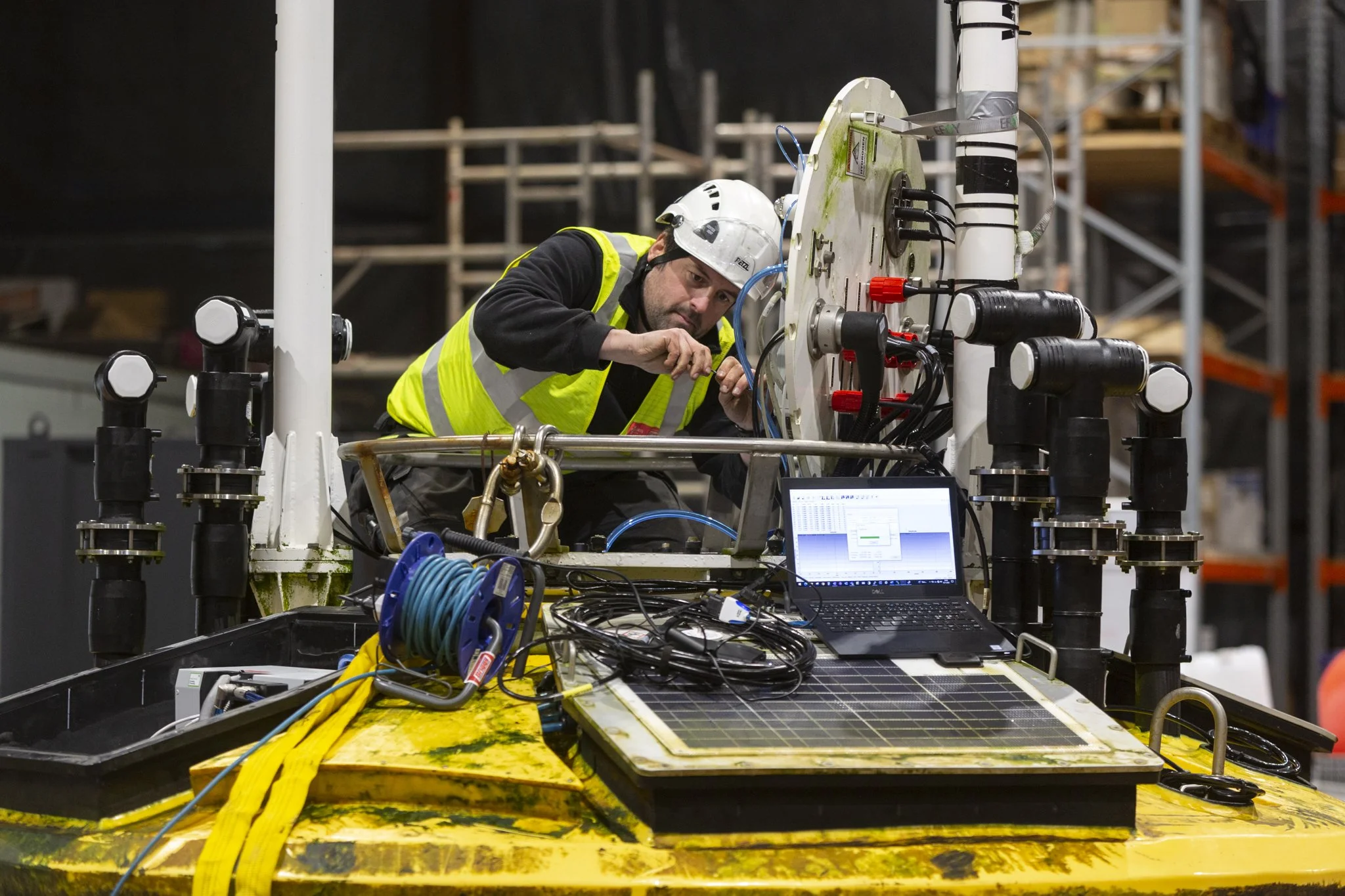
Documentary Photography - BP's LiDAR buoy at Liverpool Docks
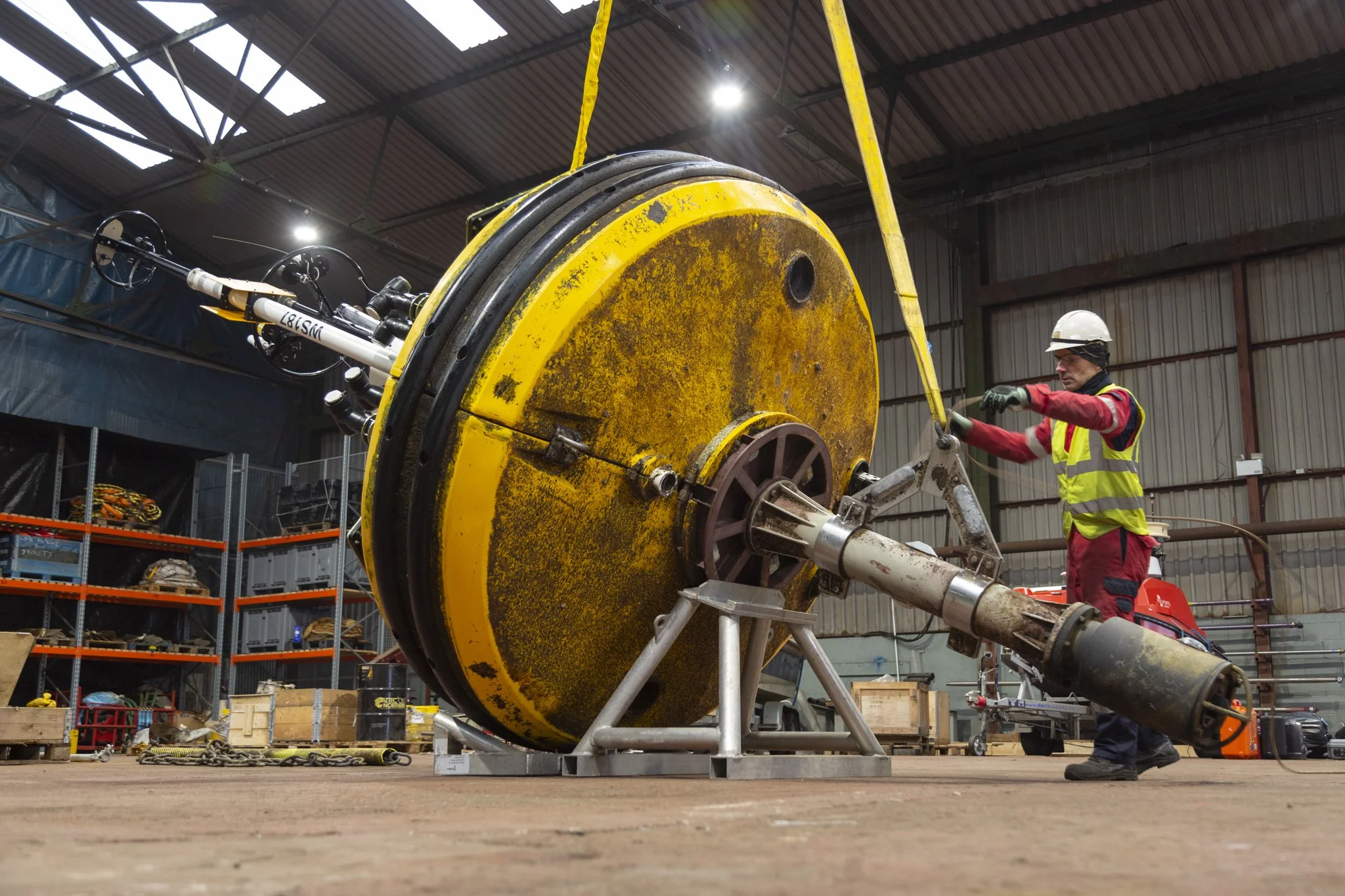
Another commission from BP as they work on the development of the Mona and Morgan Irish Sea wind farms. This time I was taking photographs to document the maintenance of one of their Fugro Seawatch LiDAR buoys which are surveying the field to find optimal wind turbine locations. The Seawatch buoys run on solar panels and fuel cells using methanol fuel. Although autonomous in the field the buoys need to be towed to shore for refueling and servicing.

Another commission from BP as they work on the development of the Mona and Morgan Irish Sea wind farms. This time I was taking photographs to document the maintenance of one of their Fugro Seawatch LiDAR buoys which are surveying the field to find optimal wind turbine locations. The Seawatch buoys run on solar panels and fuel cells using methanol fuel. Although autonomous in the field the buoys need to be towed to shore for refueling and servicing.
As an ex-engineer with a background in Physics, this was a really interesting - if freezing! - few days shooting in Liverpool.
LiDAR, or Light Detection and Ranging, can measure wind speed by using the Doppler effect. The Doppler effect is a phenomenon that occurs when the frequency of a wave changes as the source of the wave moves relative to the observer. This effect is commonly experienced in everyday life, for example, the change in pitch of a siren as an ambulance approaches and then passes by.
In the context of LiDAR, a laser beam is directed towards the atmosphere, and the reflected light is detected by a sensor. As the laser beam passes through the atmosphere, it interacts with particles in the air, such as dust or water droplets. These particles scatter the laser beam in different directions, and some of the scattered light returns to the sensor.

By analyzing the scattered light, LiDAR can detect the movement of air particles and calculate wind speed. The movement of the particles changes the frequency of the scattered light, and this change in frequency is detected by the sensor. The amount of frequency shift is proportional to the wind speed, allowing LiDAR to calculate the wind speed with high accuracy.

LiDAR can also provide information about the direction and turbulence of the wind, helping to identify potential challenges for wind turbine installations. This information is particularly useful in the development of wind farms, where accurate wind measurements are essential for identifying the most suitable locations for wind turbines.





Event Photography - Adidas and Versus at Manchester United
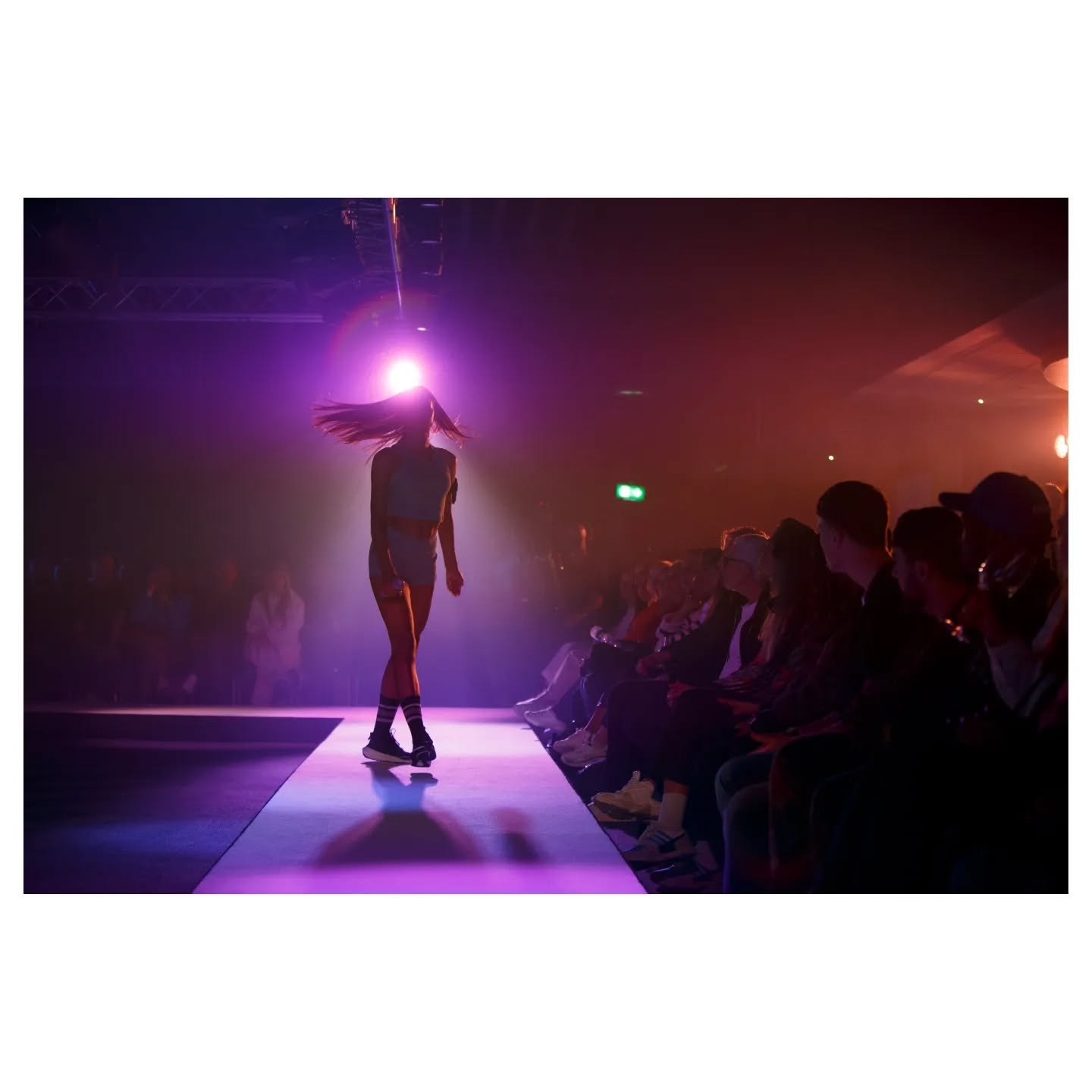
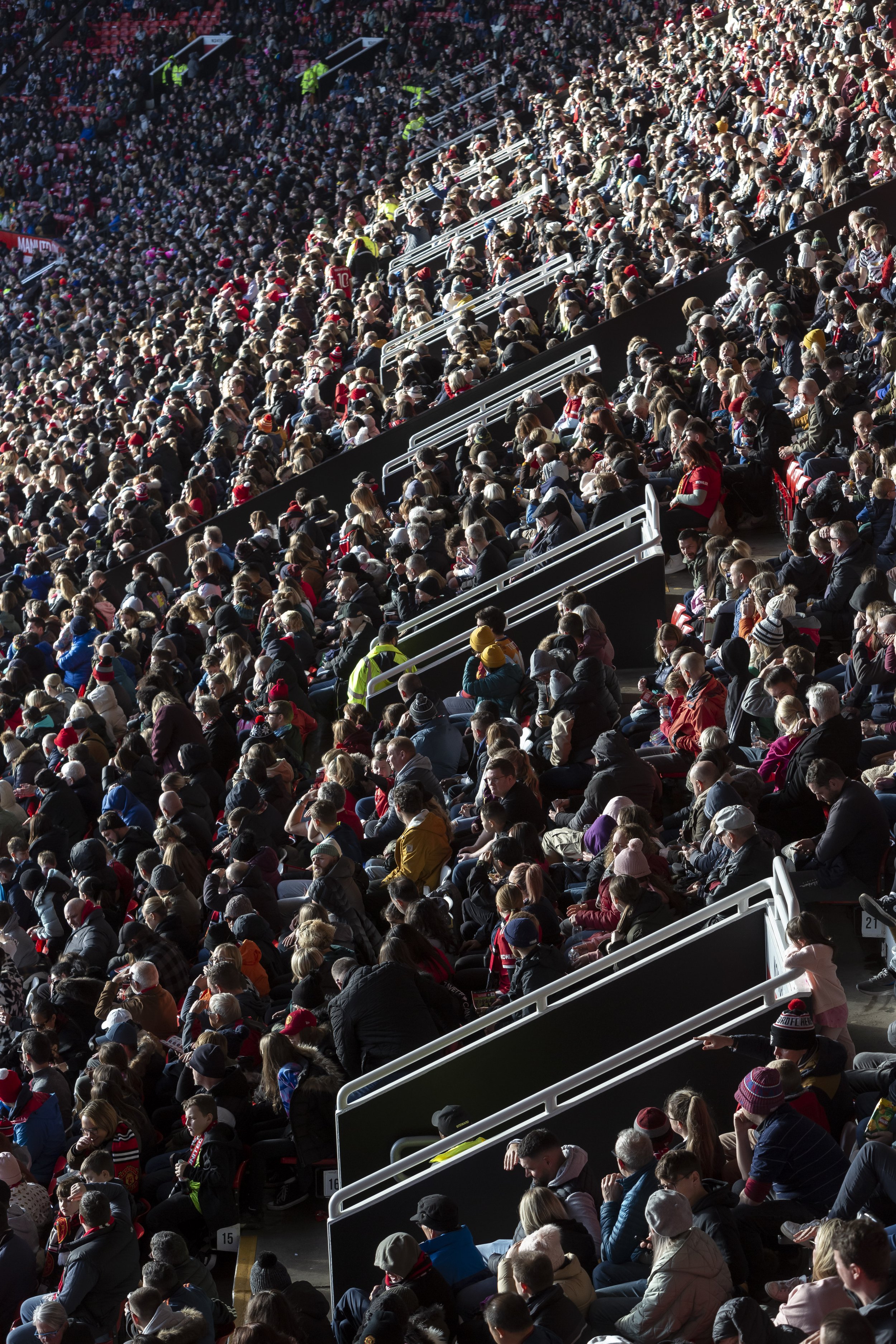
VERSUS is the platform championing the future of football and its rising influence on new music and culture. Adidas is well, Adidas. On commission for the wonderful TO Events, I photographed the launch of a collaboration between the two brands on the occasion of a games between Manchester United and Aston Villa’s women’s teams.
VERSUS is the platform championing the future of football and its rising influence on new music and culture. Adidas is well, Adidas. On commission for the wonderful TO Events, I photographed the launch of a collaboration between the two brands on the occasion of a games between Manchester United and Aston Villa’s women’s teams.




Photography of BP's public consultation at Bodelwyddan
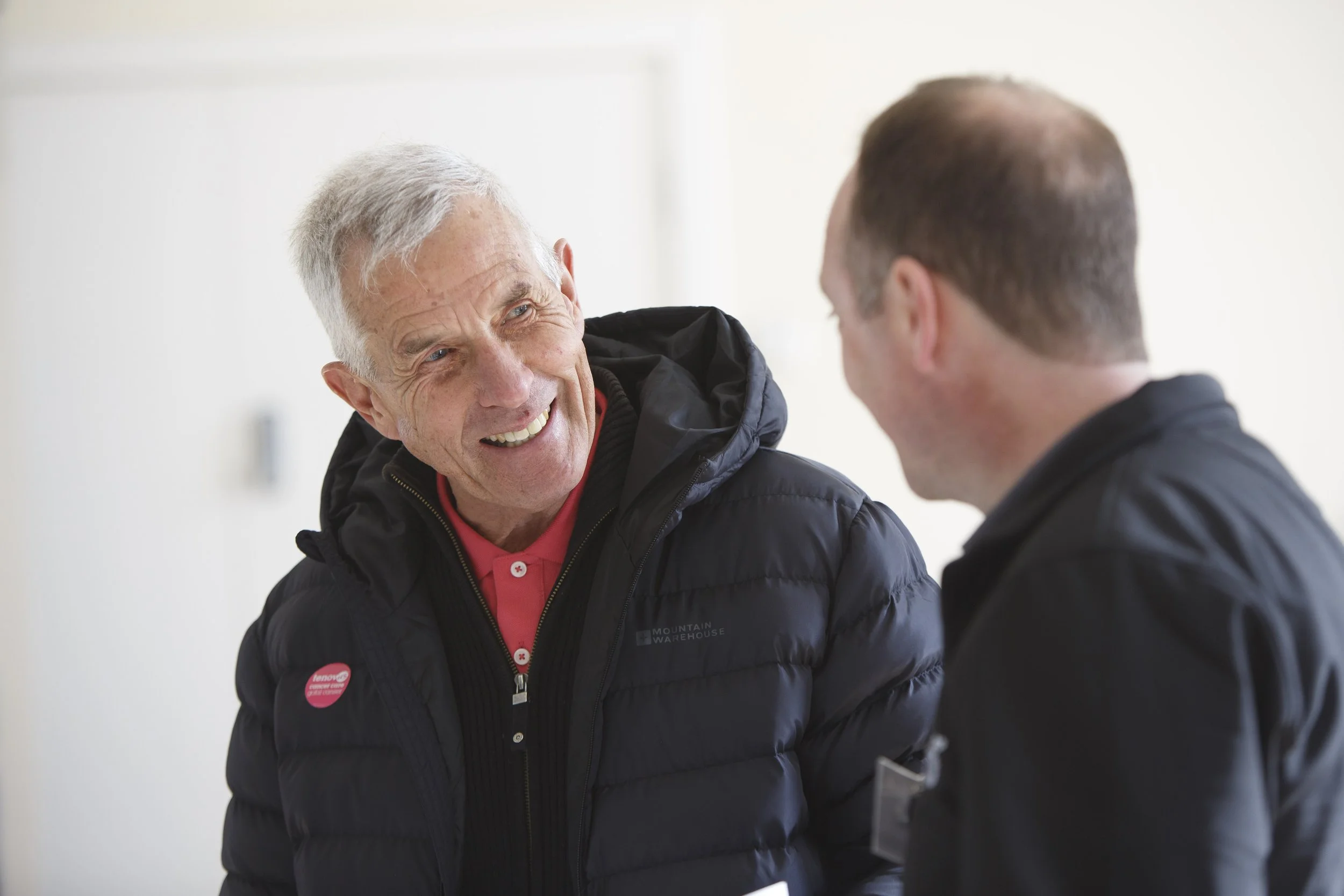
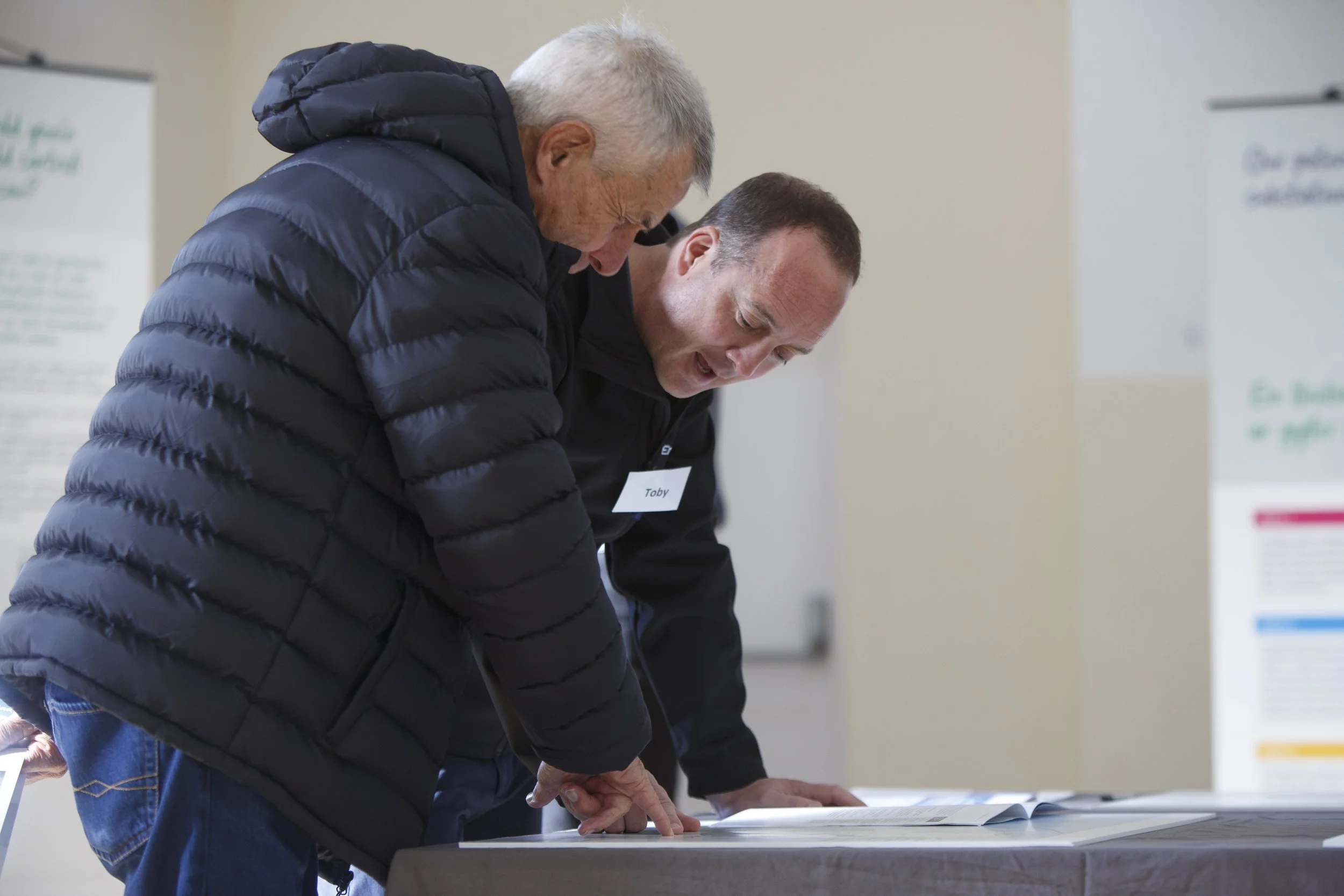
I worked with BP to photograph a consultation event at Bodelwyddan Village Hall that helped explain to residents of the area the changes that would be brought about by the development of two new wind farms off the North Wales coast. The Mona and Morgan windfarms will be two of the largest offshore windfarms in the Irish Sea.
I worked with BP to photograph a consultation event at Bodelwyddan Village Hall that helped explain to residents of the area the changes that would be brought about by the development of two new wind farms off the North Wales coast. The Mona and Morgan windfarms will be two of the largest offshore windfarms in the Irish Sea.

The wind farms will be located approximately 20km - 30km from the coast and be operational by 2029. Together, they will form one of the largest wind farms in the world, with a combined potential generating capacity of 3 gigawatts (GW). This is enough to power the equivalent of approximately 3.4 million UK households with clean electricity.

The development of the Mona and Morgan windfarms represents a significant achievement in the UK's transition towards renewable energy, and highlights the potential of offshore wind to play a key role in meeting the country's energy needs in a sustainable way.



Photographing for Art Fund at the Bronte Museum
Art Fund is a UK-based charity that aims to help museums and galleries to acquire and display works of art. The charity was established in 1903 and has since supported hundreds of museums and galleries across the country, helping to enhance their collections and make art more accessible to the public.
Art Fund is a UK-based charity that aims to help museums and galleries to acquire and display works of art. The charity was established in 1903 and has since supported hundreds of museums and galleries across the country, helping to enhance their collections and make art more accessible to the public.
One of the most notable initiatives of Art Fund is the National Art Pass, which provides free entry or discounted admission to over 240 museums and galleries across the UK, as well as other benefits such as exclusive events and discounts at art-related shops and restaurants.
Meet Me at the Museum is a podcast series published by Art Fund where famous faces take their best mate, their mum, their neighbour (whoever they want) for an afternoon at a favourite museum or gallery. As well as getting a peek behind the scenes, seeing what makes a museum tick, it's also the starting point for some great conversations about life, the universe and everything. As well as a chance to eat lots of cake in the cafe.

During the production of this episode, I photographed writer Amy Liptrot, author of The Outrun and The Instant, as she took her friend, poet Zaffar Kunial, to the Brontë Parsonage Museum in Haworth, West Yorkshire. Together they explore the former home of the Brontë sisters – Charlotte, Emily and Anne – and see where some of their most famous novels were written. From the dining table where the sisters shared their work, to early reviews of Wuthering Heights, intimate objects and artefacts prompt conversations about Amy and Zaffar’s own inspirations as writers. And, after exploring the house and museum, they head out into the landscape and discover a poem in the wild.


The Bronte Museum, located in the picturesque village of Haworth in West Yorkshire, England, is a must-visit destination for literature lovers and fans of the Bronte sisters. The museum is dedicated to the lives and works of the Bronte family, particularly the three sisters - Charlotte, Emily, and Anne - who wrote some of the most celebrated novels of the 19th century, including "Jane Eyre", "Wuthering Heights", and "The Tenant of Wildfell Hall".

The museum is housed in the former home of the Bronte family, which has been carefully preserved to provide visitors with an authentic glimpse into the lives of the famous siblings. The museum contains an extensive collection of Bronte memorabilia, including original manuscripts, letters, personal belongings, and artworks. Visitors can explore the various rooms of the museum, including the dining room, drawing room, and bedrooms, which have been furnished to recreate the atmosphere of the Bronte family home.



Manchester Met SODA Modal gallery opening
The Modal Gallery at the Manchester School of Digital Arts (SODA) is a unique space that has become a hub of creativity, innovation, and collaboration. Through its immersive exhibitions, cutting-edge technology, and interactive displays, the gallery has had a significant impact on the SODA community, helping to foster a sense of community and connection among students, faculty members, and industry professionals.

The Modal Gallery at the Manchester School of Digital Arts (SODA) is a unique space that has become a hub of creativity, innovation, and collaboration. Through its immersive exhibitions, cutting-edge technology, and interactive displays, the gallery has had a significant impact on the SODA community, helping to foster a sense of community and connection among students, faculty members, and industry professionals.
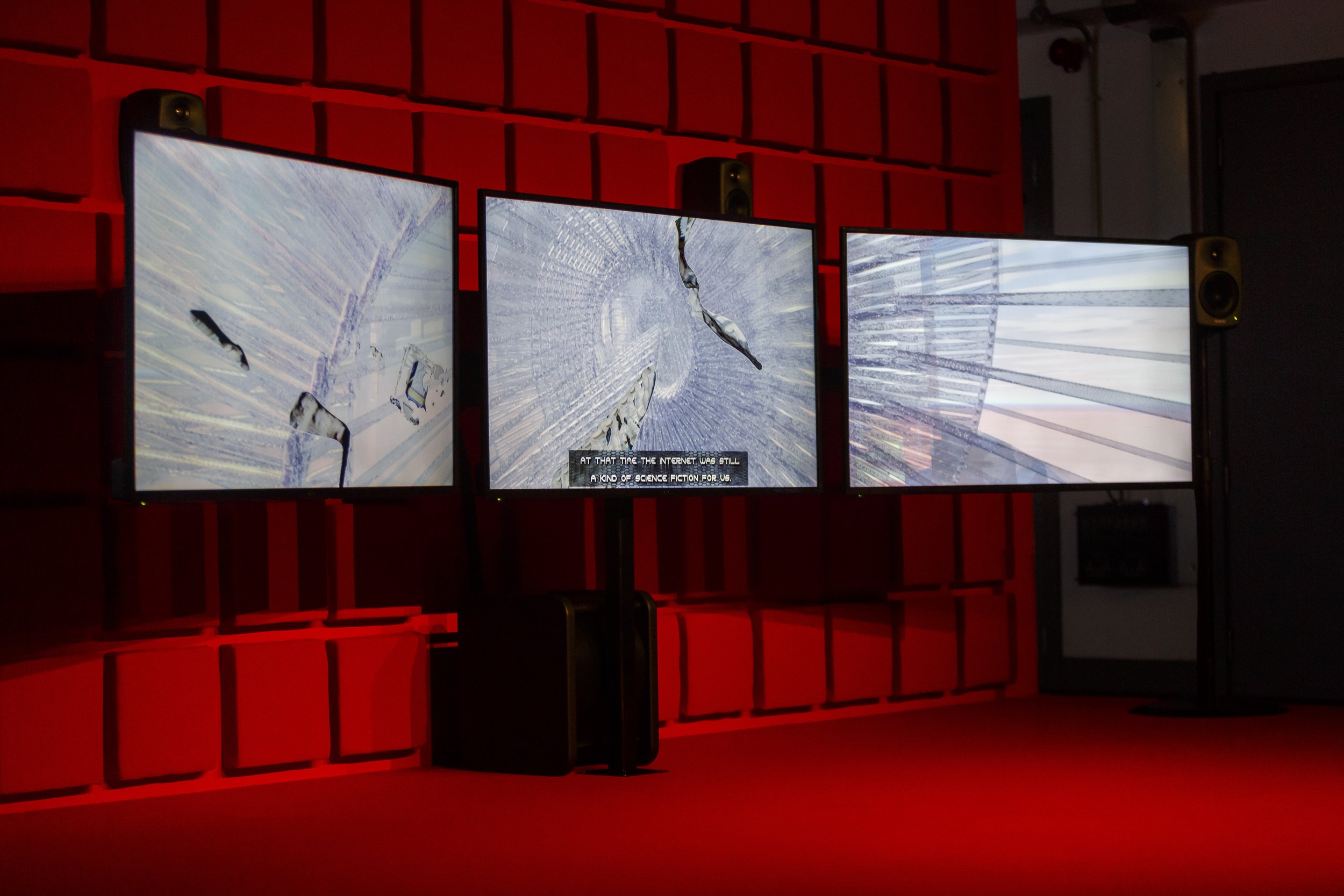
One of the key features of the Modal Gallery is its cutting-edge technology. The gallery is equipped with the latest digital tools and equipment, allowing students and faculty members to experiment with new forms of digital art and explore the boundaries of creativity. From virtual reality experiences to interactive installations, the gallery provides a platform for students to push the limits of what is possible in the digital arts.

In addition to its technology, the Modal Gallery is also known for its immersive exhibitions. The gallery's exhibitions are designed to engage visitors and create a sense of connection with the artwork. Through its immersive installations, the gallery invites visitors to explore new worlds and perspectives, challenging them to think differently about the digital arts.
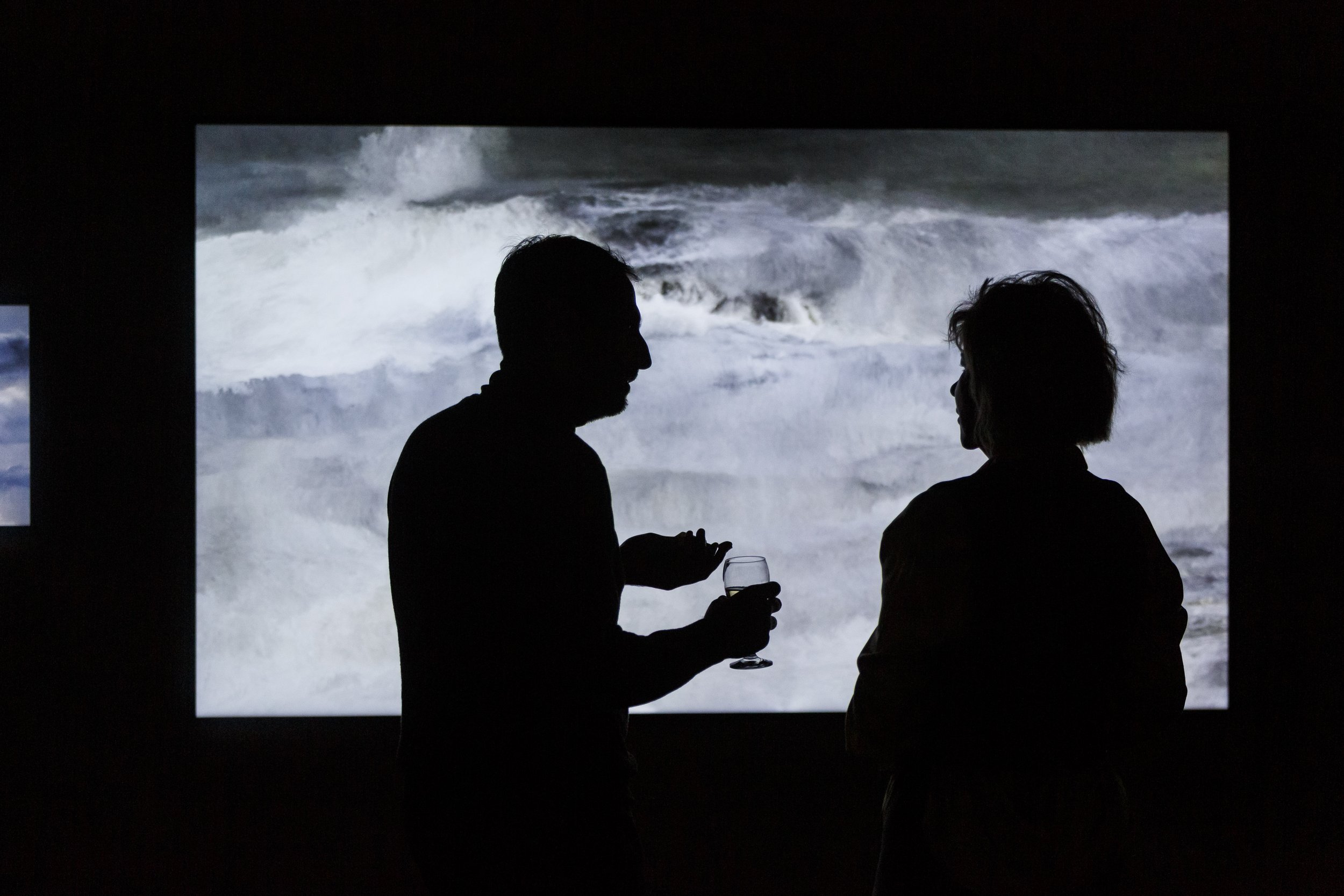
Another key feature of the Modal Gallery is its role in promoting SODA to the wider community. The gallery has become a key component of SODA's marketing and outreach efforts, showcasing the school's state-of-the-art facilities, cutting-edge curriculum, and commitment to innovation. By attracting visitors from across the region and beyond, the gallery has helped to position SODA as a leader in the digital arts and a key contributor to the creative economy.

The Modal Gallery has also had a significant impact on SODA's students. Through its exhibitions, the gallery provides students with a space to showcase their work and receive feedback and guidance from their peers and faculty members. The gallery has helped to foster a sense of community and collaboration among students, creating a supportive and dynamic environment that encourages experimentation and growth.
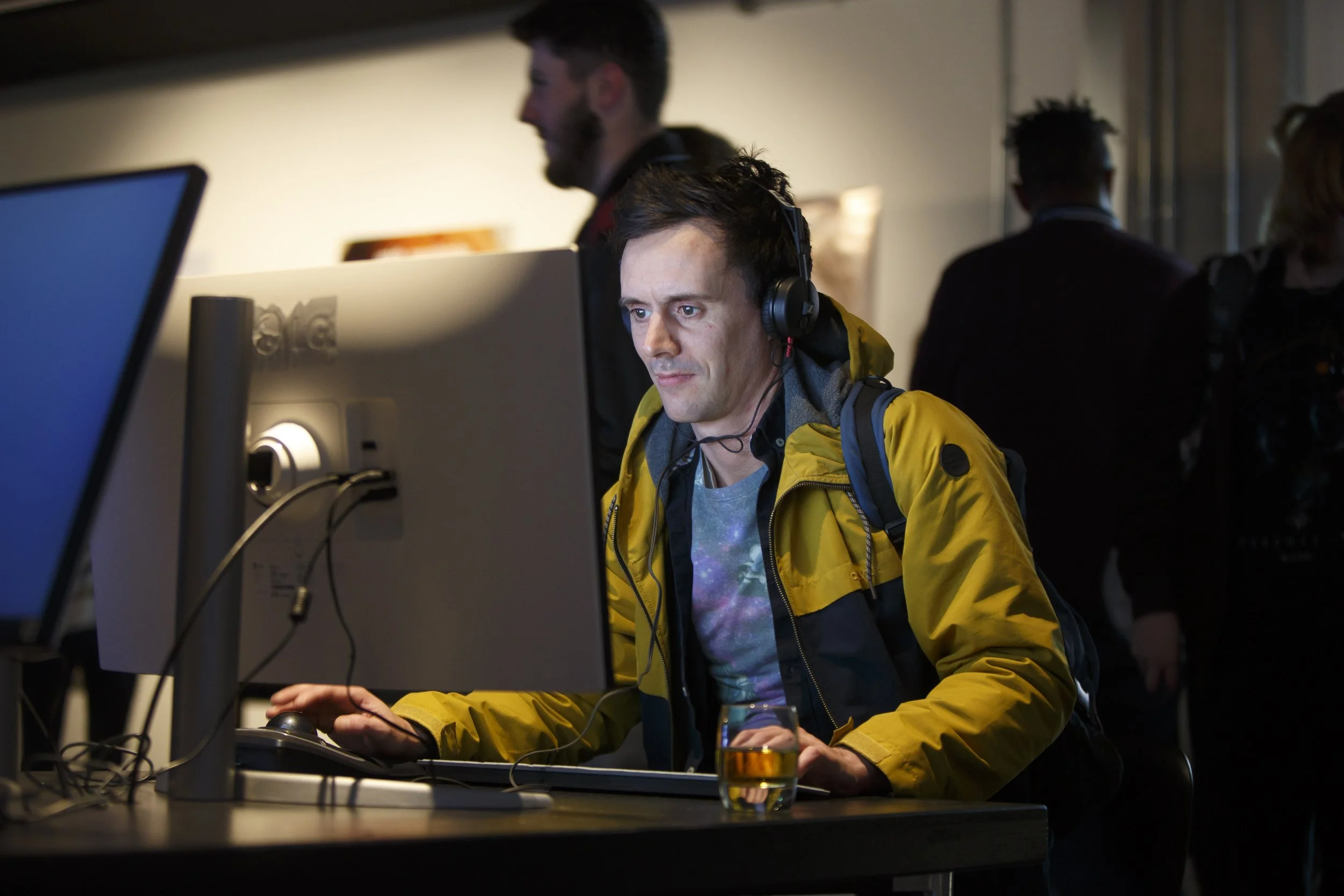
Furthermore, the Modal Gallery has helped to connect SODA's students with industry professionals and potential employers. Through partnerships with leading companies such as BBC, Channel 4, and Google, the gallery provides students with valuable networking opportunities that can help them launch their careers in the digital arts. The gallery has become a bridge between academia and industry, providing students with a clear path to success in the digital arts.
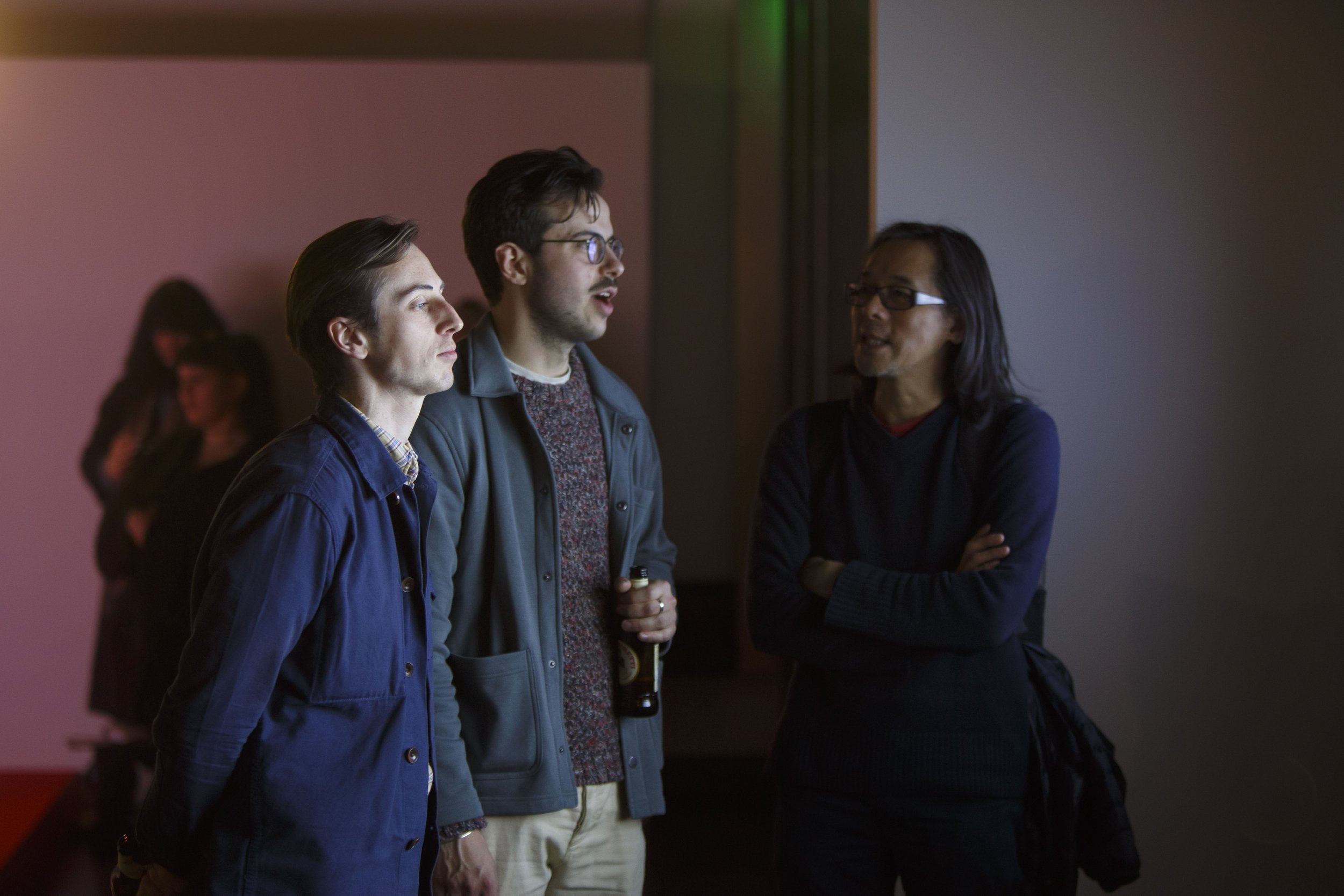
It’s been a pleasure to attend the exhibitions and photograph the events here over the past year, I always look forward to opening nights.
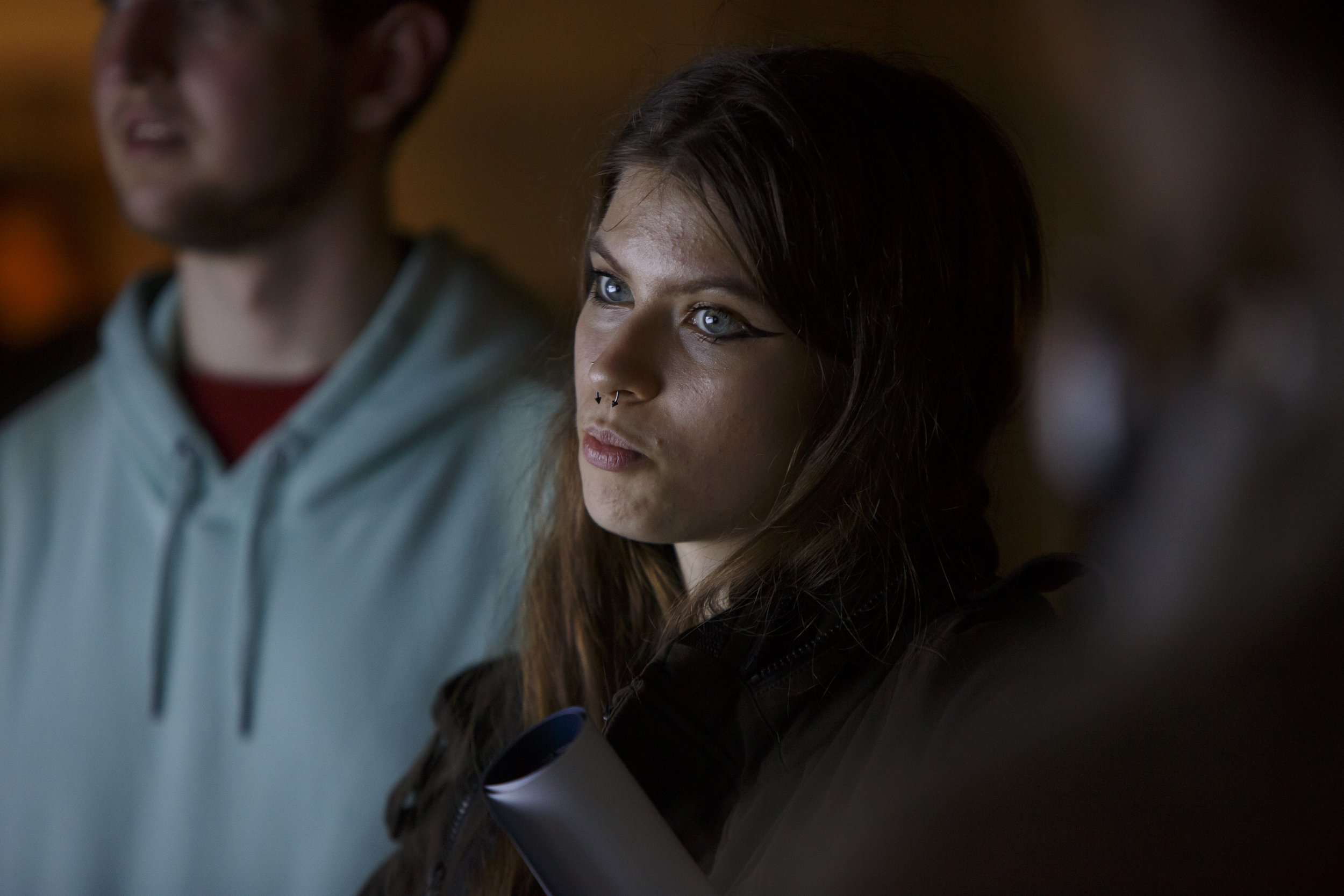


Working with IN4 Group: Photographing the Launch of HOST Gametech and CyberFirst EmPower in the North West
Over the past year it has been a privilege to work with IN4 Group documenting a series of events and initiatives focused on innovation, education and the future of technology in the North West. From the launch of new technology programmes to graduation ceremonies celebrating the achievements of young people entering the digital sector, these events highlight the growing importance of skills development and digital opportunity across the region.

Over the past year it has been a privilege to work with IN4 Group documenting a series of events and initiatives focused on innovation, education and the future of technology in the North West. From the launch of new technology programmes to graduation ceremonies celebrating the achievements of young people entering the digital sector, these events highlight the growing importance of skills development and digital opportunity across the region.

For an event photographer, projects like these offer the chance to document not only key moments and milestones but also the wider story of how organisations are shaping the future of technology and education.

Photographing the Launch of HOST Gametech
One of the highlights of the past year was photographing the launch of HOST Gametech at HOST, a hub for digital innovation and skills development based in Salford.
HOST has become an important centre for collaboration between industry, education and emerging technology companies. The Gametech programme was created to support the fast-growing games and esports sector by helping develop talent, entrepreneurial skills and new opportunities for people looking to build careers in this rapidly expanding industry.

Events like the Gametech launch bring together entrepreneurs, educators, policymakers and students, creating an environment where ideas, partnerships and opportunities can emerge. Photographing these gatherings helps capture the energy of the technology community and the conversations that shape new initiatives.

Documenting Graduation Ceremonies and Achievement
Another important aspect of the work with IN4 Group has been documenting graduation ceremonies celebrating the achievements of programme participants. These events are significant moments for students who have completed intensive training programmes designed to help them transition into careers in technology and digital industries.

Photography plays a crucial role in marking these milestones. Graduation ceremonies are not only personal achievements for the individuals involved but also powerful visual moments for the organisations delivering the programmes. Images from these events often become part of promotional materials, annual reports and future recruitment campaigns, illustrating the impact of the training and the success of the participants.

Capturing the pride and excitement of graduates as they move into the next stage of their careers provides an authentic and human perspective on the impact of digital skills programmes.

CyberFirst EmPower and Supporting Girls into Tech Careers
One of the most important initiatives photographed during the year has been the delivery of CyberFirst EmPower, developed in collaboration with the National Cyber Security Centre.
CyberFirst EmPower is part of the wider CyberFirst programme, which aims to inspire and support young people interested in careers in cyber security and digital technology. The EmPower initiative specifically focuses on encouraging girls from across the North West to explore opportunities in technology and cyber security.

Workshops and events delivered through the programme give participants hands-on experience with technology, exposure to industry professionals and a clearer understanding of potential career pathways. Photographing these sessions helps document the enthusiasm and curiosity of the students involved, while also highlighting the importance of improving diversity and access within the technology sector.
Images from programmes like CyberFirst EmPower often play a role in communicating the broader social impact of these initiatives. They show how education, mentorship and community engagement can help open doors to careers that may previously have felt inaccessible.

The Importance of Photography in Technology and Education Events
Events connected to technology, innovation and education often move quickly, with presentations, networking sessions and workshops taking place across multiple spaces. Professional photography helps organisations capture these moments in a way that reflects both the scale of the initiative and the people involved.
For organisations like IN4 Group, photography provides a visual record that can be used across press coverage, digital platforms, social media and future programme promotion. These images help communicate the organisation’s mission and demonstrate the real-world impact of their work.
Beyond documentation, photography also contributes to the wider narrative of how regions like Greater Manchester and the North West are building strong digital ecosystems. Events that bring together educators, technologists and young people entering the industry represent important steps in developing the future workforce.

Documenting the Growth of the North West’s Digital Economy
Greater Manchester and the surrounding region have become increasingly important centres for technology, digital media and innovation. Initiatives led by organisations such as IN4 Group play a significant role in supporting that growth by connecting education, skills development and industry.
Photographing these programmes provides a visual record of the people and partnerships driving this transformation. From the launch of new technology initiatives to the celebration of graduates beginning their careers, these events capture moments that reflect the region’s ambitions for the future.
Over time, images from these projects become part of a wider story about how investment in skills, education and community programmes helps build a stronger and more inclusive digital economy in the North West.

The Mirrorless Makeover: Why Pro Photographers are Ditching Their DSLRs
The Mirrorless Makeover: Why Pro Photographers are Ditching Their DSLRs
At the time of writing, there are two main types of camera systems: DSLR (Digital Single-Lens Reflex) and mirrorless. At the time of reading the latter may be a relic of a bygone era, so let's have a look at what happened...

Thomas Sutton
At the time of writing, there are two main types of camera systems: DSLR (Digital Single-Lens Reflex) and mirrorless. At the time of reading the latter may be a relic of a bygone era, so let's have a look at what happened...
Firstly, let's have a whistlestop history of the Single-Lens Reflex (SLR) system.
Single-Lens Reflex (SLR) system
Prior to the development of SLR, all cameras with viewfinders had two optical light paths: one path through the lens to the film, and another path positioned above (TLR or twin-lens reflex) or to the side (rangefinder). Because the viewfinder and the film lens cannot share the same optical path, the viewing lens is aimed to intersect with the film lens at a fixed point somewhere in front of the camera. This is not problematic for pictures taken at a middle or longer distance, but parallax causes framing errors in close-up shots. Moreover, focusing the lens of a fast reflex camera when it is opened to wider apertures (such as in low light or while using low-speed film) is not easy.
The photographic single-lens reflex camera (SLR) was invented in 1861 by Thomas Sutton, a photography author and camera inventor who ran a photography related company together with Louis Désiré Blanquart-Evrard on Jersey. Only a few of his SLRs were made.[1] The first production SLR with a brand name was Calvin Rae Smith's Monocular Duplex (USA, 1884). Other early SLR cameras were constructed, for example, by Louis van Neck (Belgium, 1889), Thomas Rudolphus Dallmeyer (England, 1894) and Max Steckelmann (Germany, 1896), and Graflex of the United States and Konishi in Japan produced SLR cameras as early as 1898 and 1907 respectively. These first SLRs were large format cameras.[2] [3]
The first 35mm prototype SLR was the "Filmanka" developed in 1931 by A. Min in the Soviet Union.[4] In 1933 A.O. Gelgar developed the "GelVeta" also in the USSR, later re-named Спорт ("Sport").[5]

Ihagee Kine Exakta
The first 35mm format SLR in large scale production was the Ihagee Kine Exakta, produced in 1936 in Germany, which was fundamentally a scaled-down Vest-Pocket Exakta. This camera used a waist-level finder.
Most SLR cameras permit upright and laterally correct viewing through use of a roof pentaprism situated in the optical path between the reflex mirror and viewfinder. Light, which comes both horizontally and vertically inverted after passing through the lens, is reflected upwards by the reflex mirror, into the pentaprism where it is reflected several times to correct the inversions caused by the lens, and align the image with the viewfinder. When the shutter is released, the mirror moves out of the light path, and the light shines directly onto the film. The viewfinder of an SLR presents an image that will not differ substantially from what is captured by the film as it presents it as a direct optical view through the main camera lens, rather than showing an image through a separate secondary lens.

The legendary Nikon F and Nikkor F
So, we've now raced through camera development to the point where we have the 35mm film SLR, further refinements of which brought us Through the Lens (TTL) metering and Automatic Exposure. The first autofocus 35 mm SLR was the Pentax ME-F released in 1981.[6]
Up to this point photographic images were captured on film - perhaps the subject for a future article - but advances in semiconductor technology were about to bring about a seismic shift.

Delta-Doped Charged Coupled Devices (CCD) for Ultra-Violet and Visible Detection
A charge-coupled device (CCD) is an integrated circuit containing an array of linked, or coupled, capacitors that can convert photons incident upon them to electron charges. the first time this technology was used in an imaging context was by Gil Amelio, Michael Francis Tompsett and George Smith in April 1970[7]. Fairchild Semiconductors team, led by ex-Bell researcher Gil Amelio, was the first with commercial devices, and by 1974 had a linear 500-element device and a 2D 100 × 100 pixel device. Steven Sasson, an electrical engineer working for Kodak, invented the first digital still camera using a Fairchild 100 × 100 CCD in 1975.[8]
The large quality advantage CCDs enjoyed early on has narrowed over time particularly since the development of the CMOS (Complimentary Metal Oxide Silicon) sensor by Eric Fossum's team at the NASA Jet Propulsion Laboratory in 1993.[9] Since the late 2010s CMOS sensors are the dominant technology, having largely if not completely replaced CCD image sensors.

1981 Sony Mavica Prototype
The first filmless SLR (single lens reflex) camera was publicly demonstrated by Sony in August 1981. The Sony “Mavica” (magnetic still video camera) used a color striped 2/3” format CCD sensor with 280K pixels, along with analogue video signal processing and recording.[10] The Mavica electronic still camera recorded FM modulated analog video signals on a newly developed 2” magnetic floppy disk, dubbed the “Mavipak”. The disk format was later standardized as the “Still Video Floppy”, or “SVF”.
Replacing film with a similar-sized digital sensor was possible, but expensive because larger sensor areas imply a greater probability that a defect will render the sensor non-functional. Such "full frame" sensor digital SLRs (DSLRs) however gained early popularity with professional photographers who could both justify their initial high cost, and retain the use of their investment in expensive 35 mm film lenses. By 2008, full-frame models such the Canon EOS 1Ds and 5D, the Nikon D3 and D700, and the Sony Alpha A850 and Alpha A900, designed and priced for professionals, were available.
Finally, we reach the DSLR era, all the advantages of decades of SLR camera development coupled with decades of research into CCD and later CMOS sensors to provide the perfect image making device. But then something new happened.
Mirrorless
In late 2008, a new type of camera emerged, called a mirrorless interchangeable-lens camera. It is technically a DSLR camera that does not require a reflex mirror, a key component of the former. While a typical DSLR has a mirror that reflects light from the lens up to the optical viewfinder, in a mirrorless camera, there is no optical viewfinder. The image sensor is exposed to light at all times, giving the user a digital preview of the image either on the built-in rear LCD screen or an electronic viewfinder (EVF).[11]
Mirrorless cameras are mechanically simpler than DSLR cameras, and are smaller, lighter, and quieter due to the elimination of the moving mirror. While nearly all mirrorless cameras have a mechanical shutter, many also have an electronic shutter, allowing completely silent operation.[12] The first digital rangefinder camera commercially marketed was the Epson R-D1 (released in 2004), followed by the Leica M8. They were some of the first digital lens-interchangeable cameras without a reflex mirror, but they are not mirrorless cameras because they did not use a digital display system for live preview.
The first mirrorless camera commercially marketed was the Panasonic Lumix DMC-G1, released in Japan in October 2008. It was also the first camera of Micro Four Thirds system, developed exclusively for the mirrorless system.
Until the mid-2010s mirrorless cameras were somewhat challenged to provide an electronic viewfinder with the clarity and low-lag responsiveness of the optical viewfinders used on DSLRs, especially under strong sunlight or when photographing the sky at night.[13]

Fujifilm X-Pro1
The Fujifilm X-Pro1, announced in January 2012, was the first non-rangefinder mirrorless with a built-in optical viewfinder. Its hybrid viewfinder overlaid electronic information, including shifting frame-lines, to compensate for the parallax effect. Its 2016 successor, the X-Pro2, had an updated version of this viewfinder. Canon was the last of the major manufacturer of DSLRs to announce their own mirrorless camera, announcing the Canon EOS M in 2012 with APS-C sensor.
After having debuted at the bottom of the market and having technologically advanced rapidly due to advances in mobile phone camera and video camera manufacturing, mirrorless lens systems created significant interest from camera manufacturers as a possible alternative in high-end camera manufacturing. Mirrorless cameras have fewer moving parts than DSLRs, and are more electronic, which is an advantage to electronics manufacturers (such as Panasonic, Sony and Samsung), as they eyed the market share of dedicated camera manufacturers who had significant advantages in precision mechanical engineering.
On-sensor autofocus is free of the adjustment requirements of the indirect focusing system of the DSLR (which relies on a separate autofocus sensor located below the reflex mirror), and as of 2018 mirrorless cameras could shoot with phase-detect autofocus at up to 20 frames per second using up to 693 focus points—a number far exceeding what was available on any DSLR.[14]
Mirrorless v DSLR: Summary
The rise of mirrorless cameras has disrupted the traditional dominance of DSLR cameras in the professional photography industry.
One of the main advantages of mirrorless cameras is their compact size and weight compared to DSLRs. Mirrorless cameras are typically smaller and lighter than DSLRs, making them more portable and easier to carry around, especially beneficial for professional photographers who often have to travel to different locations and carry multiple cameras and lenses.
A significant technical advantage of mirrorless cameras is their advanced autofocus systems. Mirrorless cameras use on-sensor contrast-detection autofocus (AF) systems, which can quickly and accurately focus on the subject even in low light conditions. In contrast, DSLRs use a phase-detection autofocus system, which can struggle in low light conditions and can require the use of external lighting. The autofocus system of mirrorless cameras is also more versatile, as it can track moving subjects across the frame and can be used for both still photography and video recording.
Mirrorless cameras also offer several features that are not available in DSLRs. For example, mirrorless cameras can shoot silently, which is beneficial for photographers who need to capture images without disrupting the environment, such as while photographing alongside a video shoot. Mirrorless cameras also offer in-body image stabilization (IBIS), which stabilizes the camera sensor to compensate for camera shake and allows for smoother hand-held shooting. This eliminates the need for image stabilization (IS) in lenses, which can be expensive and bulky. When used in combination with IS lenses the effect is multiplied, allowing the possibility of hand holding at remarkably slow shutter speeds.
Mirrorless cameras offer faster burst rates and higher frames per second (fps) than DSLRs. useful for capturing fast-moving subjects such as in sports or wildlife.
In recent years, mirrorless cameras have also made significant advancements in image quality, with many models offering high resolution and dynamic range. This is due to improvements in sensor technology and image processing, which has narrowed the gap between mirrorless and DSLR image quality.
Overall, mirrorless cameras have become the preferred choice for many professional photographers due to their compact size, advanced autofocus system, versatility, and high-performance features. While DSLRs still have some advantages, such as longer battery life and a wider selection of lenses, mirrorless cameras have established themselves as a serious competitor in the professional photography market. As technology continues to advance, it is likely that mirrorless cameras will continue to push the boundaries of what is possible in photography.
References
[1] Coe, Brian (1978). Johnston, Turlough (ed.). Cameras. USA: Crown Publishers, Inc. p. 133. ISBN 0-517-53381-2.
[2] Rudolf Kingslake: The Photographic Manufacturing Companies of Rochester, New York, p. 21
[3] Konishi: Sakura Reflex Prano; source The Japanese Historical Camera, p. 5
[4] Proletarskoe Foto, No. 3, 1933
[5] A.O. Gelgar's Sport, Wikipedia entry
[6] Pentax Imaging Company. "History of Innovations 1980–1989". Pentax history of innovations. Archived from the original on 2007-09-28. Retrieved 2006-10-22.
[7] Gilbert Frank Amelio; Michael Francis Tompsett; George E. Smith (April 1970). "Experimental Verification of the Charge Coupled Device Concept". Bell Syst. Tech. J. 49 (4): 593–600. doi:10.1002/j.1538-7305.1970.tb01791.x.
[8] Dobbin, Ben (8 September 2005). "Kodak engineer had revolutionary idea: the first digital camera". Seattle Post-Intelligencer. Archived from the original on 25 January 2012. Retrieved 2011-11-15.
[9] Fossum, Eric R.; Hondongwa, D. B. (2014). "A Review of the Pinned Photodiode for CCD and CMOS Image Sensors". IEEE Journal of the Electron Devices Society. 2 (3): 33–43. doi:10.1109/JEDS.2014.2306412.
[10] Kihara, N.; Nakamura, K.; Saito, E.; Kambara, M. (June 1982). "The Electrical Still Camera a New Concept in Photography". IEEE Transactions on Consumer Electronics. CE-28 (3): 325–331. doi:10.1109/TCE.1982.353928. ISSN 1558-4127.
[11] Gannon Burgnett. "What's a mirrorless camera and what makes it different from a DSLR?". Digital Trends. Retrieved February 16, 2019.
[12] Corporation, Sony. "Help Guide | Silent Shooting". helpguide.sony.net. Retrieved August 11, 2018.
[13] "Sony's new mirrorless camera EVF is 60 percent sharper". Engadget. Retrieved August 11, 2018.
[14] "Close up | Sony a9 focus modes | Fixation". www.fixationuk.com. Retrieved August 11, 2018.
The Canon 5D: A post mortem
As a professional photographer who used most models of the Canon 5D series of DSLRs, and who recently made the switch to mirrorless with the Canon R5, I thought it would be useful to review the 5D line, its origins and how it developed before its recent replacement. Each iteration of the 5D brought new and exciting features that improved image quality and technical capabilities, making it a popular choice among photographers and filmmakers alike. In this article, I will delve into the technical and image quality differences of the Canon 5D series, from the original Mark I to the most recent Mark IV.
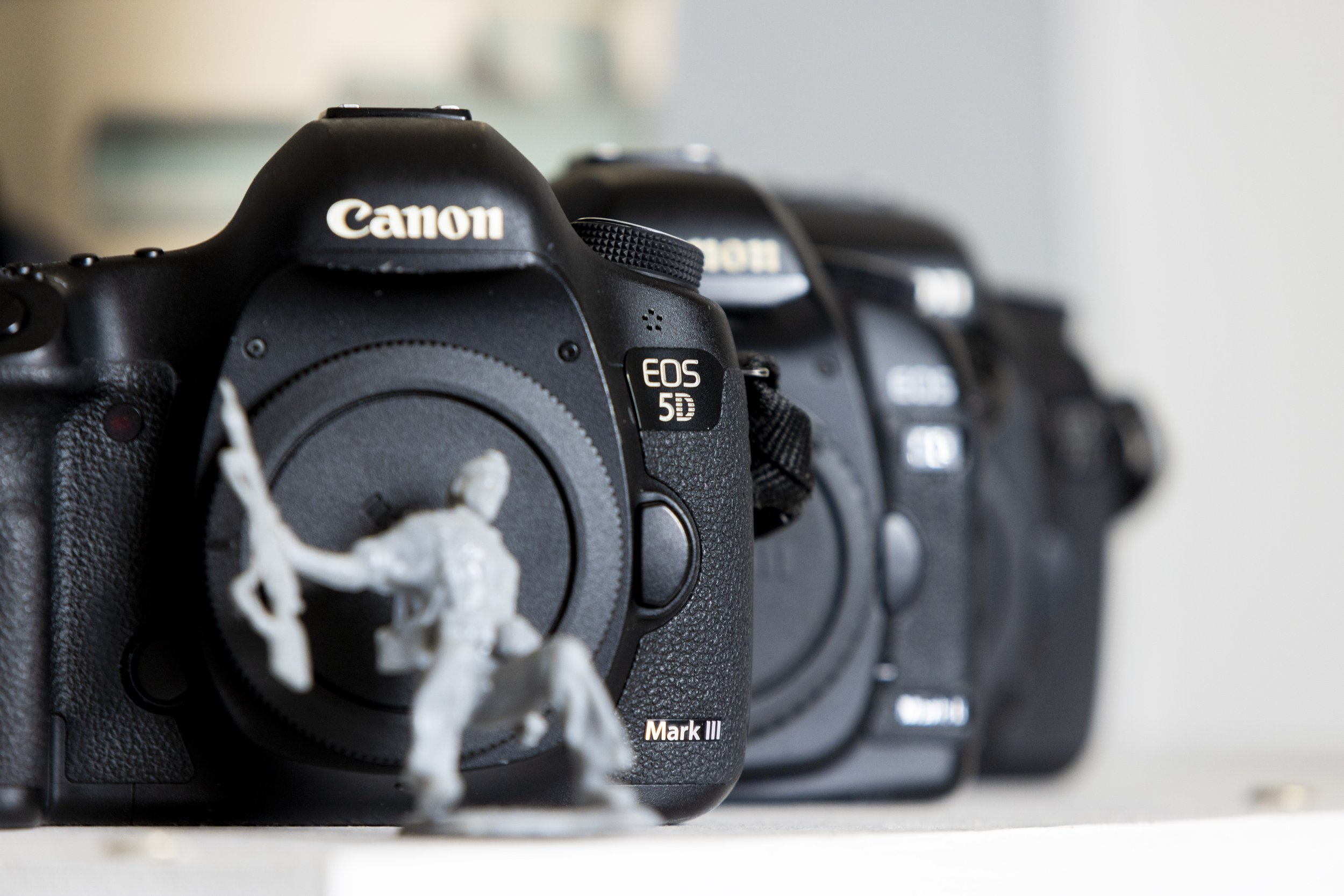
As a professional photographer who used most models of the Canon 5D series of DSLRs, and who recently made the switch to mirrorless with the Canon R5, I thought it would be useful to review the 5D line, its origins and how it developed before its recent replacement. Each iteration of the 5D brought new and exciting features that improved image quality and technical capabilities, making it a popular choice among photographers and filmmakers alike. In this article, I will delve into the technical and image quality differences of the Canon 5D series, from the original Mark I to the most recent Mark IV.
Canon 5D Mark I
The Canon 5D Mark I was released in 2005 and was a game-changer for photographers. It was the first full-frame camera that was affordable and widely available, which opened up new possibilities for image quality and low-light performance. The camera had a 12.8-megapixel CMOS sensor, a 9-point autofocus system, and a maximum ISO of 1600.
Compared to today's standards, the Canon 5D Mark I may seem limited in its capabilities. However, it was a ground breaking camera that introduced many photographers to the world of full-frame digital photography. One of the main advantages of the camera was its 35mm equivalent sensor, which allowed for a shallower depth of field and better low-light performance.
The Canon 5D Mark I was compatible with the massive range of Canon EF lenses including the L-series so beloved by working photographers for their image quality, sharpness and robustness. This made it an attractive option for photographers who already owned Canon lenses that they were using with 35mm film bodies and wanted to upgrade to a full-frame digital camera without breaking the bank. At the time, I was shooting 35mm film with a Canon EOS30, an interesting camera in itself with its Eye Control autofocus system which, after you'd calibrated it by pointedly looking around the viewfinder, attempted to track your eye movements and focus on the things in the frame you were looking at, with some fairly mixed results. Eye Control made it down to the EOS 30 from the EOS 3 and EOS 5 but was later dropped for 30 years before a glorious and perhaps somewhat unexpected return in the latest R3 models
The 5D Mk1 slotted into my camera bag as a direct replacement for the EOS 30. The most noticeable change this switch brought about as a working professional was an almost immediate end to daily visits to the processing lab and complete removal of film and processing costs from the business. What it brought in its stead was long hours of digital editing, a process that now takes up 30% of my working time.
While the Canon 5D Mark I was a remarkable camera for its time, it did have limitations in terms of autofocus performance and image quality compared to later models in the series.
Canon 5D Mark I:
12.8-megapixel CMOS sensor
ISO range of 100-1600 (expandable to 50-3200)
9-point autofocus system
3 frames per second continuous shooting
2.5-inch LCD screen

Canon 5D Mark II
The Canon 5D Mark II was released in 2008 and was a significant upgrade from the Mark I. The camera featured a 21.1-megapixel CMOS sensor, a 9-point autofocus system, and a maximum ISO of 25600. One of the most significant improvements in the Canon 5D Mark II was its video capabilities, with the ability to shoot 1080p video at 30fps.
The addition of video capabilities in the Canon 5D Mark II was a game-changer for filmmakers. It allowed them to shoot high-quality video with a relatively affordable camera, which opened up new possibilities for filmmaking. The camera also featured improved dynamic range and low-light performance, making it even more versatile for photographers.
Another significant improvement in the Canon 5D Mark II was its Live View mode, which allowed photographers to preview their shots on the camera's LCD screen before taking the picture. This was a significant improvement over the Mark I, which did not have a Live View mode.
The 5D II was an improvement for still photographers but it was really a massive leap for Canon and launched the careers of many film makers who could now get dreamy, short focus cinematic images without the need for cinema video cameras at ten times the price. The 5D II marked the beginning of a phase, only just coming to a close, in which you would turn up for a job and be using the same equipment as the videographer. I knew film making groups , like Manchester’s ‘Bokeh, Yeah’ that were set up as a result of the launch of this camera and its contemporaries. The mark 2’s use of quality optics and 35mm equivalent sensors brought cinematographic images to the masses when video cameras at the time were still using small sensors with their inevitable deep, and deeply non-cinematic, front to back sharpness. Since the mk2, contemporary pro digital stills cameras are with few exceptions exemplary video shooters, albeit with some designed in limitations to increase the attractiveness of more specialised equipment.
The Canon 5D Mark II did however have limitations in terms of autofocus performance, which was a significant issue for photographers who needed fast and accurate autofocus. Here, you were forced into 1DX territory with that camera body's associated financial and physical weight.
Canon 5D Mark II
21.1-megapixel CMOS sensor
ISO range of 100-6400 (expandable to 50-25600)
9-point autofocus system
3.9 frames per second continuous shooting
Full HD video recording at 1080p

Canon 5D Mark III
The Canon 5D Mark III was released in 2012 and was a significant improvement from the Mark II. The camera featured a 22.3-megapixel CMOS sensor, a 61-point autofocus system, and a maximum ISO of 25600 (expandable to 102400). The autofocus system in the Canon 5D Mark III was a significant improvement over the Mark II, with faster and more accurate autofocus performance.
Another significant improvement in the Canon 5D Mark III was its improved dynamic range and noise performance. The camera's sensor and improved dynamic range meant that images were even sharper, more detailed, and had even more accurate colours. The camera performed even better in low-light conditions, with the expanded ISO range allowing for even better results in dark environments.
The Mark III also featured an increased frame rate. The camera could shoot up to 6 frames per second, which was a significant improvement over the 3.9 frames per second in the Mark II. This made it a more attractive option for photographers who needed a faster frame rate, such as sports or wildlife photographers.
The Canon 5D Mark III also featured improved video capabilities, with the ability to shoot 1080p video at up to 60fps. The camera also had a headphone jack and improved audio controls, making it a more versatile option for filmmakers.
Overall, the Canon 5D Mark III was a significant improvement over the Mark II in terms of autofocus performance, image quality, and technical capabilities.
This camera was so good that I didn't upgrade to the Mark IV. Autofocus was much quicker even with the heavy glass elements in L-series lenses, image quality was improved but, in reality, was only a marginal gain over the mk II. Increased dynamic range and high ISO performance are the holy grails for me, the mk III provided another incremental improvement in dynamic range but ISO performance, while expanded, may have been useful for wildlife and sports shooters looking for fast shutter speeds in bright conditions, but in the low light conditions that I'm often shooting in, gain noise at over ISO 1600 was excessive. The struggle, sadly to this day, continues!
In its dotage, my mark II developed a hotshoe problem that meant that auto metering of flash output was impossible. Faced with the expense and more importantly the cost in time of a repair, I upgraded to the mark 3. The mk2 subsequently become my travel camera and has been around a bit, often in less than salubrious surroundings and less than luxurious luggage hence its scuffed paint and filthy strap. God knows the shutter count, to the moon and back, but it keeps on rolling…

Canon 5D Mark III
22.3-megapixel CMOS sensor
ISO range of 100-25600 (expandable to 50-102400)
61-point autofocus system
6 frames per second continuous shooting
Full HD video recording at 1080p at up to 60fps
Canon 5D Mark IV
The Canon 5D Mark IV was released in 2016 and featured a 30.4-megapixel CMOS sensor, a 61-point autofocus system, and a maximum ISO of 32000 (expandable to 102400). The autofocus system in the Mark IV was an improvement over the Mark III, with even faster and more accurate autofocus performance.
One of the most significant improvements in the Canon 5D Mark IV was its dual-pixel autofocus system, which was first introduced in the Canon EOS 70D. The dual-pixel autofocus system allowed for faster and more accurate autofocus performance in Live View mode, making it easier to capture sharp images in challenging situations.
Another significant improvement in the Canon 5D Mark IV was its improved dynamic range and noise performance. The camera's sensor and improved dynamic range meant that images were even sharper, more detailed, and had even more accurate colours. The camera also performed exceptionally well in low-light conditions, with the expanded ISO range allowing for even better results in dark environments.
The Canon 5D Mark IV also featured improved video capabilities, with the ability to shoot 4K video at up to 30fps. The camera also had improved audio controls, making it a more versatile option for filmmakers.
One of the most significant improvements in the Canon 5D Mark IV was its built-in WiFi and GPS capabilities. The WiFi feature allowed photographers to quickly and easily transfer images to their computer or smartphone, while the GPS feature allowed them to geotag their images with location data.
Overall, the Canon 5D Mark IV was a significant improvement over the Mark III in terms of autofocus performance, image quality, and technical capabilities. The dual-pixel autofocus system and built-in WiFi and GPS features made it a more versatile option for photographers and filmmakers.
Canon 5D Mark IV
30.4-megapixel CMOS sensor
ISO range of 100-32000 (expandable to 50-102400)
61-point autofocus system with dual-pixel autofocus
7 frames per second continuous shooting
4K video recording at up to 30fps
Conclusion
The Canon 5D series has been a popular choice among professional photographers and filmmakers since the release of the original 5D in 2005. Each model in the series has seen significant improvements in image quality and technical capabilities, it's been my go-to series offering pro level build quality and weather sealing, pro level imaging and a price point that while not cheap, is less mortgage worrying than the 1DX series. If you didn't need the lightning-fast burst speeds of a sports shooter and unlike the newspaper shooters you were buying your own equipment, it was a no brainer and it was bomb proof and totally reliable.
In 20 years I never had a body fail and I’ve dropped them and had them filled with rainwater so you could see it behind the screens. I dried them out in an oven - not recommended - and they trudged on for years like nothing had happened.
Epilogue: The Canon 5D Mark V
Speculation about the Mk V update gave way to scepticism after the 2018 launch of the Canon EOS R mirrorless camera and Canon confirmed that the Mk IV would be the end of the line for its popular DSLR range in June 2020 leaving the 1D X Mark III as its final SLR.
While the reasons behind Canon's decision not to produce a 5D Mark V are not entirely clear, it is likely a combination of factors that contributed to the decision. The rise of mirrorless cameras, shifting customer preferences, high development costs, and the popularity and longevity of the existing 5D cameras are all factors that may have influenced Canon's decision. Ultimately, Canon's decision to focus on developing new mirrorless cameras and expanding its camera line-up with new product lines such as the EOS R series may also have played a significant role.
So, professionals were left with a simple step over to the EOS R mirrorless system, right? Not quite, The EOS R is based, as the name suggests, around a new R mount, necessitating replacing the previous EF lenses with newer RF lenses. EF lenses can be used on R mount cameras with an adapter, but if you go all in with the new - and excellent - range of RF lens then you’re not bolting them to your old EF bodies, adapter or not.
Canon had been rolling out R mount glass for a while and the reviews of these lenses were stellar so, notwithstanding the lens compatibility issues, we could expect a pretty painless transition to the EOS R, that was until the reviews started to come in.
While the new glass was of high quality, there was limited lens selection at launch; when the Canon EOS R was first released, it only had four native RF lenses available, which was a relatively limited selection compared to Canon's vast line-up of EF and EF-S lenses. Pro photographers who had the cash to completely upgrade to the new system would be forced to adapt their EF glass at first.
The EOS R only had a single SD card slot, which was a concern for professional photographers who require a backup storage option especially when they’d become accustomed to it in the 5D mk3 and mk4.
No in-body image stabilization: The EOS R did not have in-body image stabilization, which was a drawback for photographers who rely on this feature for shooting in low light or when using longer focal length lenses.
Limited battery life: The EOS R has a relatively short battery life compared to other mirrorless cameras on the market, which may be a concern for photographers who shoot for extended periods of time.
Crop factor when using EF lenses: While the EOS R can use EF lenses with an adapter, these lenses will have a crop factor of 1.6x, which may be a drawback for photographers who require a full-frame field of view.
So, if you were a serious photographer who fancied using the excellent new lenses, didn't need a massive arsenal of focal length options, liked to shoot video and could use a little less size and weight, the EOS R was ticking a lot of boxes.
If you were a professional, shooting on the now defunct 5D and looking for an upgrade or replacement, the landscape looked a bit bare until some new EOS R bodies were announced. These came in the form of the R5 and R6, but we'll get into those in a future article.
On board the Fugro Synergy for BP
By far the best thing about working as a professional photographer is the variety of the work. The camera can gain you access to environments that are wildly different each shoot day and if you’re lucky, can sometimes take you to some incredible and unexpected places. One of the most interesting of my shoots in 2022 was an assignment from bp to photograph the crew and workings of the Fugro Synergy while on a recent stop at Liverpool docks.

By far the best thing about working as a professional photographer is the variety of the work. The camera can gain you access to environments that are wildly different each shoot day and if you’re lucky, can sometimes take you to some incredible and unexpected places. One of the most interesting of my shoots in 2022 was an assignment from bp to photograph the crew and workings of the Fugro Synergy while on a recent stop at Liverpool docks.

The Synergy Modular Drilling Unit is a unique geotechnical vessel capable of delivering
high quality geotechnical data. Its design, standards and capacity make it an efficient
platform for geotechnical investigations and scientific drilling in challenging and remote offshore marine environments.
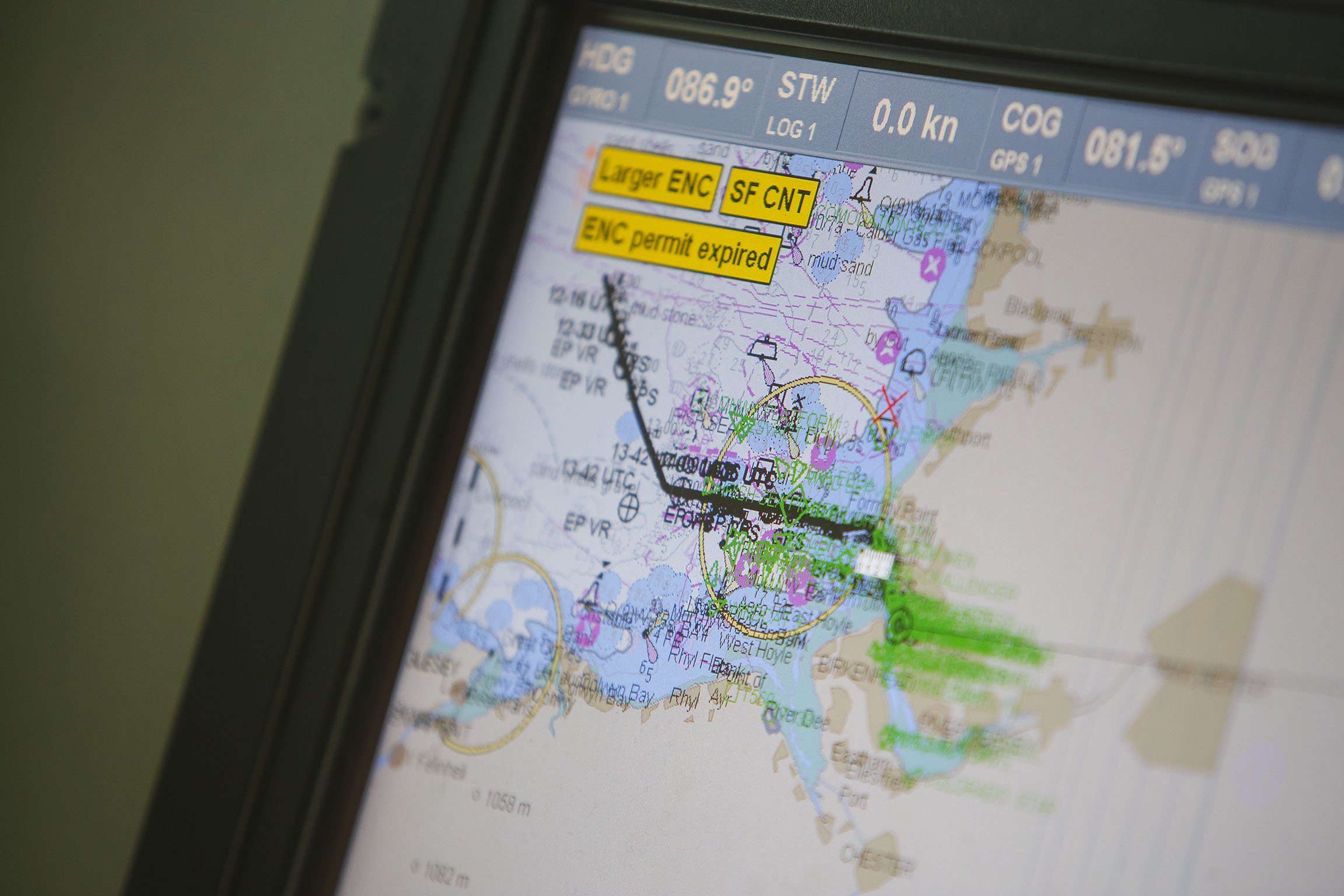
The shoot focussed on the Synergy’s role in sea bed core sampling, determining the sea bed composition to ensure that the sea bed substrate was capable of providing solid foundations for the siting of an array of wind turbines. Sea bed composition is critical, mud, sand or silt that is too soft and uncompacted will not provide a firm enough foundation, while solid rock is impossible to drill to the depths required for the footings.

EnBW with EnBW and bp are leading the development of the Morgan and Mona – two offshore wind farms in the Irish Sea. Roughly located 30km from shore between the north coast of Wales and the Isle of Man the total area of the two farms will be 800 square kilometres – about half the size of Greater London and when complete the farm will generate 3GW of energy – enough to power an astonishing 3.4 million UK homes.

These projects are helping to achieve the UK's ambition of generating 50GW of power from offshore wind by 2030.



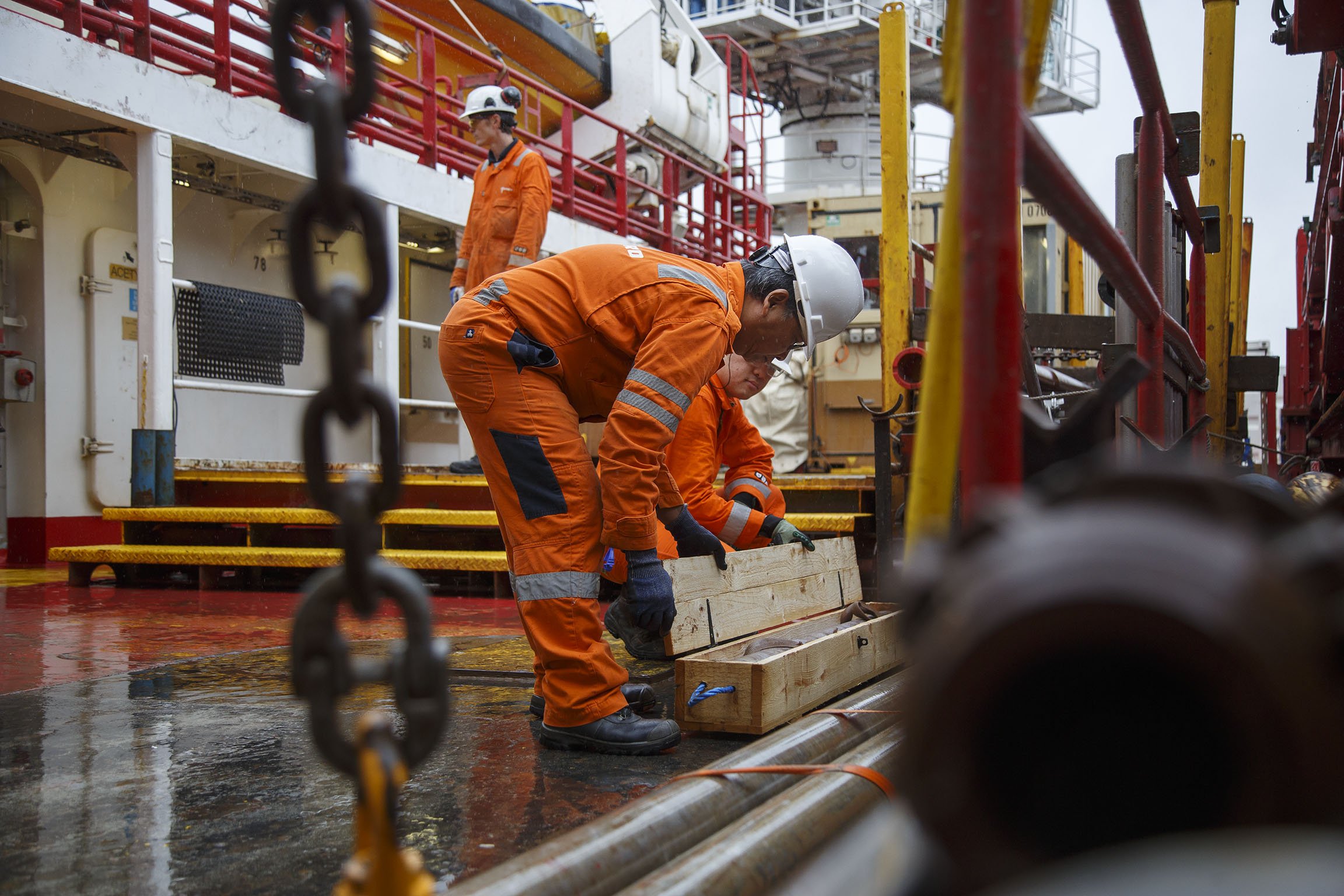
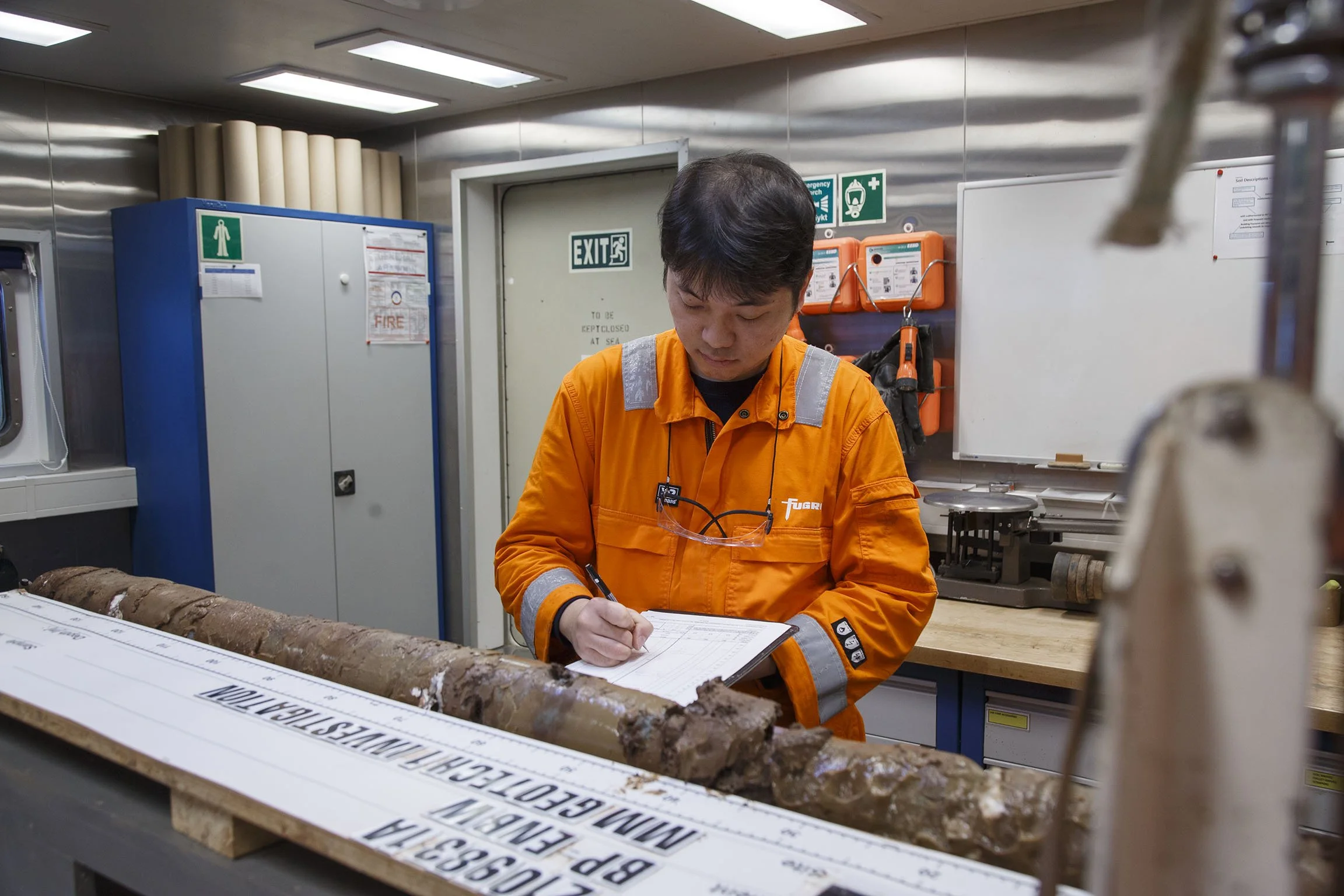


Fugro Synergy’s Party Chief, Jim Bridge

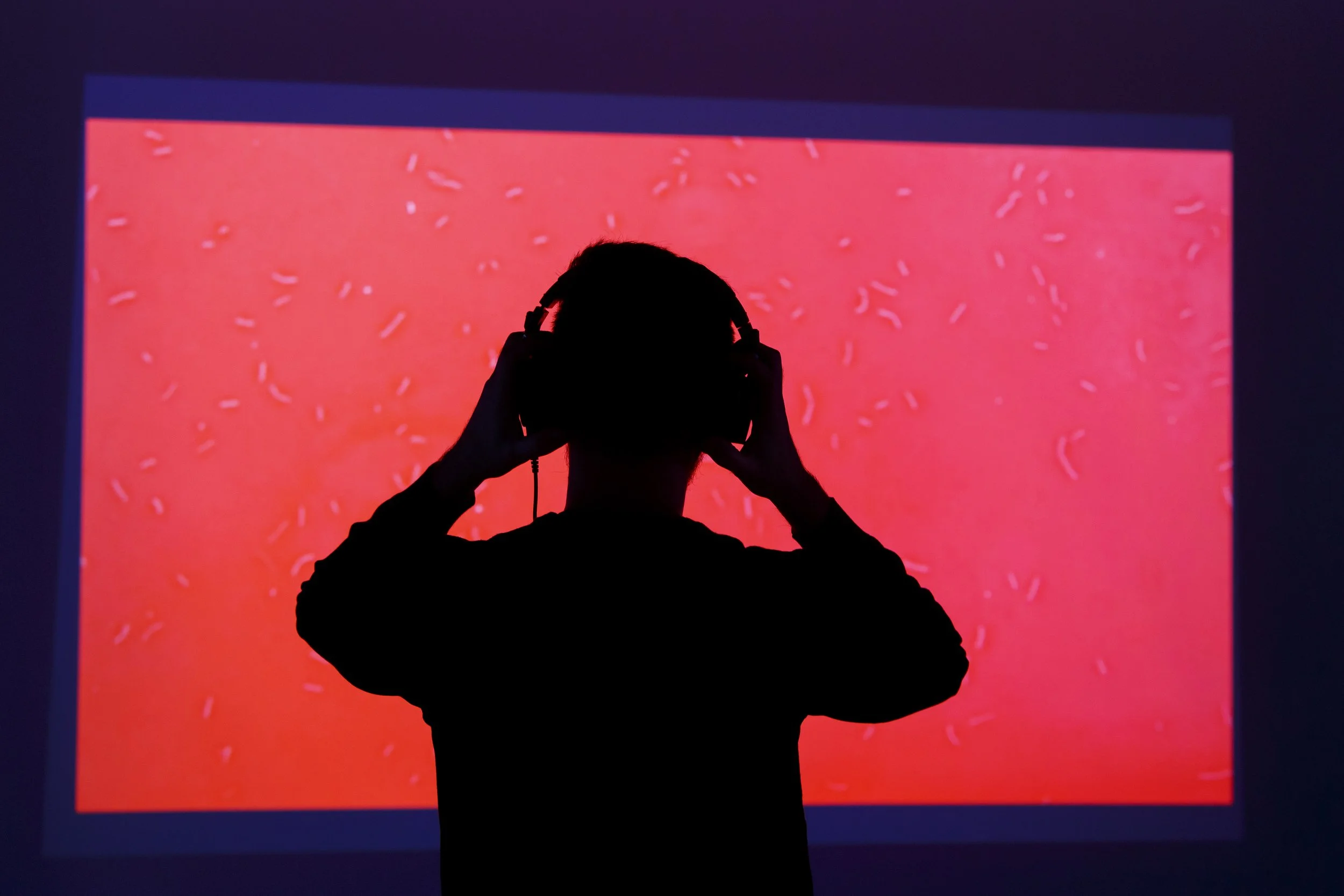
School of Digital Arts (SODA) Opening at Manchester Metropolitan University – Event Photography
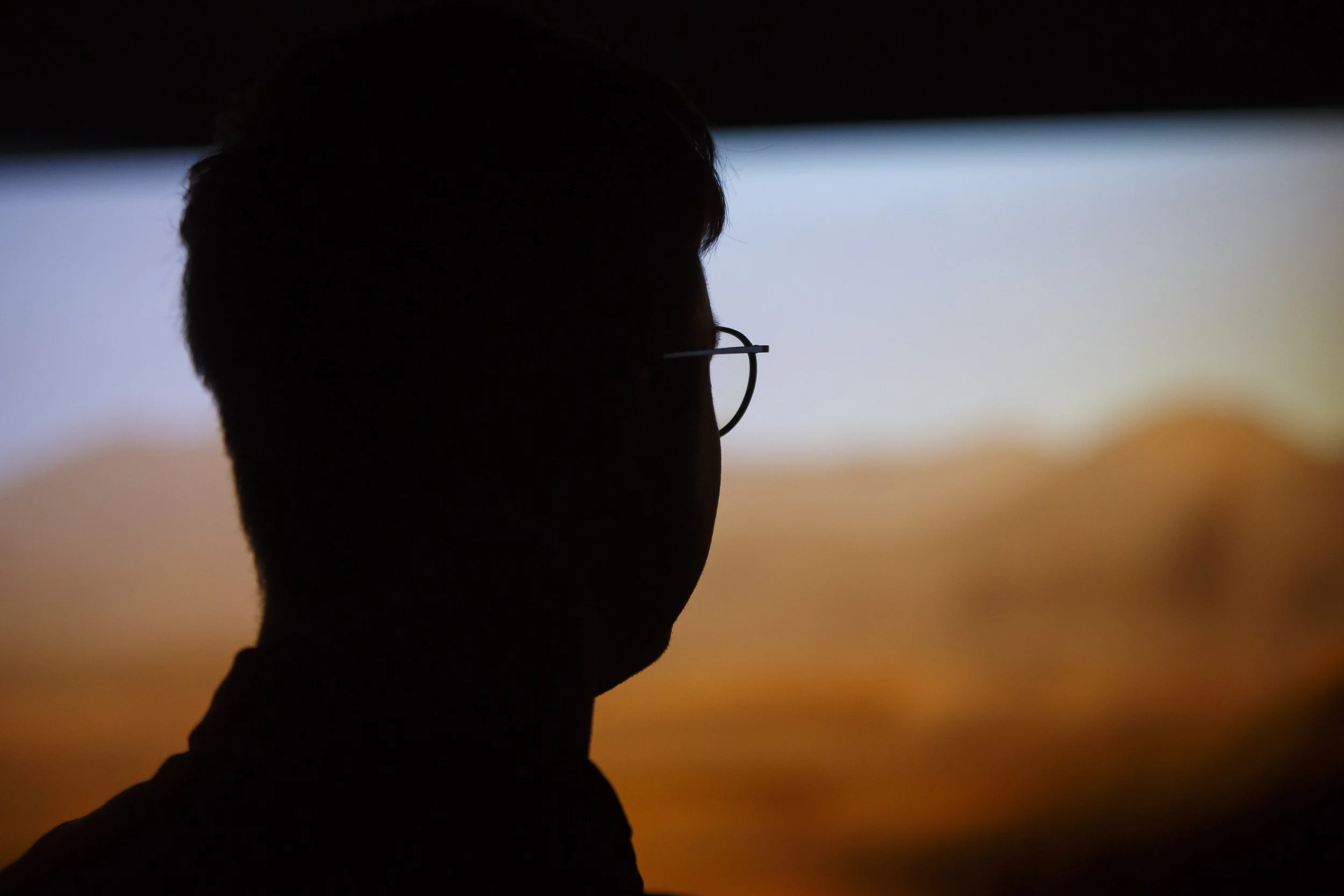
The opening of the School of Digital Arts (SODA) at Manchester Metropolitan University marked an important moment for creative education in the UK and for the cultural life of Manchester itself. Designed as a centre for innovation in digital storytelling, film, animation, photography, sound, gaming and immersive media, the new SODA building represents a major investment in the future of the creative industries.

The opening of the School of Digital Arts (SODA) at Manchester Metropolitan University marked an important moment for creative education in the UK and for the cultural life of Manchester itself. Designed as a centre for innovation in digital storytelling, film, animation, photography, sound, gaming and immersive media, the new SODA building represents a major investment in the future of the creative industries.

Events like this are significant not only for the institutions involved but also for the wider cultural landscape of the city. Documenting them through professional photography ensures that these moments are preserved as part of Manchester’s evolving creative history.

A Major Milestone for Creative Education in Manchester
The new School of Digital Arts at Manchester Metropolitan University was created to bring together students, researchers and industry professionals working across digital and creative disciplines. Located in the centre of Manchester, the building provides purpose-built studios, production spaces and collaborative environments designed to support the next generation of filmmakers, photographers, designers and digital artists.

The official launch event attracted an impressive range of guests from politics, film and music. Among those attending were Peter Mandelson, Andy Burnham, Oscar-winning director Danny Boyle, and Manchester musician and composer Barry Adamson.
Their presence highlighted the importance of the project and the role that institutions like SODA will play in shaping the future of digital creativity in the UK.

The Importance of Photographing Cultural and Institutional Events
Photography plays a vital role in documenting events that mark significant moments for universities, cultural organisations and cities. While speeches and announcements define the official narrative of an event, photography captures the atmosphere, the people and the interactions that bring those moments to life.

Images from the opening of a new building or institution quickly become part of an organisation’s visual archive. Years later they are often used in publications, exhibitions, press features and anniversary retrospectives. A well-observed photograph can communicate the significance of an occasion instantly, providing a visual record that will remain relevant long after the event itself has passed.

Professional event photography also allows institutions to communicate their identity and ambitions. In the case of the SODA launch, the photographs reflect the collaboration between academia and the creative industries, the architectural identity of the building, and the sense of energy surrounding the new school.
These visual narratives help organisations present themselves to prospective students, partners and the media.

Capturing the Atmosphere of the SODA Launch
The opening event for the School of Digital Arts was filled with moments that reflected both the prestige of the occasion and the creative spirit of the institution. Guests explored the building’s studios and digital facilities, viewed demonstrations of student work and spoke about the future of creative education in Manchester.

From a photographic perspective, events like this require careful observation and an ability to anticipate moments before they happen. Conversations between prominent figures, reactions from audiences during speeches and informal interactions between guests all contribute to the visual story of the event.
Alongside documentary images of people, the architecture of the SODA building itself also becomes an important subject. The spaces in which creative work will take place in the future are part of the narrative of the launch, providing context for the institution’s ambitions.

Manchester’s Role in the Creative Industries
The opening of the School of Digital Arts reinforces Manchester’s reputation as one of the UK’s most important creative cities. For decades the city has been a centre for music, film, television and digital media, producing artists, filmmakers and innovators whose work has had international impact.

Institutions like SODA strengthen that ecosystem by providing students with direct connections to industry and access to the technology shaping the future of storytelling. The launch of the school represents another step in Manchester’s continuing evolution as a hub for digital creativity.
Photographing events connected to these developments contributes to the broader visual history of the city. Images captured at these moments become part of the record of how Manchester continues to reinvent itself as a centre for culture, media and innovation.

The Role of the Event Photographer
Photographing high-profile events requires a combination of documentary awareness, portraiture skills and editorial judgement. The photographer must be able to move through the event discreetly while remaining alert to moments that reveal the significance of the occasion.

The most effective images often emerge from small details: a conversation between guests, the expression of an audience listening to a speech, or a quiet moment that reflects the atmosphere of the room. These photographs collectively build a visual narrative that goes beyond simple documentation.
For universities, cultural organisations and public institutions, this kind of visual storytelling is essential. Photographs from launch events, conferences and cultural gatherings are used across websites, publications, press releases and long-term promotional campaigns.

Preserving the Beginning of a New Chapter
The opening of the School of Digital Arts at Manchester Metropolitan University marks the beginning of a new chapter for creative education in the city. It brings together technology, storytelling and artistic practice in a way that reflects the direction of modern media industries.

Photographs from the event help preserve that moment. They record the people who were present, the atmosphere of the launch and the sense of anticipation surrounding the new institution.
In years to come, these images will remain as part of the visual history of both the university and the city of Manchester, documenting the moment when the School of Digital Arts opened its doors and began shaping the next generation of creative talent.
Event Photography: Princess Anne Visits The Station, Bristol | UK Youth Commission
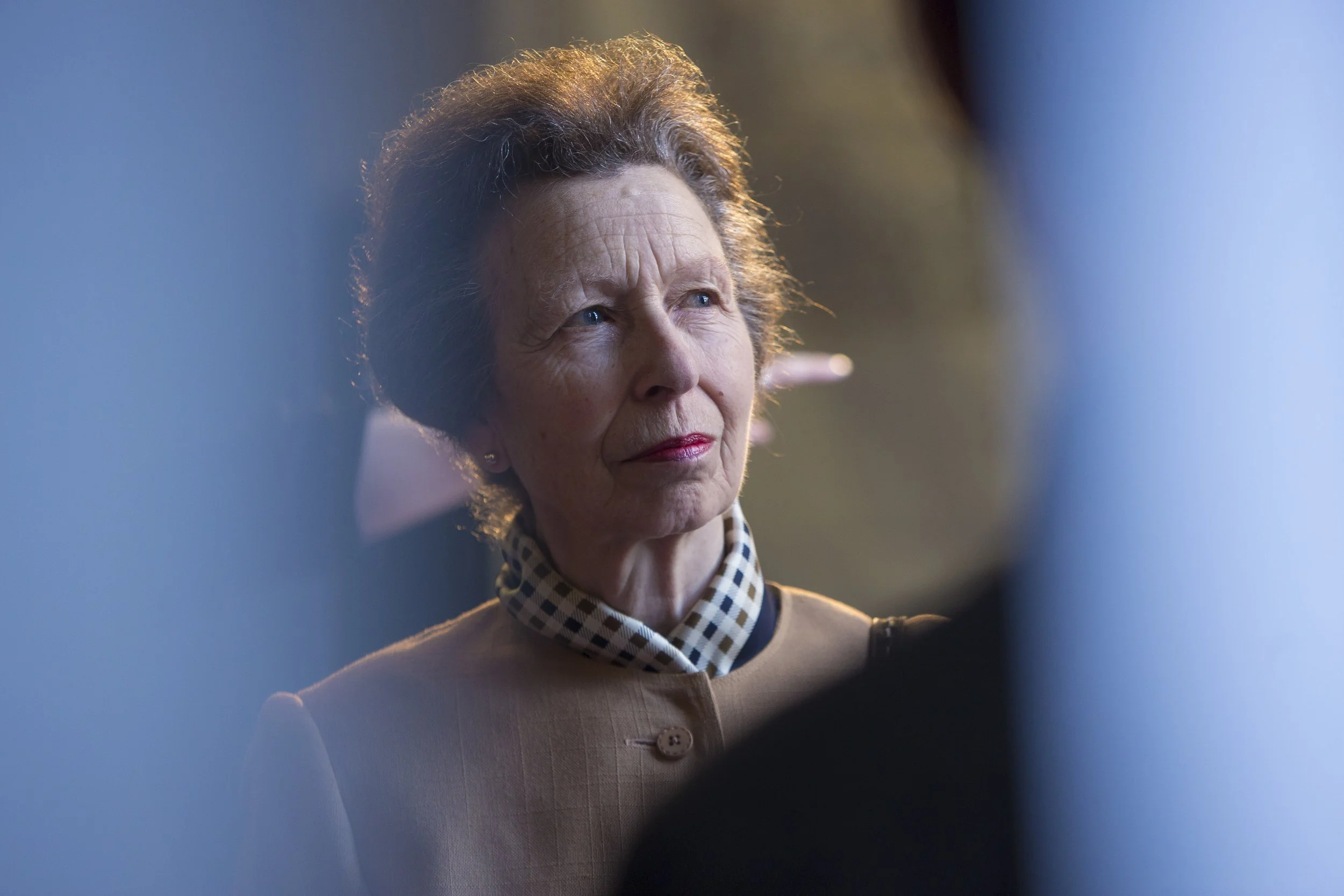
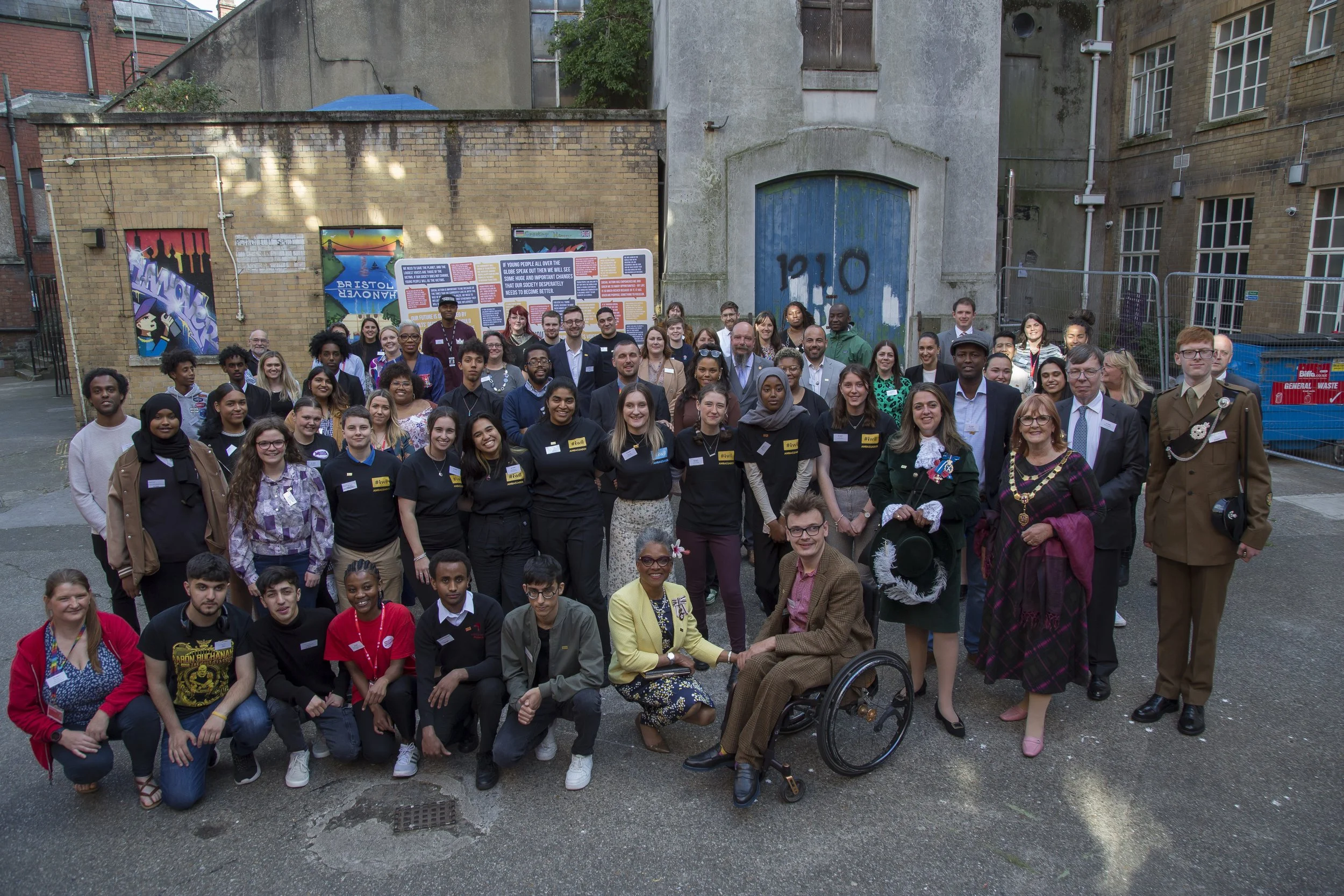
I was commissioned by UK Youth to photograph the visit of Her Royal Highness Princess Anne to The Station, a youth centre located in Bristol. The visit showcased UK Youth’s ongoing programmes supporting young people across the region, highlighting educational initiatives, community engagement, and opportunities for youth development.
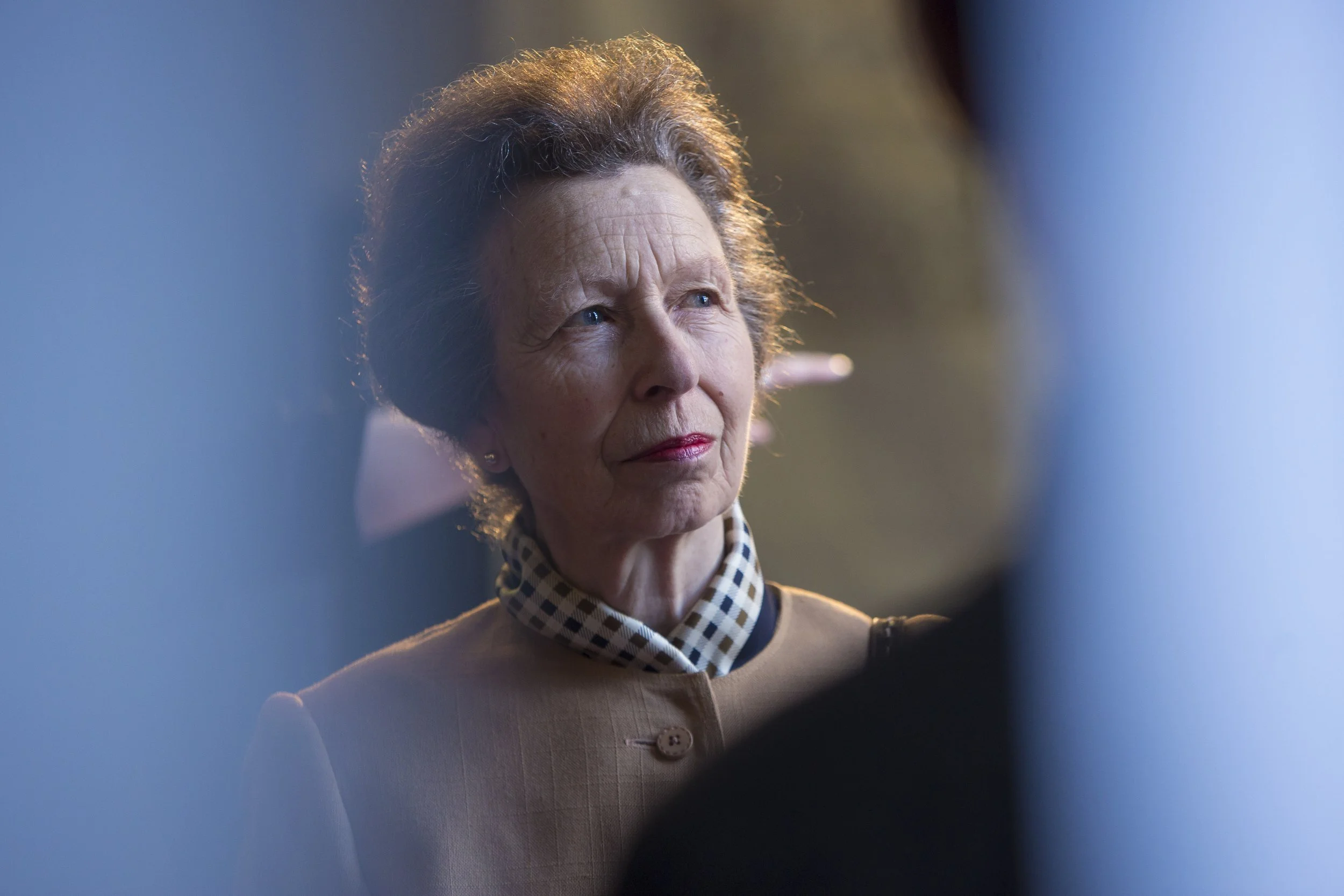
I was commissioned by UK Youth to photograph the visit of Her Royal Highness Princess Anne to The Station, a youth centre located in Bristol. The visit showcased UK Youth’s ongoing programmes supporting young people across the region, highlighting educational initiatives, community engagement, and opportunities for youth development.

Photographing high-profile events such as this requires precision, discretion, and professional planning. From capturing key interactions to documenting the environment of The Station, the aim was to provide a comprehensive record of the visit suitable for press releases, social media, organisational archives, and promotional use.

Documenting Royal Visits with Professional Photography
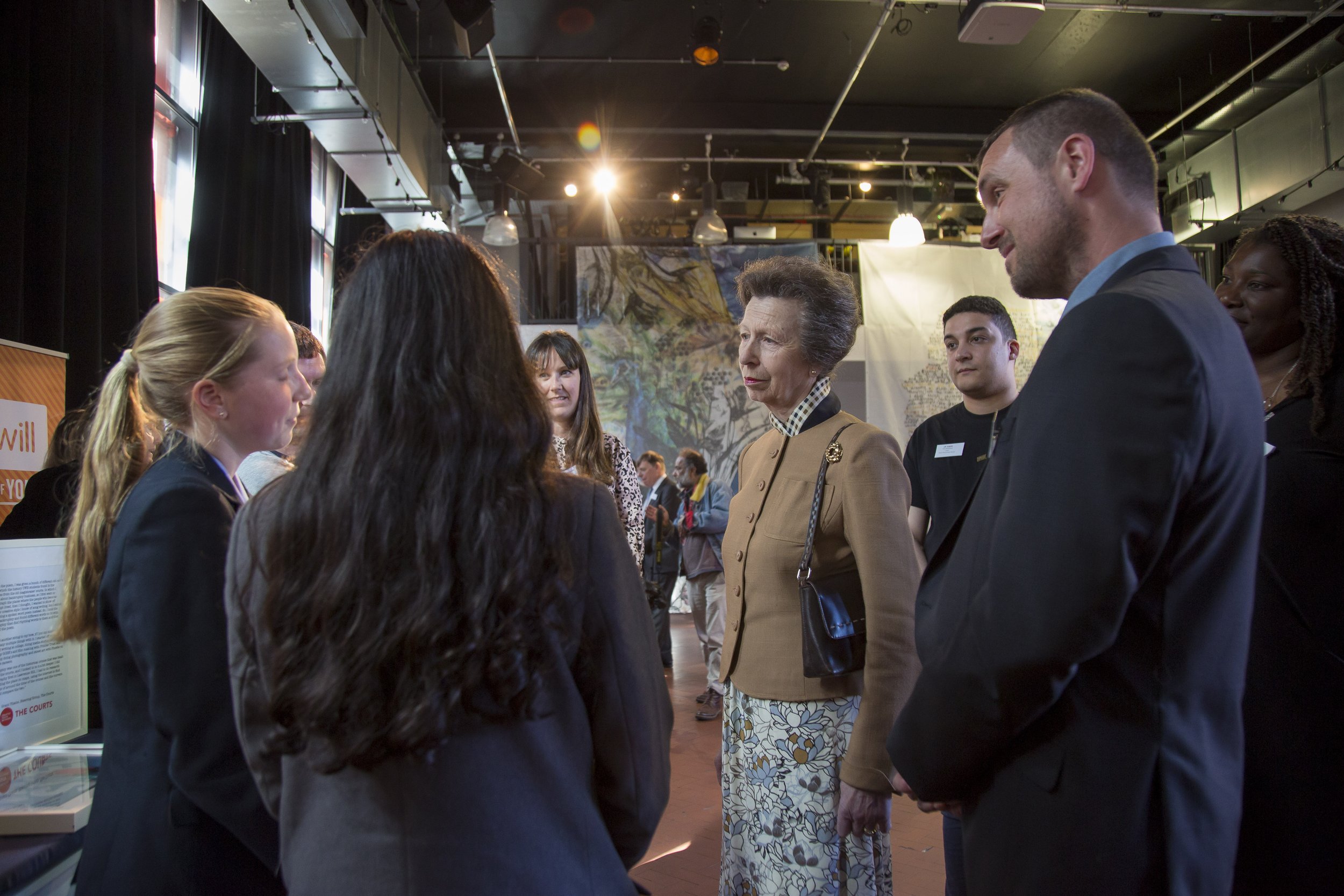
Royal visits present unique opportunities and responsibilities for photographers. Beyond formal protocol, photography must capture interactions, expressions, and moments that demonstrate the impact of the visit. At The Station, Princess Anne met young people, engaged with staff, and observed educational and creative activities. Each of these moments contributes to the visual record of the day, illustrating the work of UK Youth and the centre’s role in supporting youth engagement in Bristol.

Effective photography of royal visits requires balancing visibility and access with sensitivity. Images must respect privacy and protocol while clearly showing the purpose and outcomes of the visit. Capturing these moments with professional clarity ensures that both the organisation and the wider public can understand the significance of the event.

Capturing the Work of UK Youth
UK Youth operates across the UK to provide programmes that support young people’s education, skills development, and personal growth. Documenting events like the Princess Anne visit enables the organisation to showcase its impact. Photographs of staff interacting with participants, young people attending workshops, and community activities provide tangible evidence of the programmes in action.

These images serve multiple purposes. They are used in press materials, annual reports, newsletters, social media, and fundraising campaigns. Professional photography ensures that every key moment is preserved, creating a visual narrative that supports organisational objectives while accurately reflecting the event.
Bristol as a Centre for Youth Programmes
The Station in Bristol is a hub for youth engagement, offering spaces for education, mentorship, and community activities. UK Youth’s work at The Station contributes to the broader goal of increasing opportunities for young people, particularly in areas such as personal development, STEM education, and creative programmes.

Photographs from high-profile visits help communicate this work to the public. Images of participants interacting with Princess Anne, engaging in workshops, or presenting projects provide insight into the centre’s daily operations and achievements. For residents, stakeholders, and potential supporters, these photographs are a clear demonstration of the organisation’s positive impact.

The Role of Photography in Royal and Organisational Events
Professional event photography is essential for organisations like UK Youth. Well-documented events communicate credibility, professionalism, and transparency. Capturing royal visits requires careful planning: from the timing of key moments to framing images that reflect the significance of the visit.
Images must balance documentary and editorial objectives. Portraits of dignitaries, interactions with participants, and wider environmental shots all contribute to a comprehensive visual record. These photographs not only provide immediate use in press and marketing but also serve as a long-term archive for the organisation.

Preserving a Professional Record of the Visit
Princess Anne’s visit to The Station represents an important moment in UK Youth’s ongoing programmes. Photography captures the formality of the royal engagement alongside the everyday interactions that demonstrate the organisation’s work in action.
A well-documented visit supports organisational storytelling. By providing a clear, professional visual record, photographs help convey the impact of UK Youth’s programmes to funders, stakeholders, and the wider community. They also ensure that this significant visit is preserved for historical reference, reflecting both the importance of the royal engagement and the role of The Station in Bristol’s youth development landscape.

Why Event Photography Matters for UK Youth Programmes
High-quality photography is more than a record; it is a communication tool. For UK Youth, professional photography of events such as royal visits:
Demonstrates the success and reach of programmes
Enhances press coverage and social media engagement
Supports fundraising and stakeholder reporting
Creates a historical archive for future reference
As an event photographer, documenting these occasions provides a lasting visual record that communicates professionalism, scale, and the tangible outcomes of youth initiatives. The images help organisations like UK Youth build trust with partners and supporters, showing the real-world impact of their work.
Conclusion
Documenting the Princess Anne visit to The Station, Bristol, was an important professional assignment that highlights the role of photography in capturing institutional, community, and educational milestones. Through careful composition, attention to detail, and respect for protocol, these images provide UK Youth with a long-lasting visual record that communicates both the significance of the visit and the organisation’s ongoing work.

British Cycling Team Photography: New Kalas Kit Shoot at Manchester Velodrome
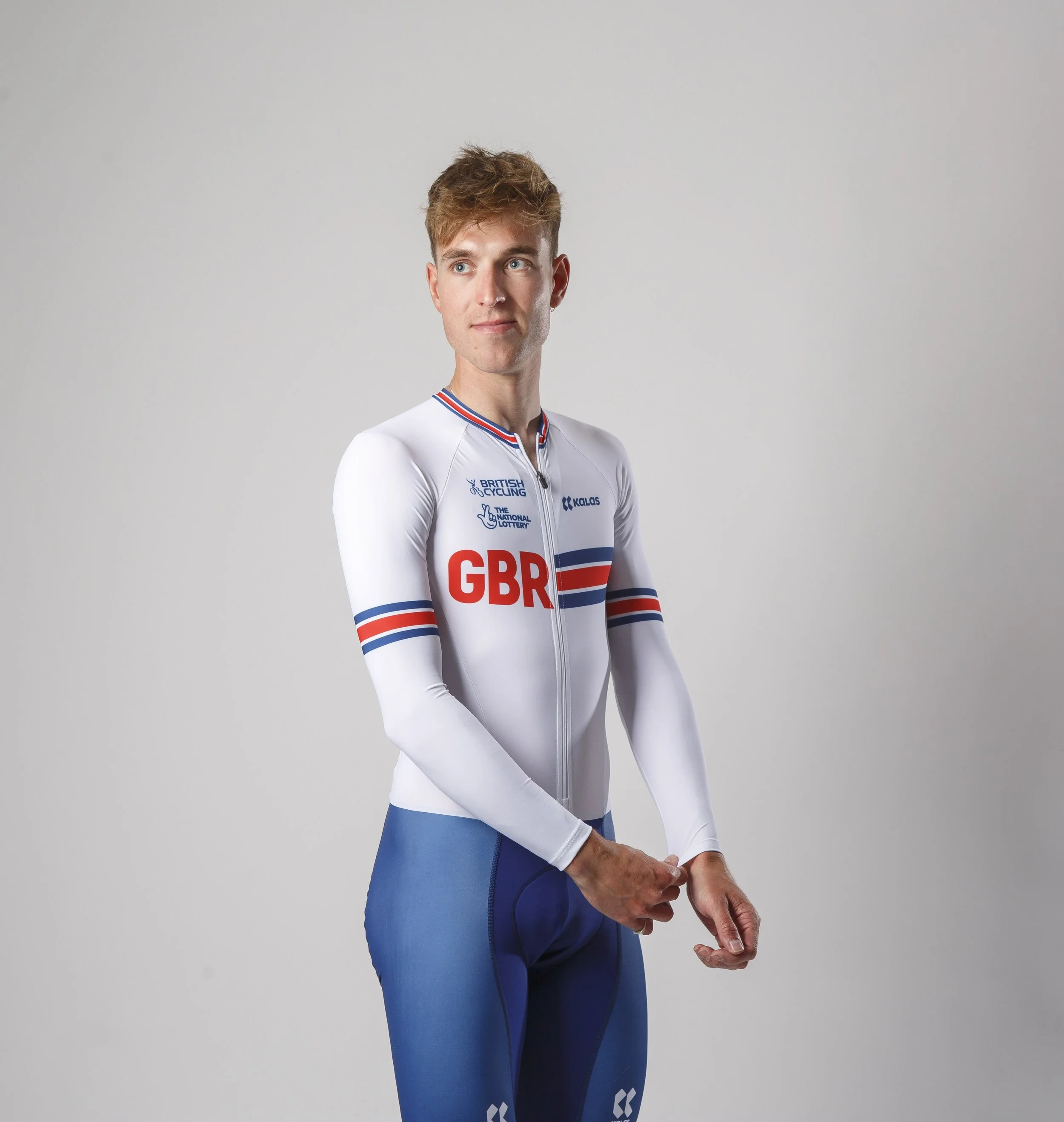
It’s always great working with video production company What Media. This time to produce images of the latest British Cycling team jersey by Kalas
It’s always a pleasure collaborating with video production company What Media, and this time the project involved producing a complete series of images of the latest British Cycling team kit by Kalas. The shoot took place at the Manchester Velodrome, capturing the team both on and off their track bikes in a variety of settings, from studio photography to dynamic on-track action shots. As a professional photographer, I focused on highlighting the design, functionality, and style of the new kit while telling the story of the team and their environment.
Photographing the British Cycling Team in Action
The shoot provided numerous opportunities to photograph the British Cycling team in their element. I captured cyclists wearing the new Kalas kit inside the velodrome, on their track bikes, and in areas where all the bicycles are stored and maintained. These behind-the-scenes shots showcase the athletes interacting with their equipment and provide insight into the preparation and technical side of professional cycling.

Close-up photography played a key role, allowing me to document the details of the new kit, including team branding, fabric, and fit. I photographed cyclists putting on their kit, securing shoes, and preparing for training sessions, creating intimate, human-focused images that complement the action-oriented shots.

Studio Photography and Detail Shots
In addition to the velodrome environment, I conducted studio photography sessions to produce clean, professional images of the cyclists wearing the new kit. This approach allowed me to focus on the kit’s details, including logos, textures, and colorways, while ensuring consistent lighting and composition. Studio photography is essential for commercial use, marketing campaigns, and media promotion, making it a key part of the overall shoot strategy.

Outdoor and On-Bike Photography
The Manchester Velodrome surroundings offered excellent locations for photographing the cyclists outside, on their bicycles, and in motion. These images highlight the versatility of the Kalas kit, showing how it performs in different conditions and settings. By capturing the cyclists on track bikes in the outdoor areas around the velodrome, I was able to produce dynamic, visually compelling images that showcase both the athletes and their equipment.

Behind the Scenes at the Velodrome
Documenting the team in the Velodrome’s changing rooms added another layer to the project. I photographed cyclists as they prepared for training, putting on kit, adjusting shoes, and getting ready for action. These behind-the-scenes images provide context and authenticity, showing the human side of professional cycling and the preparation required to perform at the highest level.

The Importance of Collaboration and Photography
Working with What Media allowed me to capture both the creative and technical aspects of the shoot. Coordinating studio, on-track, and behind-the-scenes photography ensured that every image told part of the story of the British Cycling team and the new Kalas kit. This comprehensive approach is essential for creating marketing content, editorial imagery, and promotional material that highlights the team’s professionalism, equipment, and athleticism.

Conclusion: A Complete Visual Record of the British Cycling Kit
This shoot produced a full range of imagery, from studio portraits to action shots, behind-the-scenes preparation, and outdoor cycling photography. By focusing on the athletes, their equipment, and the details of the new Kalas kit, the series provides a compelling visual narrative suitable for media campaigns, commercial use, and portfolio work. Collaborating with What Media and the British Cycling team made this project both professionally rewarding and creatively inspiring, resulting in images that showcase the cutting-edge design and functionality of the new kit while celebrating the skill and dedication of the athletes.



TJX Headquarters Photography: Capturing Staff and Lifestyle in the New Watford Office
I recently completed a commission for Vicky Fagan at film production company Fagan Jones to produce a full series of campaign images for TJX’s new office building at their headquarters in Watford, UK. The project focused on capturing both the design of the building and the way people interact with the space, producing images that feel authentic, professional, and lifestyle-oriented.

I recently completed a commission for Vicky Fagan at film production company Fagan Jones to produce a full series of campaign images for TJX’s new office building at their headquarters in Watford, UK. The project focused on capturing both the design of the building and the way people interact with the space, producing images that feel authentic, professional, and lifestyle-oriented.

Photographing Staff in Social and Collaborative Spaces
A key focus of the shoot was documenting staff in the breakout rooms and social areas of the new headquarters. I photographed people having informal conversations, sharing laughs, and enjoying their workday, creating images that convey a positive and welcoming environment. The relaxed, lifestyle-focused photography highlights how TJX’s office design encourages collaboration, creativity, and employee wellbeing.

Meetings, Presentations, and Professional Interactions
In addition to casual social spaces, I photographed staff attending presentations and participating in group meetings. Capturing employees engaging with each other professionally provides context to the office environment while maintaining a natural and authentic feel. These images are perfect for campaign use, illustrating both the functionality of the office spaces and the culture of teamwork at TJX.

Lifestyle and Leisure Photography in the Workspace
I also photographed people relaxing in the café, using the computer bar, and enjoying their lunch breaks. Capturing these moments of downtime adds a human dimension to the office photography, showing the balance between productivity and relaxation. Outdoor spaces, including the secret rooftop garden, were also featured, with staff enjoying fresh air and informal social interactions. These images emphasize the modern, lifestyle-driven design of the office and its focus on employee comfort.

Photography Approach and Techniques
The shoot combined environmental portraiture, candid lifestyle photography, and interior architectural photography. By photographing people naturally interacting with the space, I was able to produce a series of images that feel authentic, dynamic, and visually engaging. Attention to composition, natural light, and the interaction between people and their surroundings was key to creating a versatile set of campaign-ready images.

Conclusion: A Complete Visual Story of TJX Headquarters
This commission with Fagan Jones captured TJX’s new office in Watford as a lively, professional, and human-centered workplace. From collaborative breakout rooms to rooftop gardens, cafés, and meeting areas, the photography tells the full story of a modern corporate environment designed for both productivity and wellbeing. The resulting images are suitable for marketing campaigns, corporate communications, and professional portfolios, showcasing TJX’s commitment to workplace design and employee experience.






Conference Photography for The Invisible Orthodontist
It was a real pleasure to photograph The Invisible Orthodontist’s conference in Murcia, Spain earlier in the year. Fantastic weather and accommodation, even time for a quick dip in the pool between sessions and great to see everyone letting their hair down at the conference dinner.
I’m looking forward to the next one!

It was a real pleasure to photograph The Invisible Orthodontist’s conference in Murcia, Spain earlier in the year. Fantastic weather and accommodation, even time for a quick dip in the pool between sessions and great to see everyone letting their hair down at the conference dinner.
I’m looking forward to the next one!


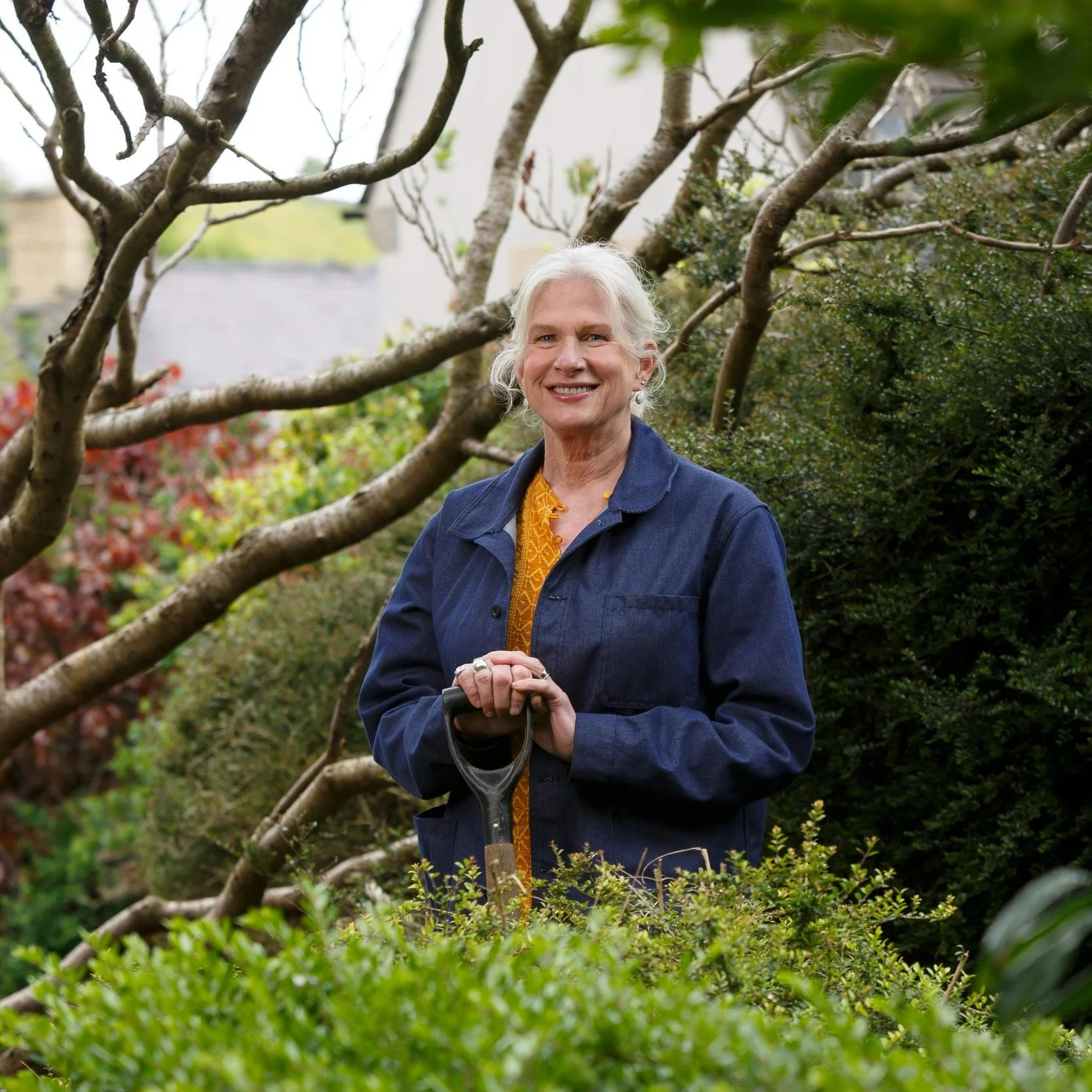
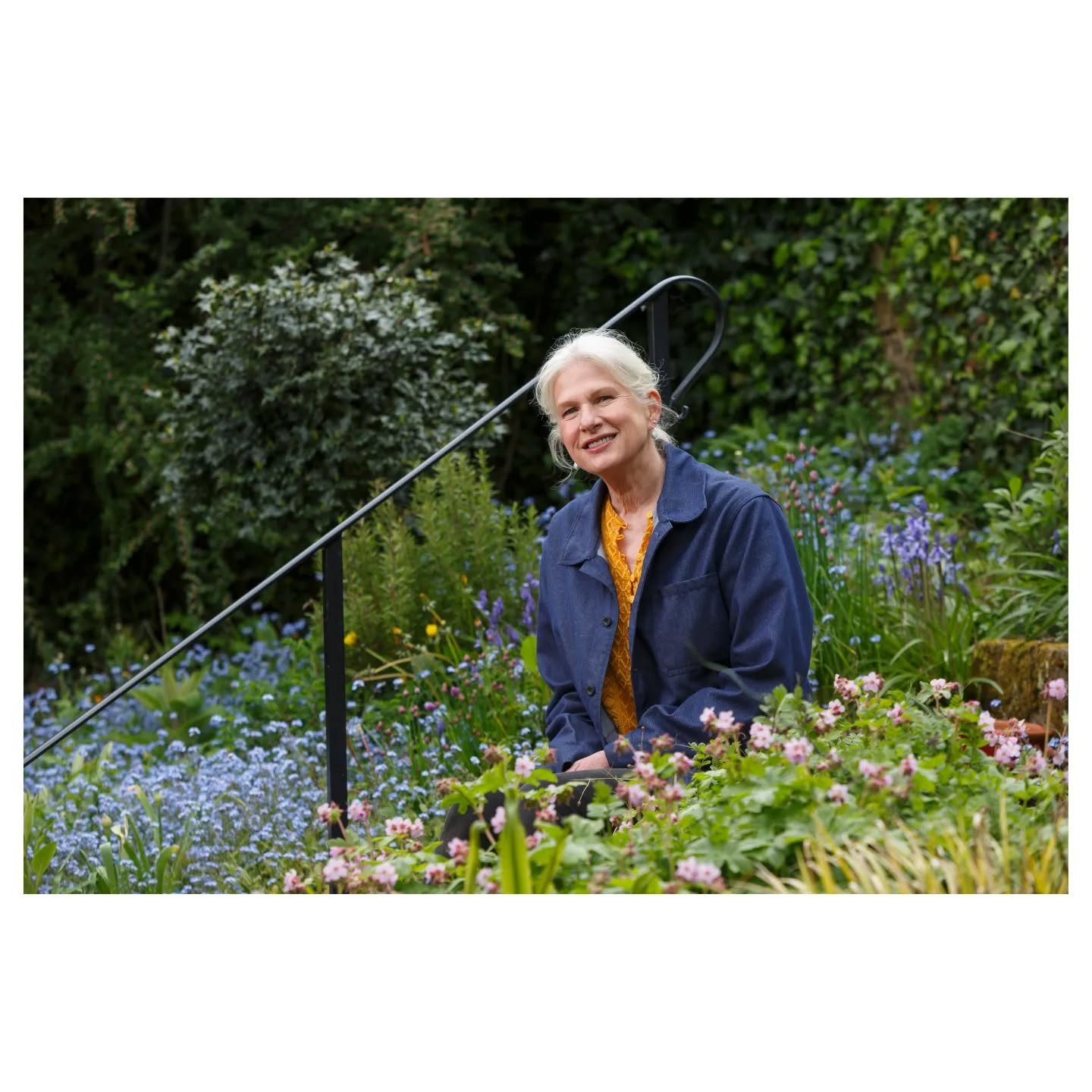
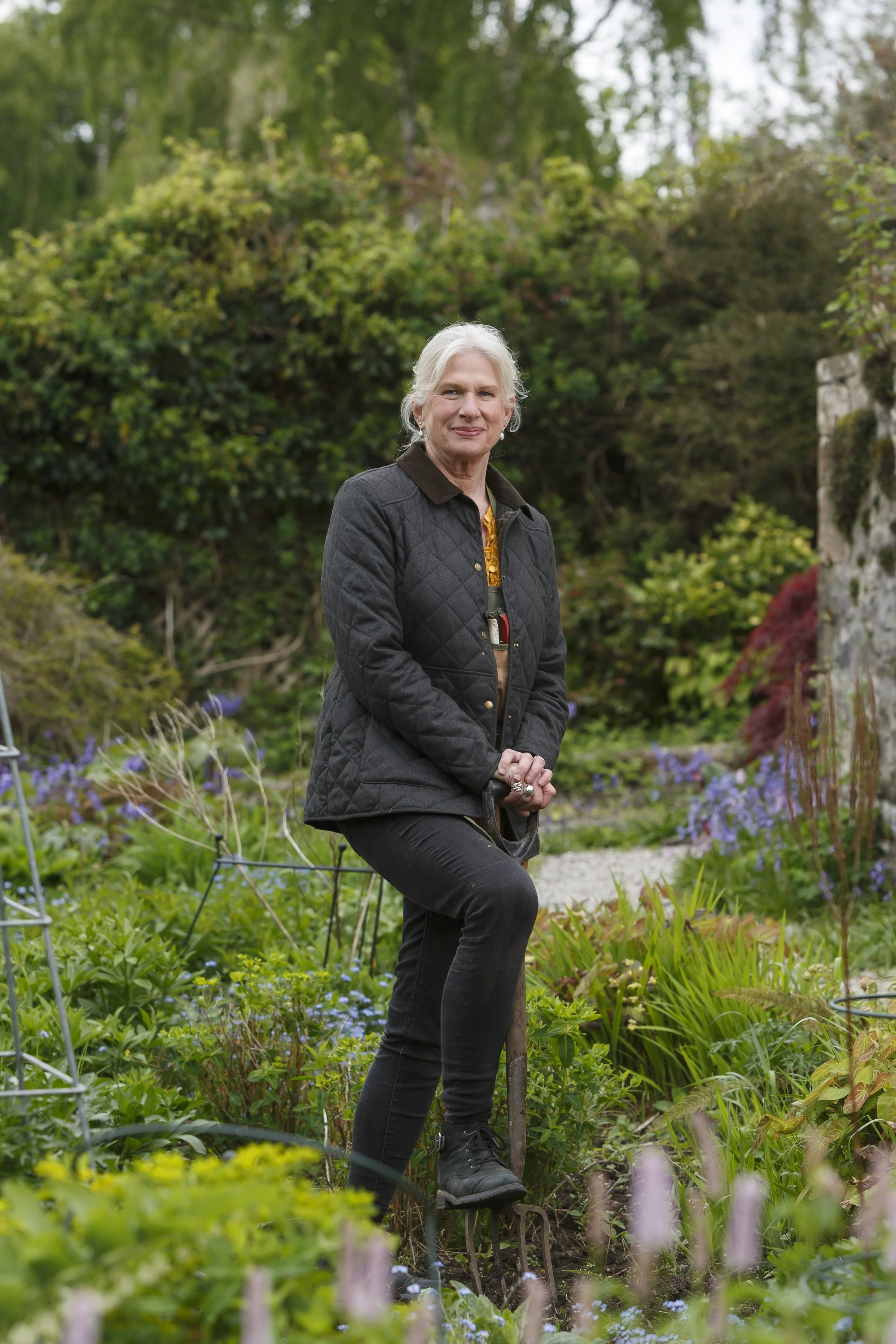
Ann Treneman for The Times
It was a pleasure to photograph Ann Treneman for The Times recently, a shoot that resulted in my first cover for The Times Weekend supplement and my first image on the cover of The Times newspaper.

It was a pleasure to photograph Ann Treneman for The Times recently, a shoot that resulted in my first cover for The Times Weekend supplement and my first image on the cover of The Times newspaper.
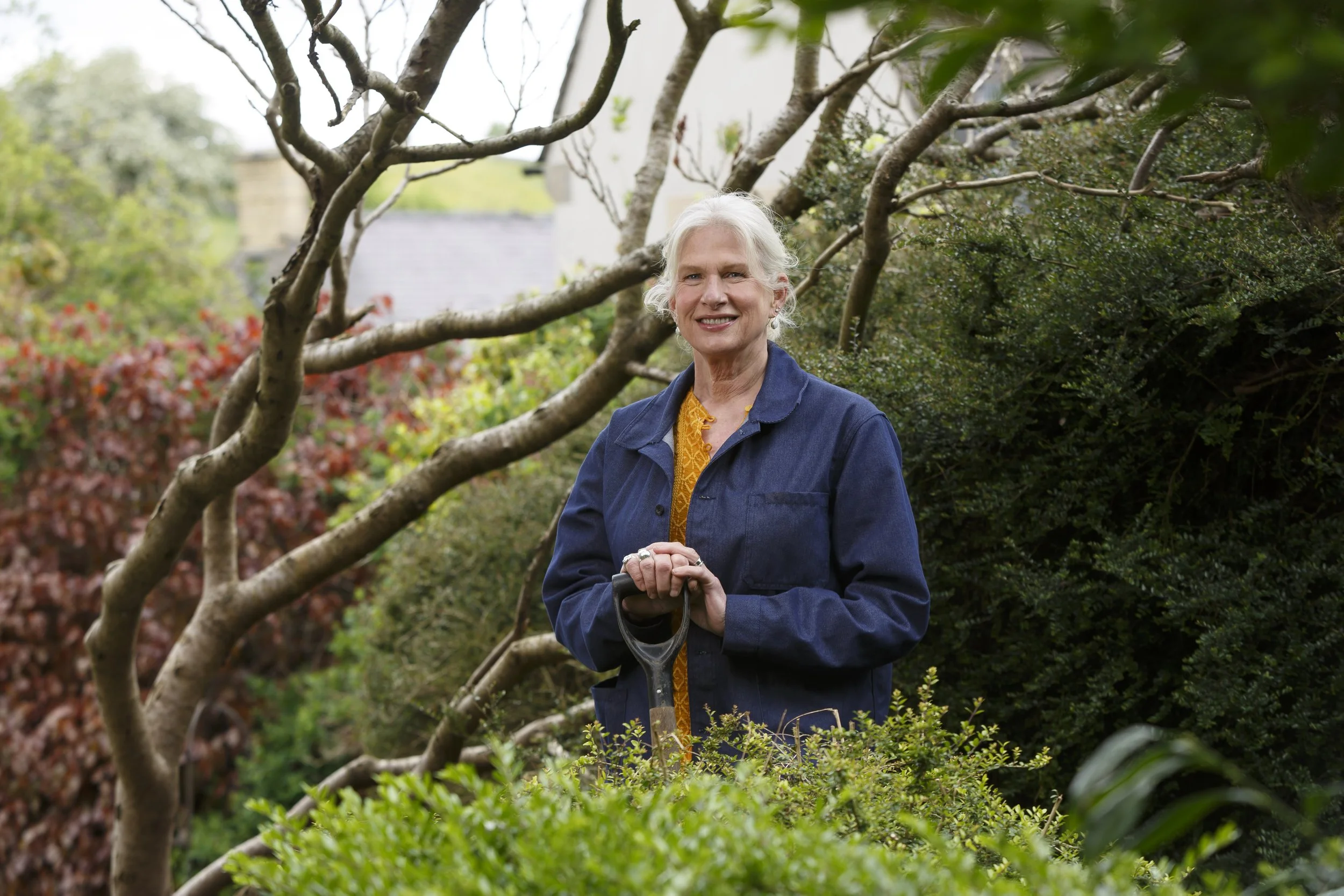
Until September 2015, Ann was The Times Parliamentary sketchwriter after which she became the paper’s chief theatre critic. A keen weekend gardener, Ann subsequently studied horticulture and landscape architecture with both the RHS and the University of Sheffield.
The Times article details Ann’s preparations for her garden designed for this year’s Chelsea flower show. The shoot took place in Ann’s garden in Bakewell, Derbyshire.


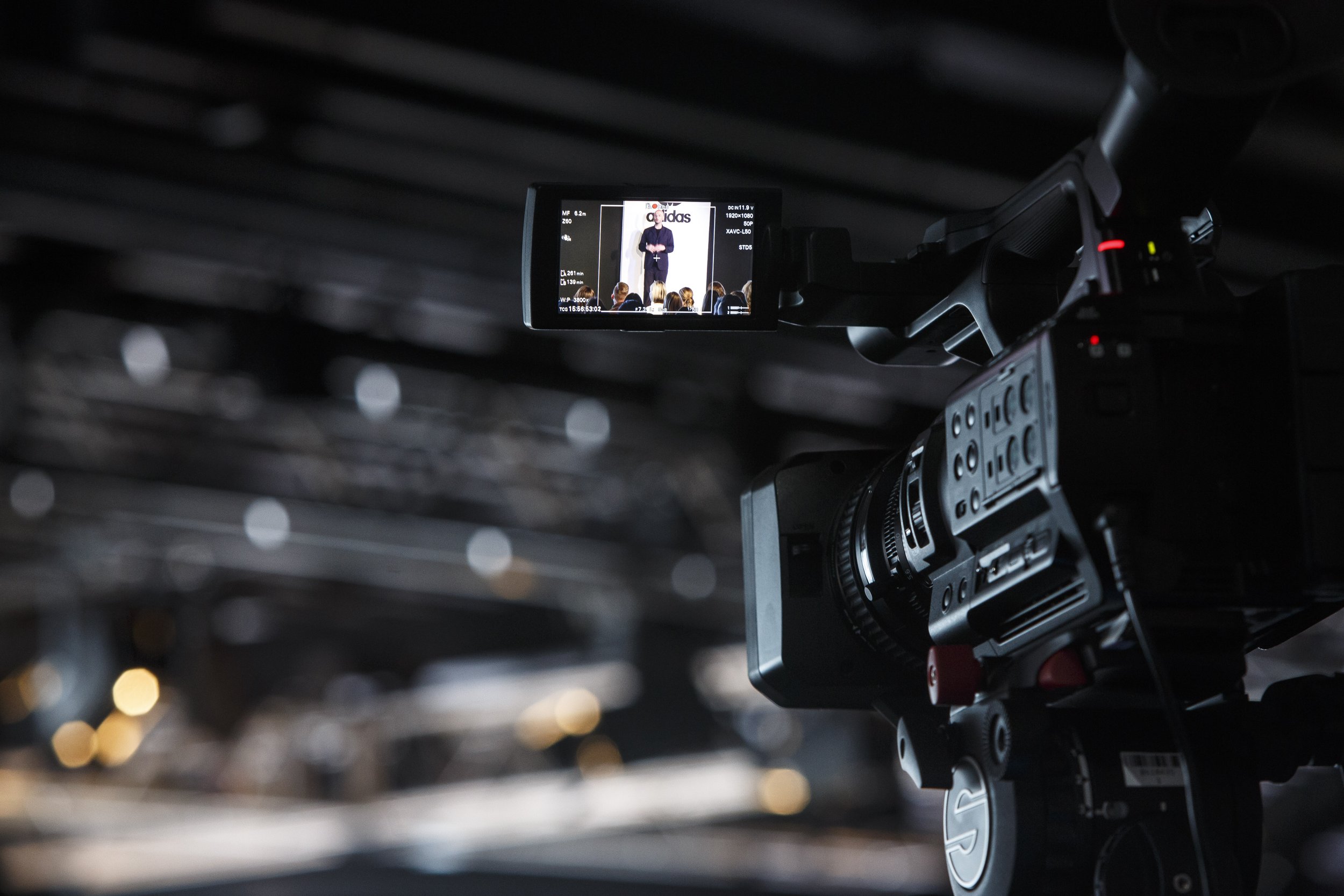
Adidas UK
Some highlights from my recent shoot of the Spring/Summer 2023 sales and marketing meeting for Adidas UK
Spring/Summer 2023 Adidas UK Sales and Marketing Meeting Photography
I recently photographed the Spring/Summer 2023 sales and marketing meeting for Adidas UK, documenting the event at their UK headquarters. The meeting brought together key staff from across departments to review performance, plan strategies, and align on marketing initiatives for the upcoming season.

Capturing Corporate Collaboration and Strategy
Corporate photography for events like this focuses on capturing interactions, presentations, and collaborative moments. The Spring/Summer 2023 meeting was an opportunity to highlight teamwork, strategic discussions, and the creative energy driving Adidas UK’s sales and marketing efforts. Photography helps communicate the professionalism and cohesion of the company while showcasing the dynamic environment in which staff operate.

The Significance of Adidas in Sport and Culture
Adidas is a globally recognised brand with influence across sport, fashion, music, and lifestyle culture. Working with a company of this stature allows for imagery that reflects not only corporate professionalism but also the cultural and creative impact of the brand. Documenting meetings like this provides a behind-the-scenes perspective of how Adidas UK continues to innovate and maintain its leadership in both the sportswear and lifestyle markets.

Professional Event Photography for High-Profile Brands
Photography at corporate meetings requires attention to detail, capturing both formal presentations and informal interactions. Images from this shoot can be used across internal communications, marketing materials, and social media campaigns. For Adidas UK, this documentation supports the visual narrative of a collaborative and forward-thinking company culture.

By recording these moments, the photography illustrates the brand’s commitment to strategy, innovation, and engagement, highlighting the environment that drives its ongoing success in the global market.


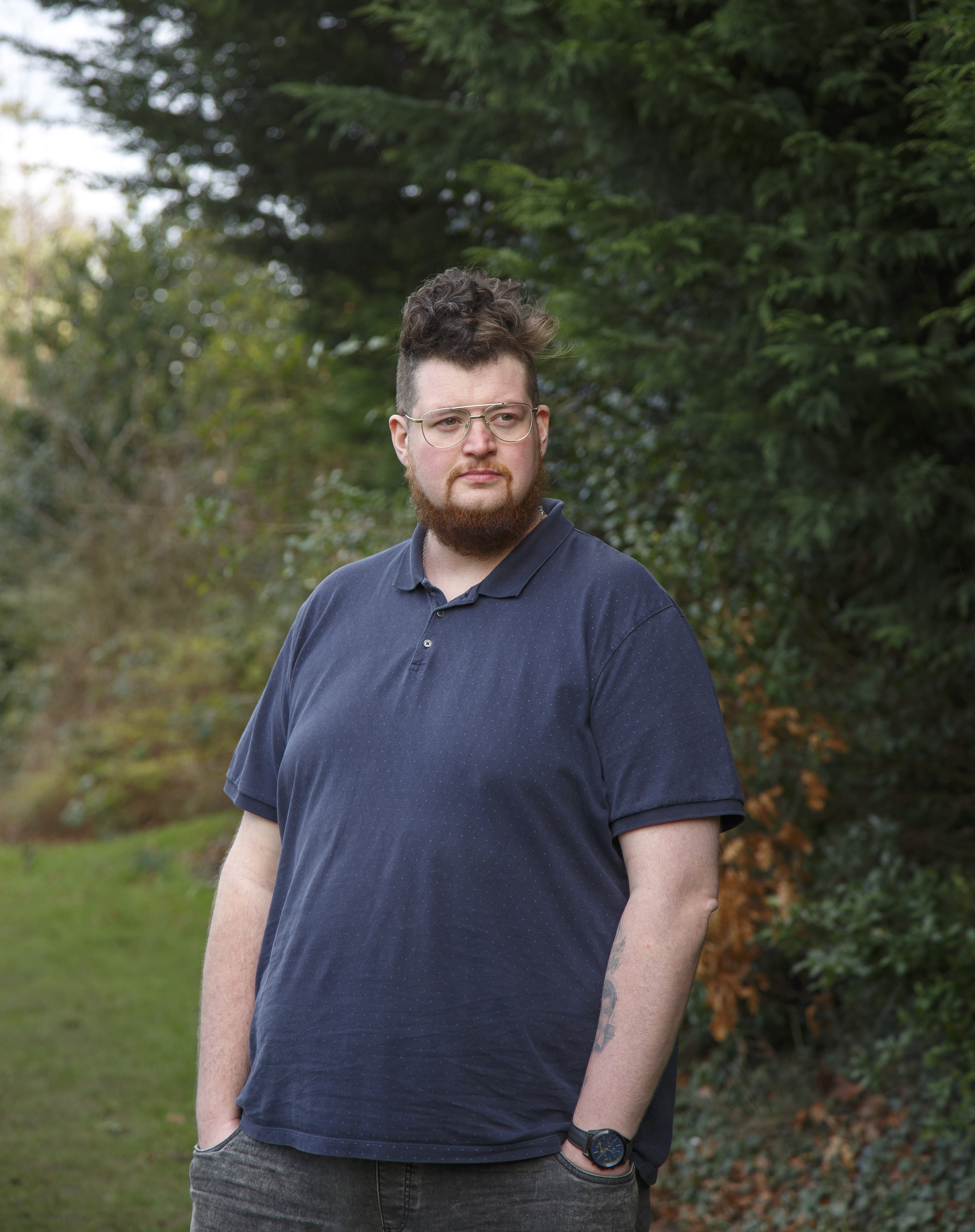
John Junior for Samaritans
Another great shoot for Samaritans, photographing mental health activist John Junior.
In 2019, John started vlogging about his experiences of mental health issues on Instagram in order "to reach out to others with mental health difficulties". In May 2020 his vlogs on Instagram caught the attention of UNILAD, who approached Junior to test Samaritans self-help app during mental health awareness week and to help raise awareness for world suicide prevention day on 10 September 2020.

Photographing Mental Health Advocate John Junior for Samaritans
I recently had the pleasure of photographing John Junior for the Samaritans, capturing his work as a mental health activist and advocate. John uses his platform to educate others about mental health challenges and to promote awareness of support services.

John Junior’s Work in Mental Health Awareness
In 2019, John Junior began vlogging about his own experiences with mental health difficulties on Instagram, aiming to reach out to others facing similar challenges. His candid and personal approach helped to connect with young people and adults alike, offering insight, guidance, and reassurance. In May 2020, his vlogs caught the attention of UNILAD, who invited him to test the Samaritans self-help app during Mental Health Awareness Week and contribute to campaigns around World Suicide Prevention Day on 10 September 2020.
The DBT for All Campaign
Following his work with Samaritans, John helped promote the "DBT for All" campaign, created in September 2020 to make dialectical behaviour therapy more widely available on the NHS. DBT is a clinically recognised therapy used to treat children, teenagers, and adults who are suicidal or demonstrate self-destructive behaviours. Through the campaign, John helped raise public awareness of the importance of accessible mental health treatments in the United Kingdom.

Speaking Out and Breaking Stigmas
John Junior speaks publicly about living with mental health conditions and has given interviews on television, radio, and in print internationally. His advocacy focuses on breaking down the stigma around mental health, providing education, and encouraging open conversations about emotional wellbeing. Photography plays a key role in documenting and promoting this work, helping to communicate his message to wider audiences.
Supporting Samaritans’ Mission
The Samaritans organisation provides vital support for anyone struggling with mental health issues or suicidal thoughts. Collaborating with John Junior on this photography project allowed me to visually contribute to their ongoing campaigns and highlight the importance of mental health awareness. Capturing these moments reinforces the human stories behind advocacy work and the significance of accessible mental health support services.


Suzanne Lacy at Whitworth Art Gallery
Suzanne Lacy
What kind of city?
A manual for social change
The Whitworth presents the first major UK presentation of multiple works of US artist Suzanne Lacy, a pioneer of social practice and community organising for almost five decades. In the wake of the Coronavirus pandemic, What kind of city? has been conceived with the artist as a project that is more than an exhibition, one that takes key works with relevance to our current context and uses them to convene people in order to start new initiatives that will actively help rebuild our city. Working around fundamental themes such as youth agency, borders, social cohesion, and work prospects for older women, the exhibition is designed to operate as an evolving manual for how we create equitable transformation. This underpins a new direction of travel for the Whitworth, as an institution that actively works for and with people across the city, one that begins with the question: after Covid, what kind of city can we make together?
Thanks again to my friends at the Whitworth for asking me to document the event opening and associated artist’s talk.
Event Photography: Suzanne Lacy – What Kind of City? A Manual for Social Change | The Whitworth, Manchester
I had the privilege of working with The Whitworth to photograph the opening of What Kind of City? A Manual for Social Change, the first major UK presentation of works by US artist Suzanne Lacy, a pioneer of socially engaged practice and community organising for nearly five decades.
The exhibition brings together multiple projects from Lacy’s extensive career, highlighting her commitment to using art as a tool for social change. Across her work, Lacy has consistently explored issues such as youth engagement, gender equity, social cohesion, and civic participation. What Kind of City? continues this focus by presenting works that encourage dialogue and collective action around the structures, challenges, and opportunities that shape urban life.

Photographing the Exhibition Opening and Artist’s Talk
Documenting exhibition openings requires capturing the atmosphere of the event, the artist in conversation, and audience engagement with the works. At the Suzanne Lacy opening, I photographed Lacy interacting with attendees, leading discussions during her artist’s talk, and engaging with curators and participants.
Event photography in this context provides a record that serves multiple purposes. Images are used for press coverage, marketing, social media, and archival documentation while conveying the essence of the exhibition: its ideas, engagement, and impact on the public.

Situating What Kind of City? in Suzanne Lacy’s Oeuvre
Suzanne Lacy has spent decades exploring the intersection of art, activism, and social practice. From her early performances in the 1970s addressing gender and public space, to large-scale public interventions in the 1990s and 2000s, her work consistently involves collaboration with communities, creating participatory experiences that address societal issues directly.
What Kind of City? reflects this legacy by focusing on pressing themes including youth agency, borders, social cohesion, and opportunities for older women. The exhibition frames these issues through Lacy’s lens of engagement and empowerment, presenting her work as both artistic practice and a guide for social action. Photography captures this interplay between artwork, artist, and audience, showing the exhibition not just as a collection of objects but as an active space of dialogue and reflection.

The Whitworth’s Role in Community Engagement
The Whitworth has long been committed to socially engaged programming and public participation. By presenting Suzanne Lacy’s work, the institution positions itself as a space where art intersects with civic dialogue.
Documenting the exhibition opening and artist’s talk demonstrates the Whitworth’s dedication to fostering connections between artists, communities, and audiences. Professional photography captures the human dimension of the event, reflecting both the ideas of the exhibition and the engagement of participants.

Why Professional Photography Matters for Exhibitions
High-quality photography is essential for institutions to communicate the significance of exhibitions. Images capture the artworks themselves, audience responses, and the environment in which these interactions take place. For socially engaged work like Lacy’s, photography is particularly important, as it records collaborative, performative, and participatory elements that might otherwise exist only in the moment.
Photographs from What Kind of City? provide a visual record for press, marketing, social media, and archives while highlighting the ways in which art can inspire dialogue and social action. By documenting both the artist and the audience, photography demonstrates the exhibition’s reach and impact.

Capturing the Dialogue Between Art and Community
What Kind of City? is designed to operate as a manual for equitable transformation. Photographing the opening involved documenting Lacy’s talk, audience interactions, and the curatorial context of the exhibition. These images show how art can facilitate civic engagement, prompt discussion, and provide insight into the challenges and opportunities facing urban communities.
Through careful observation and composition, the photographs preserve the exhibition’s central idea: that art can be a catalyst for dialogue, reflection, and action, situating Lacy’s practice as both relevant and influential within contemporary socially engaged art.
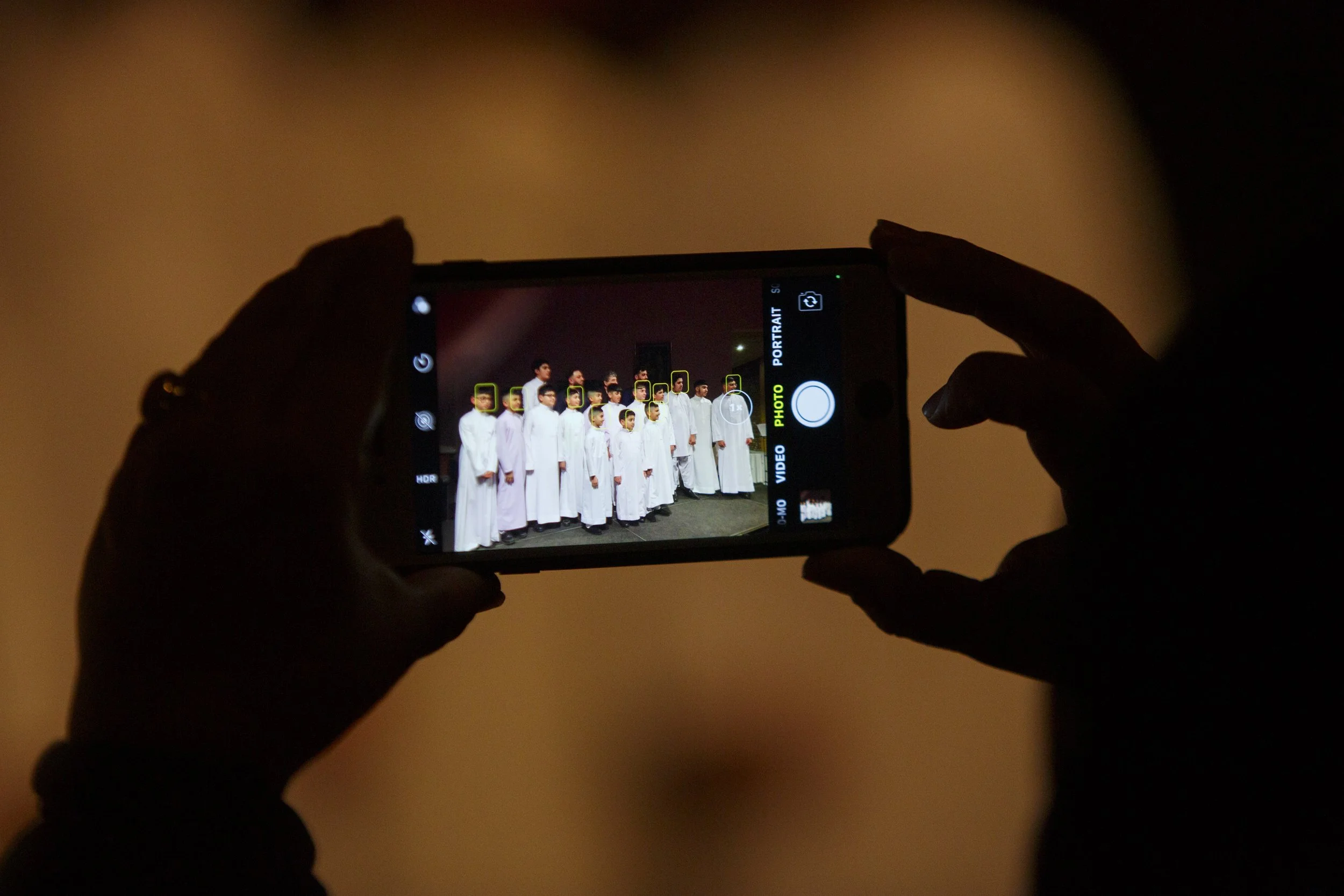
Conclusion
Thanks again to The Whitworth for inviting me to document this important exhibition. Photographing What Kind of City? A Manual for Social Change offered an opportunity to capture Suzanne Lacy’s longstanding commitment to social practice while highlighting the interaction between her work, the audience, and the wider community. The images serve as a professional record of an exhibition that exemplifies the power of art to foster dialogue, participation, and meaningful social engagement.


Lillian and Fidaa for Asthma UK - British Lung Foundation
It was wonderful to meet and photograph Fidaa and Lily and be a part of Asthma UK and the British Lung Foundation’s vital campaign for clean air.
Lily has asthma, which is exacerbated by air pollution.
“She is nine years old now and has had breathing problems since she was a baby. Her old school was in an area with very high pollution levels, despite being near a park and off the main road. School is a place where children should be safe, but too many of them are in high air pollution areas.”
The family didn’t realise how bad the pollution was until Lily’s friend’s mum, Ruth, borrowed an air quality monitor from the British Lung Foundation. The results showed regular spikes of nitrogen dioxide that peak 50 per cent above EU legal limits. Ruth pushed the council to take action, starting a petition to create ‘school streets’ and ban cars on the roads close to schools at drop off and pick up times.
“Politicians simply aren’t taking enough action to clean our air. We need less traffic on the roads and social housing needs to be safer for children with asthma. They need more trees and green spaces to clean the air. Fresh air is so good for their lungs.”

Documenting Asthma UK and British Lung Foundation’s Clean Air Campaign
It was a privilege to meet and photograph Fidaa and Lily while supporting the British Lung Foundation and Asthma UK’s important campaign for clean air. The campaign highlights the dangers of air pollution, particularly for children living with respiratory conditions like asthma.
Lily, who is nine years old, has experienced breathing problems since she was a baby. Her asthma is exacerbated by exposure to air pollution, a reality that her family only fully understood after borrowing an air quality monitor from the British Lung Foundation. The results revealed regular spikes of nitrogen dioxide that were up to 50 per cent above EU legal limits, even near parks and roads that seemed safe.

The Impact of Air Pollution on Children with Asthma
Children spend significant time at school, yet many are exposed to high levels of traffic-related air pollution during drop-off and pick-up times. For families like Lily’s, these invisible pollutants pose a serious risk to health, particularly for children with asthma. The campaign calls for measures such as creating ‘school streets’ that restrict traffic near schools, planting more trees, and increasing green spaces to improve air quality.

Parents and communities are demanding more action from politicians and local authorities to protect children’s lungs. Initiatives such as petitions, local advocacy, and monitoring air quality play a crucial role in raising awareness and implementing change. The experiences of Lily and her family illustrate the real-life impact of air pollution on children’s health and wellbeing.

Supporting Clean Air Initiatives
The British Lung Foundation and Asthma UK are working to improve air quality and reduce the risks associated with pollution for children and adults with respiratory conditions. Campaigns like these demonstrate the need for cleaner, safer urban environments and highlight how community action can influence policy and infrastructure. Photography helps to document these campaigns, giving a human face to public health advocacy and showing the urgency of creating healthier spaces for children to live, learn, and play.

By capturing moments like these, the campaign raises awareness and engages wider audiences, reinforcing the importance of clean air for everyone, especially vulnerable children like Lily.