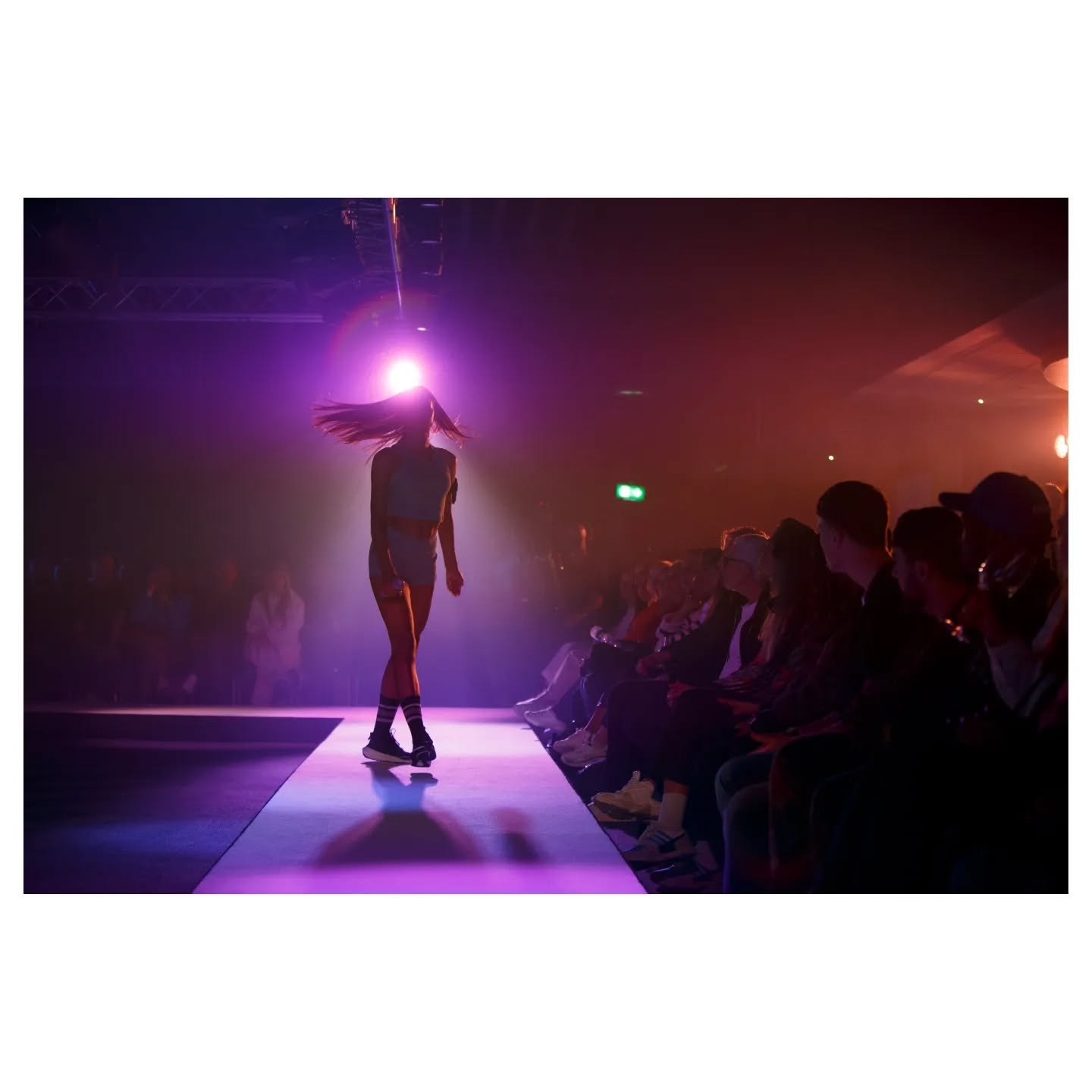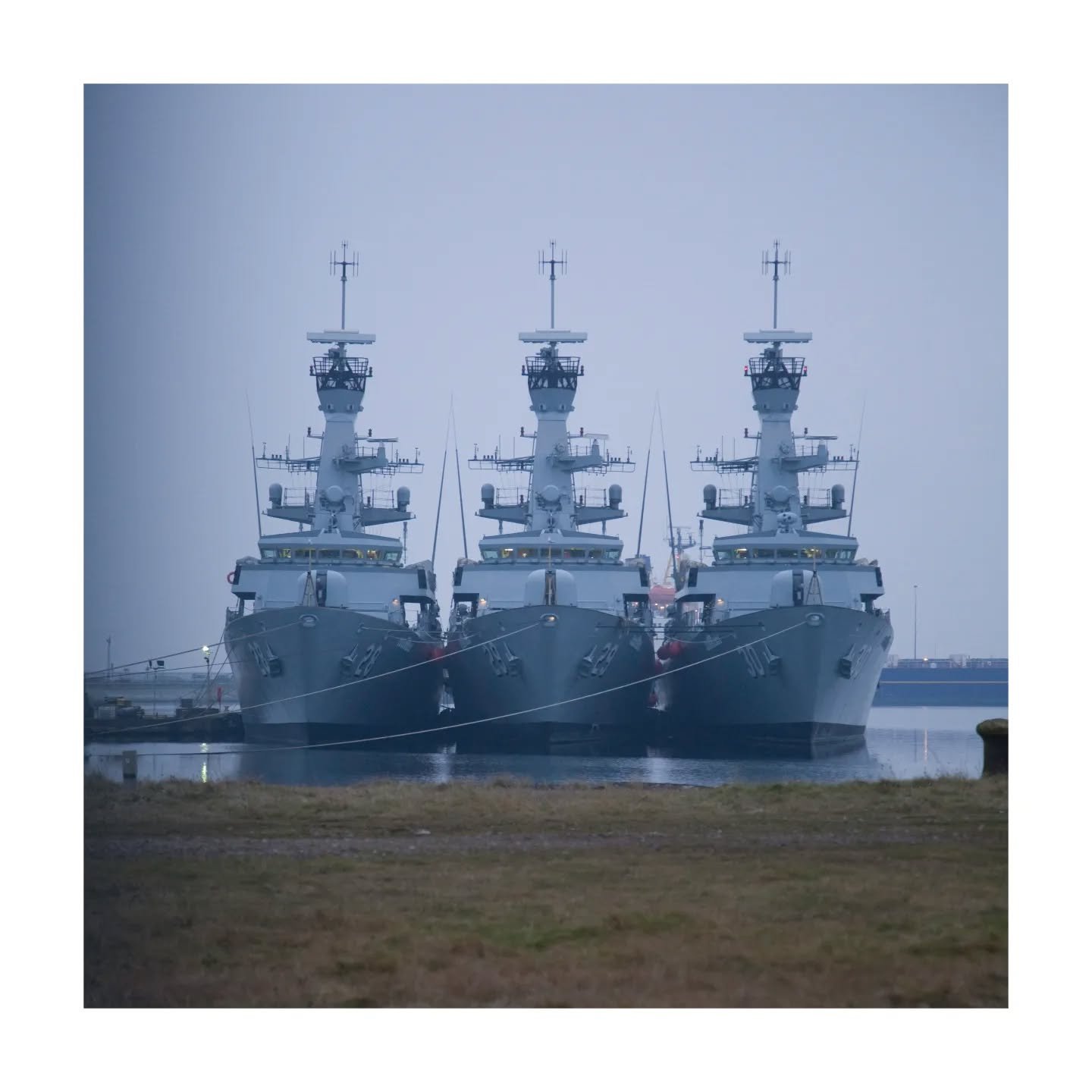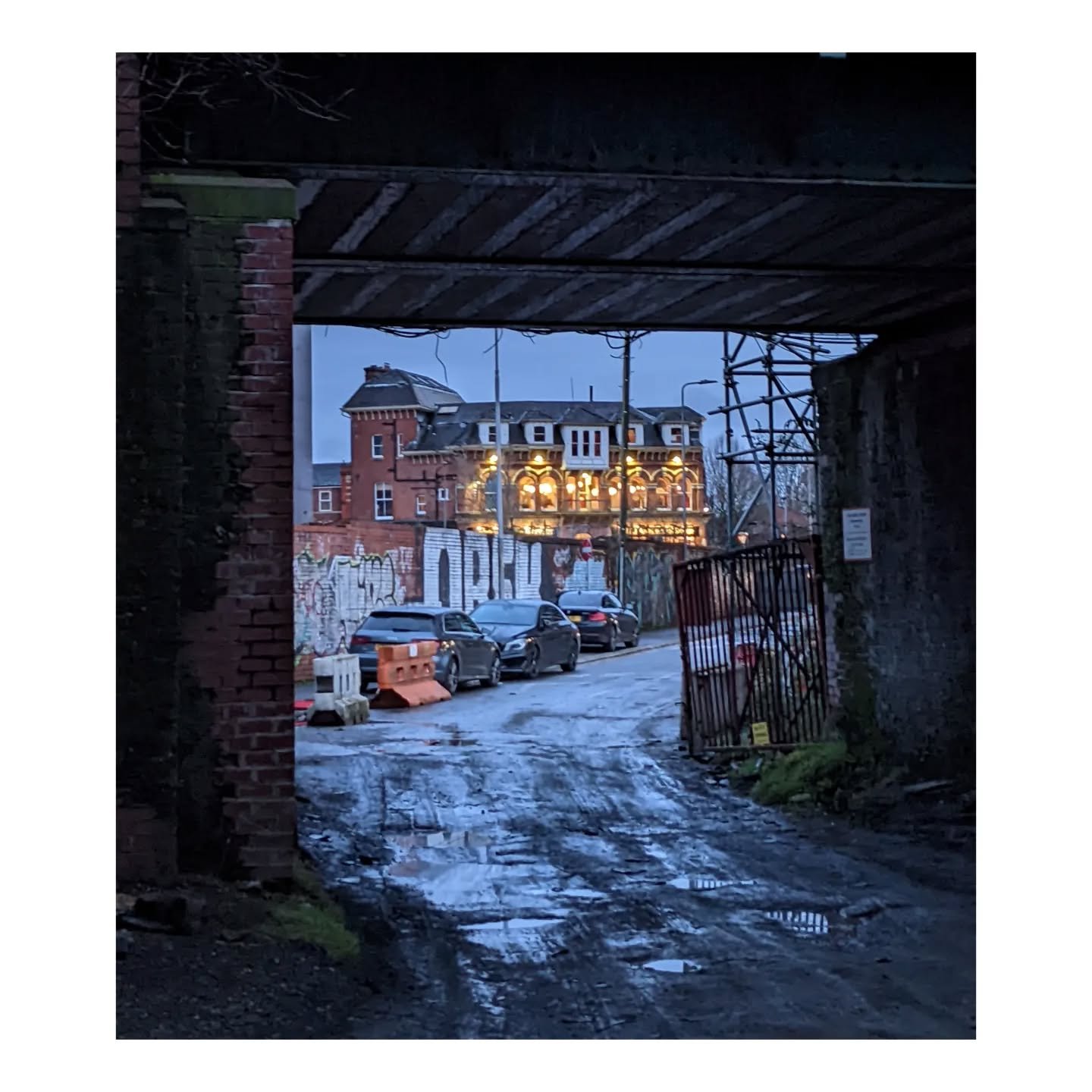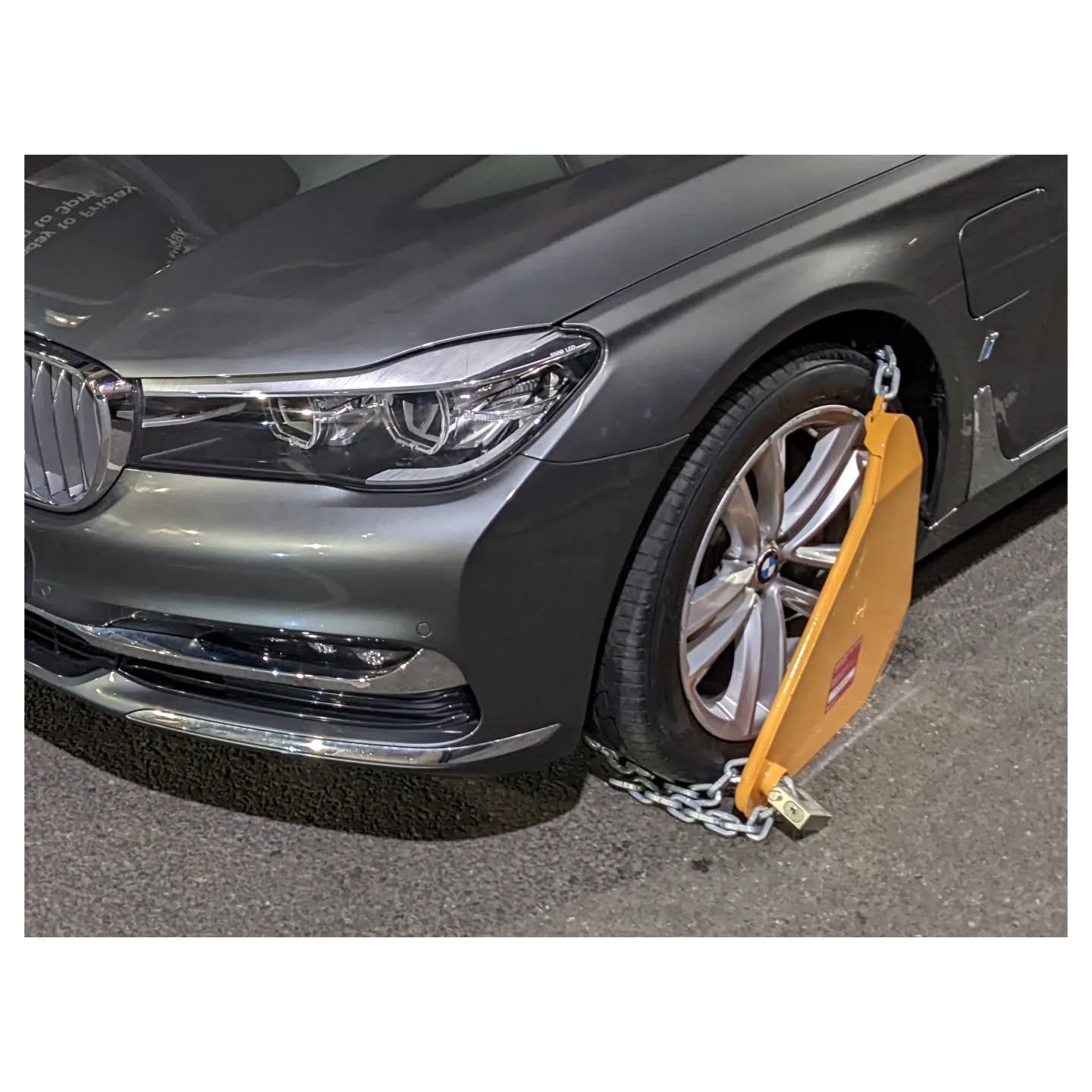
Latest Editorial, Portrait & Commercial Photography Projects
A selection of my most recent commissions and ongoing projects.
The work shown here spans editorial assignments, portrait commissions, documentary projects and commercial photography for organisations and publishers. It reflects current areas of focus and the range of contexts in which I am working.
New projects are added regularly.
Mark Radcliffe for the Daily Telegraph
Mark Radcliffe is as nice in person in real life as his radio persona would suggest. Music nerd, City fan, all round good egg.
I’ve photographed him a couple of times, here in Dunham Massey country park in Cheshire with a beautiful vintage VW Beetle for a motoring feature in the Daily Telegraph.
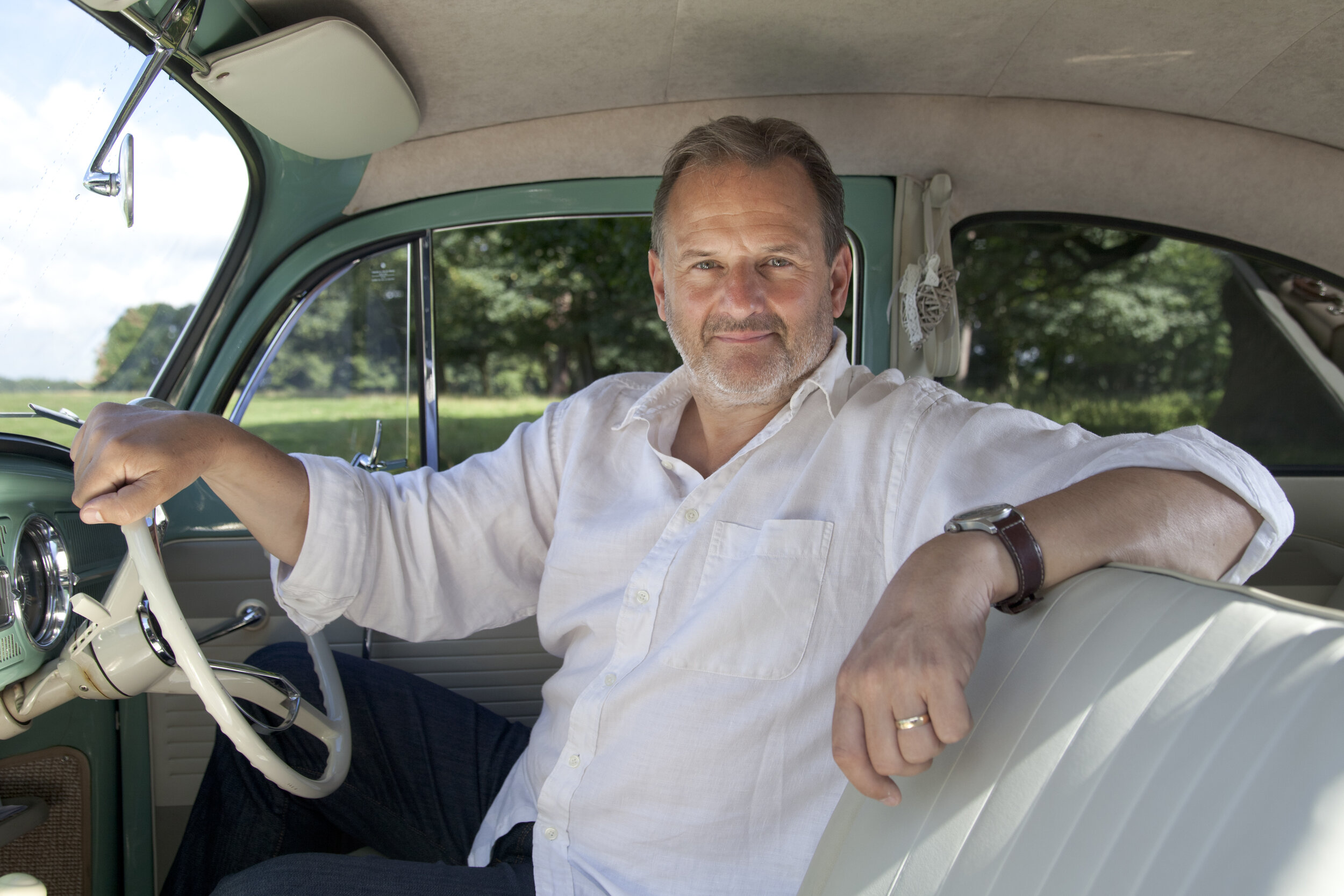
Portrait of Mark Radcliffe at Dunham Massey | Daily Telegraph Motoring Feature
While going through old hard drives recently I came across another set of photographs from an earlier editorial commission. The images feature broadcaster and writer Mark Radcliffe, photographed at Dunham Massey Country Park in Cheshire for a motoring feature in the Daily Telegraph.
Mark Radcliffe is exactly as you might expect from his radio persona: knowledgeable about music, quick-witted, a lifelong Manchester City supporter and generally an extremely good person to spend time with on a shoot. I have photographed him a couple of times over the years, and this particular session was for a feature pairing him with a beautifully restored vintage Volkswagen Beetle.
Mark Radcliffe: Broadcaster, Author and Music Journalist
Mark Radcliffe is well known in the UK for his long career in broadcasting, particularly on BBC Radio where he has presented a wide range of music programmes across several decades. Many listeners first encountered him through his partnership with Marc Riley on BBC Radio 1 in the 1990s, before Radcliffe went on to present programmes on BBC Radio 2 and BBC Radio 6 Music.
His work has always been characterised by a deep enthusiasm for music, ranging from alternative rock and indie through to folk and country. In addition to broadcasting, Radcliffe is also a writer and musician, contributing regularly to publications and performing with his folk group The Shirehorses.
Because of this long-standing role in British music broadcasting, he remains a familiar and well-liked figure to audiences across the UK. Photographing personalities like Radcliffe is often straightforward because their ease in conversation translates naturally into relaxed portraits.
Editorial Portrait Photography for Newspapers
This portrait session took place at Dunham Massey Country Park in Cheshire, a location that provided an appropriate rural backdrop for the Daily Telegraph’s motoring feature. Editorial portrait photography for newspapers often involves finding a setting that complements the theme of the article while still allowing the subject’s personality to come through.
The vintage Volkswagen Beetle featured in the piece added a strong visual element to the shoot, combining classic automotive design with a relaxed outdoor location. Working with well-known public figures in this kind of editorial context requires balancing documentary observation with informal portraiture, capturing both the person and the environment in which the story is set.
Photographing Personalities for Editorial Features
Portrait photography for editorial publications often moves quickly, with limited time to establish rapport and create images that work both visually and narratively. When the subject is comfortable and engaged, the process becomes much easier, allowing the photographer to focus on composition, light and atmosphere.
In this case, the combination of a distinctive car, an attractive location in Cheshire and an engaging subject made for an enjoyable shoot and a memorable commission for the Daily Telegraph.

Documentary Photography for Buzzfeed News
Harassment Outside Abortion Clinics Is Still Happening, But Local Authorities Are Struggling To Stop It
The Home Office has rejected calls to put a national ban on abortion clinic protests, but councils are a long way off tackling the issue locally.

Words by Laura Silver, BuzzFeed News Reporter
Harassment Outside Abortion Clinics Is Still Happening, But Local Authorities Are Struggling To Stop It
The Home Office has rejected calls to put a national ban on abortion clinic protests, but councils are a long way off tackling the issue locally.
In a narrow side street outside a Marie Stopes clinic in Fallowfield, Manchester, it’s business as usual for the anti-abortion protesters who have been gathering here for the past decade.
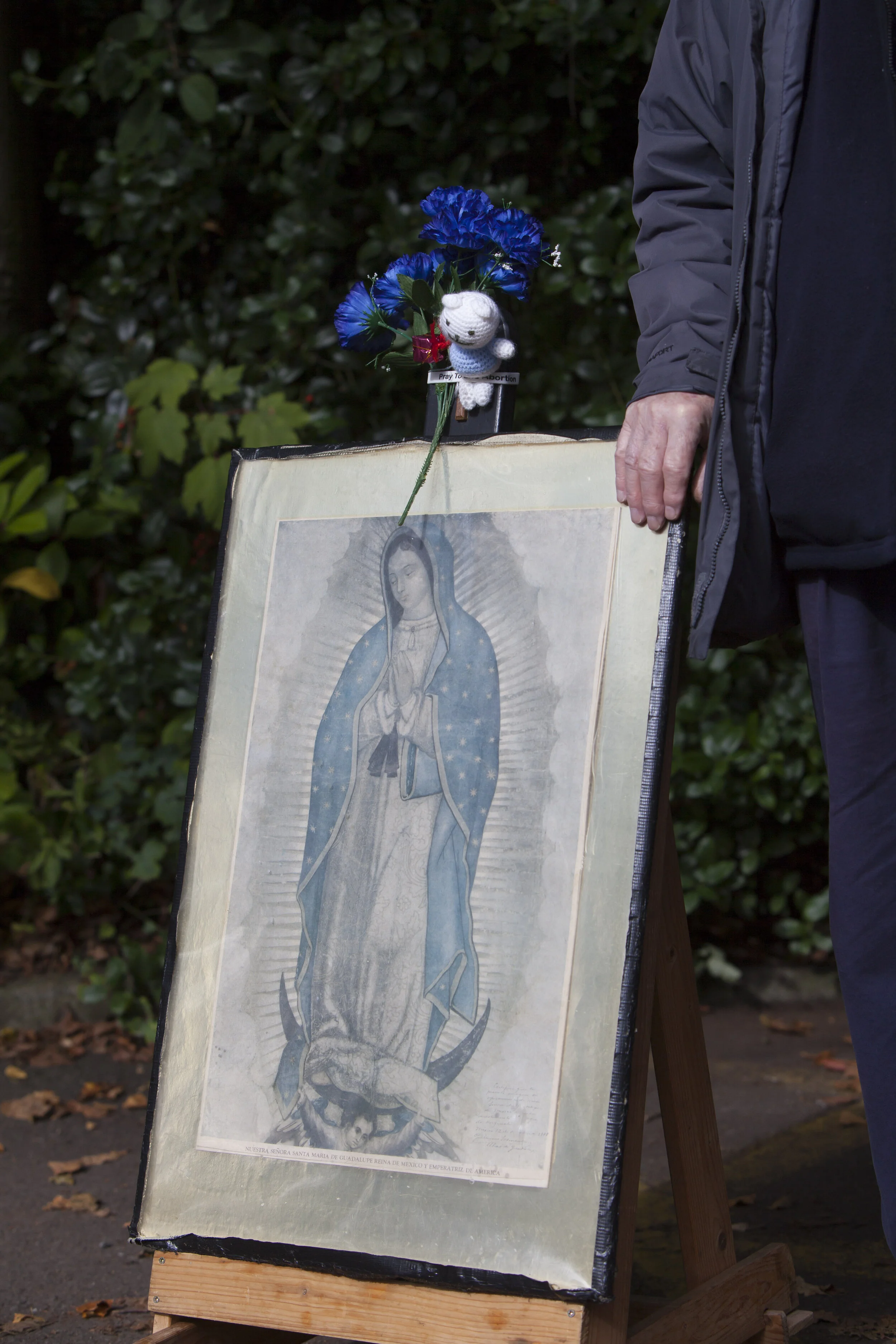
On this particular Saturday, a small group is playing hymns from a sound system pitched up next to a wooden cross and posters showing the Virgin Mary. Their mission is simple: Dissuade women from going ahead with an abortion.
“We’re praying to save the babies, darling,” an elderly woman with an Irish accent tells BuzzFeed News, while offering a string of plastic rosary beads, a leaflet describing the gestational stages of a foetus, and phone numbers for the anti-abortion charities Life and the Good Counsel Network.
A chorus of the “Hail Mary” rings out behind us as she says with much pride that she stands outside the clinic most days, and believes she has “saved quite a few babies” over the years, including one today.

“Hail Mary, full of grace. Our Lord is with thee,” her companions chant over the hum of traffic from the nearby main road. “Blessed art thou among women, and blessed is the fruit of thy womb, Jesus.”
Watching them from across the street are volunteers from Sister Supporter, an abortion rights group, who gather to deter the protesters from approaching women seeking abortion at the clinic.
Sister Supporter, founded in London in 2015, has also been lobbying authorities to introduce measures such as a buffer zone that effectively bans any group from gathering immediately outside an abortion clinic, to prevent women from feeling harassed.
This year there was a major breakthrough: The campaign led to the UK’s first public space protection order (PSPO) outside a Marie Stopes branch in Ealing, west London, where anti-abortion protesters have had a near-constant presence for over 20 years.

Staff at the clinic told BuzzFeed News that incidents of alleged harassment have virtually disappeared since the buffer zone was put in place.
The PSPO was achieved through the efforts of the local authority, Ealing council, but there had been optimism that a Home Office review of harassment outside abortion clinics — launched by the then home secretary, Amber Rudd — would result in national guidelines that councils could rely on.
Last week, however, Rudd’s successor Sajid Javid dashed those hopes, saying it would "not be a proportionate response" and that individual councils should instead follow Ealing’s lead and tackle the issue locally. The review had received more than 2,500 submissions and identified 36 sites nationwide as problem areas.
His decision has angered clinic staff and local councillors who argue that cash-strapped councils will struggle to undertake the lengthy process of passing PSPOs, leaving women who face harassment outside clinics without protection in the meantime.
“I’m really mad about it,” Jackie Schofield, a clinical team lead at Marie Stopes Fallowfield, told BuzzFeed News. “Everybody has freedom of speech, fair enough, but not outside the place when there’s vulnerable people. I just think it’s wrong, I really do.”
During the years she has worked at the Manchester clinic, Schofield said, she has often had to spend significant time calming her patients who have found it upsetting to be greeted by protesters on what can already be a distressing day.
She said she has regularly witnessed the protesters calling patients and staff “murderers” or telling women they will “go to hell” if they enter the clinic, meaning they’re often too distressed for their appointments. “I’m going through a consent process but I have to calm them down a lot first because of what’s happened to them before they even got started — it really messes with them,” Schofield added.
Schofield, and several other staff, told us that recently a protester had stood breastfeeding a baby outside the clinic, and that last Christmas anti-abortion groups handed out wrapped packages containing knitted baby booties, wishing them “Happy Christmas, Mummy.”
She said these incidents can be especially upsetting for women who have travelled from Ireland. Although the country voted to legalise abortion earlier this year, the ongoing legislative process means that services will not be available until 2019 — and remain illegal in Northern Ireland — so Irish women will continue to travel to the UK to access abortion.
“Today is an Irish day,” Schofield said. “Tuesdays and Saturdays we have lots of Irish ladies because the flights are cheaper. Can you imagine having to go through all that anyway, and then coming here and getting this?”
Lynn Bradley, a healthcare support worker who has been at the clinic for nine years, said she was physically assaulted by a protester on one occasion — an account she submitted to the Home Office review.
“She chased after me and started slapping me on the back,” said Bradley, a chirpy, white-haired woman with a thick Manchester accent.
“Whenever she sees me she does this,” she added, making a throat-slitting gesture and sticking out her tongue. “She’s very crafty — she does it when she’s on her own.”

Bradley, whose job involves supporting women before and after they receive treatment, was also disappointed by Javid’s response. “When we arrive in the morning [protesters] make it as awkward as possible for you when you get out the car, calling us murderers, saying you’ll go to hell, and that’s before you start a day’s work,” she said.
“We can cope with it, but at the end of the day, these ladies shouldn’t be put through that.”
Manchester city council has passed a motion to explore the possibility of a PSPO outside the Fallowfield clinic, but even with resounding support across the board, progress will be slow.
“It’s a really long process and we still need to go through the evidence-gathering and mapping where the PSPO would cover,” Rebecca Moore, councillor for the neighbouring ward of Withington, told BuzzFeed News.
Ealing council is facing an ongoing legal challenge over its PSPO, and Moore said she had sensed a nervousness within her own council about the threat of a lengthy and costly court battle if a PSPO were to be introduced in Fallowfield.
“Local government finances are in a really bad state, so if there’s any big costs to implementation I think that’s going to cause concern to a council that’s had to go through such big austerity measures,” Moore continued.
“I don’t think that means that it shouldn’t be done or wouldn’t be done, but it is a concern.”
Grace Fletcher-Hackwood, a councillor for Fallowfield, questioned whether the Home Office would have made the same decision if protesters were gathered outside a local cancer hospital like the Christie, which is situated nearby.
“If they rocked up outside the Christie, people would realise how inappropriate that is,” she said. “You make medical decisions with yourself and your doctor based on what is good for your own health, not because of some ideologues who have posted themselves outside the clinic and decided they’re qualified to speak about what’s best for you and your body.”
Disappointment over Javid’s statement has been felt across the country, including in Portsmouth, where the local authority has agreed to look into ways to prevent protests at the clinic.
It, too, is in still in the early stages and is currently working out how best to proceed in light of the Home Office decision, according to a council spokesperson.
Chris Francis, a clinic manager at the Portsmouth branch of the British Pregnancy Advisory Service (BPAS), another of the UK’s major abortion providers, said: “If there’s national legislation in place, then as soon as women get harassed we can fall back on that.
“But getting a local decision, you have to get an agreement for a consultation process, and then you have to go through the consultation.”
In the meantime, Francis continued, anti-abortion protesters remain active outside the clinic, which is based within the sexual health centre at St Mary’s Hospital, where a mental health ward is situated above. “I know they caused some real upset for some vulnerable women in care there,” she added.
Francis told us that the protesters were especially aggressive during the biannual 40 Days for Life campaign, due to begin on Sept. 26, where anti-abortion protesters around the world increase the frequency of their gatherings outside clinics.
“We’ve had singing outside the hospital so we could hear them inside,” she said, referring to the previous 40 Days for Life campaign, which took place in February. “They were handing out knitted booties and rosaries in baby blue and pink, and generally harassing any woman entering the hospital who looked like she could be childbearing age.”
Francis said that protesters move from clinic to clinic, so it can be difficult to gather evidence of consistent harassment at the particular sites where each individual PSPO is needed.
“With Portsmouth, by the time they were starting to consider the PSPO, the protesters moved to Bournemouth,” Francis told BuzzFeed News. “I know it was the same guys because I went there and saw the same faces. They move around the country. [There] has to be some kind of national legislation.”
The evidence-gathering process also requires women who have been harassed to relive the experience when providing accounts to clinic staff or, in some cases, the police.
Back in Manchester, Katy Kershaw, a clinical team lead at Marie Stopes in Fallowfield, said many women just don’t want to engage. “They just want to forget about it; they don’t want to come back and talk about how traumatic it was to have protesters pass them things, or be told they’re murdering their baby,” she said. “They just want it over and done with.”

For clinic staff, who have full lists of patients to work through every day, working with councils to build a compelling case for a PSPO means a significant increase to their workload.
“It’s a struggle because it’s time-consuming,” Kershaw continued. “We’re such a busy clinic that it’s difficult for us to get out to the council to say how much we need them.”
Manchester council, Kershaw said, has been proactive. “They’ve been coming to see us — we didn’t have to approach them,” she said, but worried that this wouldn’t necessarily be the case everywhere.
Beth Redmond, who leads Manchester’s Sister Supporter branch, was also sceptical that councils across the country would be as dedicated as Manchester. “The thought of having to do this for more than one council doesn’t really bear thinking about,” she added.

Both Birmingham and Leeds city councils have in the last year passed motions to explore measures to prevent harassment outside abortion clinics. They say the work is ongoing, but neither have begun a formal evidence-gathering or consultation period.
Redmond said she worried about what scale harassment outside abortion clinics would have to reach before the Home Office would deem it necessary to act nationally. “What does Sajid Javid want? Does he want someone to get hurt?” she continued. “It feels like waiting for something awful to happen when actually bad things are already going on.”
Despite an ongoing legal challenge to Ealing’s PSPO, protesters have adhered to its restrictions and clinic staff and local councillors consider it to be a success.
The Good Counsel Network’s Clare McCullough, who had organised the vigils in Ealing, told us that as her volunteers are distanced from the clinic, she is unable to “support” as many women. She continues to protest against abortion in the designated area in Ealing, as well as outside a BPAS clinic in Richmond, southwest London, and a Marie Stopes facility in the city centre.

But even Ealing’s PSPO is not without vulnerability. Alina Dulgheriu, who brought the initial legal challenge against the council, has crowdfunded more than £50,000 to launch an appeal. The order is only temporary, meaning Ealing council will have to undergo the same time-consuming process to get it renewed when it expires in three years’ time.
Binda Rai, the councillor for Ealing’s Walpole ward who led the council’s efforts to implement the current PSPO, said it was “outrageous” for Javid to expect other councils to duplicate this effort time and again.
“The current system means that councils have to go through a lengthy and complex process to allow women access to services that they are entitled to with privacy and dignity, free from the interference that causes them distress and harassment,” Rai said.
“It would appear that he has no understanding of what women go through at such a vulnerable and difficult period in their lives,” Rai continued. “It is a national issue: Women up and down the country are facing harassment from protestors outside abortion clinics and this activity is on the increase. To avoid a postcode lottery for women, a national solution is a must and would take this debate away from clinic doors and ensure a consistent approach across the country.”
Responding to Javid’s announcement last week, Labour MP Rupa Huq, who helped bring the issue to national attention, vowed to keep on fighting for a universal ban.
“Shoving the burden on to already cash-strapped local authorities is not addressing the problem, it’s just passing the buck,” Huq, who represents Ealing Central and Acton, told BuzzFeed News.
“I will not give up on this and have been promised a meeting with ministers so as to ensure vulnerable women cannot be sidelined and that they can access healthcare as is the case with any other procedure.”
Huq has received wide political support on the issue, including from Labour leader Jeremy Corbyn, who accused Javid of a “shocking failure to protect women from harassment and intimidation when exercising their right to choose”.
In the meantime, the protests outside abortion clinics are free to continue.

When the 40 Days for Life campaign starts again on Sept. 26, a spokesperson told BuzzFeed News, it will have volunteers stationed outside clinics nationwide, seven days a week, from 8am to 8pm.
Redmond said she was concerned that the Home Office’s decision could leave protesters feeling emboldened: “I do think they will be saying, ‘Why are you telling us we can’t be here when the most powerful people have told us that we can?’”

New website photography for Nufox
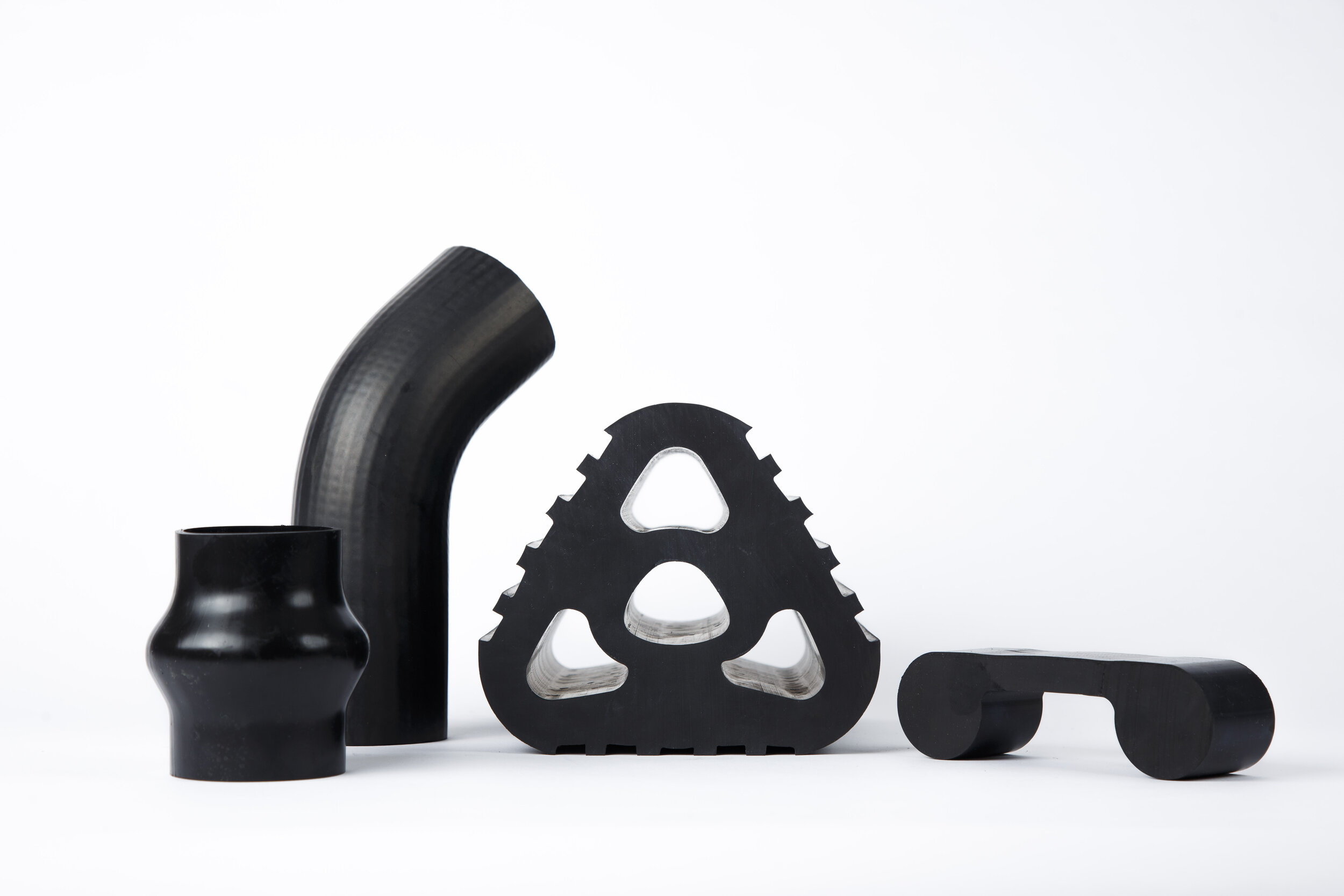
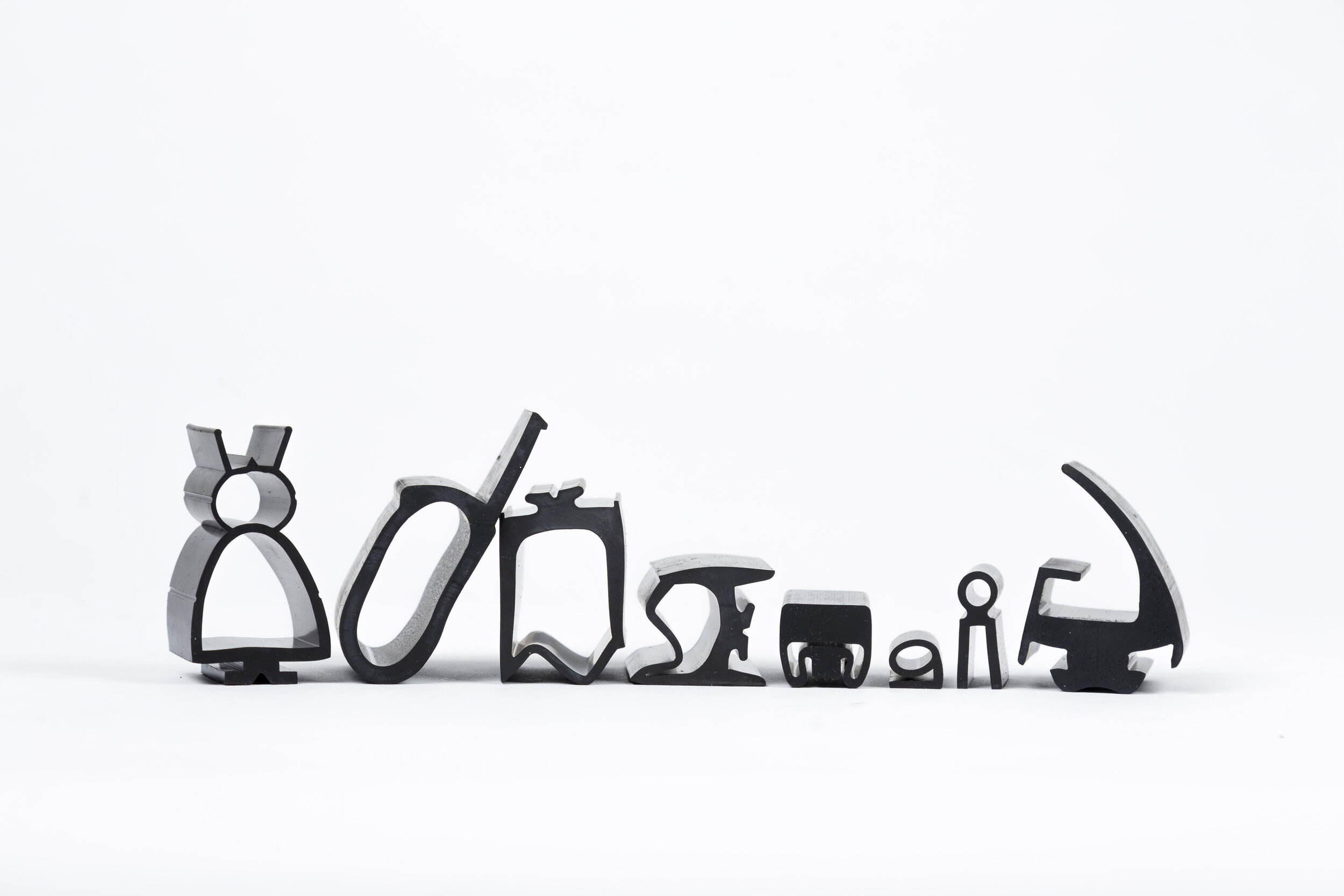
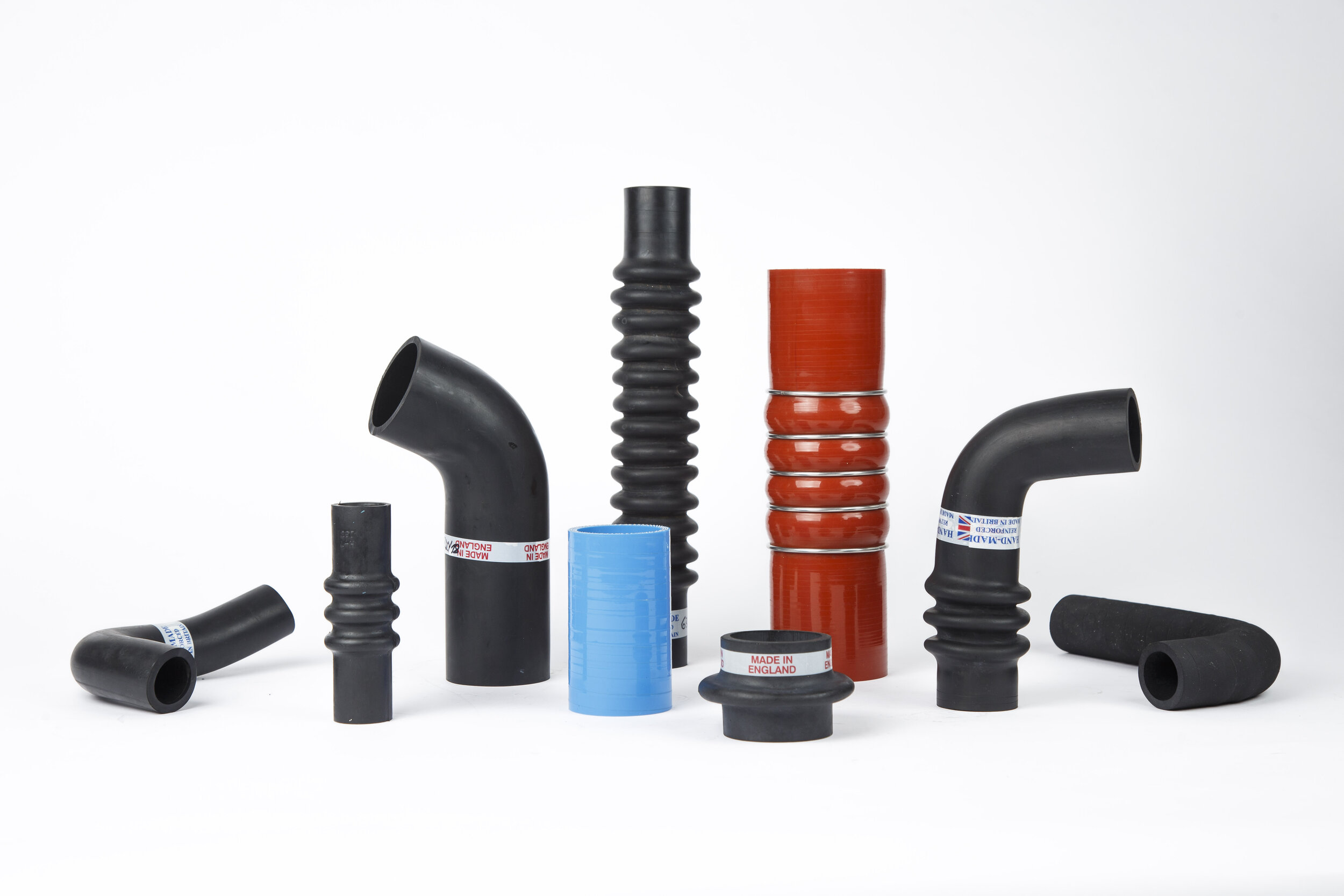
It’s long time ago since I finished my PhD in Materials Science, my subject was high temperature materials yet my office was not in the upper rooms with the furnaces and laser flash equipment but in the basement with the polymer engineers and the extruders and that weird persistent smell of all things rubbery. So it was with a feeling of nostalgia that I was once again amid the extruders and waterbaths at Nufox in Manchester to photograph their people, processes and products for their imminent website redesign.

Industrial Photography at Nufox | Manufacturing, Materials and Polymer Engineering
It has been a long time since I finished my PhD in Materials Science. My research focused on high-temperature materials, yet my office was not in the upper laboratories with the furnaces and laser flash equipment. Instead, I was based in the basement alongside the polymer engineers, surrounded by extruders, water baths and the persistent, slightly rubbery smell that seems to accompany plastics processing everywhere.
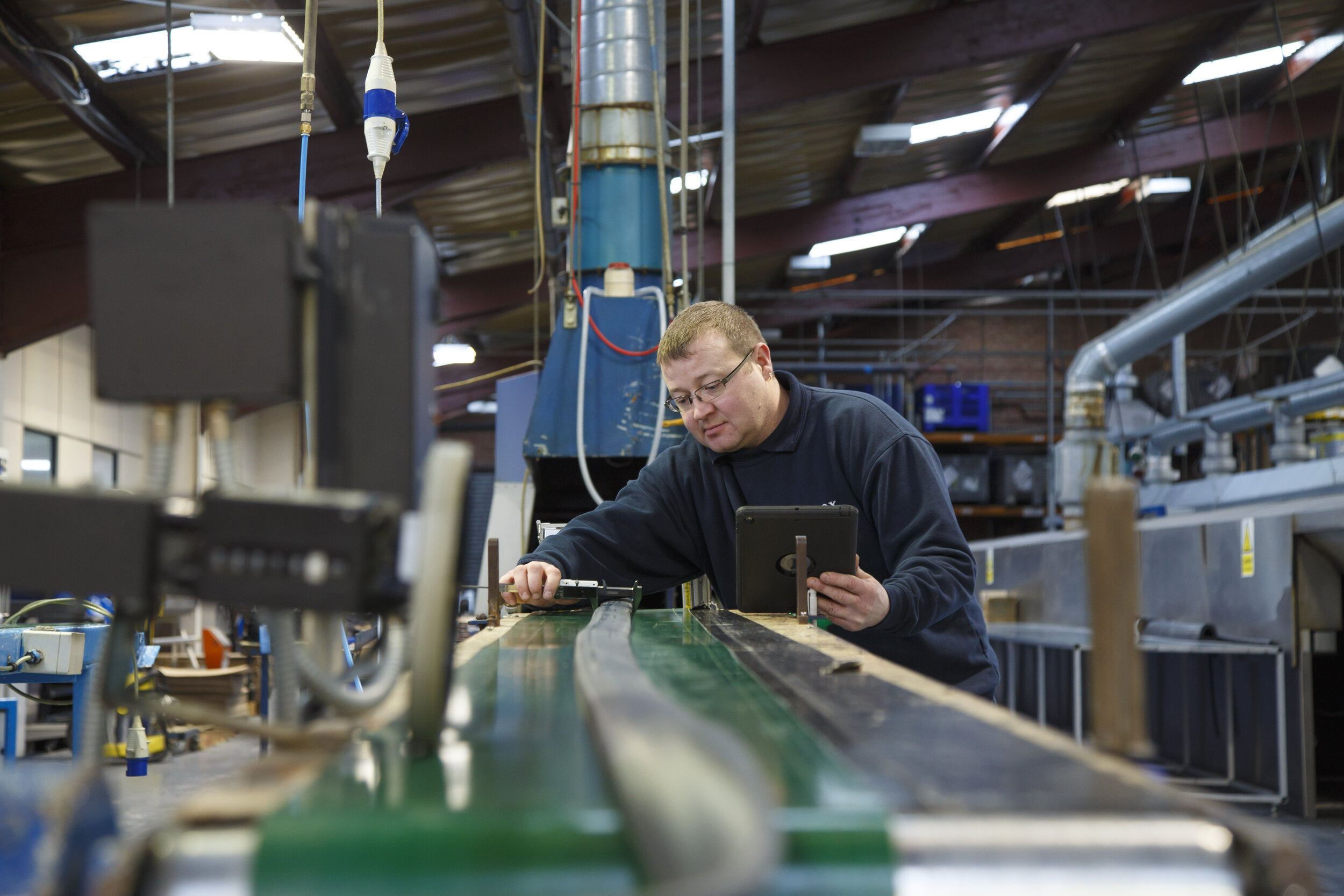
So it was with a certain sense of nostalgia that I recently found myself once again among the extruders and cooling baths while photographing the manufacturing processes at Nufox. The commission involved creating a set of industrial and documentary images of their people, processes and products as part of an upcoming redesign of the company’s website.

Photographing Manufacturing and Industrial Processes
Industrial photography often involves documenting complex production environments in a way that is both visually clear and technically accurate. At Nufox, the focus was on capturing the interaction between machinery, materials and skilled operators working across the production line.

Extrusion processes are particularly interesting to photograph because they combine movement, heat and material transformation. Polymer compounds pass through heated extruders before being shaped, cooled in water baths and processed into finished products. Visually, these processes create strong lines, textures and contrasts that lend themselves well to documentary industrial photography.

Materials Science and Manufacturing Context
Having previously worked in a materials science environment made it especially enjoyable to return to this type of setting. Many of the sights and sounds of a polymer processing facility are instantly familiar: the steady rhythm of extruders, the cooling lines running through water baths, and the careful monitoring of materials as they move from raw compound to finished product.
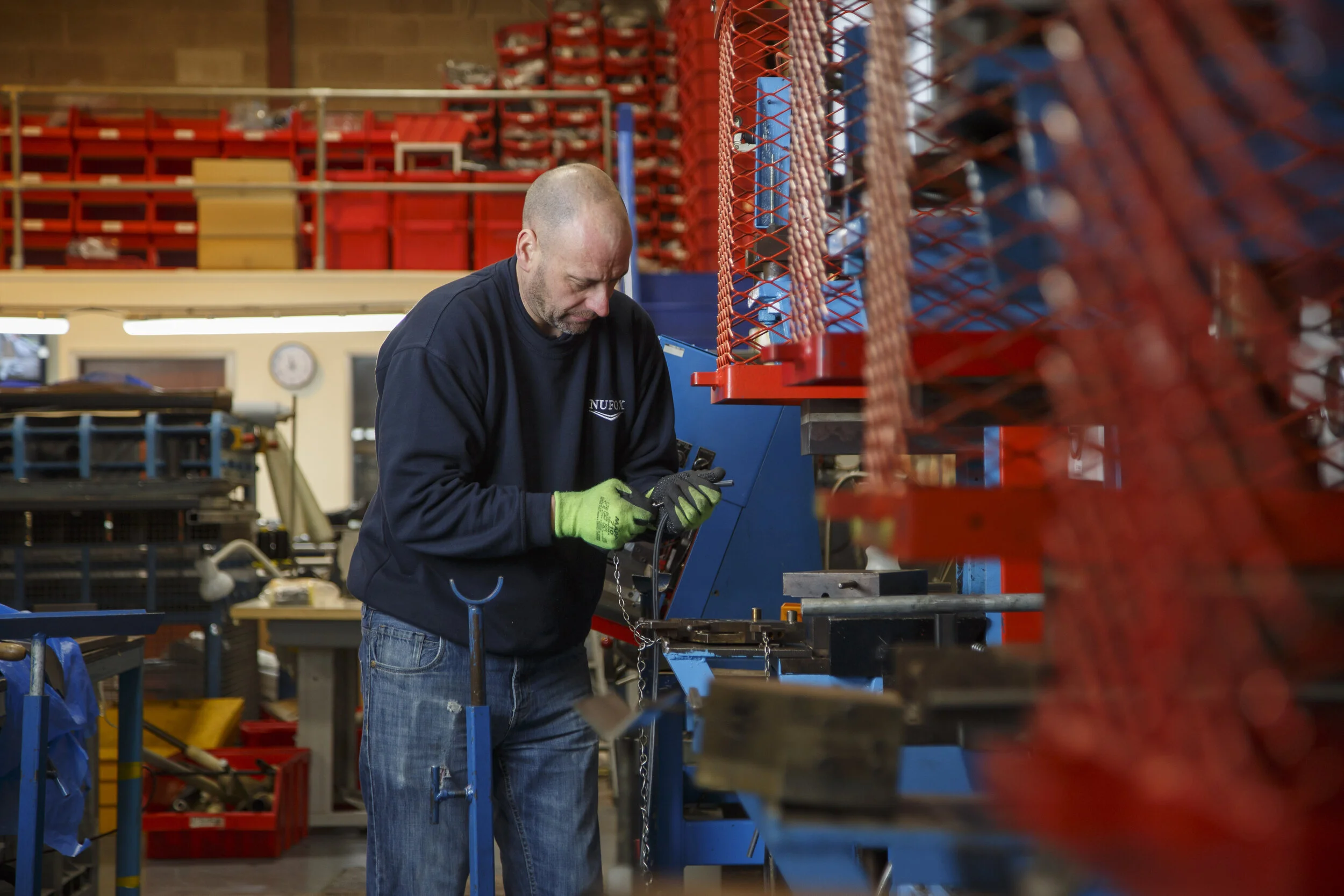
That background also helps when photographing technical environments, where understanding what is happening in the process can make it easier to anticipate key moments and capture meaningful images of both equipment and people at work.

Industrial Photography for Website and Marketing Use
The images produced at Nufox were designed primarily for their forthcoming website redesign. For manufacturing companies, professional photography plays an important role in communicating capability, scale and expertise to potential clients and partners.

Photographs of production environments, staff and finished products help create a clear visual narrative of how a company operates. These images are typically used across websites, marketing materials, recruitment campaigns and corporate communications.

Documenting facilities like Nufox provides an authentic visual record of the manufacturing process while helping companies present their work clearly and professionally online.




Photography of High Street Task Force
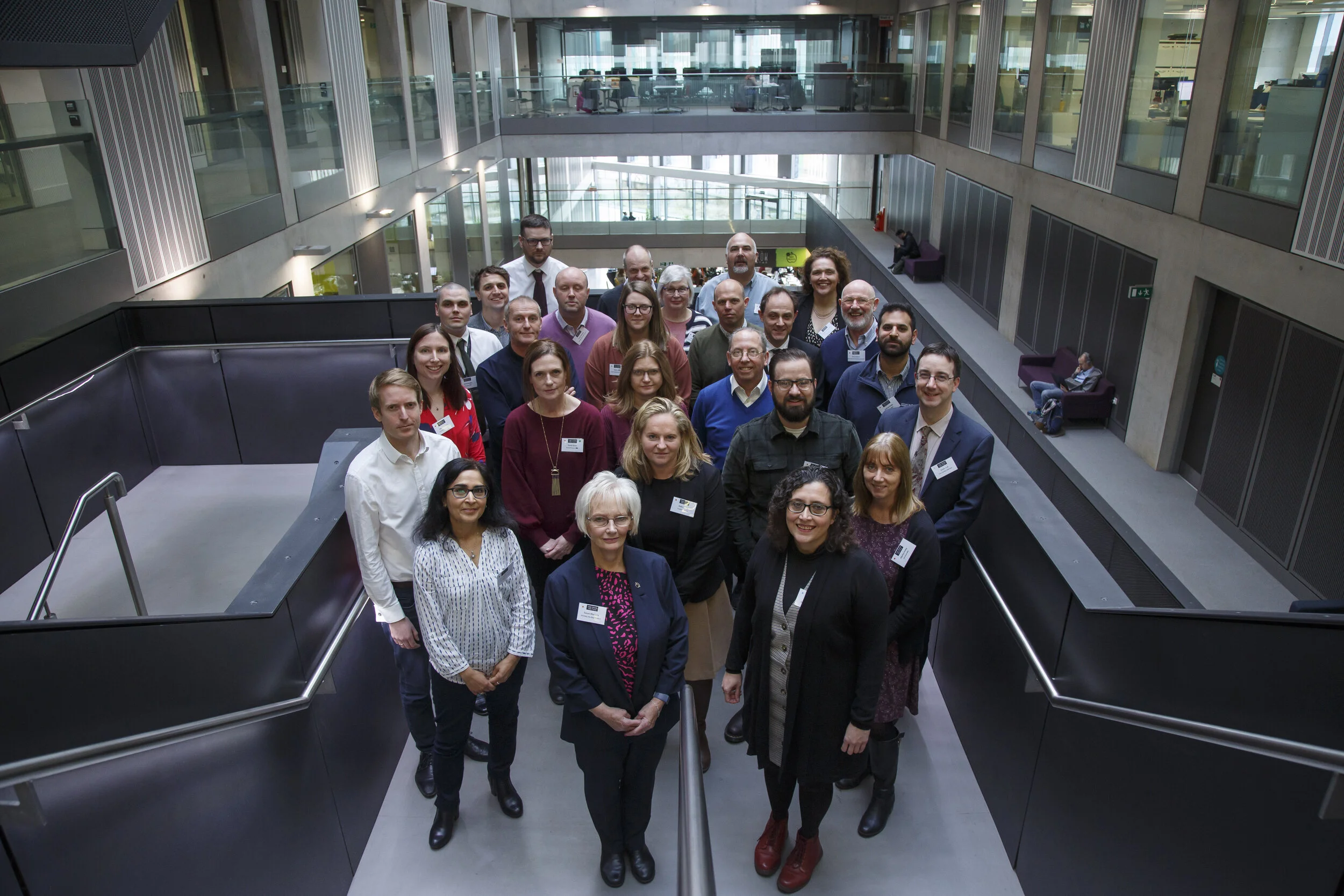
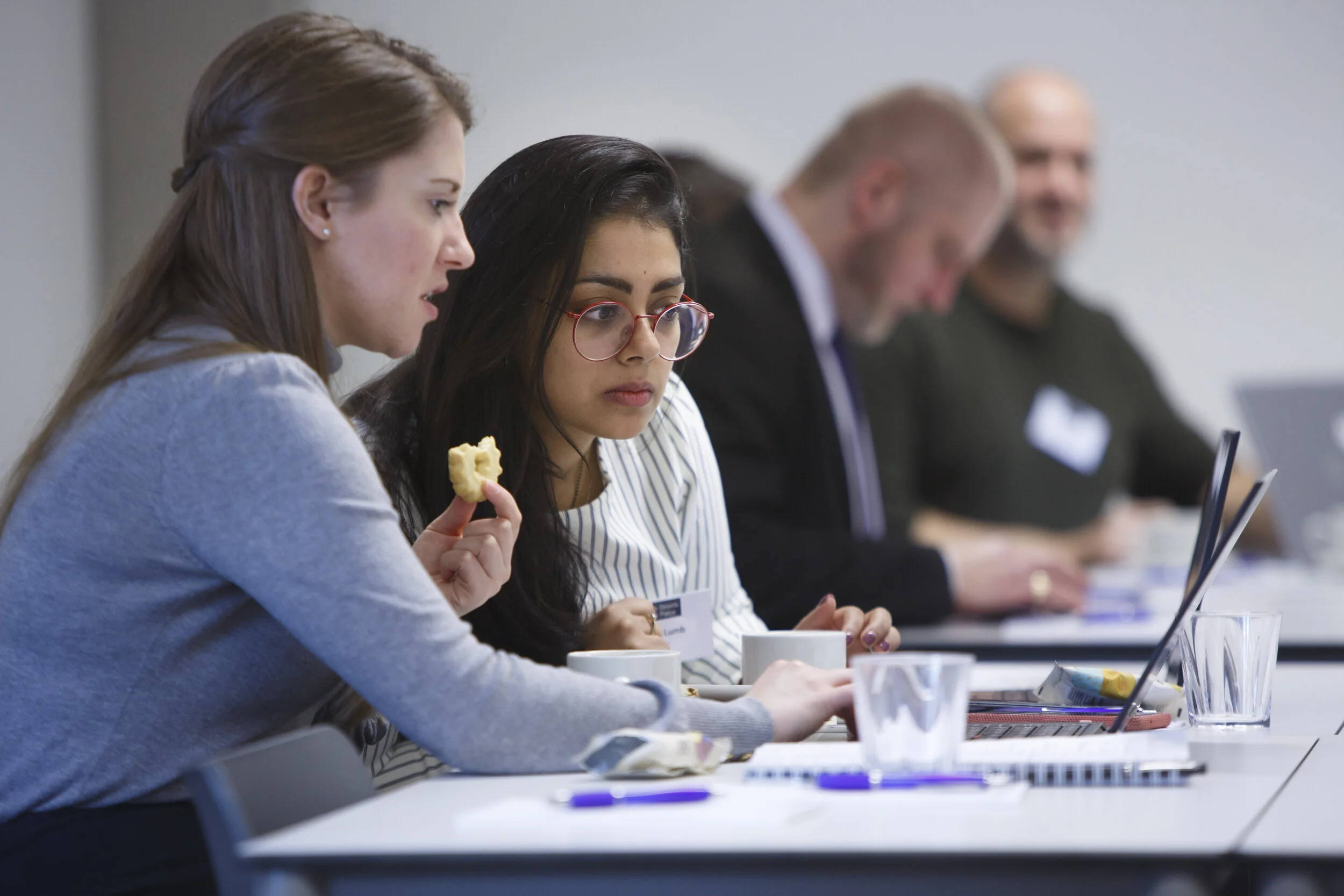
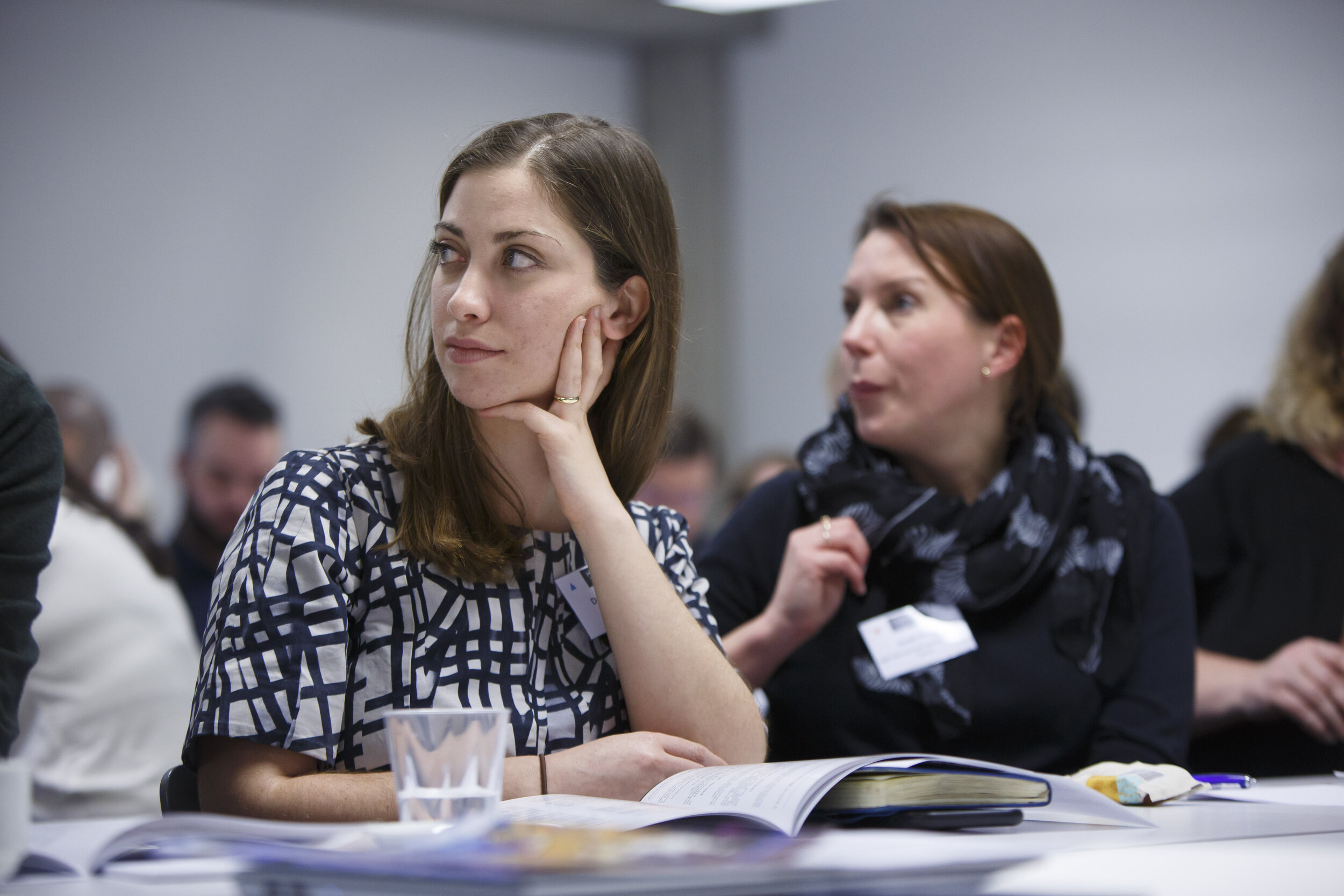
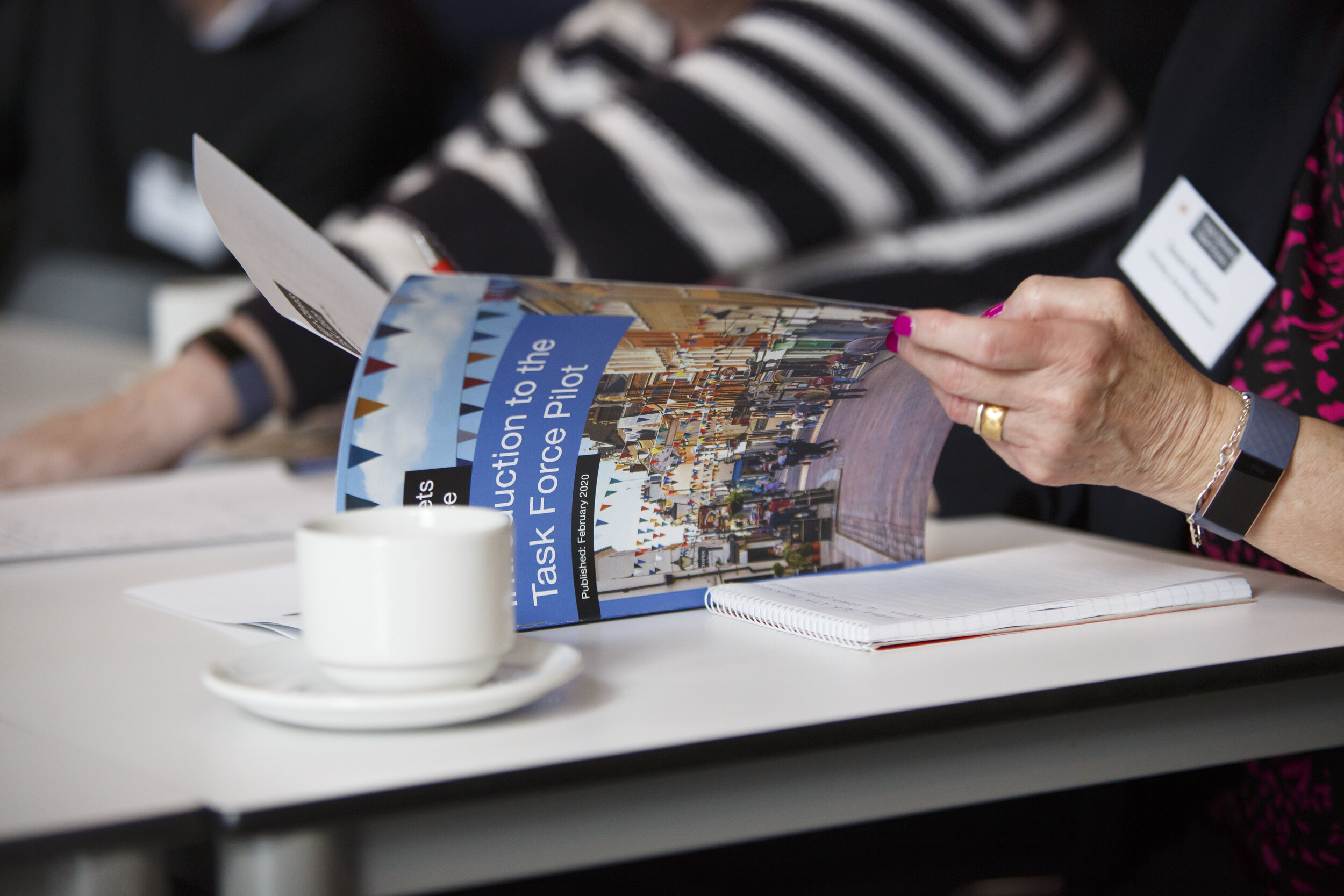
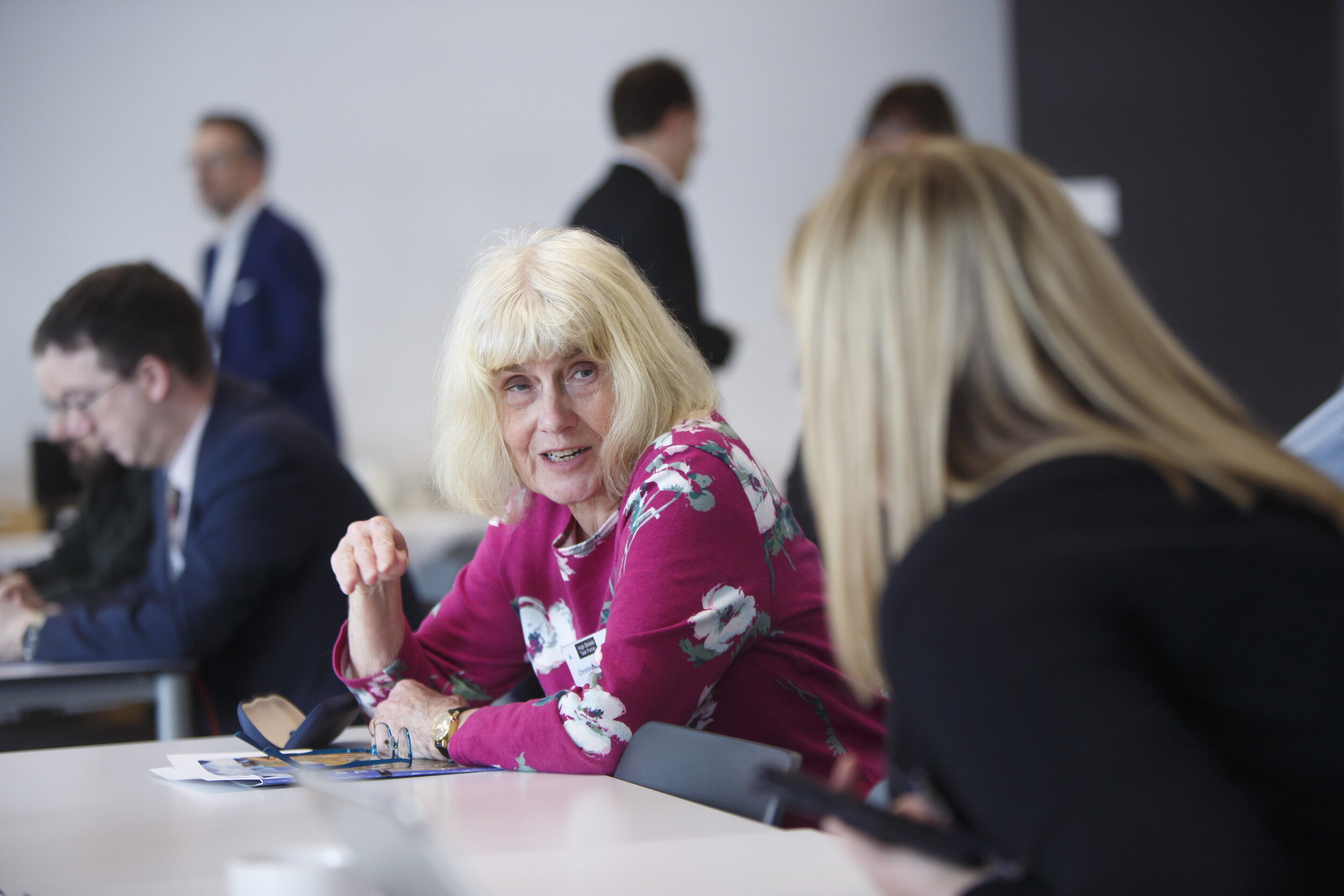
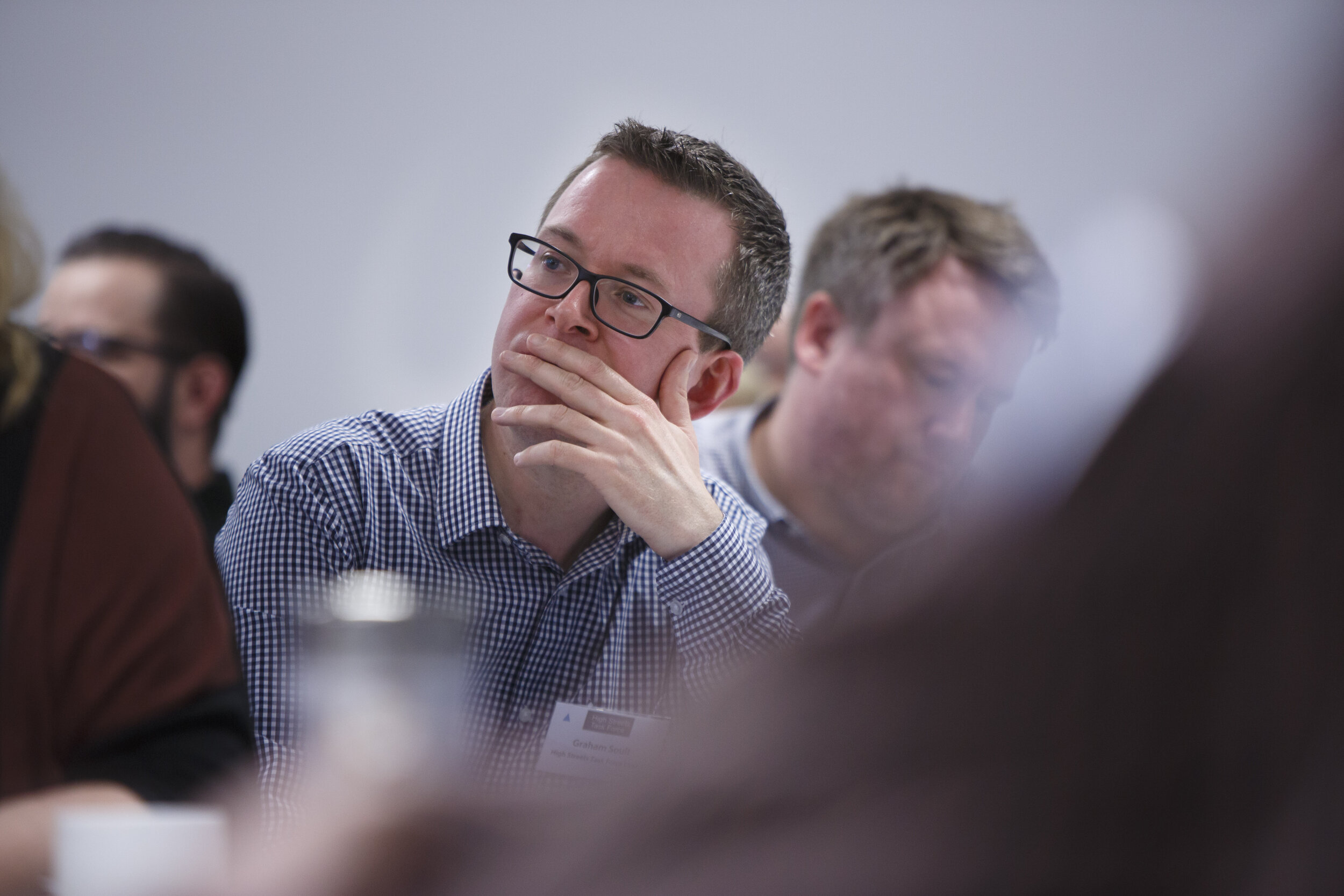
The High Streets Task Force was established to England's high streets and town centres to thrive - providing expert training, guidance data to the people who make them. Local leaders and partnerships are be able to access the latest data and evidence to inform their investment and regeneration decisions.
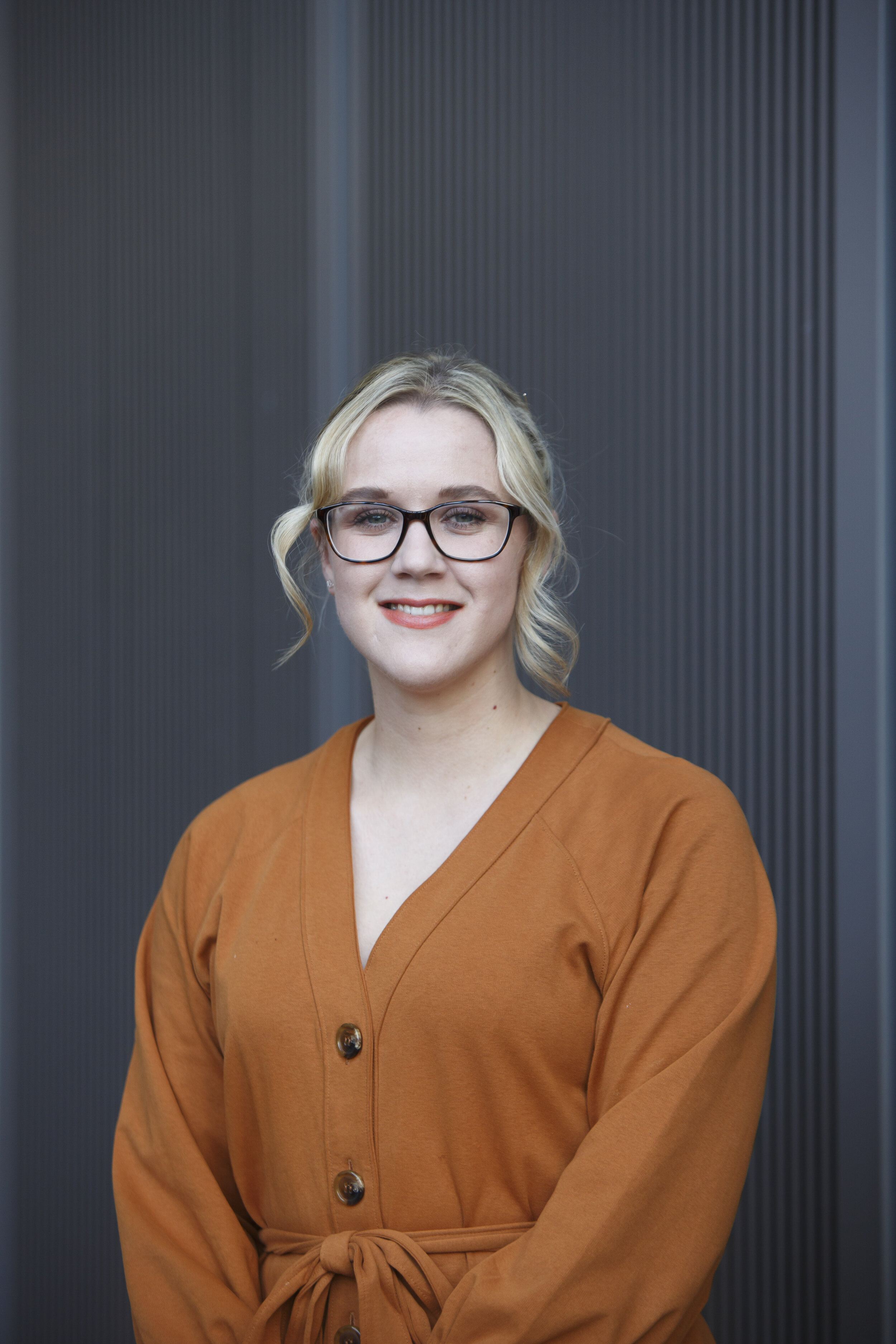
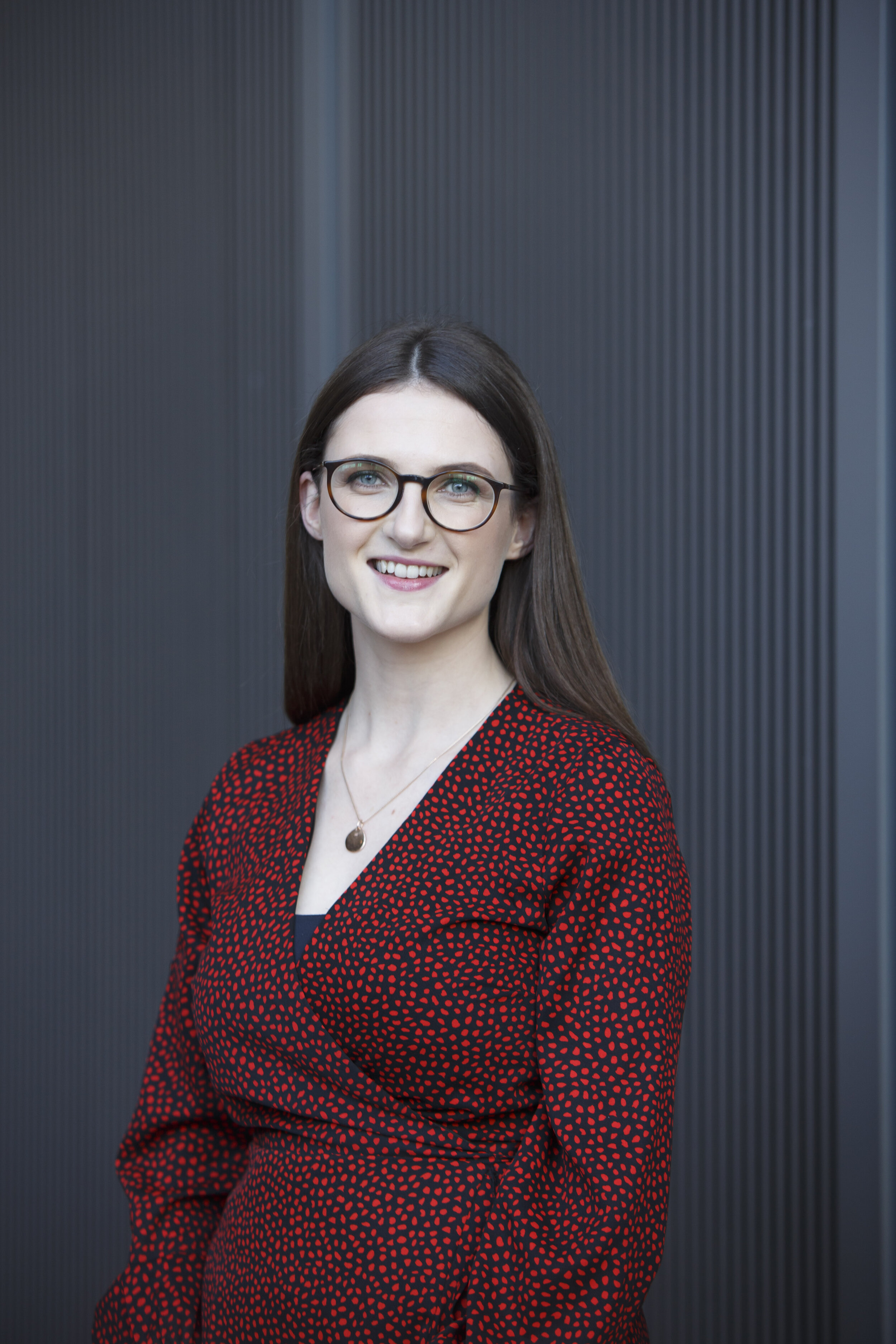
I was pleased to photograph the latest meeting of experts and representatives from the chosen towns at Manchester Metropolitan University business school. I was also able to photograph some portraits of the university staff at the conclusion of the meeting.

The High Streets Task Force was established to England's high streets and town centres to thrive - providing expert training, guidance data to the people who make them. Local leaders and partnerships are be able to access the latest data and evidence to inform their investment and regeneration decisions.
I was pleased to photograph the latest meeting of experts and representatives from the chosen towns at Manchester Metropolitan University business school. I was also able to photograph some portraits of the university staff at the conclusion of the meeting.
The funding will be piloted first in 20 town centres before being rolled out in 101 areas across the country.
The first 14 towns to take part in the pilot schemes and receive funding from the government will be:
Swinton Town centre – Salford, Thornton Heath – Croydon, Cheadle – Staffordshire Moorlands, Aldershot Town Centre – Rushmoor, Stirchley – Birmingham, Accrington Town Centre – Hyndburn, Kendal – South Lakeland, Friargate – Preston, Coventry City Centre – Coventry, Hartlepool Town Centre – Hartlepool, Ellesmere Port Town Centre – Cheshire West and Chester, West Bromwich Town Centre – Sandwell, Huyton Town Centre – Knowsley, Withington District Centre – Manchester.

“The Task Force will provide the tools they need to get the best advice possible and a dashboard of key local data,” Communities Secretary Robert Jenrick said.

Ministers will also launch a consultation on whether to build an online register of commercial properties, which could make it easier to bring empty shops back into use.
The government has also pledged to cut small retailers’ business rates bills by 50 per cent from April.

If you require photography of your conference, meeting or event please drop me a line at david@davidoates.net or fill out the form on the ‘Contact’ page of this website.


Documentary photography of Helen Knowles 'Trickle Down', Arebyte Gallery, London
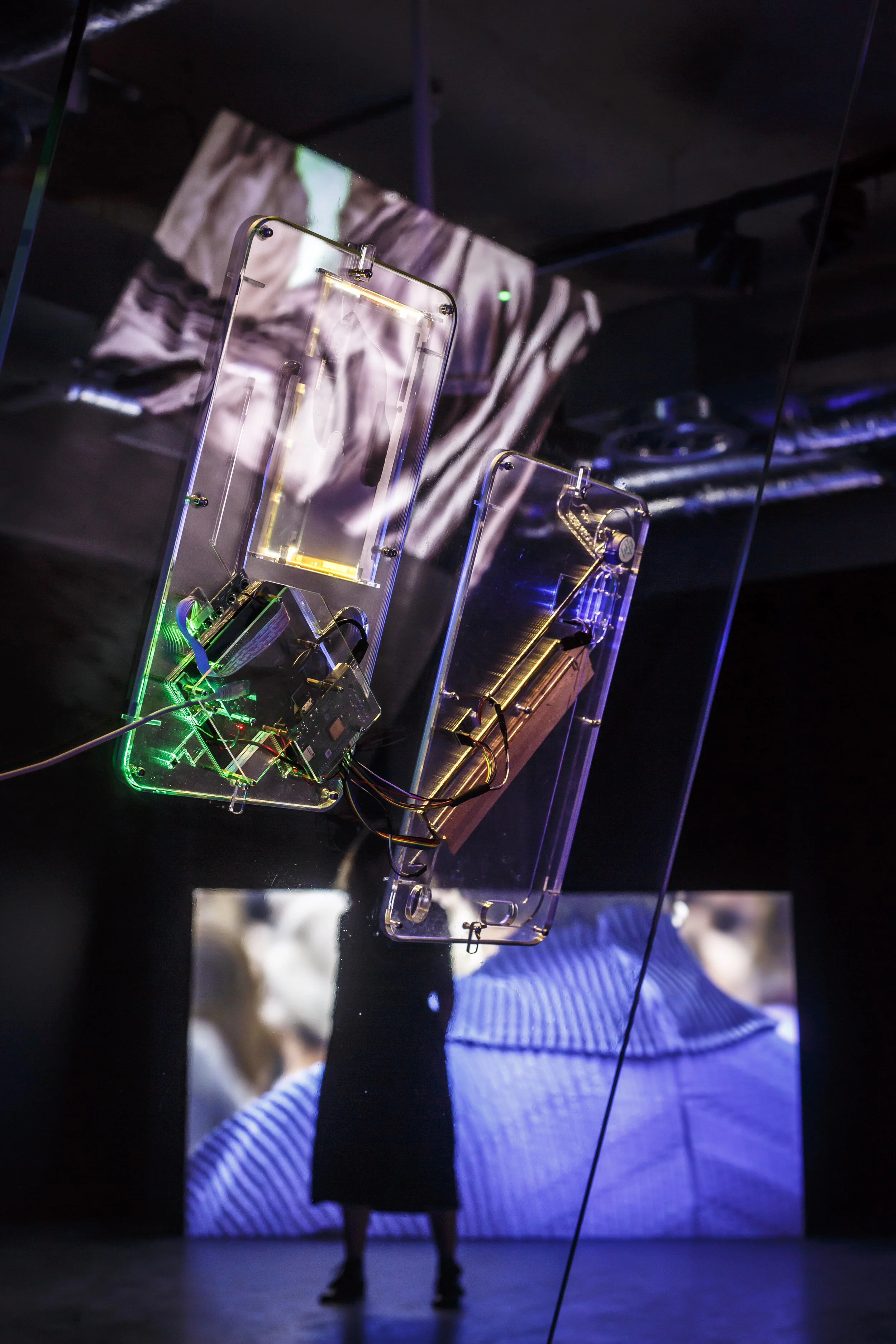
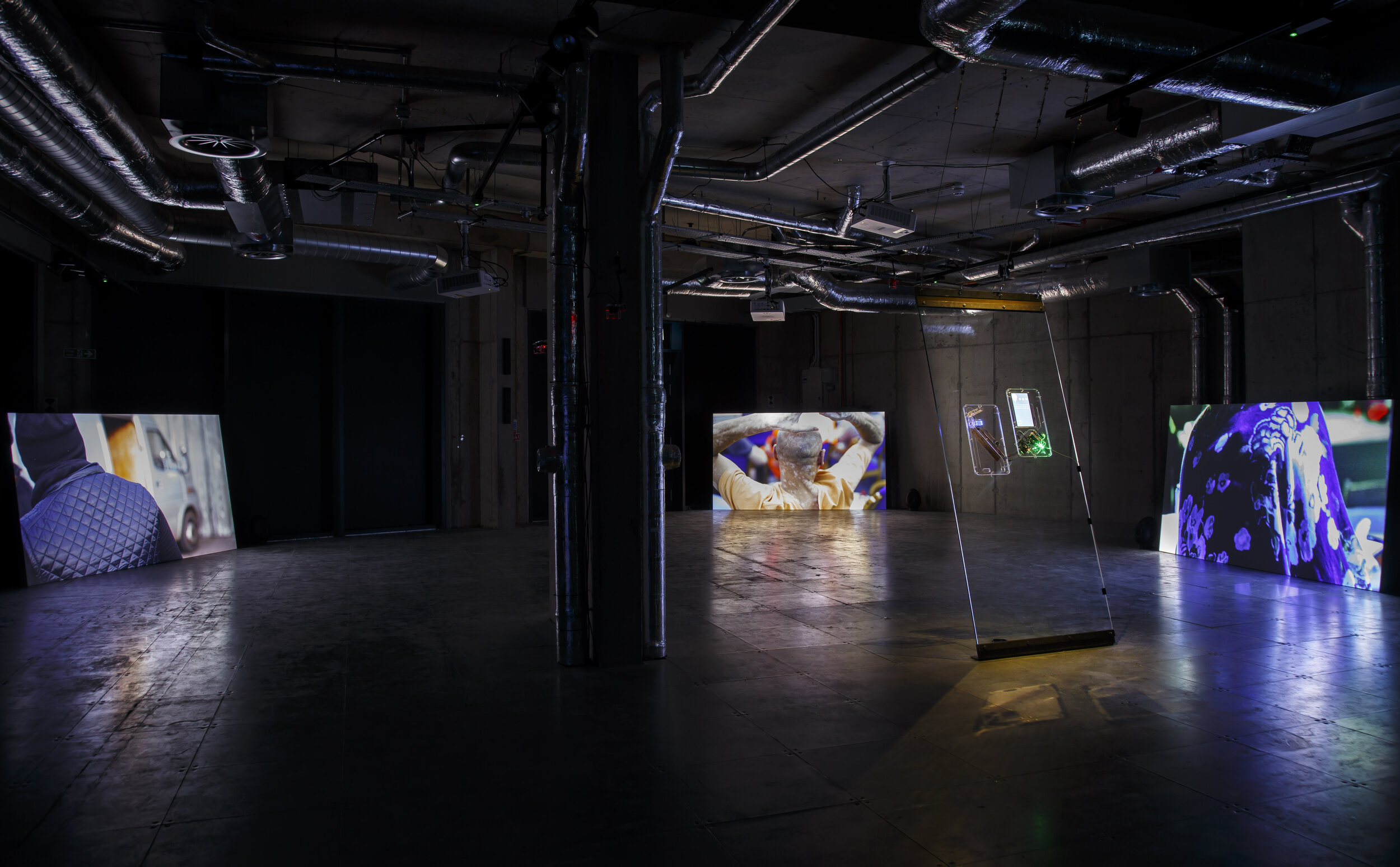
Trickle Down, A New Vertical Sovereignty is a tokenised four-screen video installation and generative soundscape, which explores value systems and wealth disparity. The artwork is composed of auction scenes, performances and choral interludes by different communities such as prisoners, blockchain technology employees, market sellers, and Sotheby’s auction bidders.
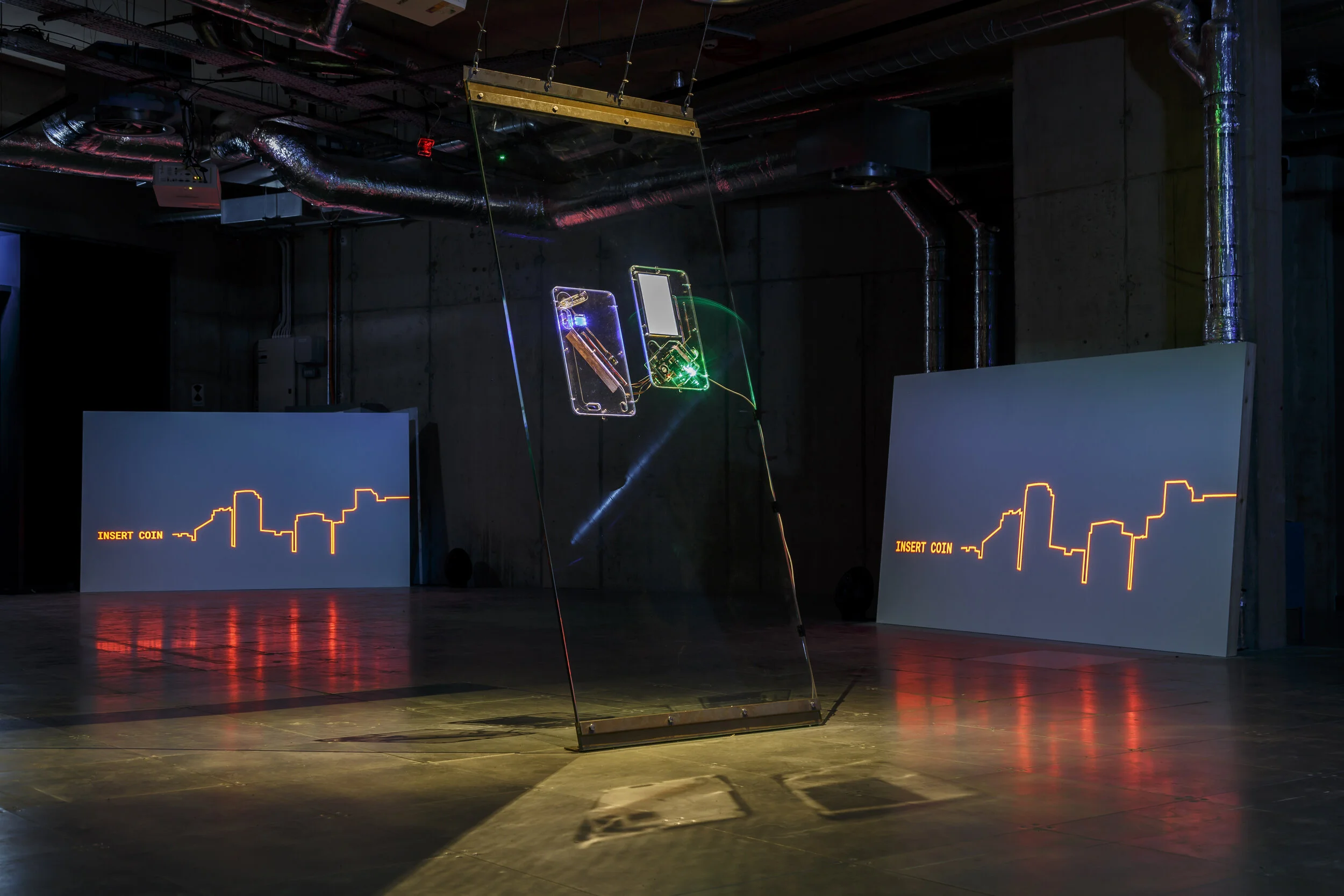
Helen Knowle’s immersive four-screen installation ‘Trickle Down’ opened on 23rd January.
I attended the final set-up day to photograph the completed installation ahead of the opening night.
Trickle Down, A New Vertical Sovereignty is a tokenised four-screen video installation and generative soundscape, which explores value systems and wealth disparity. The artwork is composed of auction scenes, performances and choral interludes by different communities such as prisoners, blockchain technology employees, market sellers, and Sotheby’s auction bidders.

The installation commences when a visitor drops a pound coin into a machine designed to expose the mechanisms needed to convert fiat currency into crypto-currency. The sensors, software and electronic components along with a read out of the blockchain ledger are exposed, embedded in a large sheet of glass. Each and every member of the Trickle Down community, who has helped the work come to fruition, will receive a share of the ETH via a crypto-currency wallet, questioning: can technology be a unifying force to enable more equality in society or does technology only work effectively for those who are educated to navigate it?

Knowles documented a series of auctions in widely different settings, which reflect the disparities in wealth and financial power individuals in different communities have. These include prisoners at HMP Altcourse in Liverpool, Ethereal Summit attendees, employees at blockchain company ConsenSys in New York, shoppers at Openshaw market in North Manchester and the Russian community in central London buying cultural artefacts at Sotheby’s auction house. Knowles photographed members of these communities during the bidding process, documenting their attire rather than identities.

Images of expensive handbags, jewels, fur and beautifully woven fabrics accompany sounds of rising numbers as cultural artefacts are offered for sale. At the opposite end of the wealth spectrum, bric a brac and basic goods are being bought in bulk at the north Manchester market and prisoners bid with their labour for plants to send to relatives for Christmas, during an auction staged by the artist exploring prison economies.
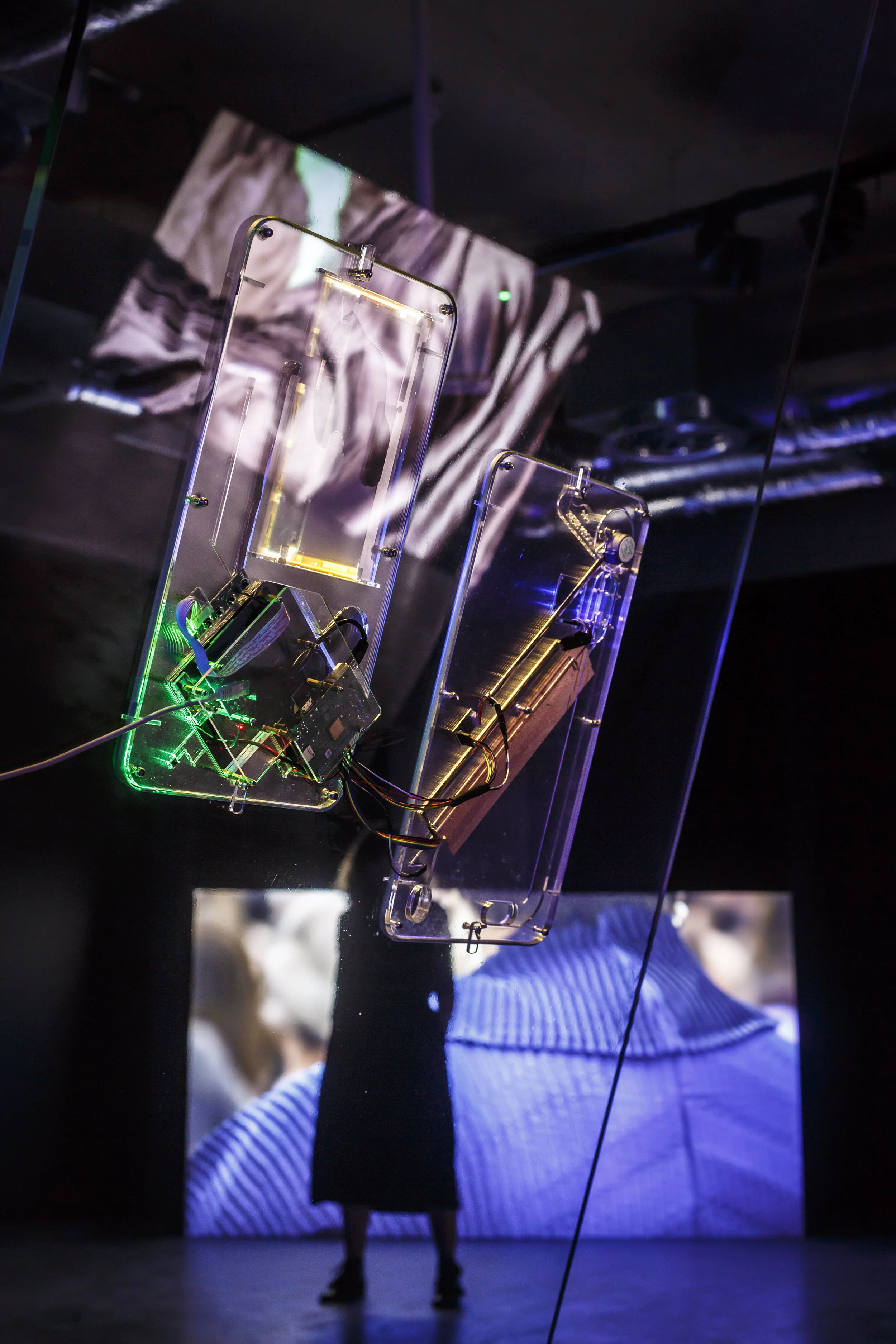
Trickle Down, A New Vertical Sovereignty seeks to explore and provoke questions about labour, automation, value in art, decentralised sharing economies and distribution of wealth.
https://www.arebyte.com/trickle-down-a-new-vertical-sovereignty
Vietnam
In October I made my first trip to Vietnam, a country that I’ve been wanting to visit for as long as I can remember. I was attracted by the culture, the cuisine and the thought of getting away from this year’s dismally dreary ‘summer’ to a country that while it has its fair share of rainfall also has its fair share of heat. Oh and scooters…

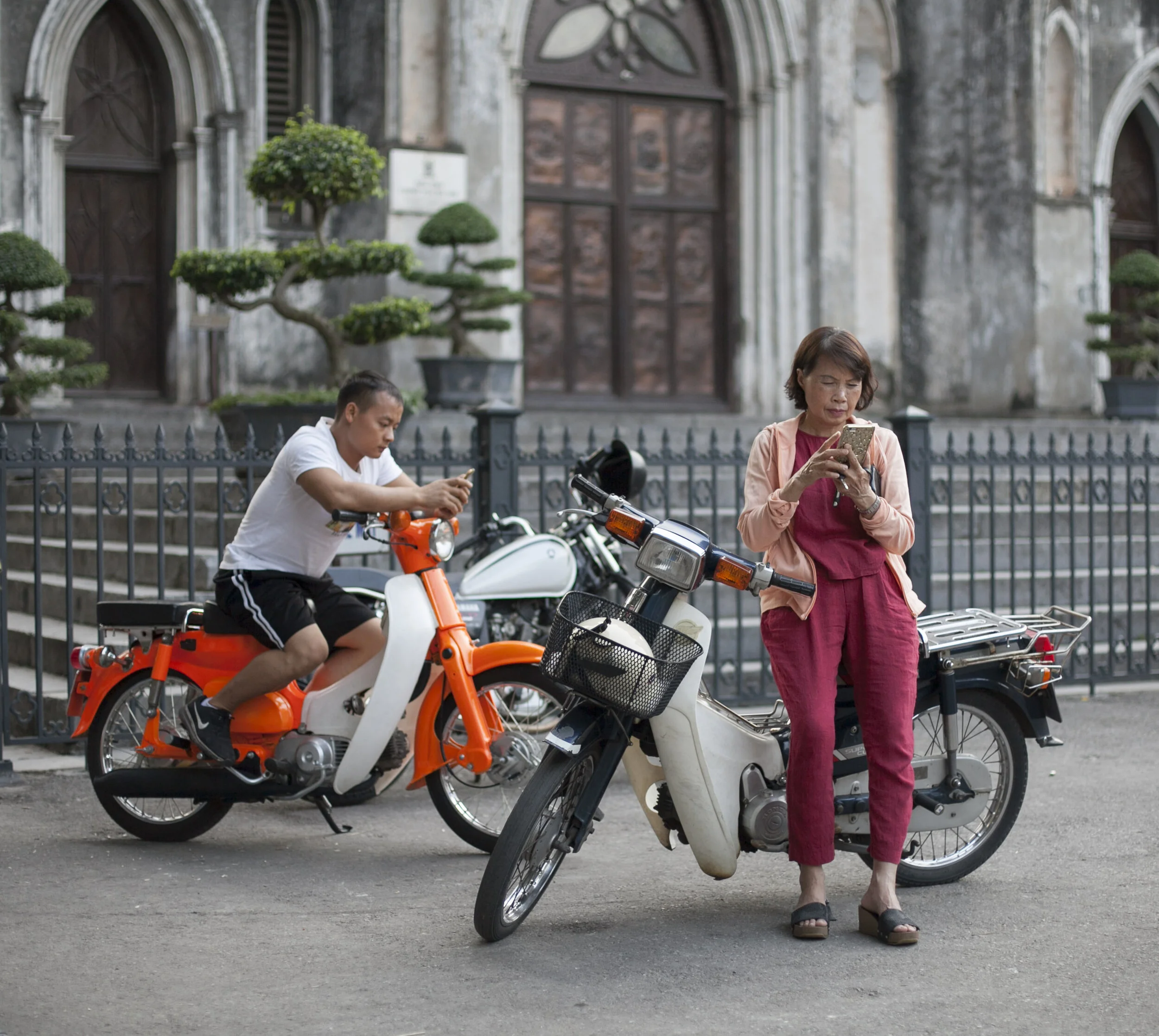
People relaxing on their Honda’s outside St. Joseph’s cathedral, Hanoi
Capturing Vietnam: Travel Photography of Vietnamese Culture and Streets
As an English freelance photographer, I’ve traveled extensively, but Vietnam presented a vibrant, dynamic environment unlike anywhere else. From the bustling streets of Hanoi to the peaceful coastline of An Bang Beach, each location offered a striking window into Vietnamese life, culture, and daily routines. The intensity of the cities and the tranquility of rural landscapes provided a rich visual narrative that I was eager to capture.

Members of the Vietnamese Army gathered for a dinner at the Vietnamese Military History Museum in Hanoi. I found later that it’s eerily reminiscent of this http://bit.ly/2PFwOiI from my visit to Beijing a few years ago.
Street Life and Urban Chaos in Hanoi
Hanoi’s streets are alive with energy, from the honking motorbikes weaving through crowded intersections to the street vendors selling local delicacies. Capturing urban life in Vietnam required a careful balance of timing, perspective, and attention to detail. Photography in this environment revealed not only the chaos but also the rhythms, relationships, and traditions that define Hanoi’s unique character.

A man photographs the now famous MiG-21 at the Vietnamese Military History Museum in Hanoi.
Cultural Heritage and Daily Life
Beyond the streets, Vietnam’s culture is visible in its architecture, markets, temples, and homes. Each neighborhood tells a story of community, history, and resilience. Through photography, I was able to document artisans at work, families engaged in daily routines, and cultural ceremonies, illustrating both tradition and the modern vibrancy of Vietnamese society.

The elegantly decaying cockpit of a captured United States Huey helicopter
Coastal Serenity and Rural Landscapes
Traveling from the city to the coast, locations such as An Bang Beach offered a contrast to the urban intensity. The calm beaches, fishing villages, and rural landscapes allowed for reflective, scenic photography that captures the slower pace of life. These settings provide a complementary perspective to the energetic streets of Hanoi, highlighting Vietnam’s diversity and natural beauty.

The Hanoi skyline
Photography as Storytelling in Vietnam
Vietnam is a photographer’s dream: the contrasts between urban chaos and coastal calm, modern life and traditional practices, provide endless opportunities for storytelling. Documenting the country required a mix of environmental portraits, street photography, and landscape work, creating a cohesive visual journey that communicates the spirit of Vietnam.

A woman sells clothes in a night market at Hàng Bè in central Hanoi.
The Allure of Hanoi
Hanoi, the capital city, was my first stop. Stepping off the plane, I was immediately hit by the warm, humid air and the symphony of honking scooters and chatter that filled the streets. The city buzzed with life, and I knew I was in for an adventure. As I wandered through the Old Quarter, my camera was glued to my face, capturing the narrow alleyways, the chaotic mix of colonial architecture, and the street vendors who seemed to emerge from every corner.

One of my favorite memories from Hanoi was capturing the street food culture. I watched as locals prepared dishes in makeshift kitchens on the sidewalks. The aroma of grilled meats and fresh herbs wafted through the air, drawing me closer. I couldn't resist trying pho from a small stall run by an elderly woman who smiled warmly as she ladled broth into a bowl. The experience was transformative; I felt as if I had tasted the heart of Vietnamese cuisine.

A woman washes in the river in Tam Cốc-Bích Động
Despite the city's charm, navigating the streets was a daunting experience. The sheer number of motorbikes zipping past made crossing the road feel like a high-stakes game. I watched in awe as locals seemed to glide through the traffic, their movements fluid and confident. Meanwhile, I hesitated, clutching my camera as I waited for a gap in the chaos.

This guy appeared to be chopping up a monster in Tam Cốc-Bích Động. I later discovered it was a goat and realised were the Baphomet mythology comes from. I like the matching under bites of man and beast.
The Scary Bus Rides
After a few days, it was time to venture beyond Hanoi. I boarded a sleeper bus heading to Tam Coc, and the adventure took a turn I hadn’t anticipated. The bus driver, a seemingly fearless man in his 30s, sped down the winding roads with a reckless abandon that left my heart racing. With each sharp turn, I clutched my seat, whispering silent prayers. I managed to snap a few photos of the breathtaking landscapes outside the window, but the sheer terror of the ride overshadowed my artistic intentions.

A scene familiar the world over that always seems worth a photograph. Note the still very popular in Vietnam pith helmet and the ubiquitous scooters.
When we finally arrived in Tam Coc, I was greeted by stunning limestone karsts rising majestically from the rice paddies. The landscape felt like a painting come to life, and I quickly set out to capture its beauty. A boat ride along the river revealed views that were straight out of a dream. I photographed local rowers navigating the tranquil waters, their movements graceful against the backdrop of towering cliffs.
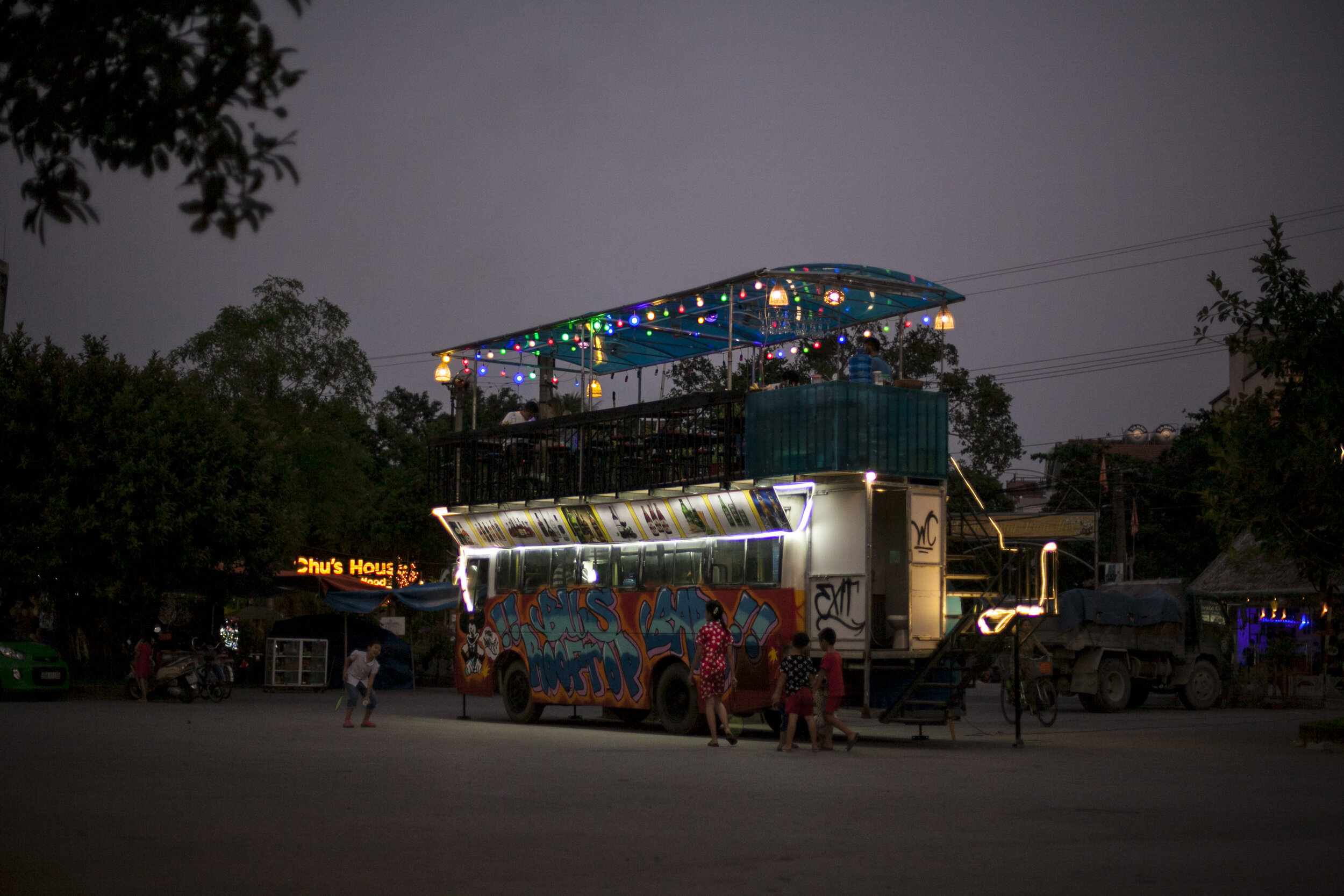
Tam Cốc-Bích Động is a backpackers haven at some times of the year. Here one of the two bus bars opposite the lake.
A Culinary Detour in Hue
From Tam Coc, we made a brief stop in Hue. While my time there was short, it was not without its highlights. After changing buses, I took the opportunity to seek out the famed Bun Bo Hue—a spicy beef noodle soup that is a local specialty. I found a bustling little eatery filled with locals, the air thick with the scent of herbs and spices.

And in the lake the local kids who swim here every night another picture that reminded me of a shot from China http://bit.ly/38T4rW0
As I savoured each spoonful, I captured the vibrant colours and textures of the dish, the glistening broth swirling with greens and tender beef. It was a simple meal that resonated deeply, embodying the essence of Vietnamese culinary culture.

Young Vietnamese man playing pool in one of the nearly empty backpacker bars of Tam Cốc. Vietnam is a country completely enamoured by counterfeit designer wear and these boys didn’t disappoint.
Da Nang: A City of Contrasts
Next on my journey was Da Nang, a city that struck me as a blend of modernity and tradition. Here, I explored the Dragon Bridge and the stunning beaches that lined the coastline. The juxtaposition of skyscrapers against the natural beauty of the sea was captivating.

Forgive me for the sunset shot. The limestone karsts emerging from an otherwise billiard flat plateau define the geology of much of Vietnam most famously at Halong Bay. The area around Tam Cốc is an inland version with rice paddys covering the water for much of the year.
While in Da Nang, I discovered a thriving street food scene. I encountered vendors selling banh mi, the beloved Vietnamese sandwich that is as varied as it is delicious. I snapped photos of the colorful ingredients piled high—crunchy pickled vegetables, savory meats, and fresh herbs. Each bite was an explosion of flavor, and I felt a rush of excitement as I documented the culinary artistry before me.

A woman cleans part of the absolutely vast Bái Đính Buddhist Temple in Ninh Bình Province
Hoi An: A Photographer’s Paradise
Just a short journey from Da Nang is Hoi An, a UNESCO World Heritage site renowned for its well-preserved ancient town. The moment I arrived, I knew I had stumbled into a photographer’s paradise. The streets were lined with yellow-hued buildings, their facades adorned with vibrant lanterns that seemed to glow in the soft evening light.

Vietnam is the home of the face mask and the spiritual home of Chanel.
I spent hours wandering the narrow alleyways, capturing the intimate moments of daily life—vendors preparing their goods, children playing in the streets, and couples sharing quiet moments along the riverside. Hoi An’s charm was intoxicating, and I found myself lost in the magic of it all.

Book keeping at the market in Hoi An
I also made my way to An Bang Beach, just a short bike ride from the town center. The beach was a breathtaking escape, with soft sand and azure waters. Here, I captured the juxtaposition of relaxation and the vibrant energy of beachgoers enjoying their day. The sun dipped below the horizon, casting a golden hue over the scene, and I felt a sense of fulfillment as I clicked away, the light perfectly framing my subjects.

Shoppers in Hoi An market
Quy Nhon and Bai Xep: Hidden Gems
Continuing my journey, I ventured to Quy Nhon and Bai Xep, two coastal towns that felt like hidden gems. In Quy Nhon, I found a more laid-back atmosphere compared to the bustling cities. The beaches were less crowded, allowing me to connect with the local culture on a deeper level. I photographed fishermen mending their nets, their weathered faces telling stories of hard work and dedication.

Motorcycling wear in Vietnam is the best I’ve seen anywhere.
At Bai Xep, I discovered a tranquil setting that felt worlds away from the frenetic energy of Hanoi. The beach was dotted with traditional fishing boats, their bright colors contrasting beautifully with the sandy shore. I spent my days capturing the idyllic scenery and the simple joys of life along the coast.
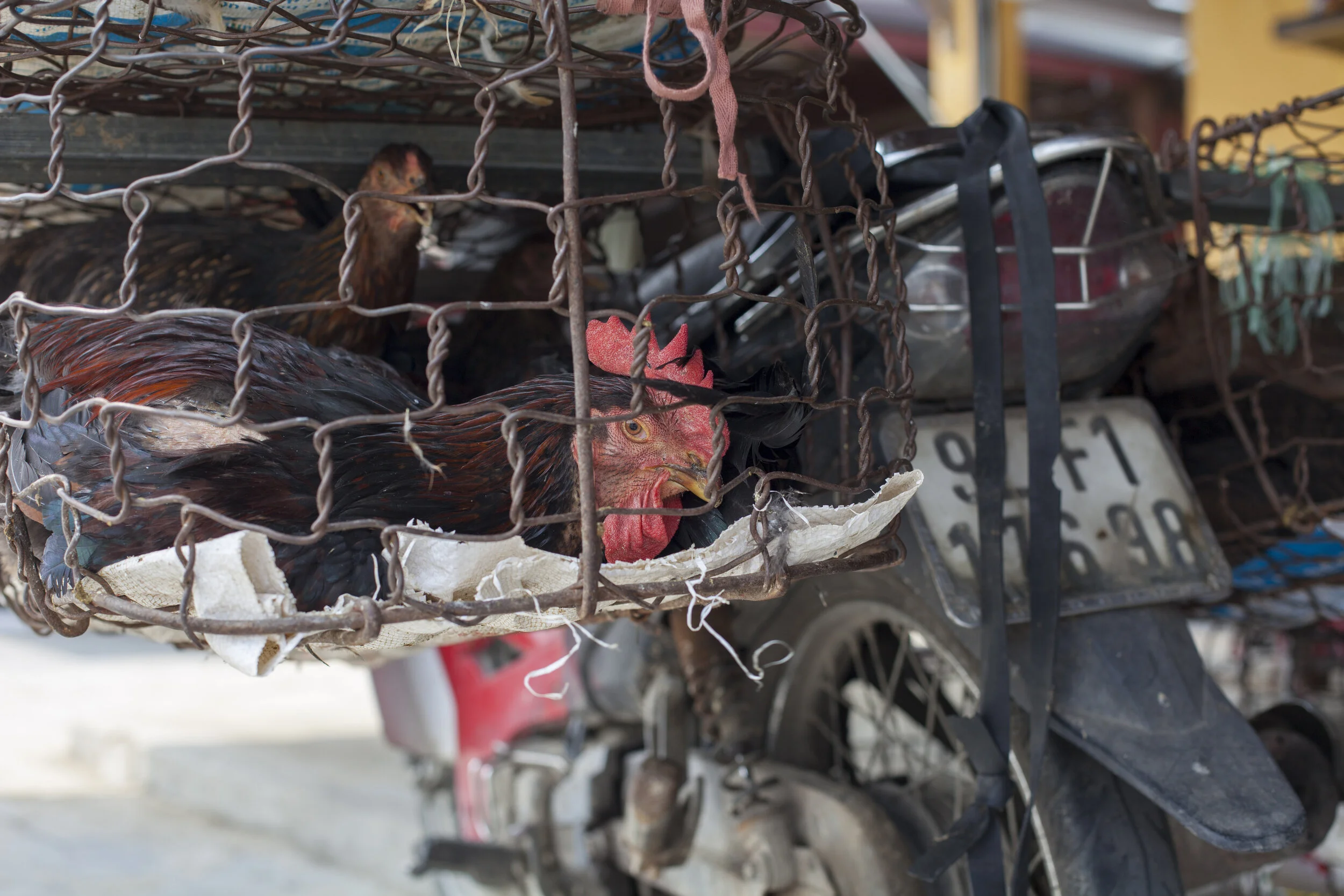
Probably the final journey before this guy becomes Pho Ga
One evening, as I watched the sun set over the horizon, I reflected on the journey thus far. My experiences had deepened my appreciation for Vietnamese culture, particularly its resilience and warmth.

Relaxing in Hoi An
The Return Journey
As I prepared to leave Vietnam, I couldn’t help but feel a sense of nostalgia wash over me. The bus rides, though often harrowing, had become part of the adventure, a reminder of the unpredictability of travel. The street food, with its incredible flavors and colors, had fueled my passion for photography and storytelling.

The outdoor fan is an absolute necessity for any restaurant hoping to attract custom.
I returned home with a treasure trove of images, each one a testament to the beauty and complexity of Vietnam. My camera had captured not just landscapes and meals, but the spirit of the people I met along the way.

A typical traffic jam in Da Nang. Everyone rides.
In sharing my journey, I hope to convey the essence of Vietnam: a land of contrasts, where chaos meets tranquility, and tradition dances with modernity. My adventure was more than just a trip; it was a deeply transformative experience that will continue to inspire my work as a photographer.

Even though the machines are incredibly reliable, Vietnamese Honda mechanics are rarely out of work due to the vast numbers on the roads. Here are young man waits for a street corner mechanic to mend his bike in Da Nang.
Vietnam, with its captivating streets and tantalizing food, has etched itself into my memory—a destination I will cherish and revisit through my lens for years to come.

Street food vendors in Da Nang. Everything you’ve heard is true, this is how to eat the best food in Vietnam. My highlight was a bowl of Bun Cha eaten knees round ears in a garage entrance with motorbikes whizzing by. Unimprovable.

One of the most stylish people I’ve seen this year. In Qui Nhon in the centre of the country.

At night in Qui Nhon

A very typical view down an alley in Hoi An.

Seamstresses work late in the night in Da Nang.

Another great Hanoi Bun Cha spot. The people get bigger the chairs don’t.

A man and his dog in Hanoi.

A typical side street motorcycle mechanic/valet service in Hanoi

The street food essentials, outdoor fan, low plastic tables, beautiful sunlight.
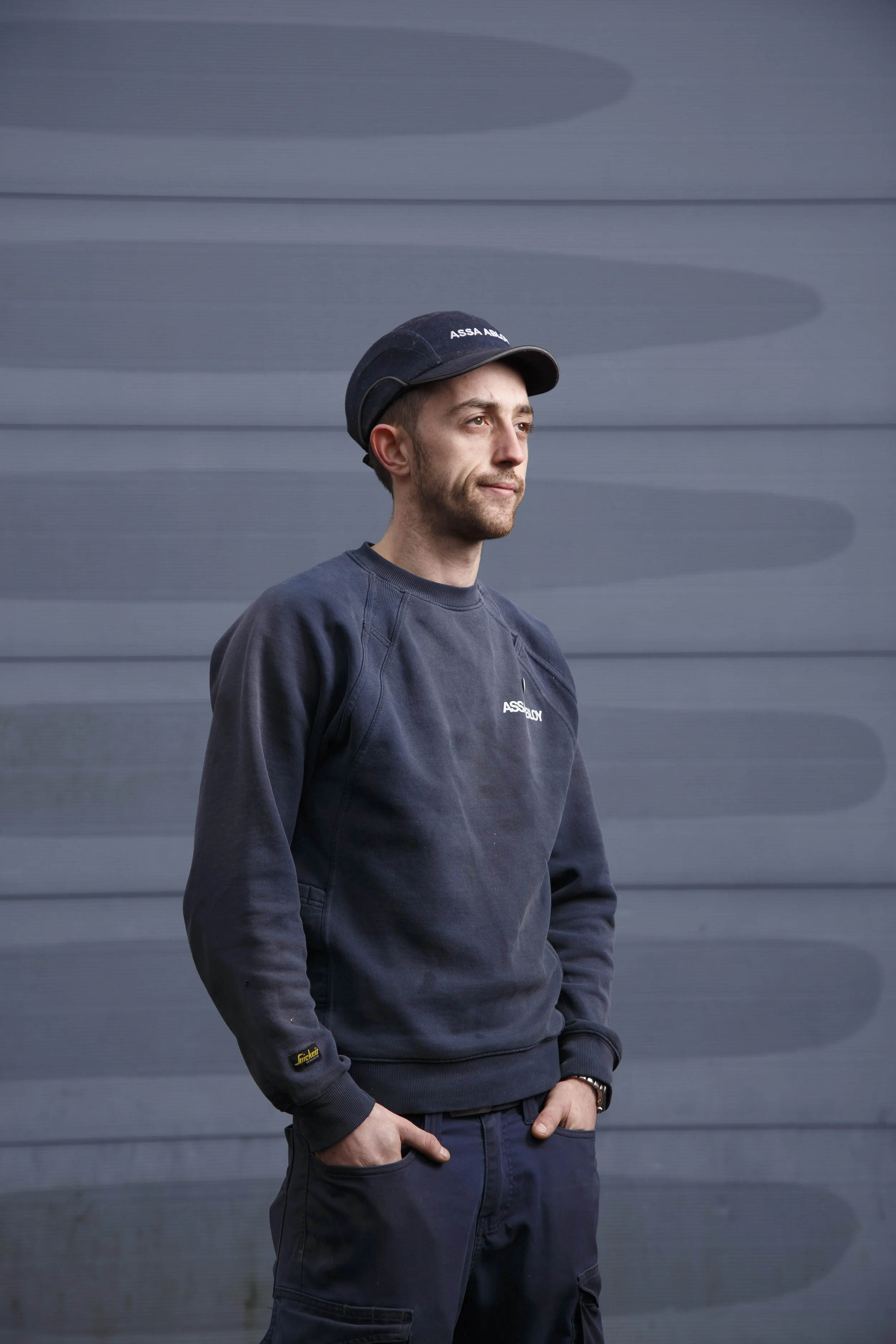
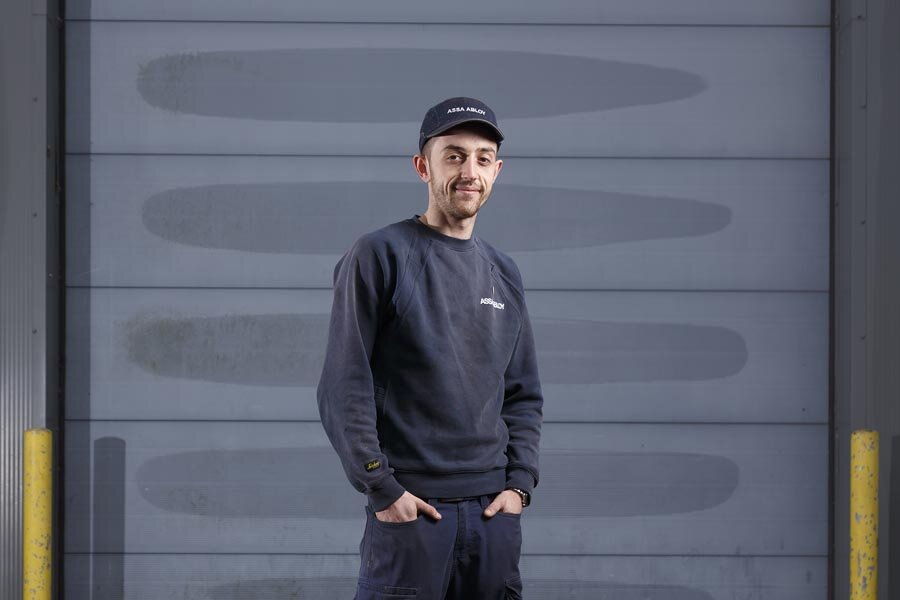
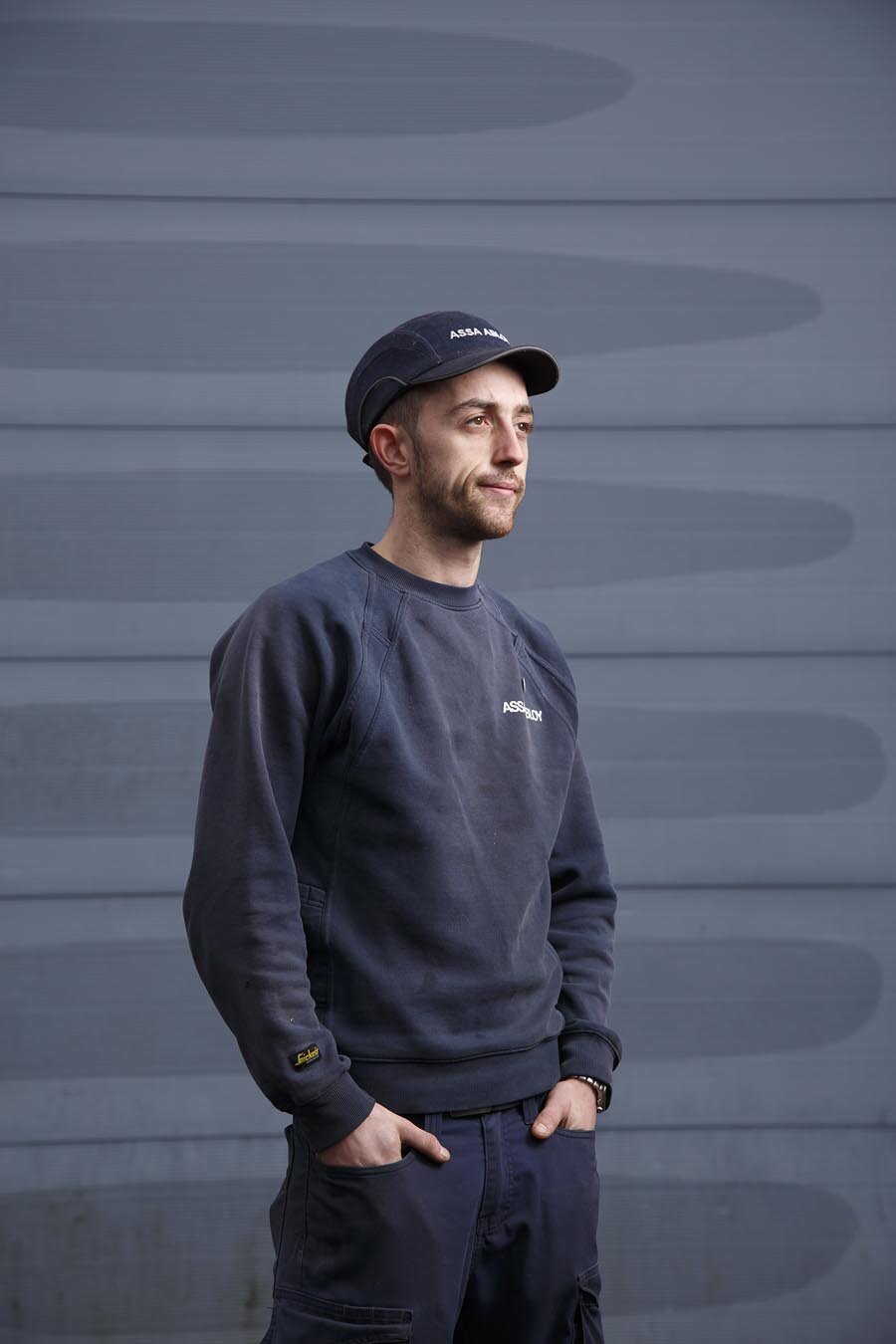
Aaron Heinzelmann of Assa Abloy for Off the Wall, Stockholm
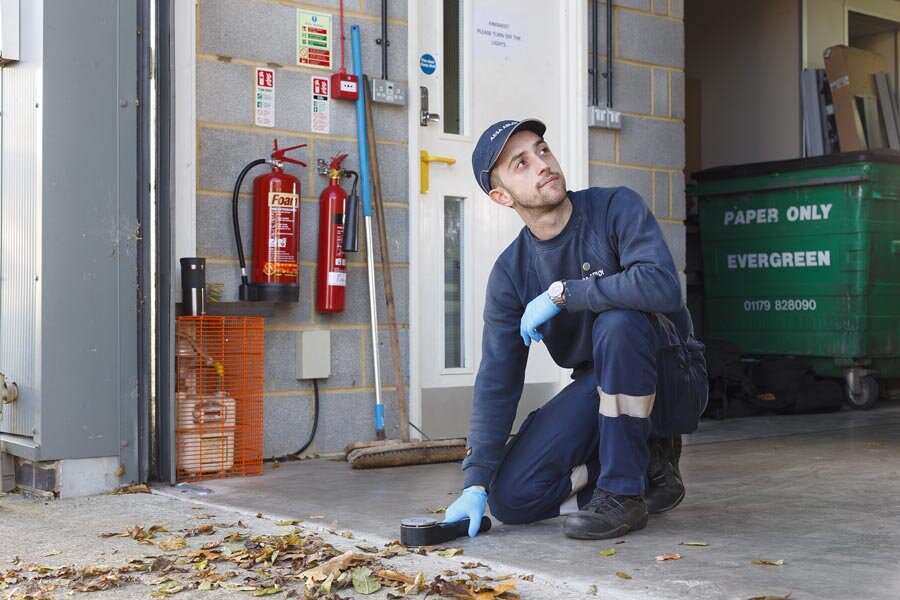
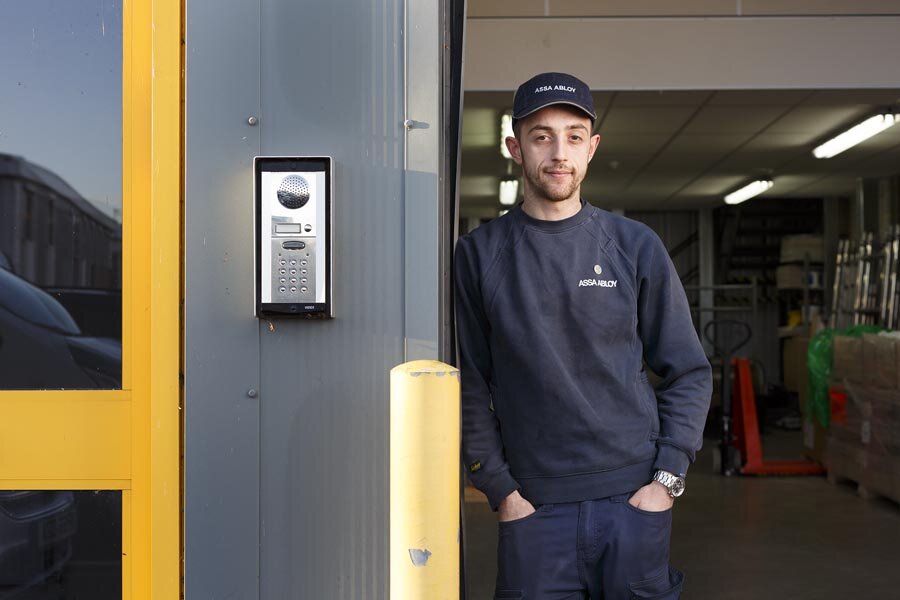
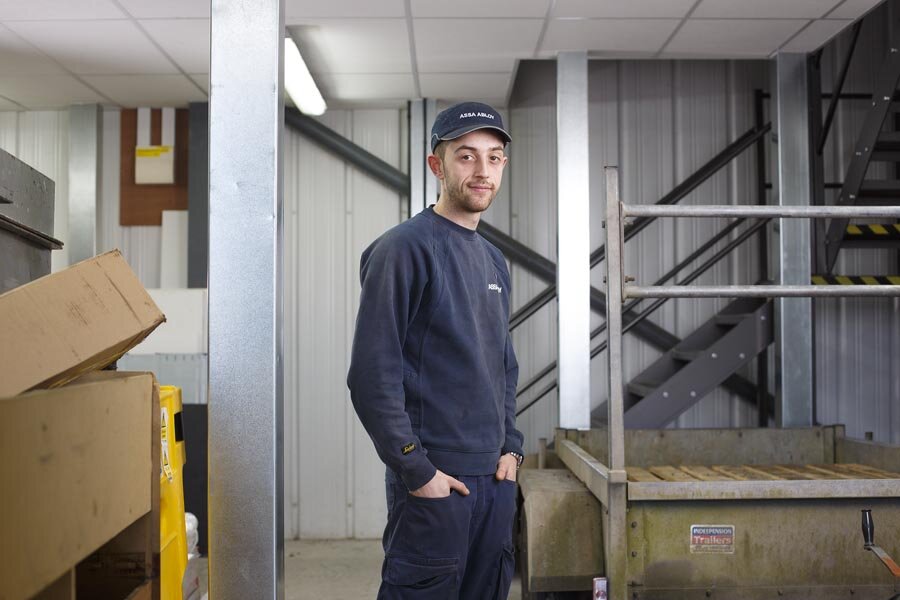
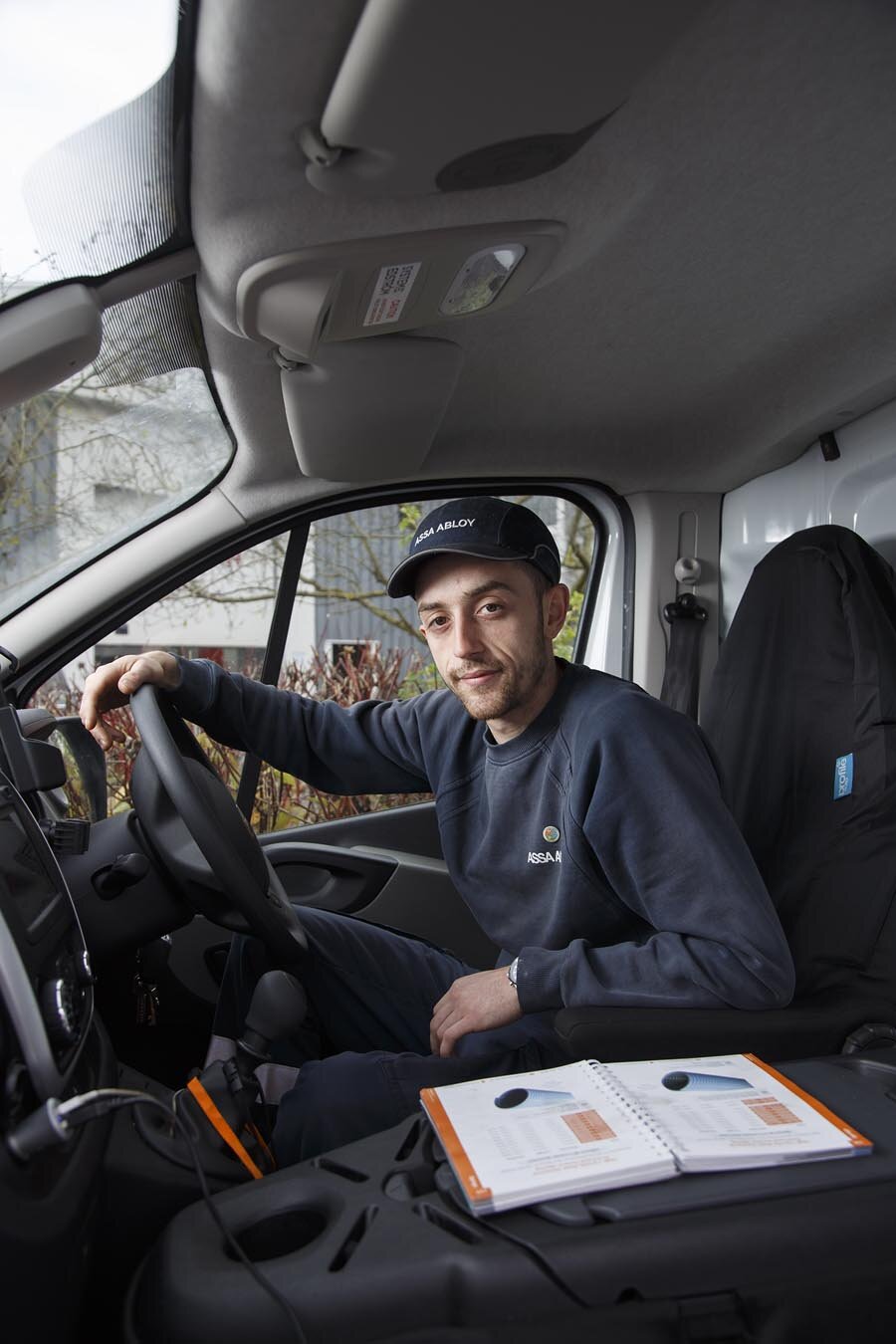
It was great to photograph Aaron for his employers Assa Abloy last week.
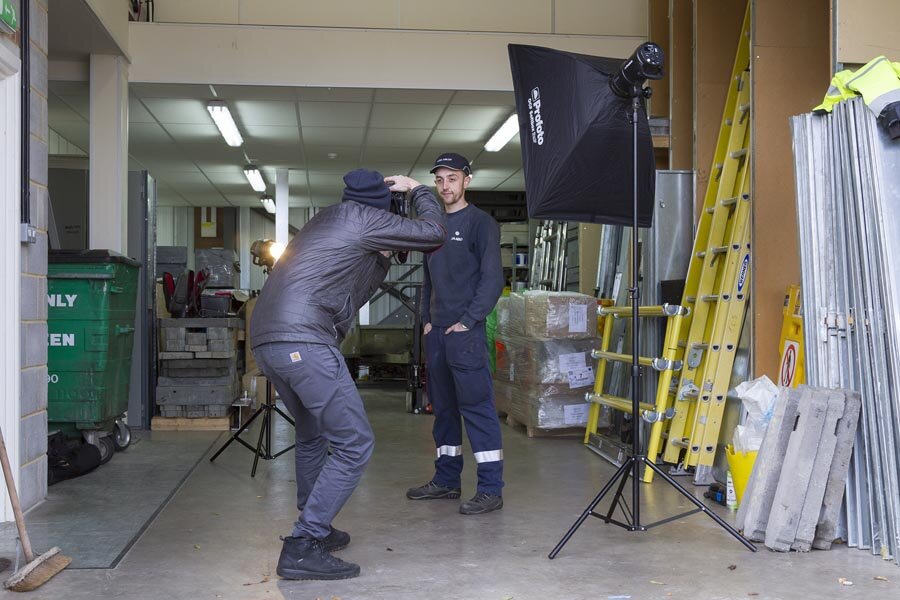
Aaron came to the aid of a mother and her seriously ill daughter while at work earning him a hero award and a feature in the company’s magazine. I'm glad to have been invited to be a part of it by Swedish agency Off the Wall. The final shot is a ‘behind the scenes’ for the rear cover of the magazine, thanks to Aaron’s Uncle Dave for sterling work on second camera duties.
The shoot was in Kenn, North Somerset so I had road trip and a stay in a holiday cottage the night before and a refreshing tea on the seafront at Clevedon before the long drive north.
Aaron Heinzelmann Hero Award Photography for Assa Abloy
I recently photographed Aaron Heinzelmann of Assa Abloy for Swedish agency Off the Wall, Stockholm, documenting his recognition as a workplace hero for a feature in the company magazine. Aaron was awarded a hero accolade after coming to the aid of a mother and her seriously ill daughter while at work, demonstrating quick thinking, compassion, and professionalism.
Capturing a Workplace Hero
The shoot aimed to capture Aaron Heinzelmann both as an employee of Assa Abloy and as an individual recognised for his bravery. Photography included portraits, environmental shots, and a behind-the-scenes image used for the rear cover of the magazine. The shoot was collaborative, with Aaron’s uncle Dave assisting as second camera, providing additional perspectives to tell the story.
Working with Off the Wall, Stockholm
The commission was managed by the creative team at Off the Wall in Stockholm, who ensured the photography aligned with Assa Abloy’s corporate communications and magazine style. Collaborating with the agency allowed for a smooth workflow and a visually engaging representation of Aaron’s achievement, highlighting both personal narrative and professional context.



On Location in North Somerset
The shoot took place in Kenn, North Somerset. Preparation included an overnight stay in a holiday cottage and a stop for tea on the seafront at Clevedon before the drive north. Capturing environmental context adds depth to the story, connecting the heroic actions of Aaron Heinzelmann to the locations where they occurred.
About Assa Abloy and Employee Recognition
Assa Abloy is a global leader in door opening solutions and security technology. The company regularly features staff achievements in its magazine, showcasing examples of initiative, care, and dedication. Photography plays an important role in this, highlighting individuals like Aaron Heinzelmann and reinforcing the company’s culture of recognition, safety, and service excellence.
Francis Lung for Scandinavian Airlines
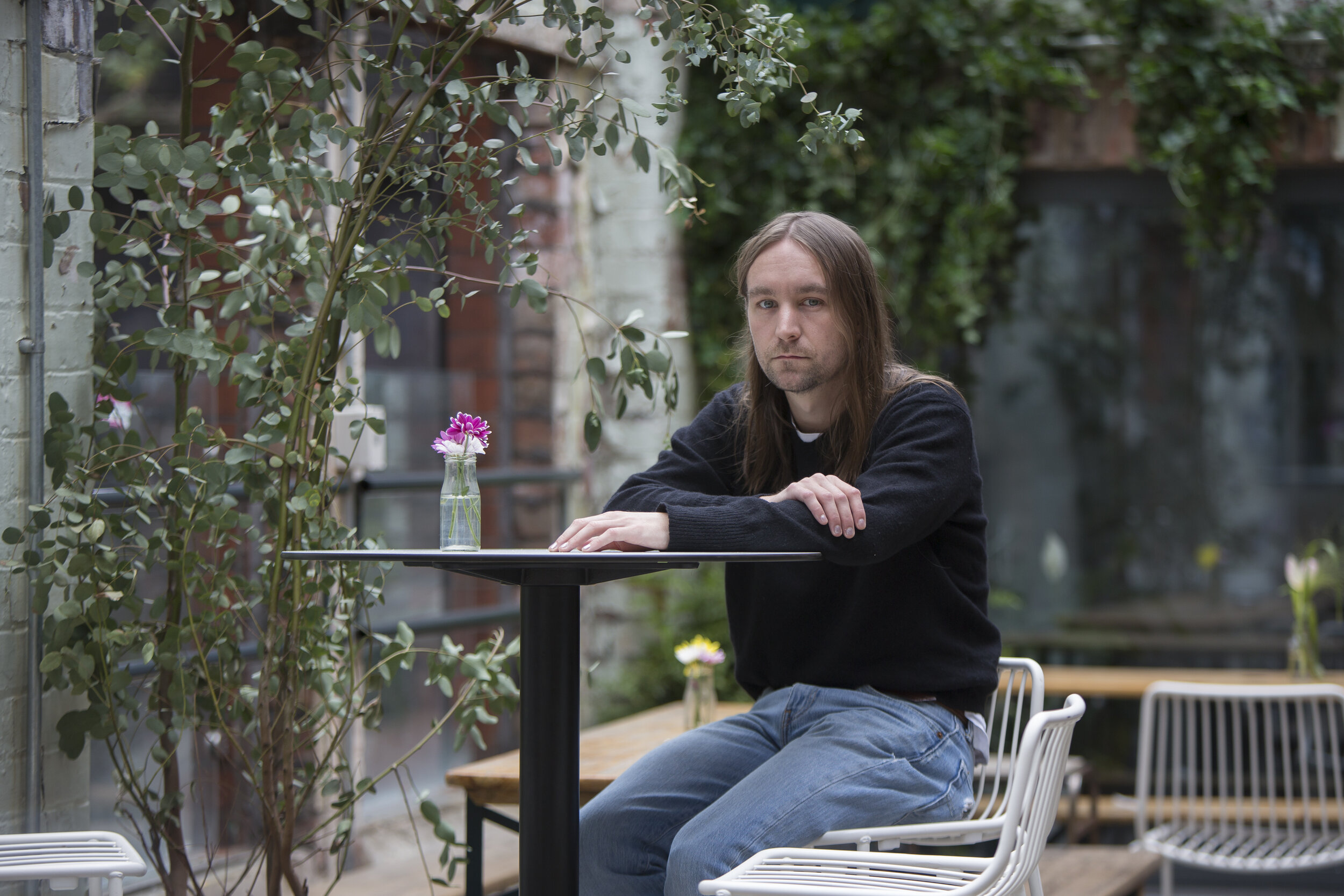
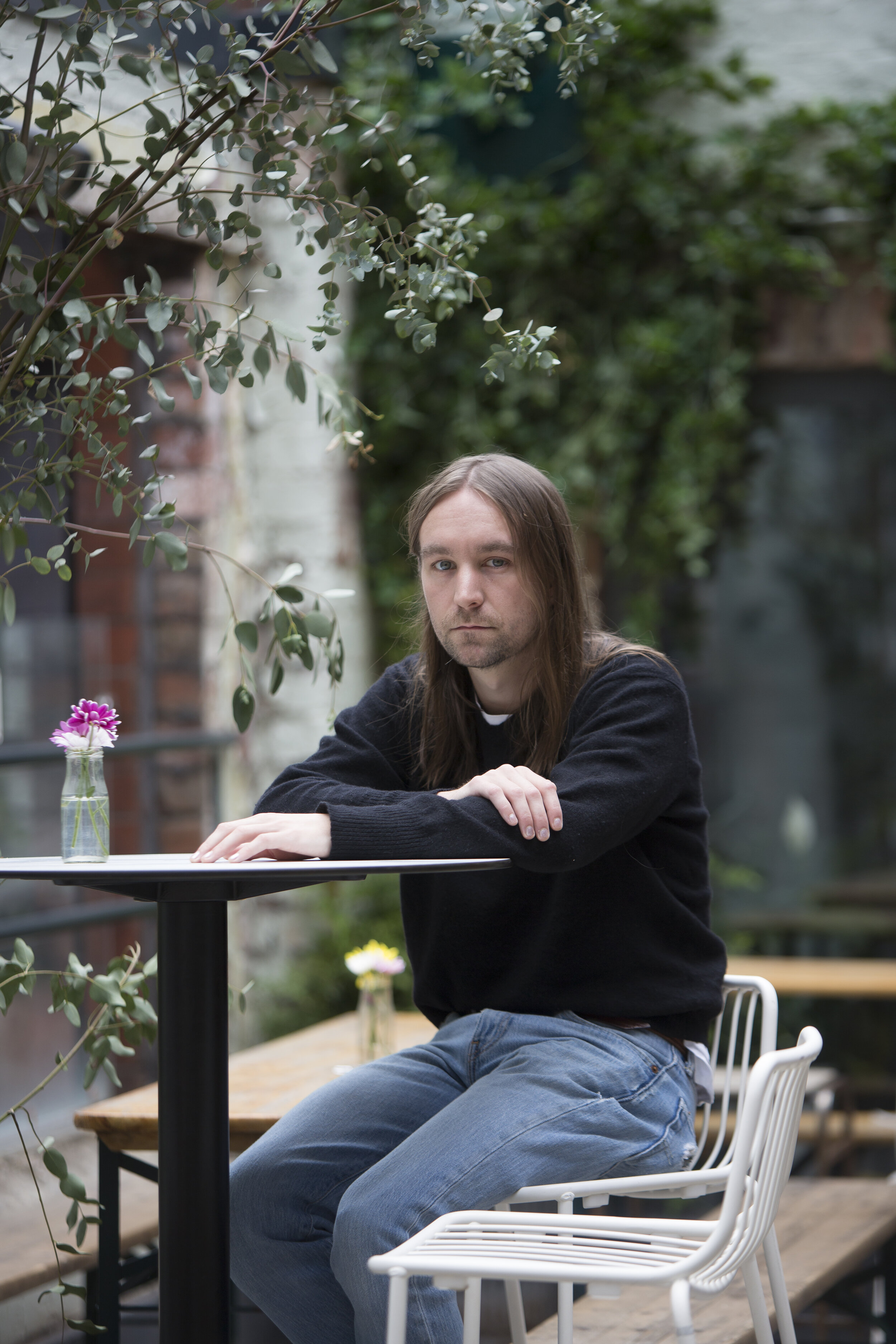
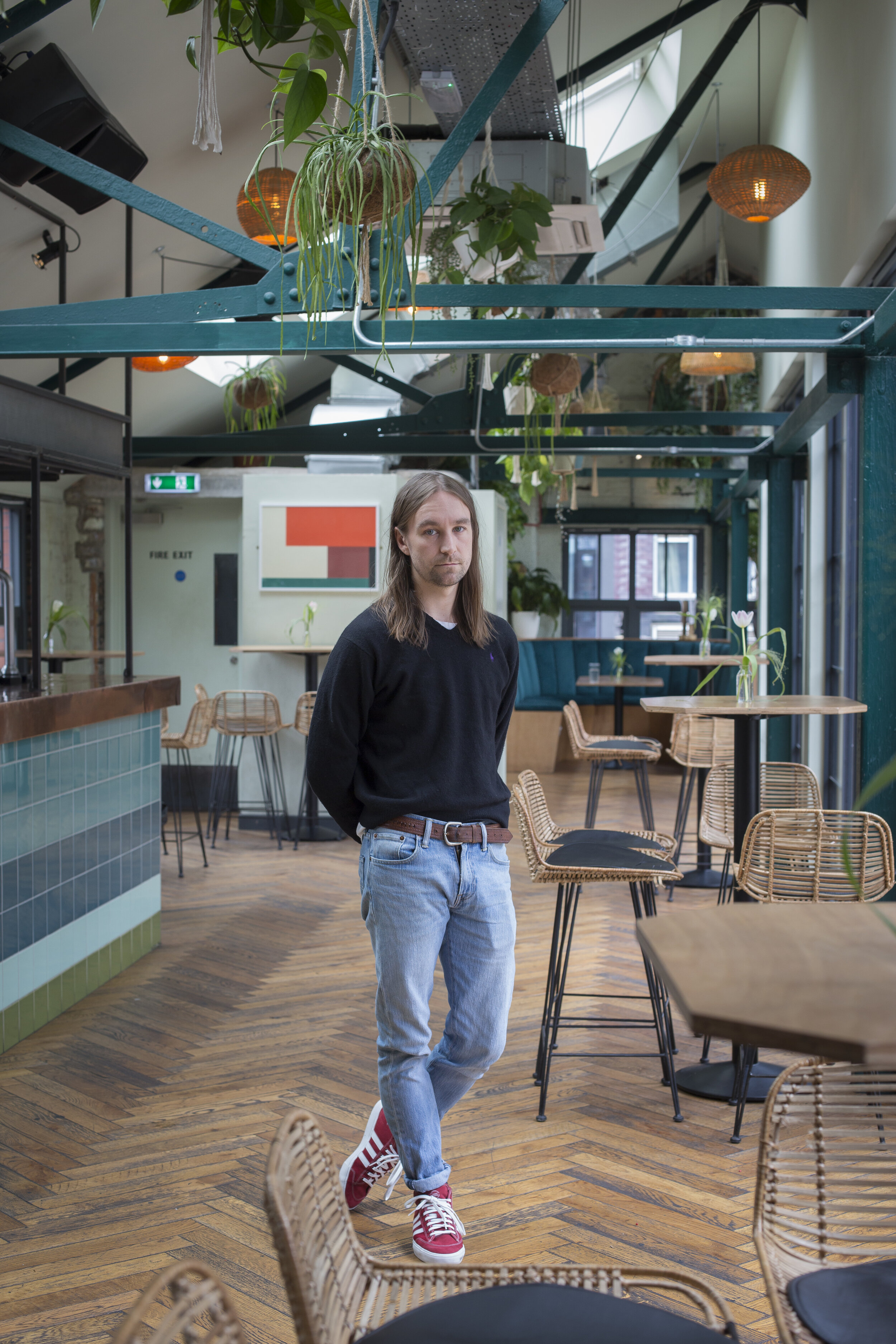
Photographs of Francis Lung, solo musician and former member of the Manchester band Wu Lyf.
A portrait photography commission for Scandinavian Airlines.

Francis Lung Portrait Photography in Manchester
I recently photographed Francis Lung, solo musician and former member of the Manchester band Wu Lyf, for Scandinavian Airlines. The shoot focused on capturing Francis’ personality and musical presence in locations he recommends around Manchester.
Portraits at Yes and Other Manchester Locations
The portraits were taken at the venue and club Yes, one of Francis’ preferred spots in the city. The shoot combined casual and posed portraits to reflect Francis’ style, energy, and connection to the Manchester music and cultural scene.
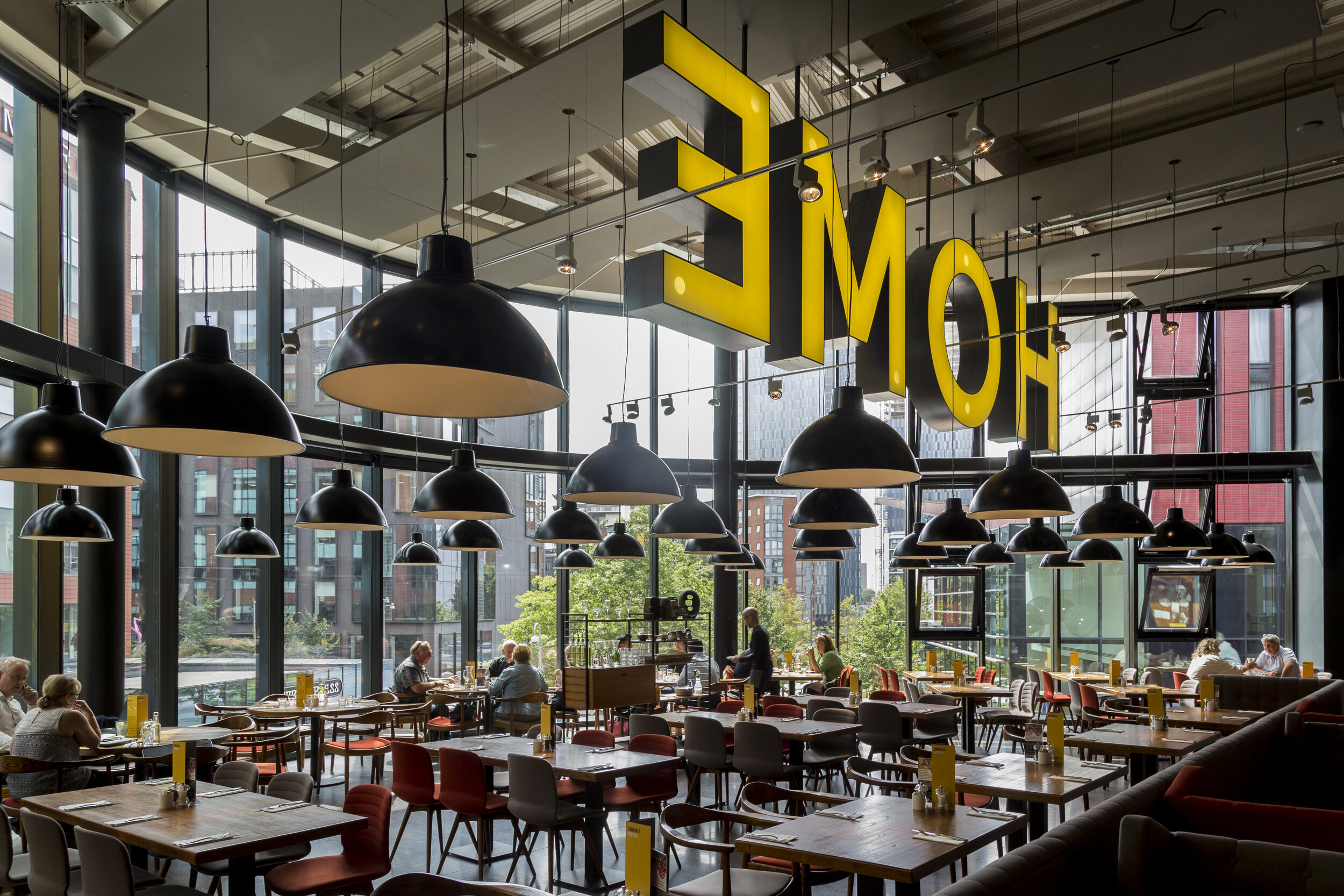
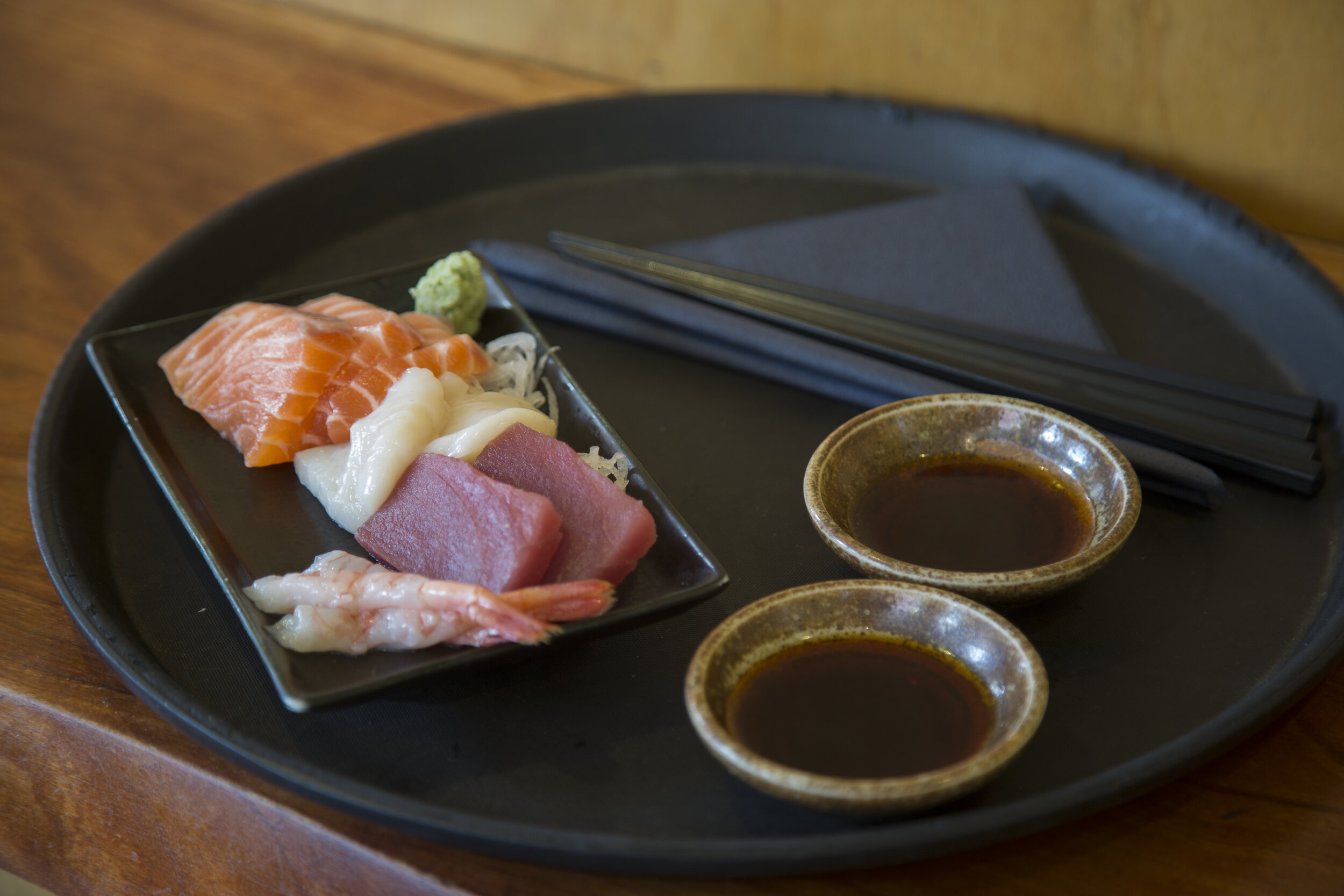
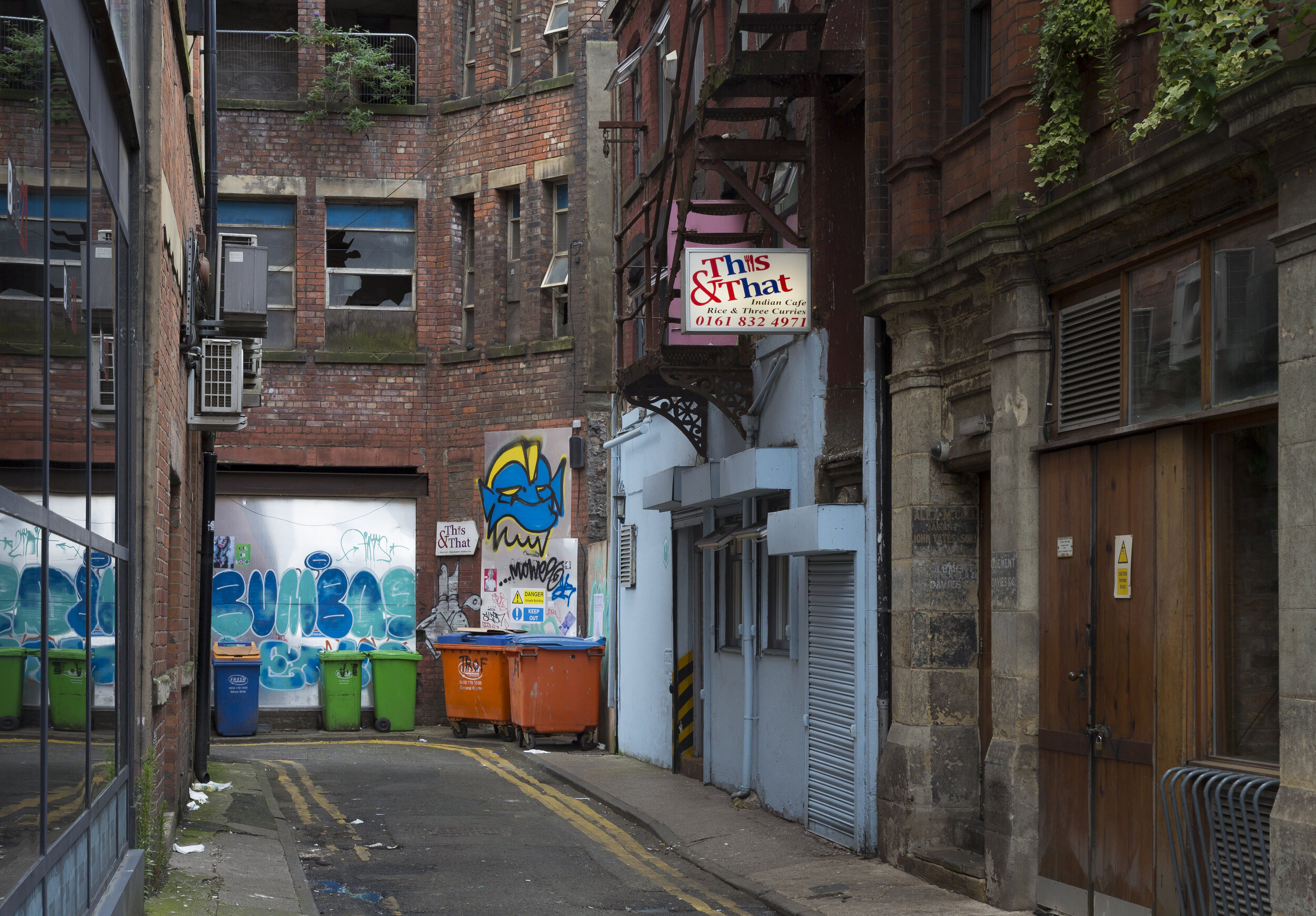
Additional locations included the arts centre Home, the Japanese restaurant Yuzu, the Whitworth Art Gallery, and This & That, a personal favourite of mine.
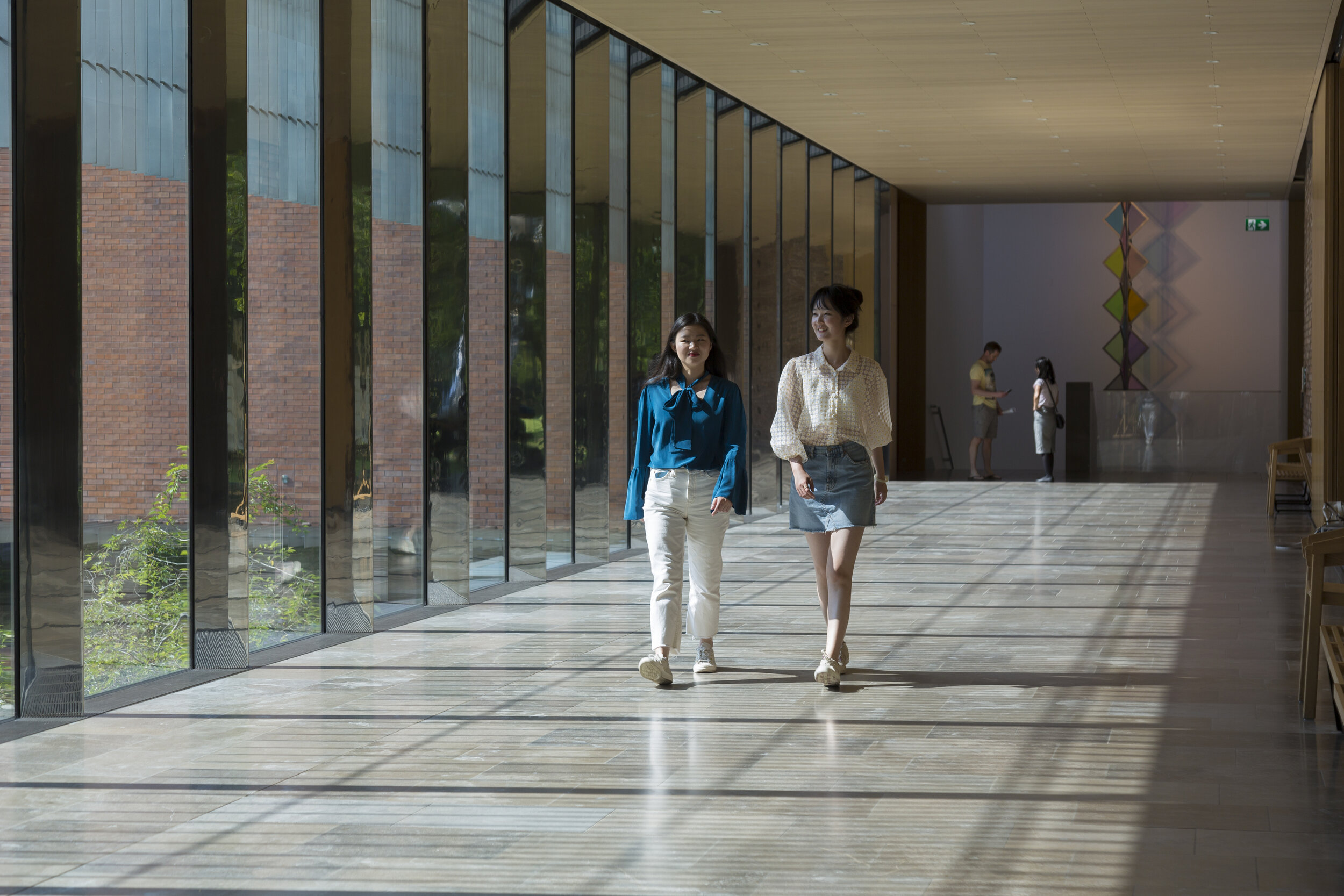
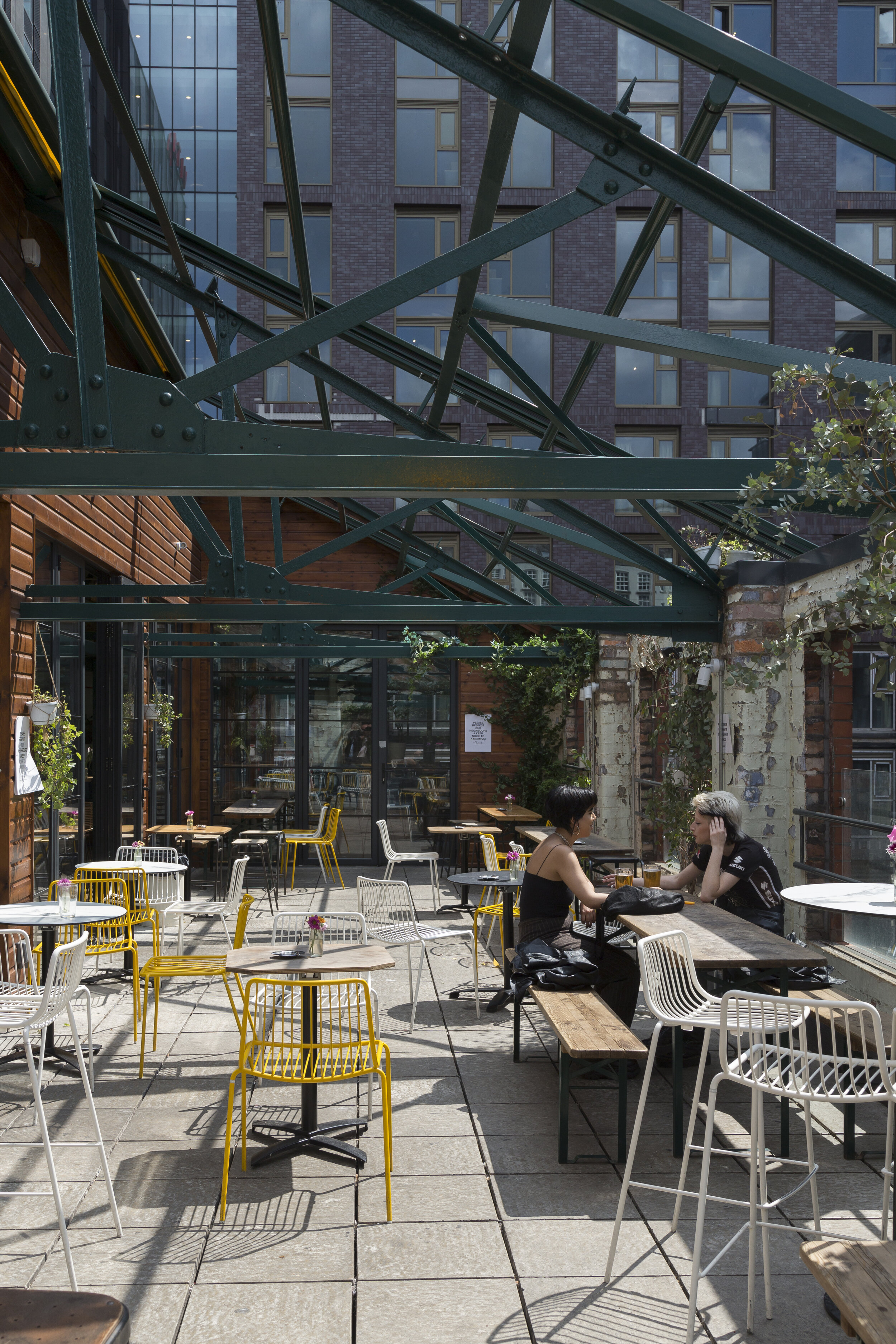

Showcasing Manchester’s Music and Cultural Scene
Francis Lung’s recommendations highlight some of Manchester’s most vibrant cultural locations. By photographing him in these spaces, the shoot documents both the musician and the city, capturing the interplay between artistic identity and the urban environment. Locations like Yes and Home are central to Manchester’s creative and music culture, while restaurants and galleries like Yuzu, This & That, and the Whitworth provide context to the lifestyle and local engagement of artists.
Collaborating with Scandinavian Airlines
Scandinavian Airlines commissioned the shoot to showcase Francis Lung’s insights into Manchester and to highlight the city’s music, art, and culinary offerings. Photography plays a key role in storytelling, presenting both the artist and the locations in a way that connects audiences to the experience of visiting Manchester.

British Association for Applied Linguistics conference
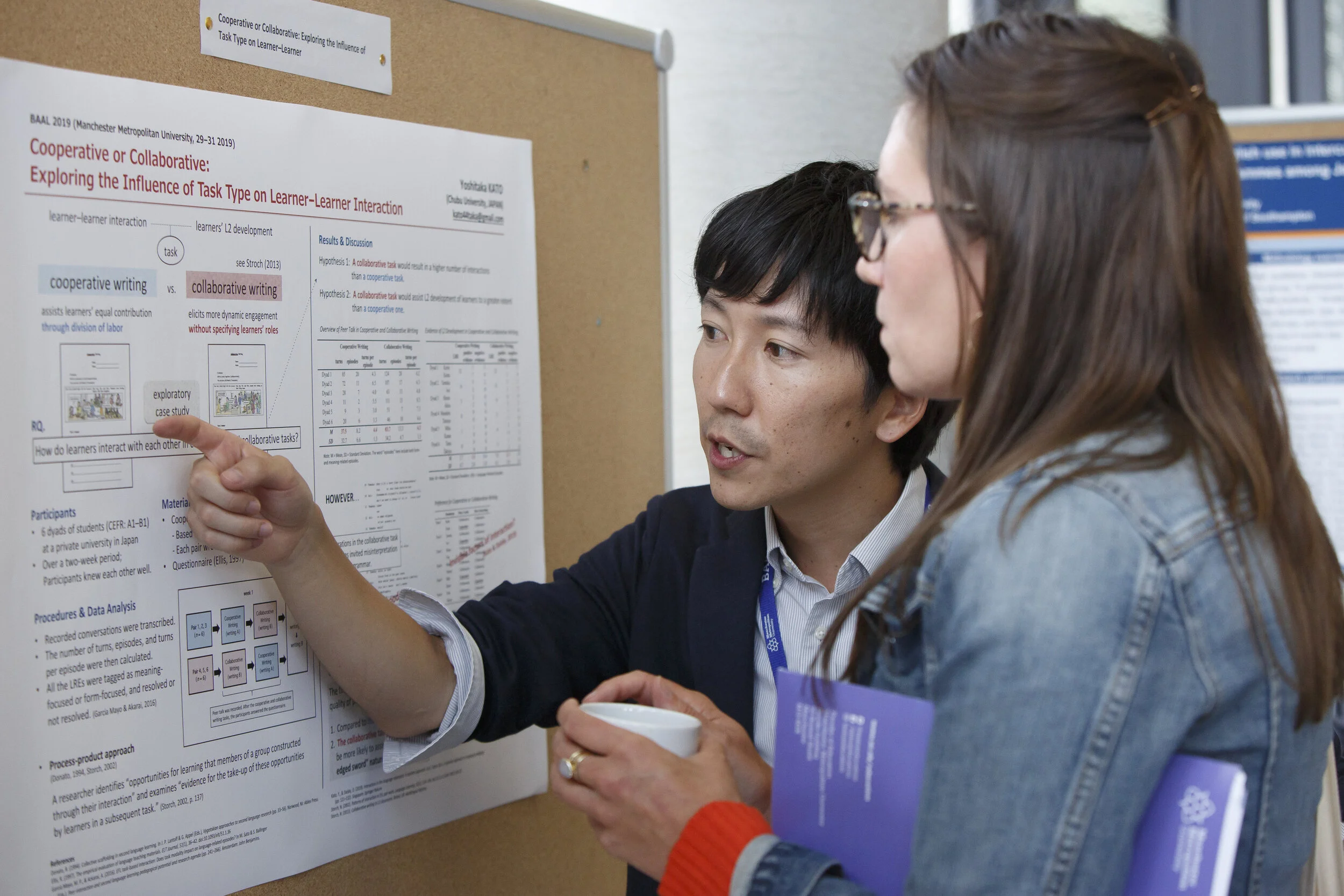
A few weeks ago I photographed the latest BAAL conference at Manchester Metropolitan University.
I find it really interesting to cover conferences as you get thrown into the deep end of academic research in subjects that you previously hadn’t really thought all that much about. BAAL this year was no exception, some extremely interesting themes and insights into language acquisition, learning foreign languages and linguistic changes brought about by emerging technologies.
As freelance photographers we often don’t get feedback on our work after the event, so it was very pleasing to get this response from the conference organiser:
‘I’ve just downloaded the photos – absolutely fantastic. I’ve never given a photographer such a haphazard brief and had it nailed so well, so thanks very much. I wouldn’t hesitate to use you again based on these.’
If you’d like me to photograph a conference for you either in Manchester, the North or across the country, please get in touch via email or using the contact form on the About page of the site.

Conference Photography at the BAAL Conference, Manchester Metropolitan University
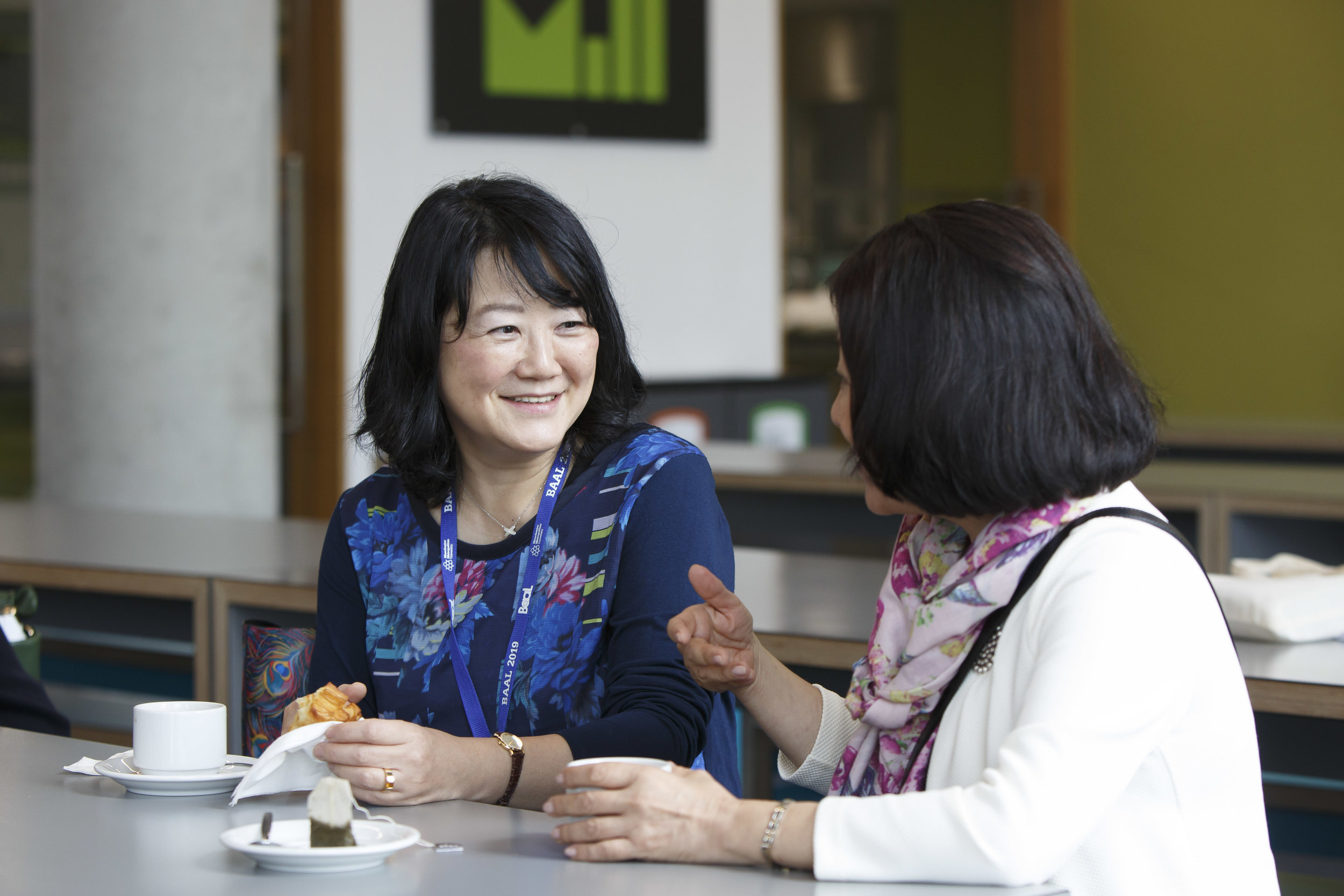
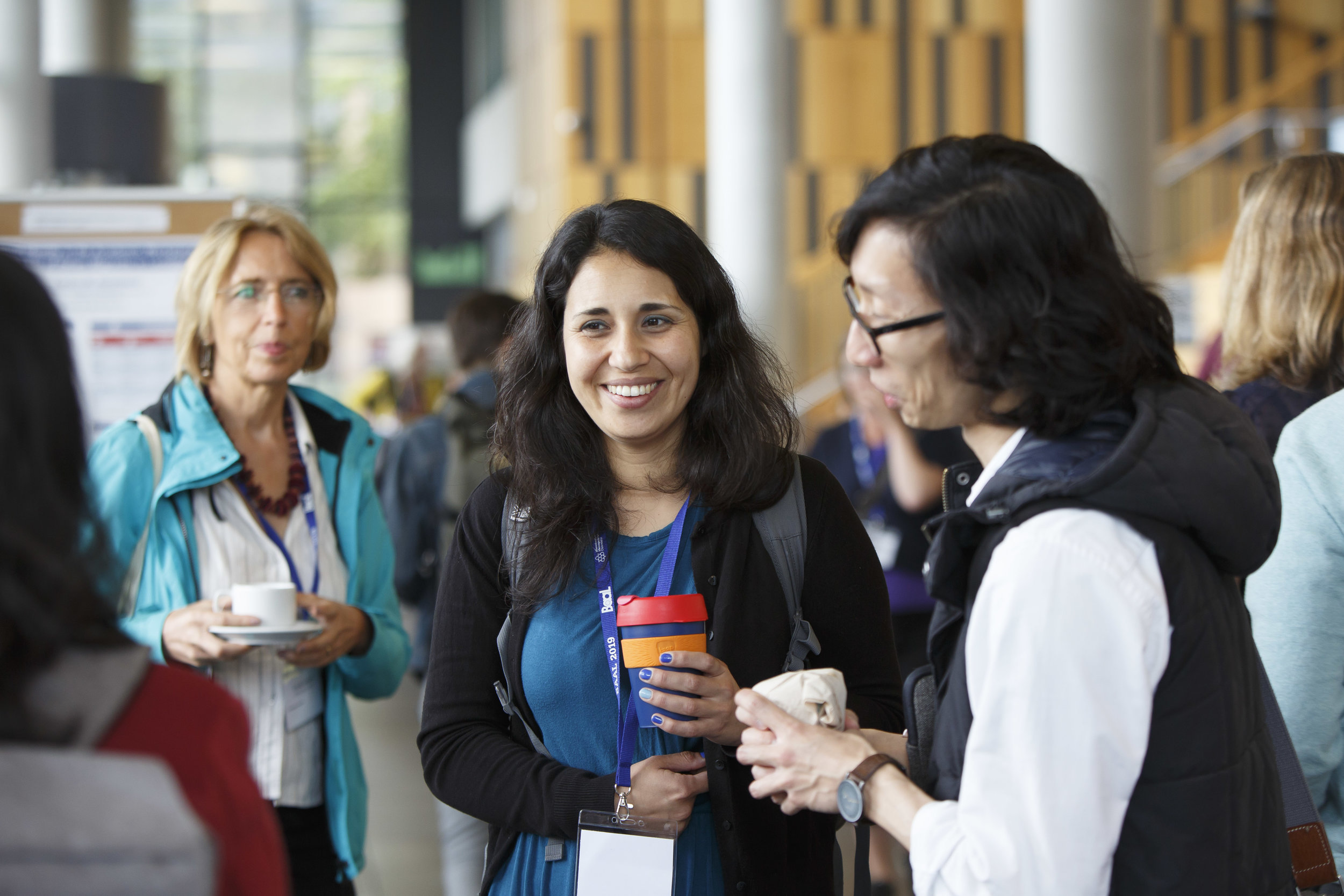
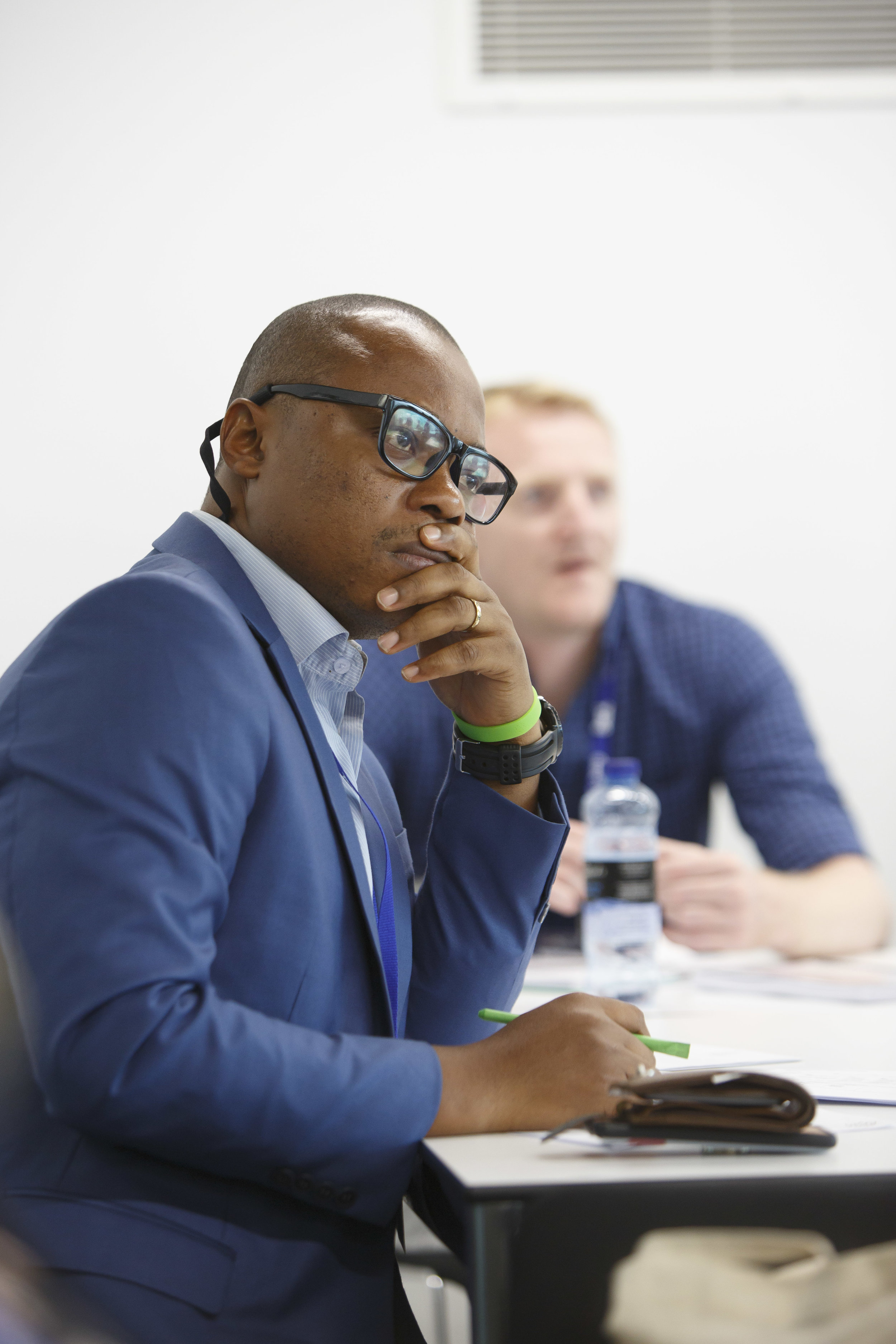
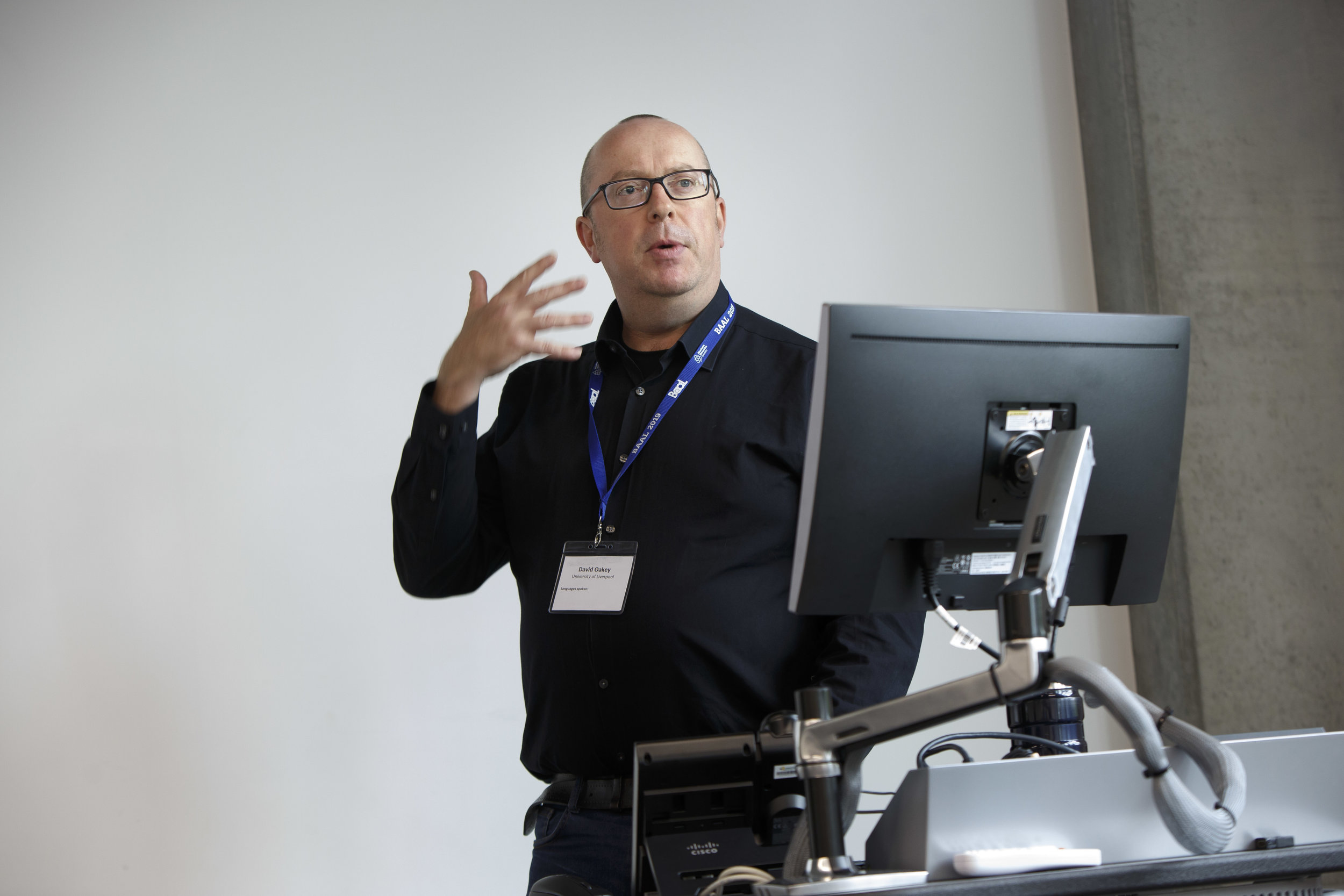
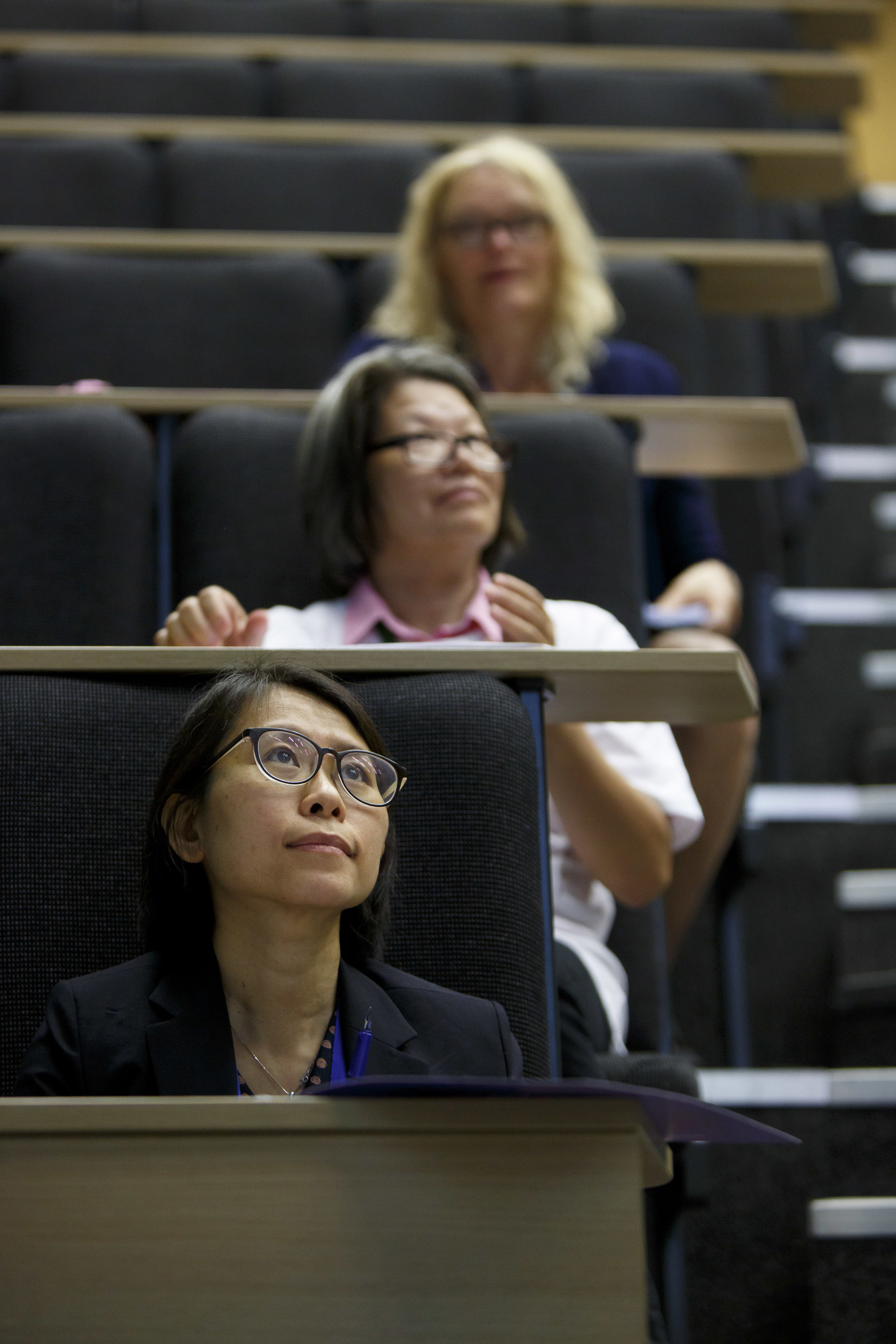
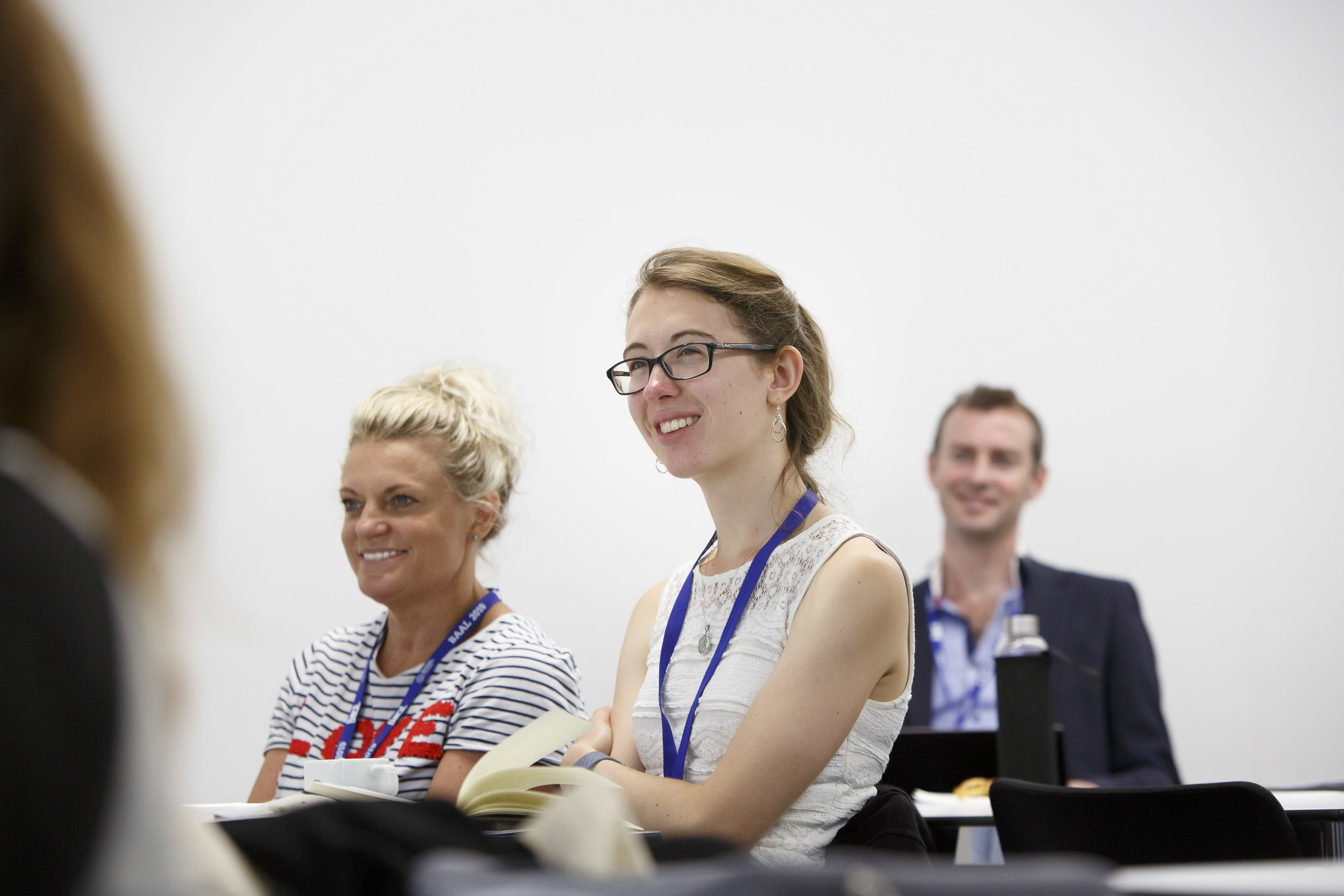
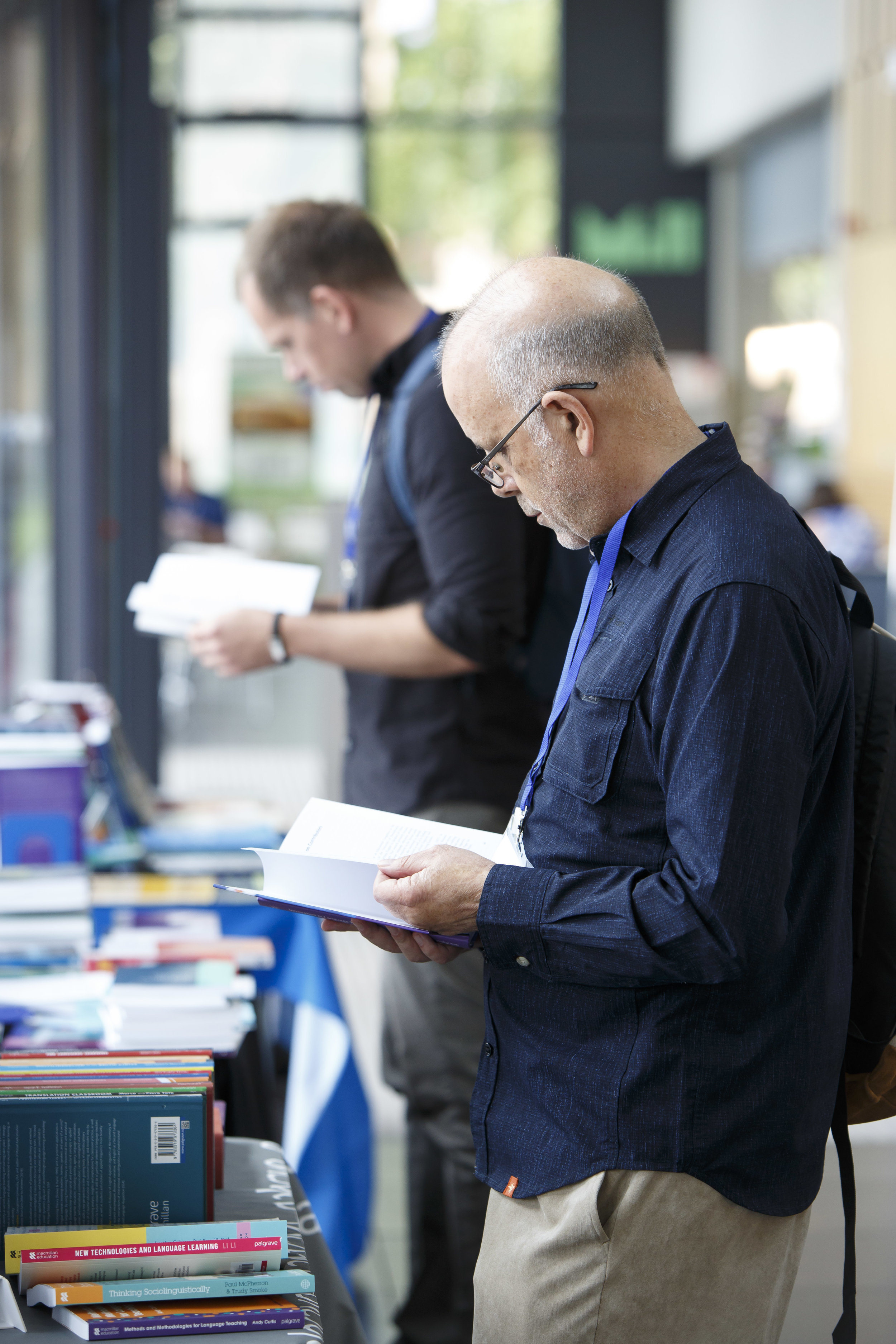
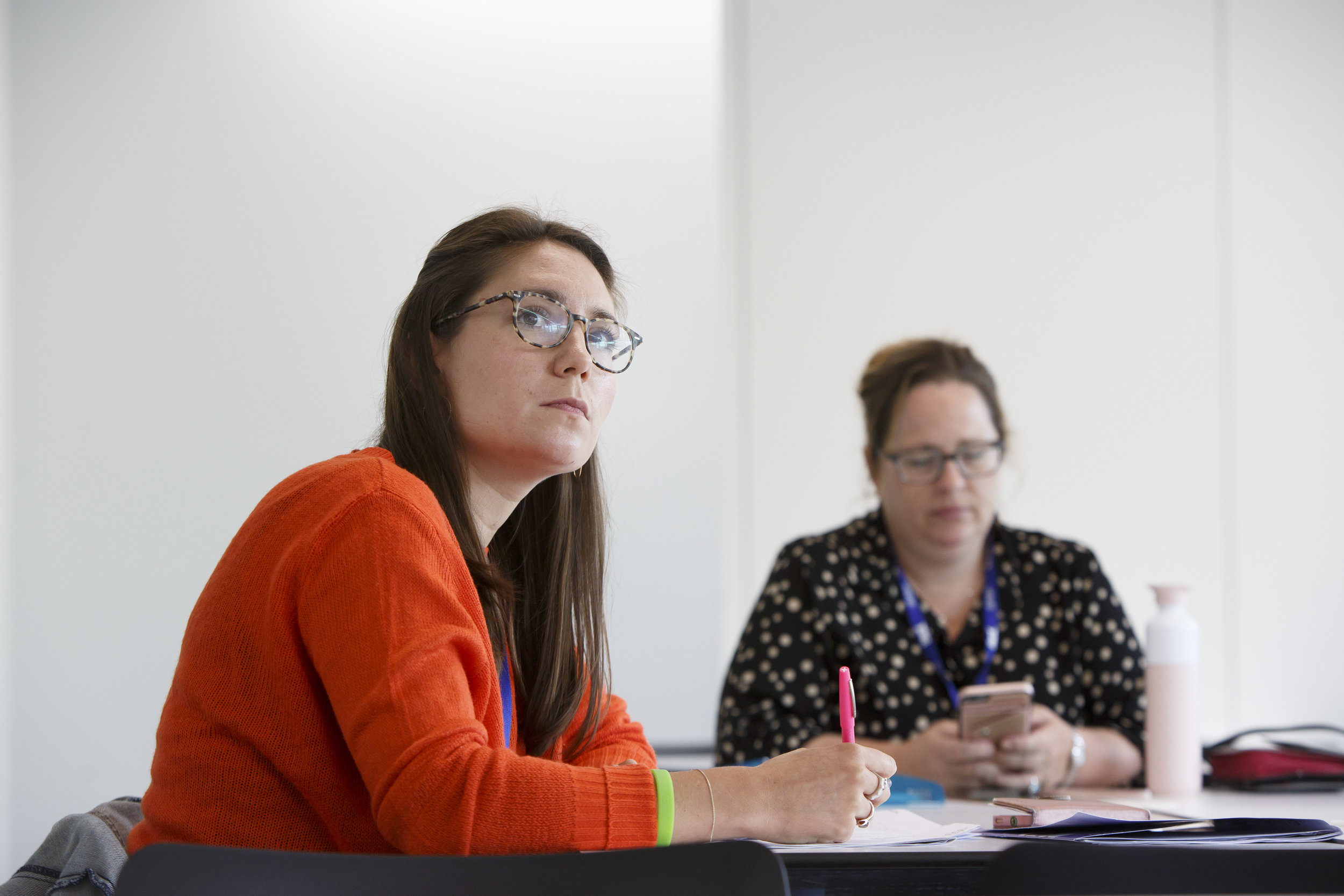
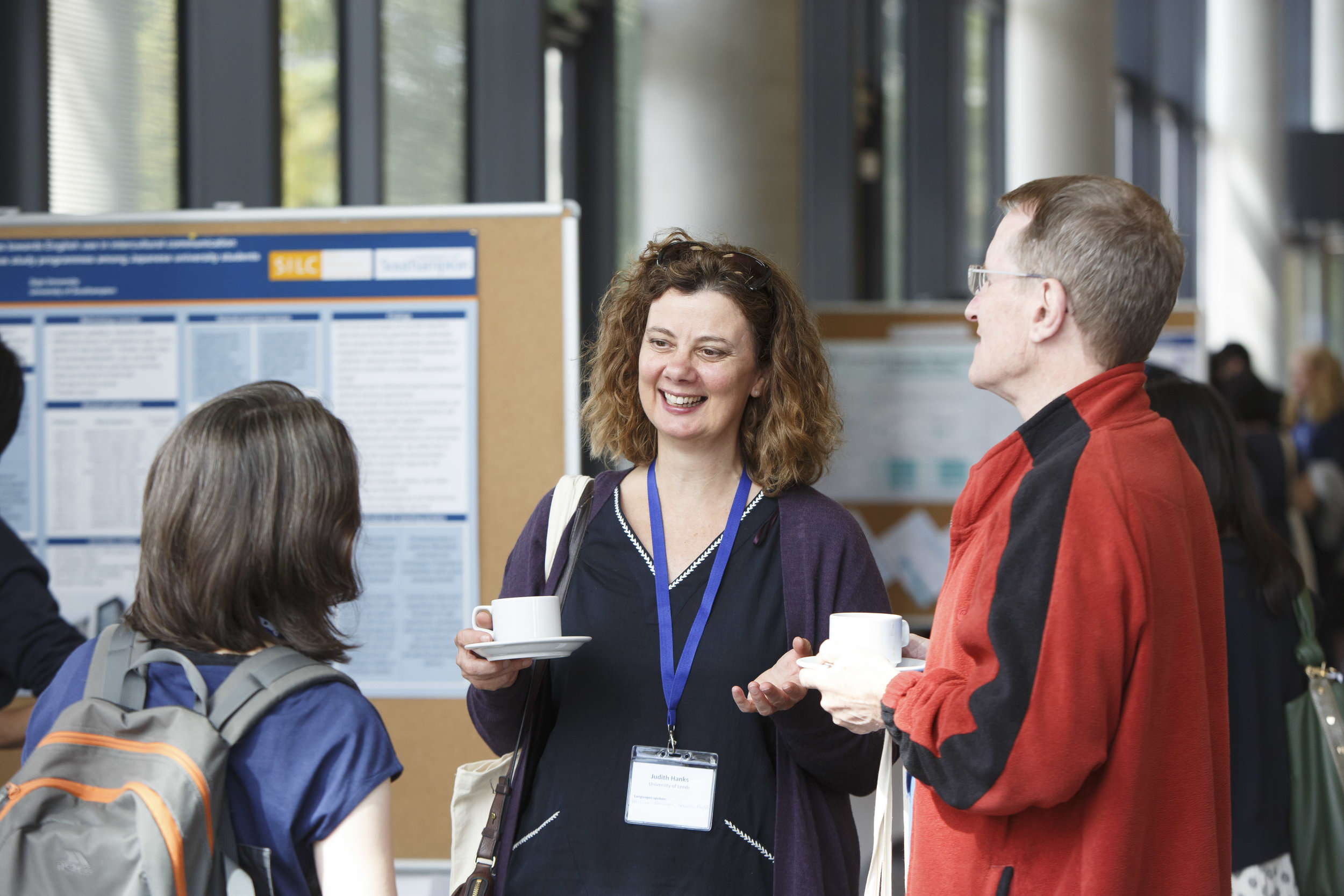
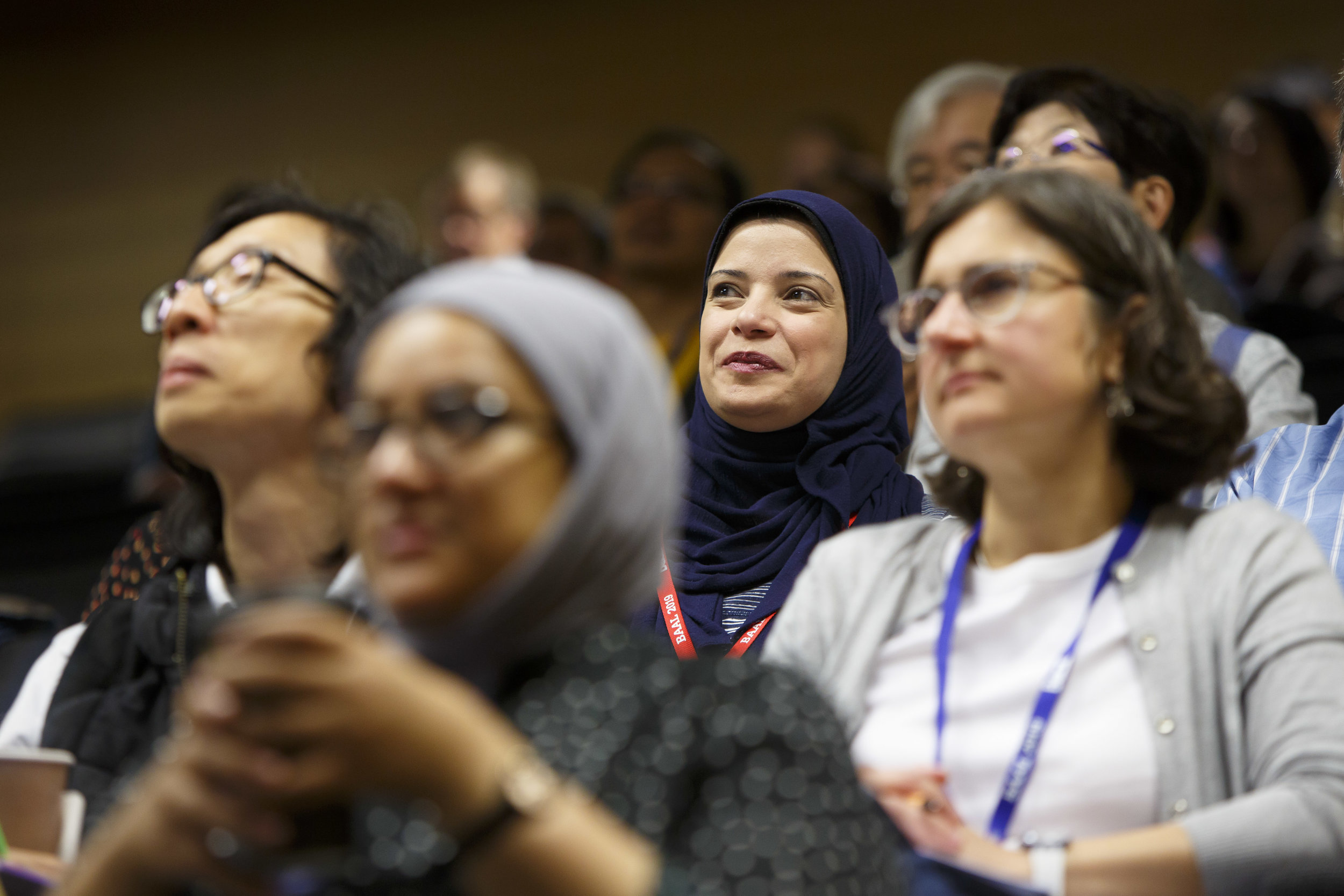
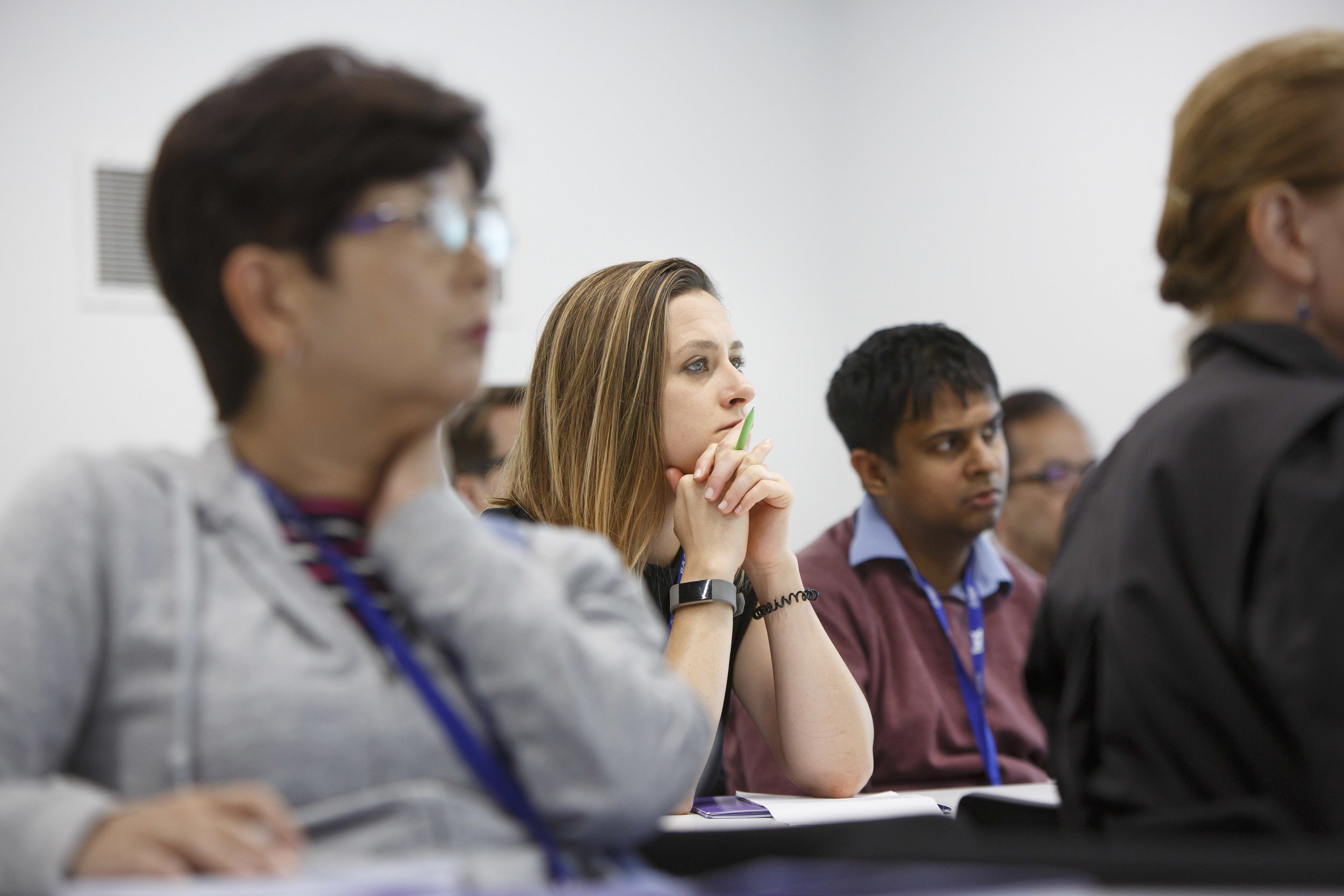
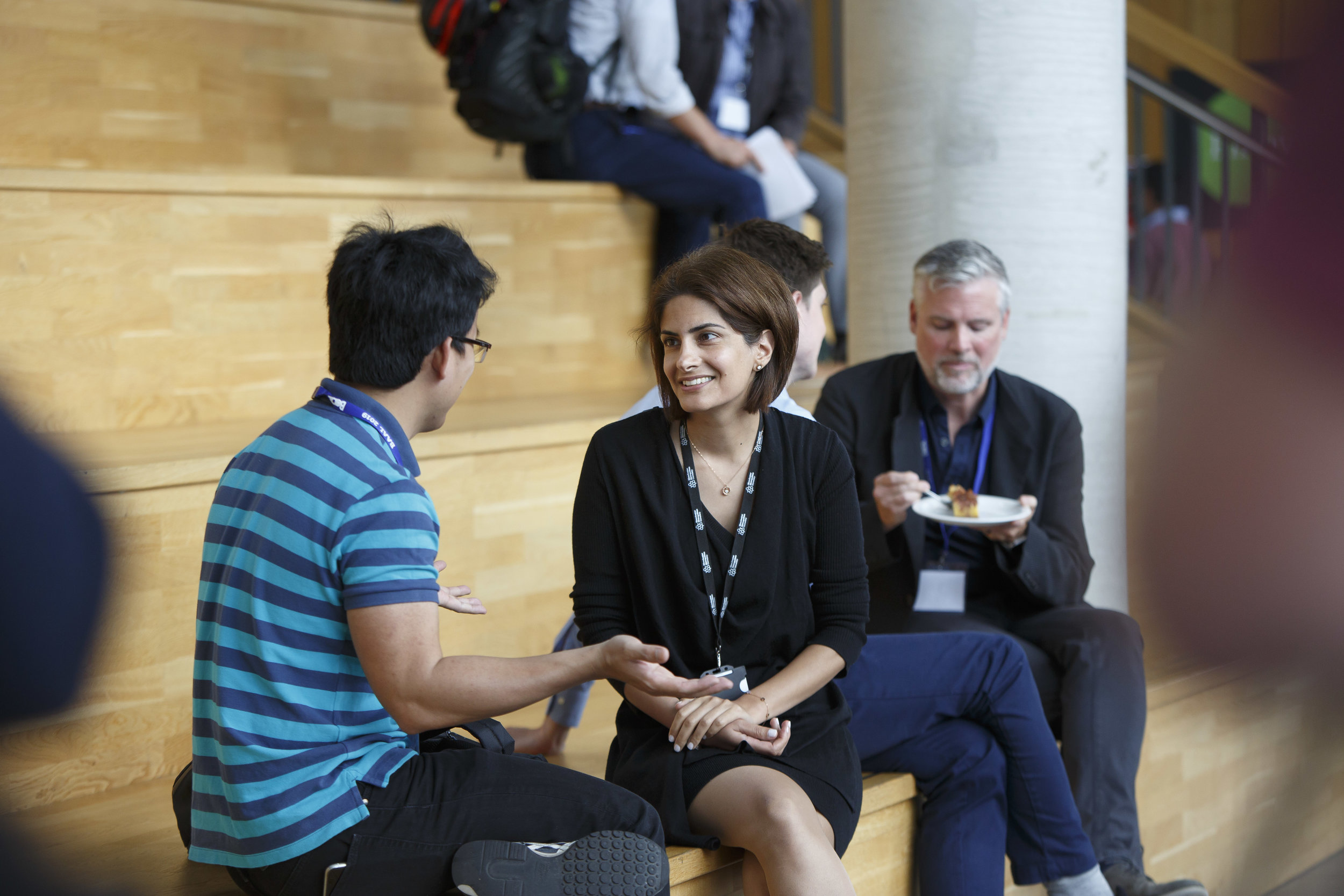
A few weeks ago I photographed the latest conference organised by the British Association for Applied Linguistics (BAAL) at Manchester Metropolitan University. The event brought together researchers, academics and students working across the field of applied linguistics, with presentations, panel discussions and networking sessions taking place throughout the day.
Photographing academic conferences like this is always engaging, not only from a visual perspective but also intellectually. As a photographer you are immersed in subjects that you might not otherwise encounter, documenting conversations and presentations while absorbing ideas and research happening around you.
Applied Linguistics and Academic Research
The BAAL conference this year explored a range of themes connected to language learning and linguistic research. Topics included language acquisition, the experience of learning foreign languages, and the ways in which emerging technologies are influencing communication and linguistic change.
Events like these highlight the diversity of contemporary research in applied linguistics. Bringing together scholars from different institutions allows for discussion and collaboration while giving attendees the opportunity to share new insights and approaches to teaching, learning and analysing language.


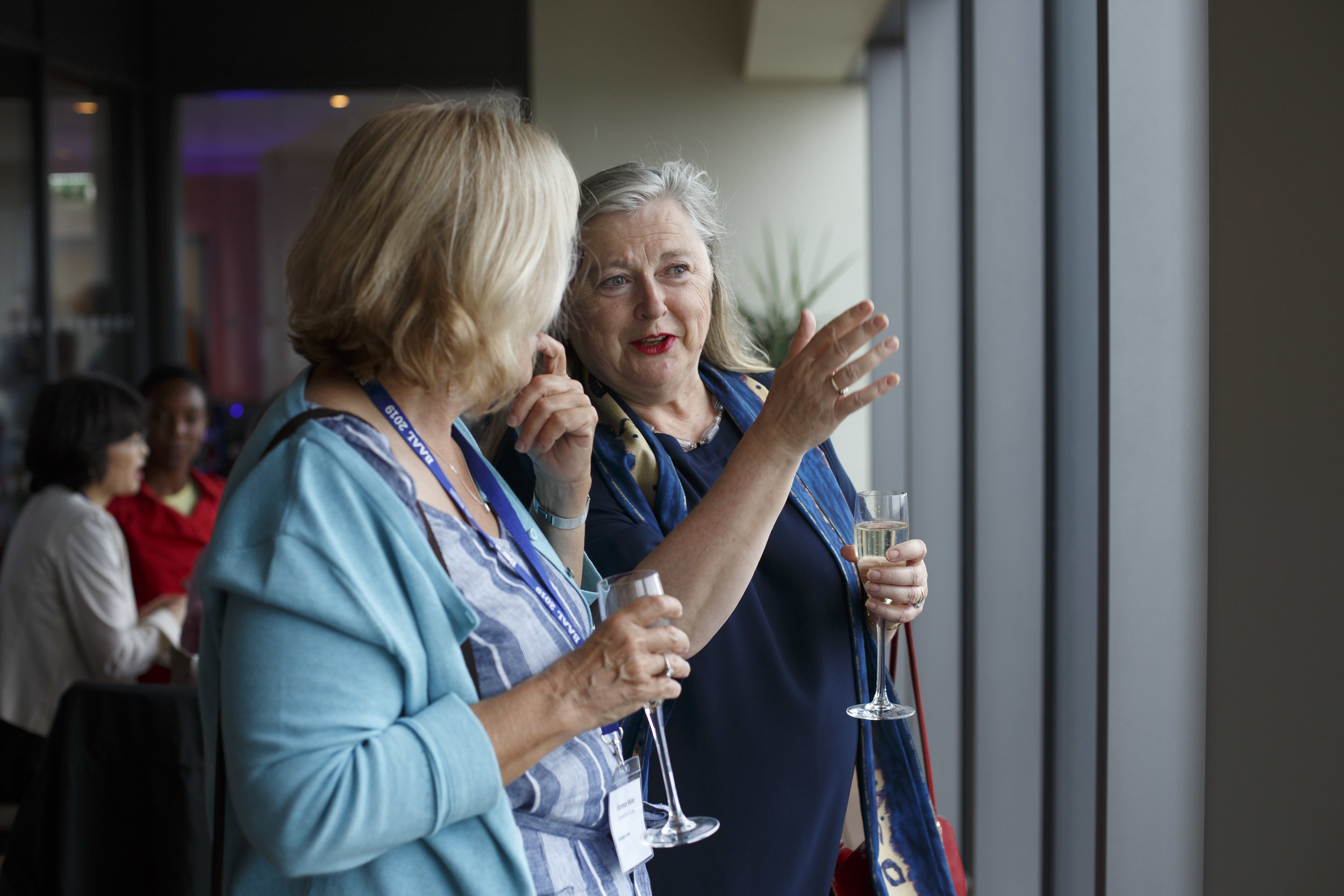
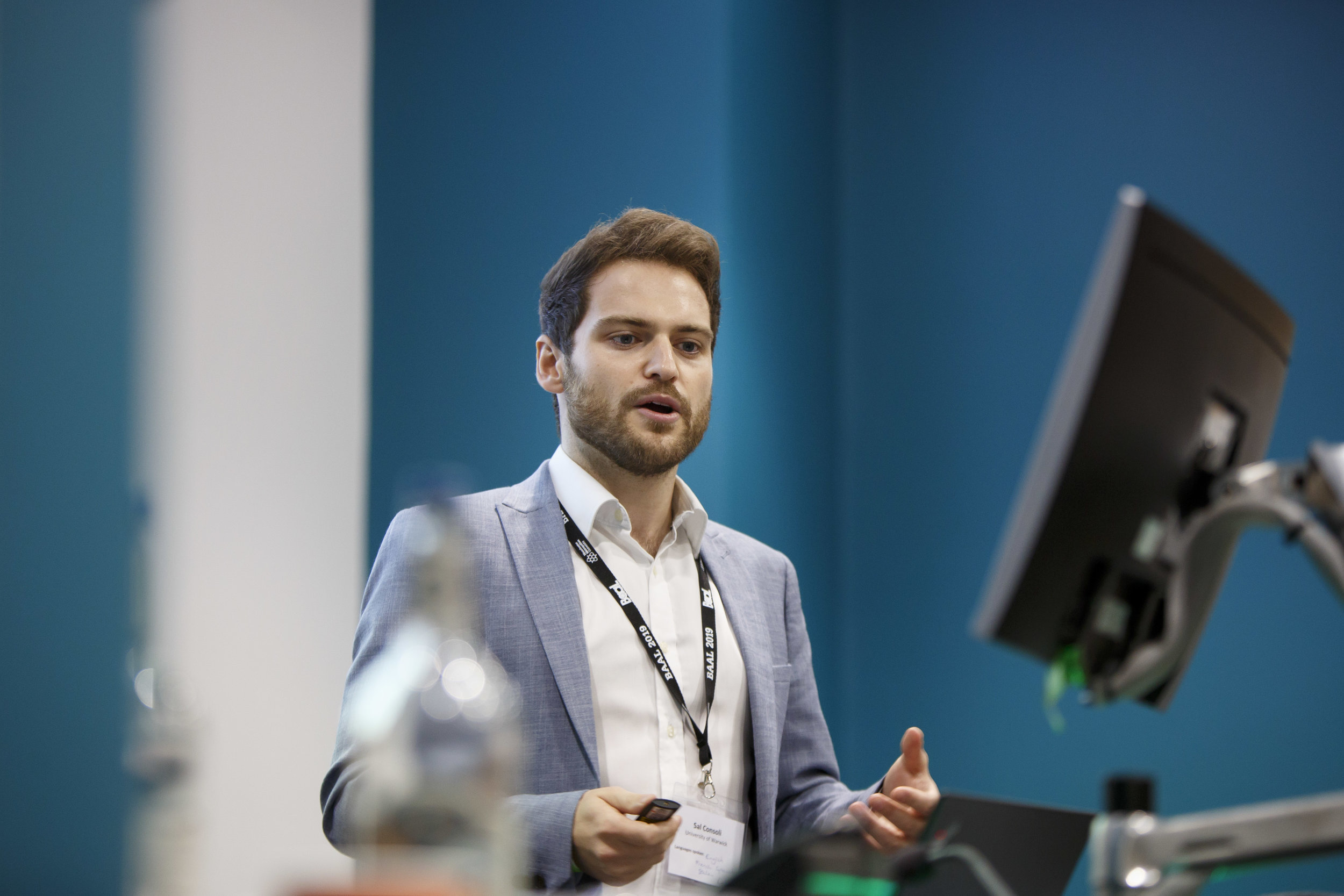
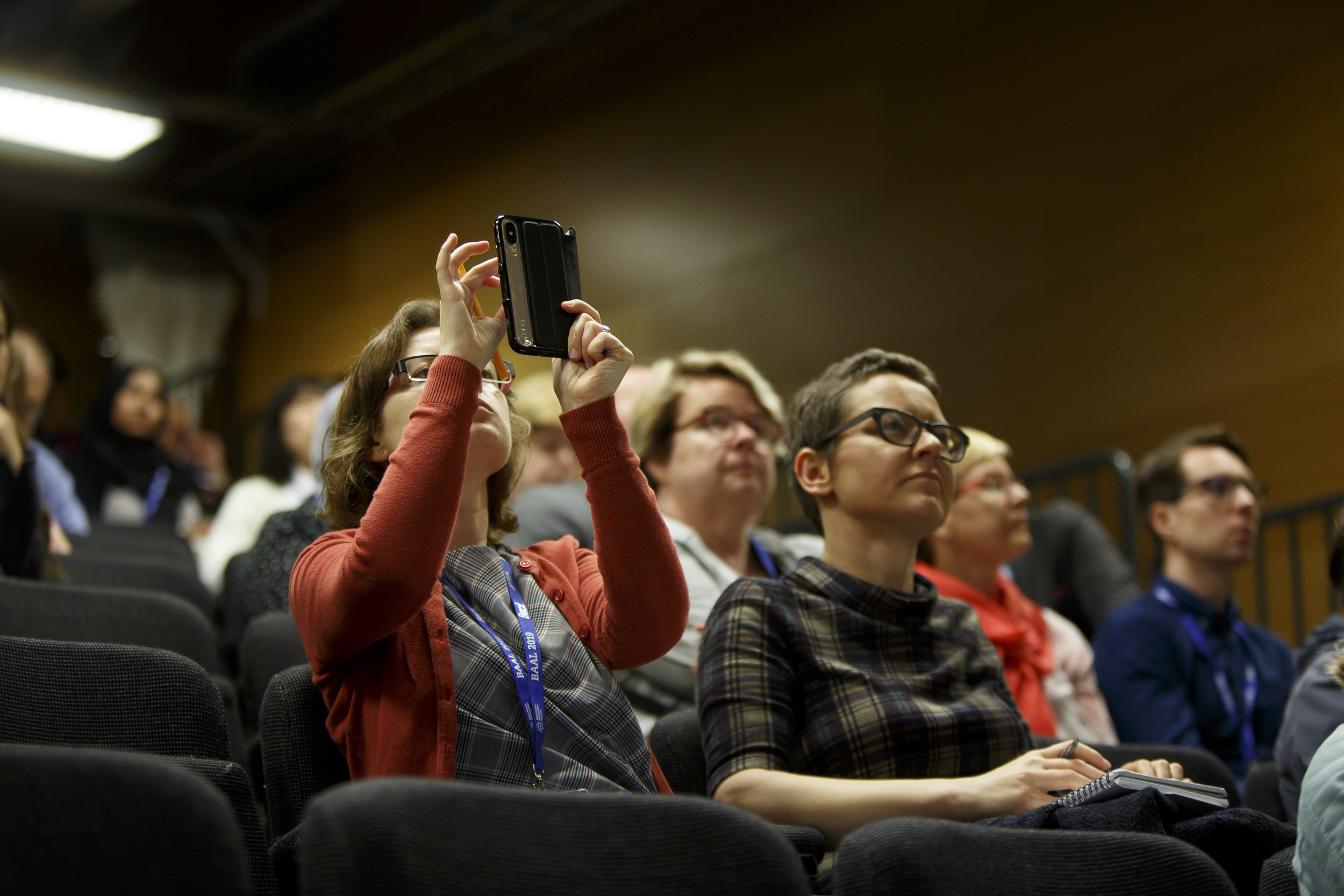

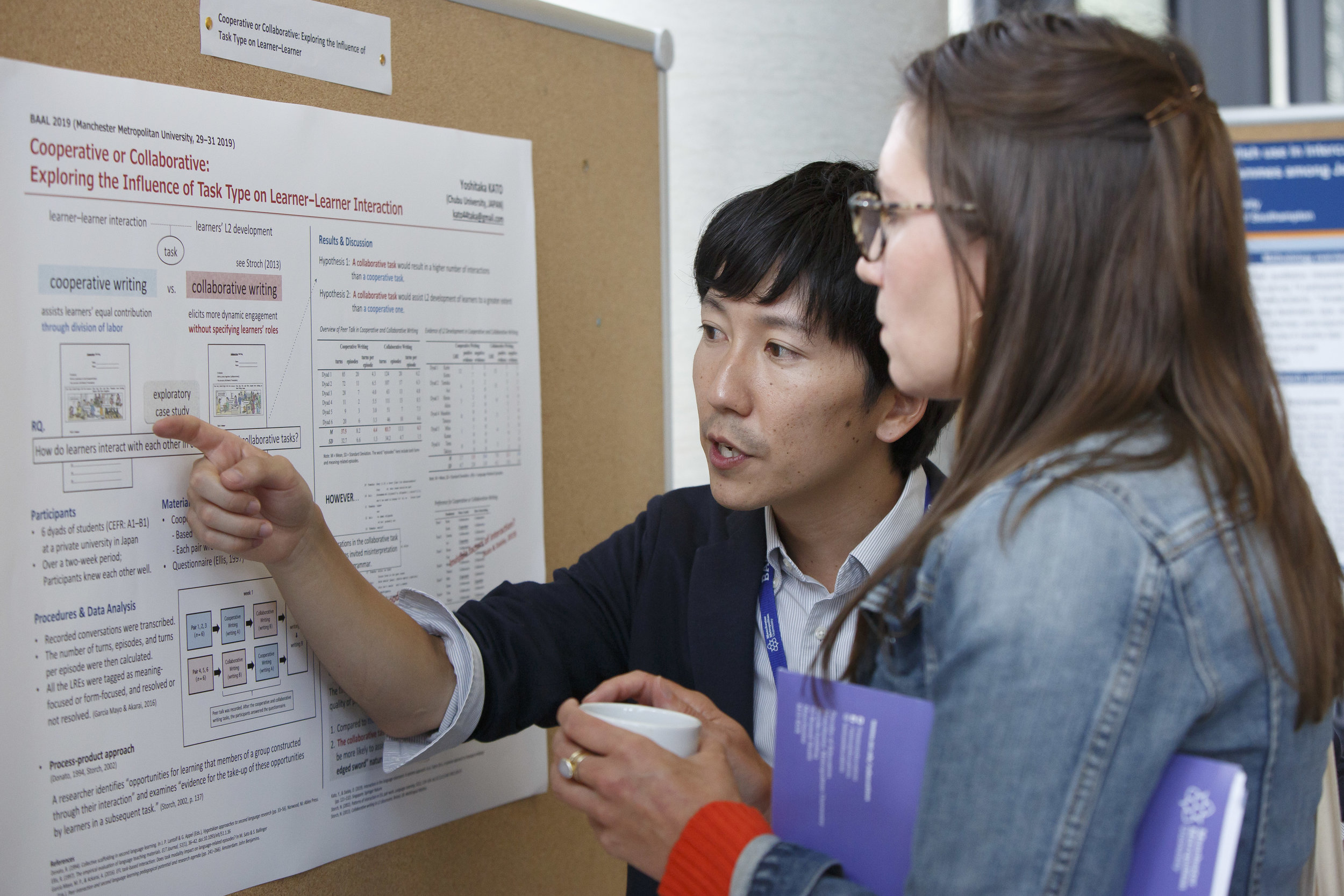

Photographing Academic Conferences
Conference photography requires a balance between documentary observation and careful timing. The aim is to capture a clear visual record of the event: keynote speakers presenting their research, audience engagement during talks, informal discussions between delegates, and the overall atmosphere of the venue.
Universities and academic organisations often use these images for future conference promotion, websites, social media, and institutional archives. High-quality photographs also help illustrate the energy and collaborative nature of academic gatherings.
Feedback from the Conference Organiser
Freelance photographers often deliver work after an event without hearing much about how the images are received, so it was particularly gratifying to receive this message from the BAAL conference organiser afterwards:
“I’ve just downloaded the photos – absolutely fantastic. I’ve never given a photographer such a haphazard brief and had it nailed so well, so thanks very much. I wouldn’t hesitate to use you again based on these.”
Positive feedback like this is always encouraging, especially when working in fast-moving environments such as conferences where capturing the right moments requires careful observation and responsiveness.
Conference Photographer in Manchester and the UK
If you are organising a conference, academic event or professional gathering and require a photographer in Manchester, the North of England or elsewhere in the UK, please feel free to get in touch via email or through the contact form on the About page of this site.
British Ecological Society Summer School
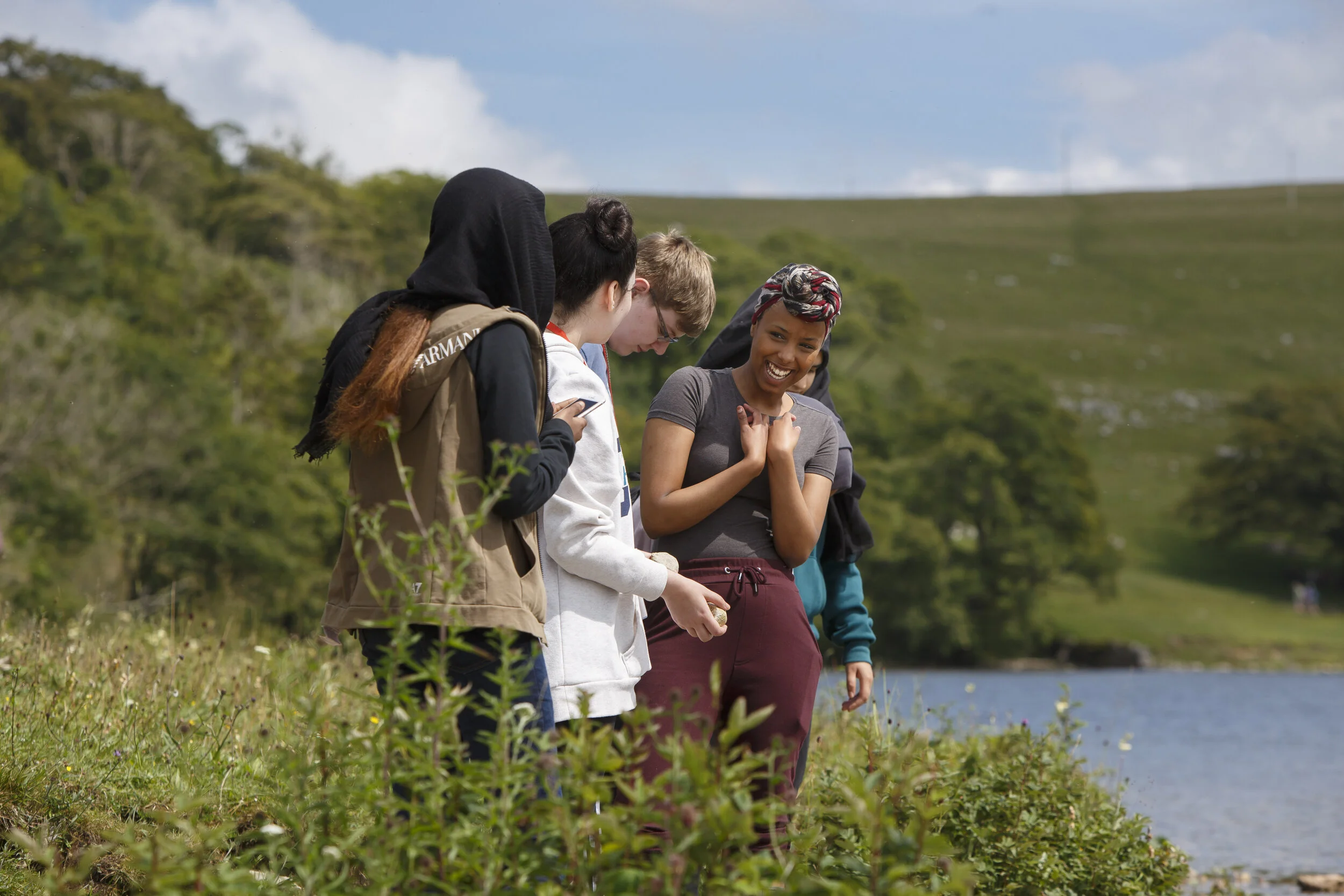
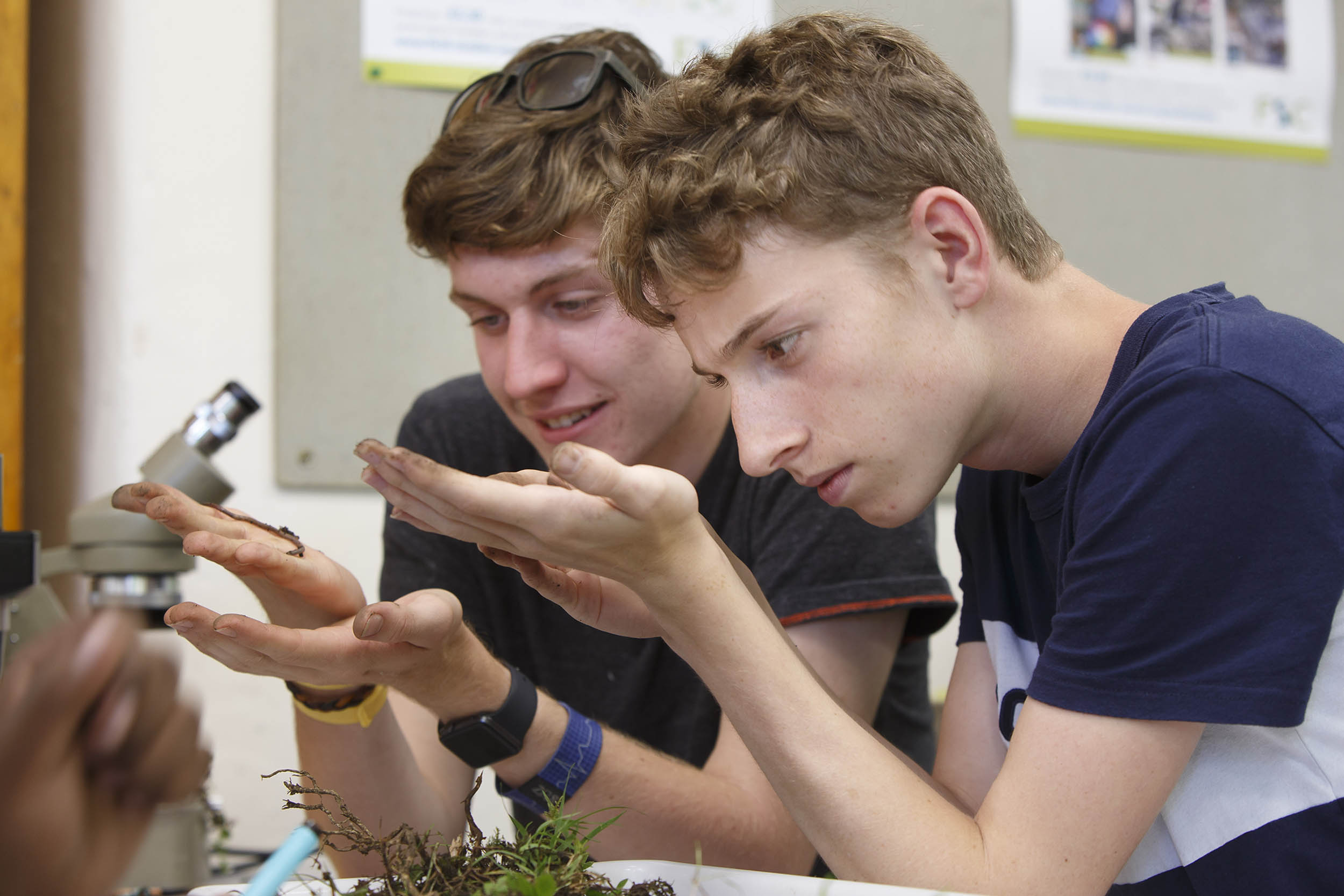
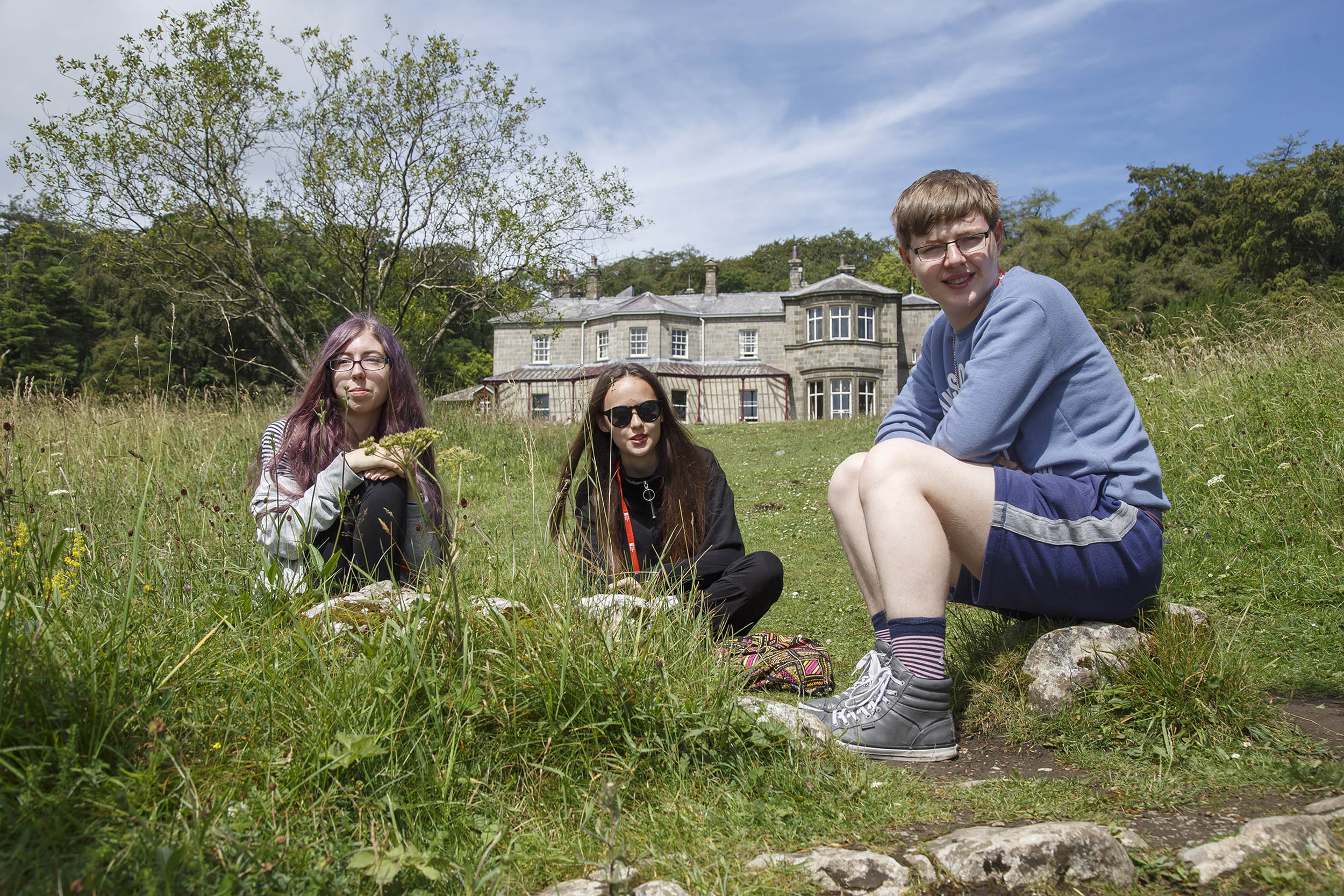
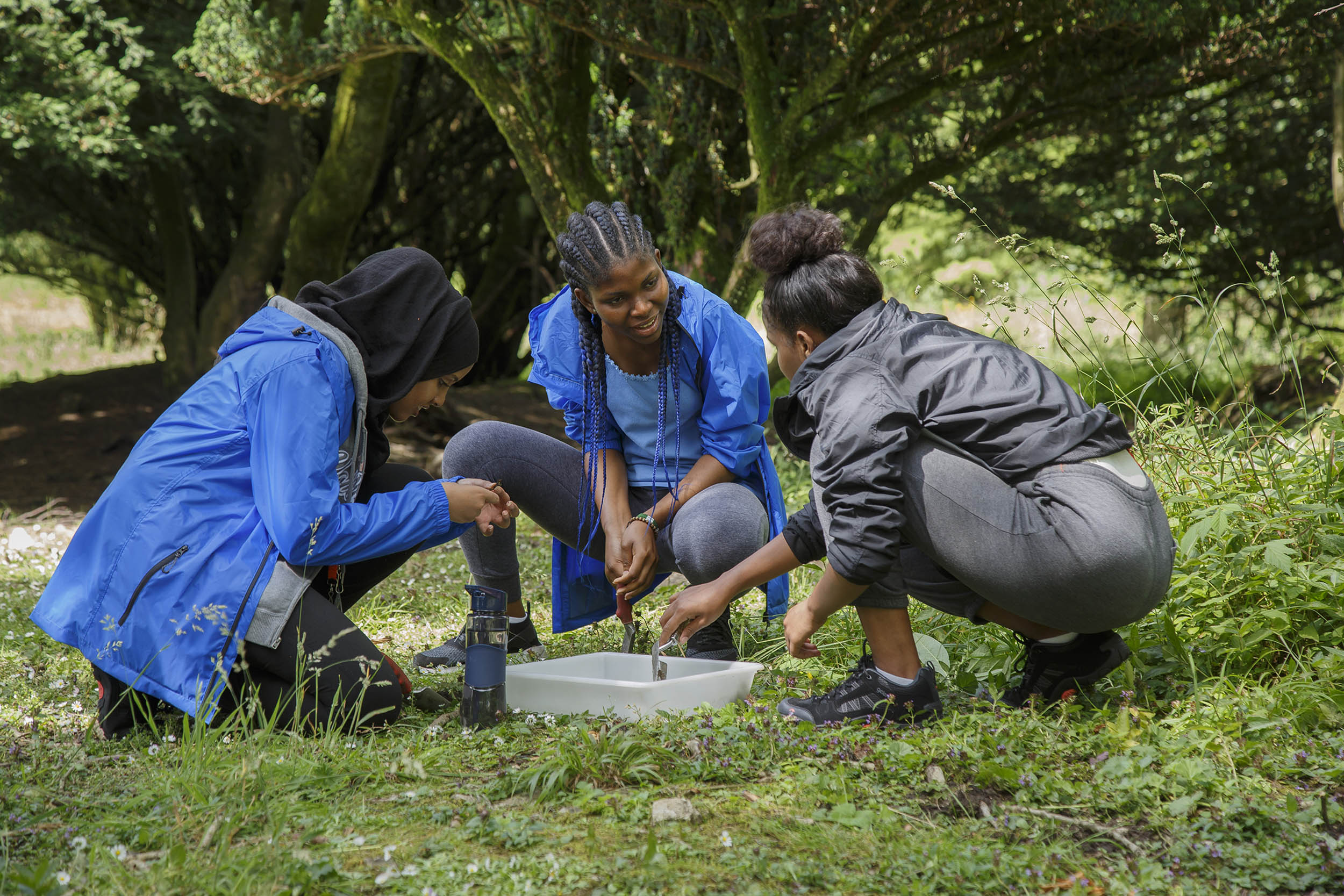
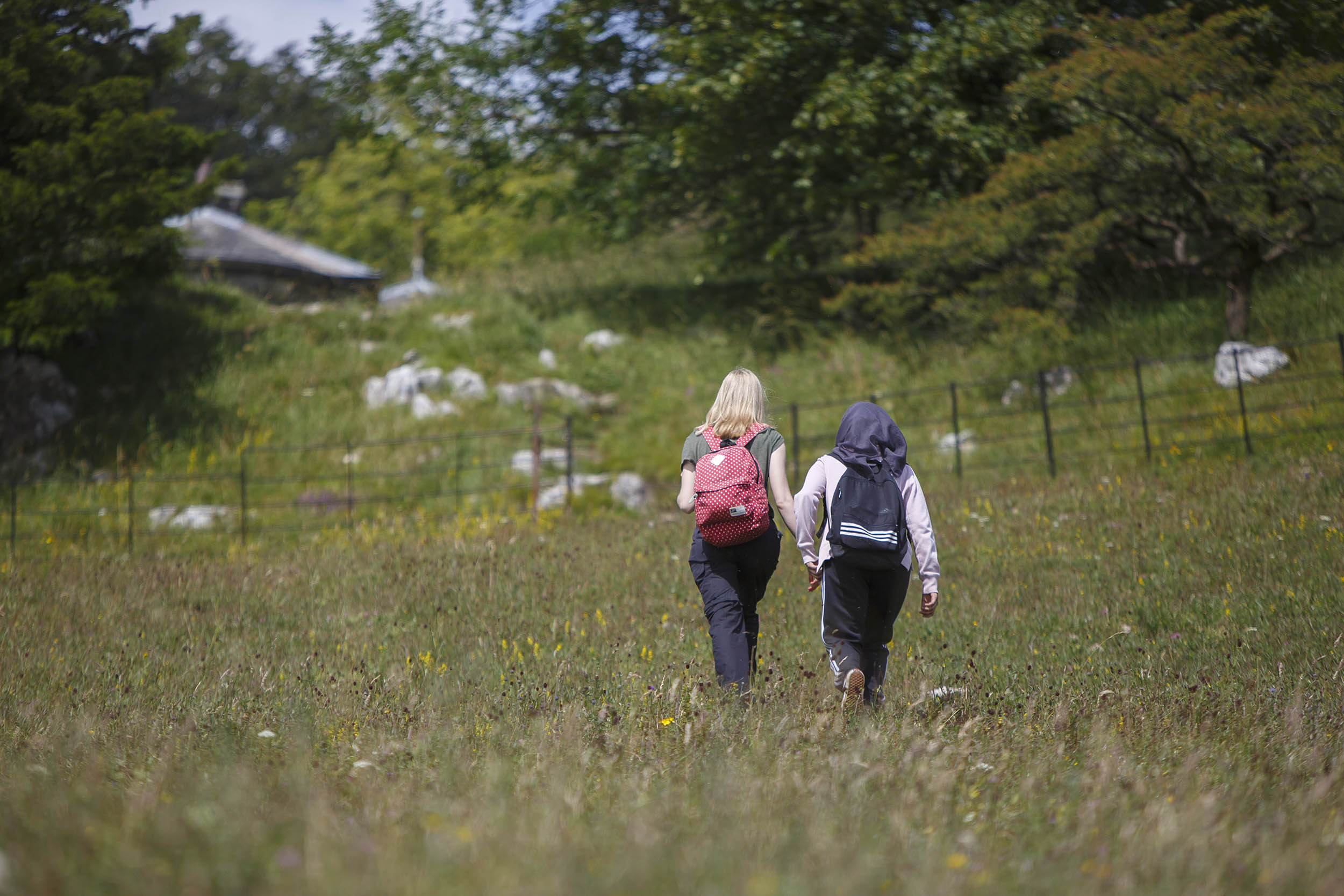
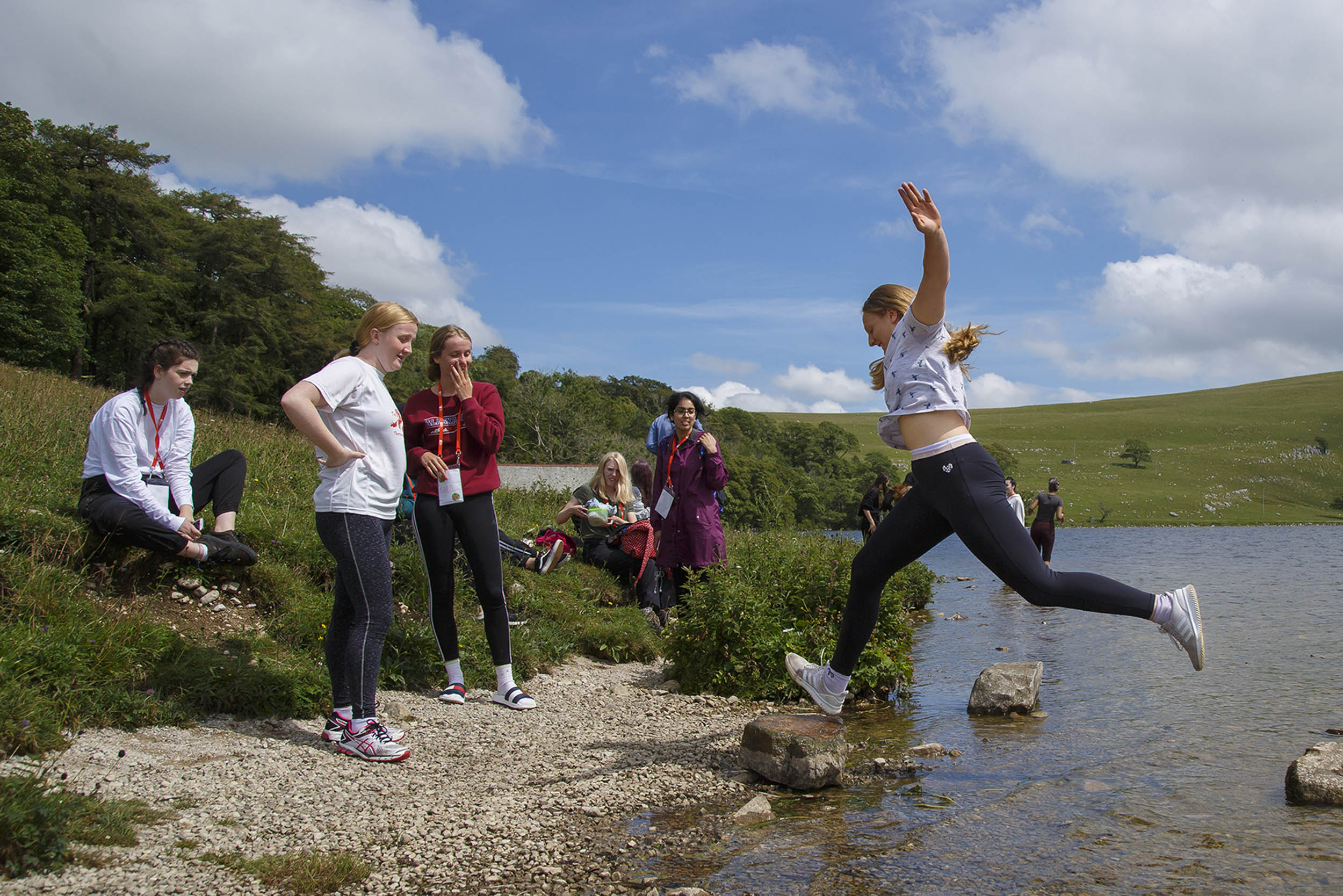
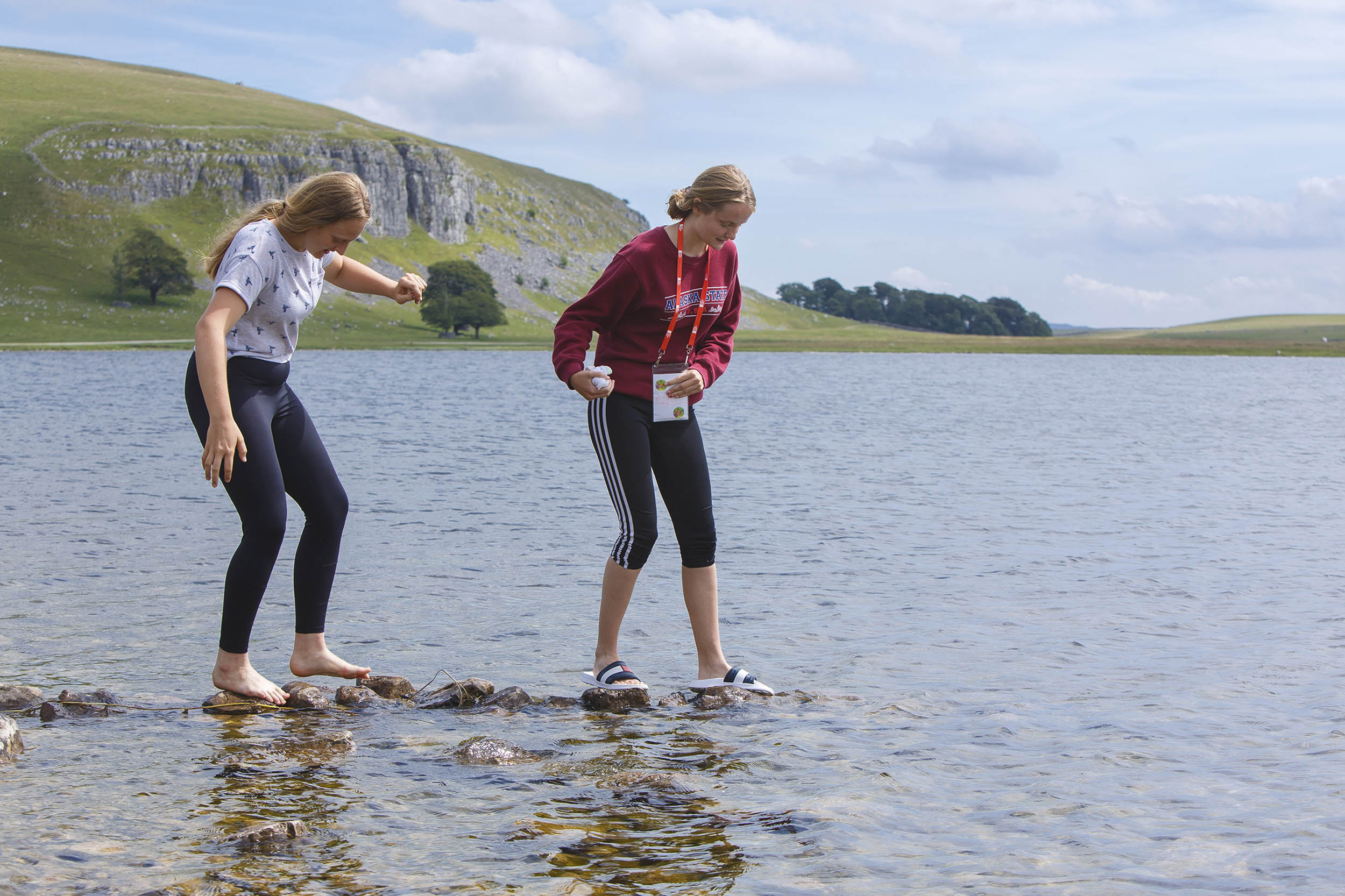
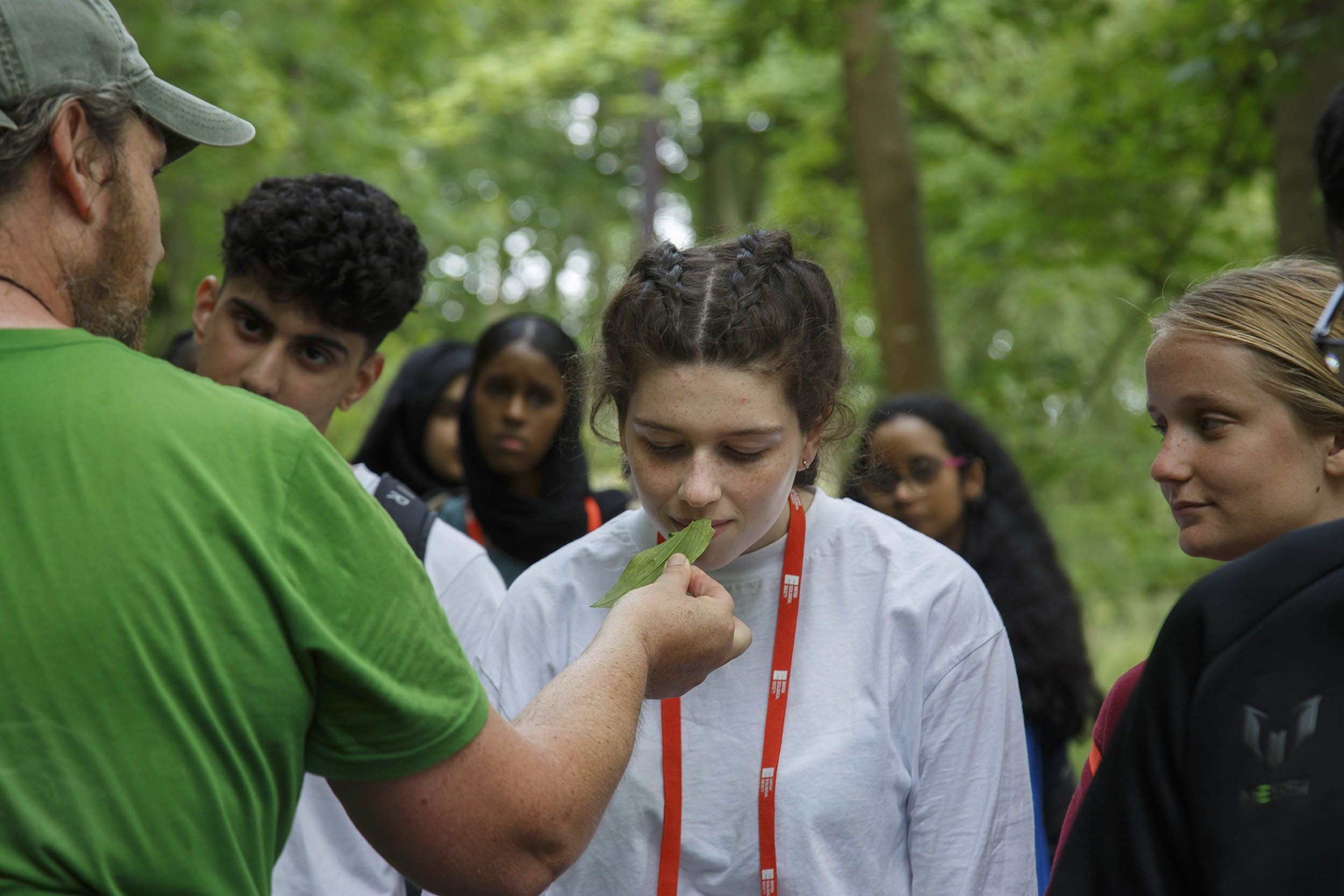
The British Ecological Society’s summer school is a week long residential field experience for students studying sciences at A-level, Scottish Higher and other similar qualifications. This year 31 students from 7 different schools across the UK gathered at Malham Tarn in the Yorkshire Dales. I was there as documentary photographer giving an overview of the day’s activities and providing marketing and social media material.
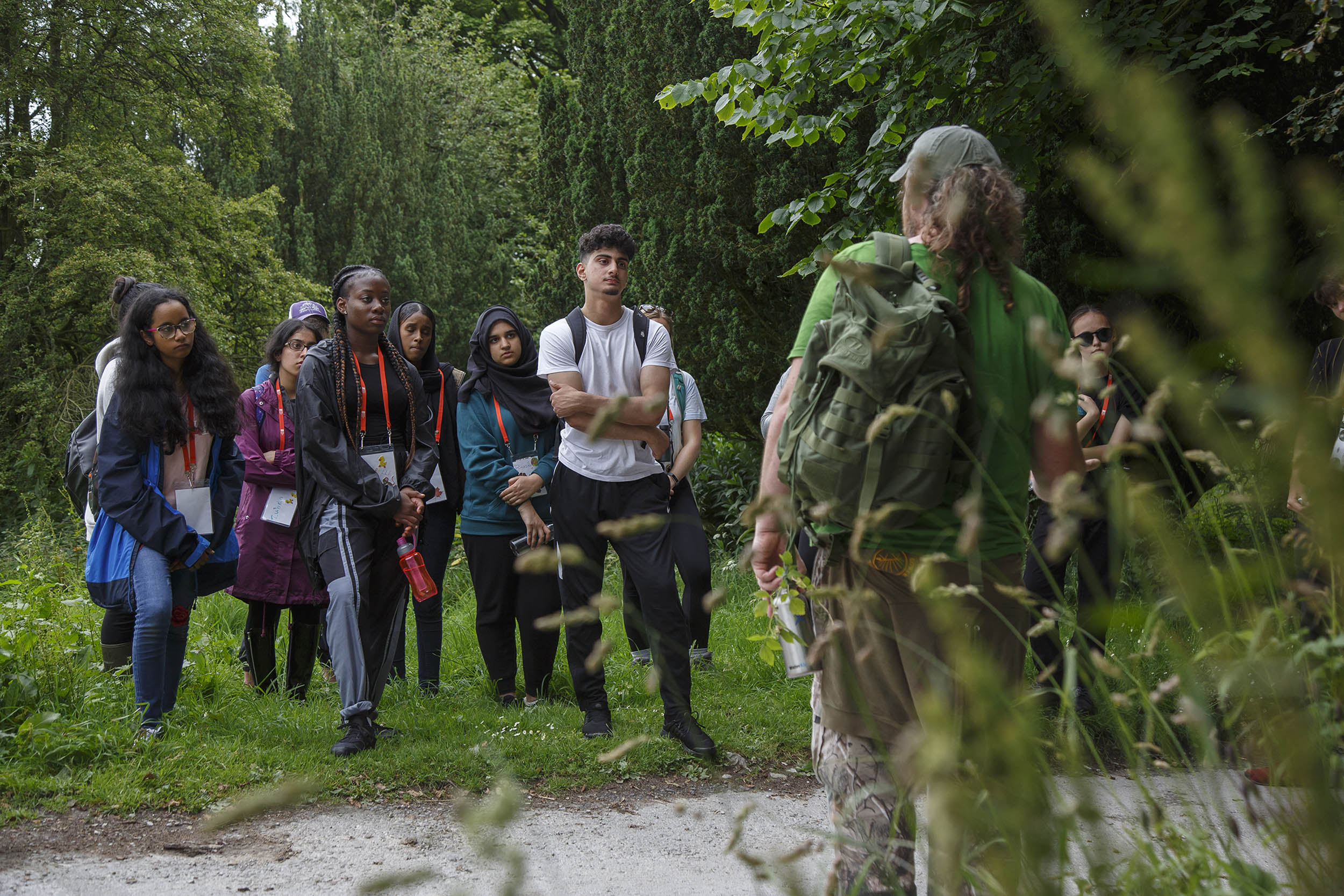
As ever, working for BES was extremely interesting, a personal highlight being the nature walk led by Dr. Daniel Forman, lecturer in Biosciences at Swansea University. I’d walked the same route as part of the Pennine Way last year but his fascinating insights into the ecology around us was illuminating.

Event Photography: British Ecological Society Summer School at Malham Tarn
I recently worked with the British Ecological Society (BES) as a documentary photographer during their annual summer school, a week-long residential field experience for students studying sciences at A-level, Scottish Higher, and equivalent qualifications. This year, 31 students from seven schools across the UK gathered at Malham Tarn in the Yorkshire Dales to explore ecology, fieldwork, and environmental science firsthand.
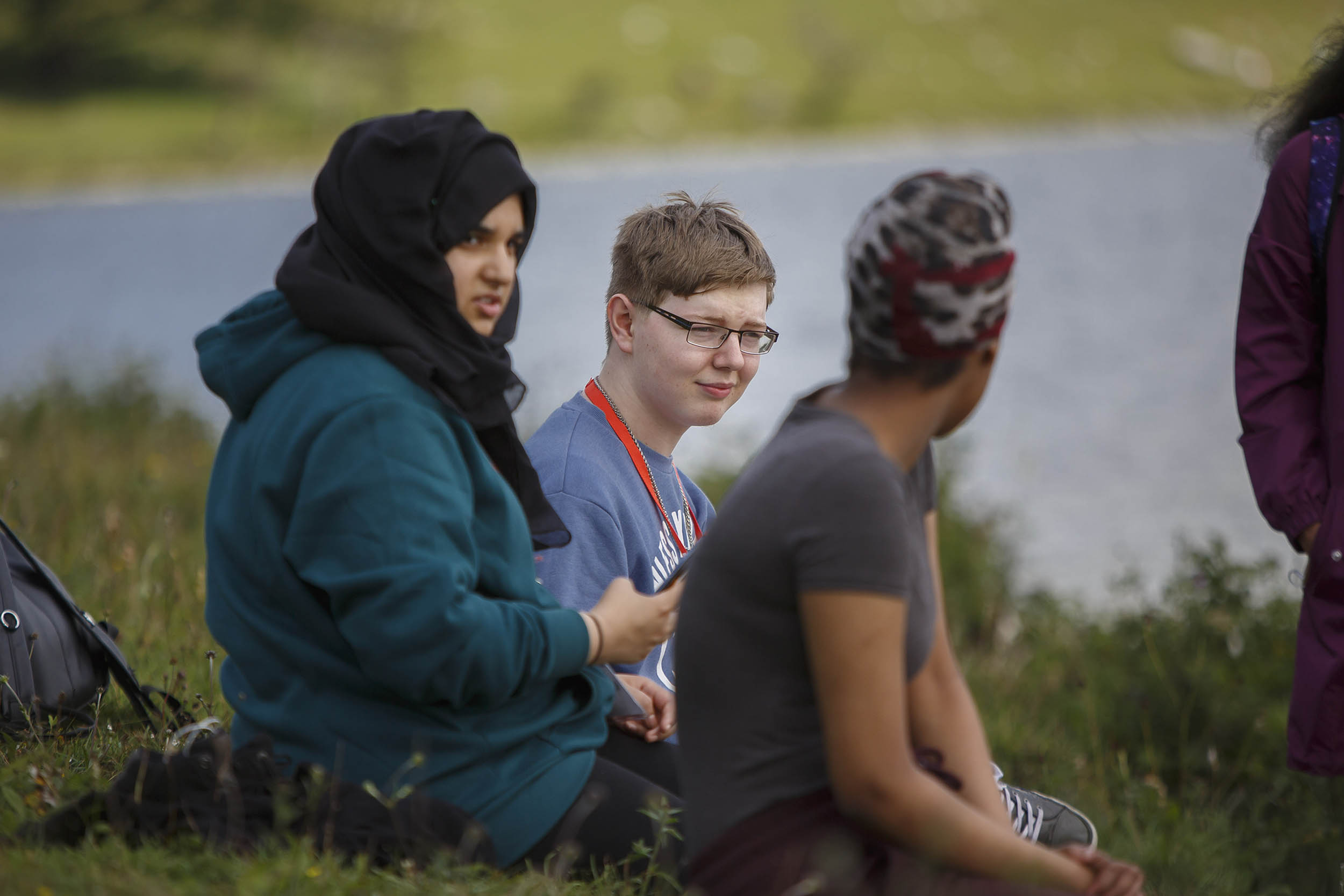
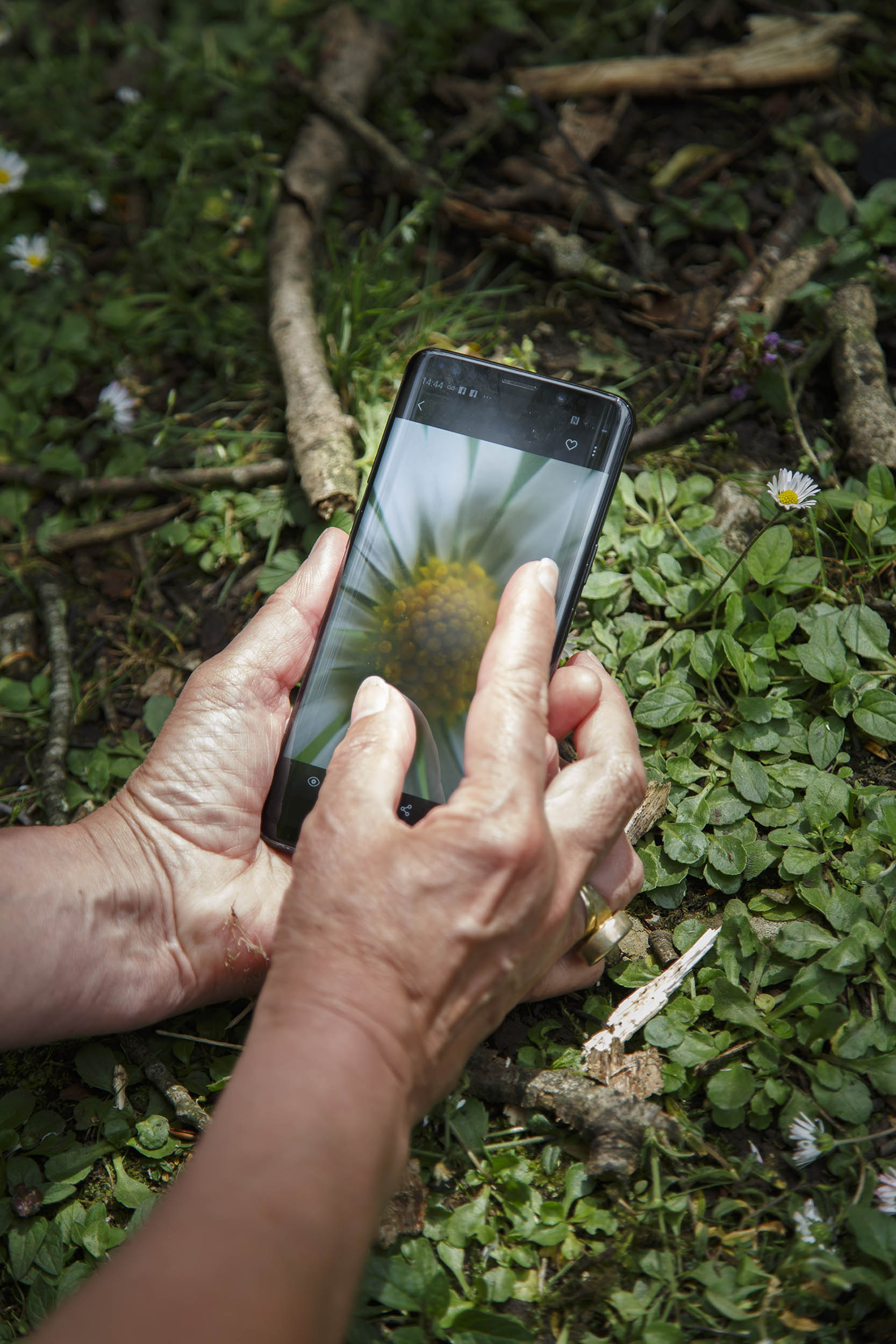
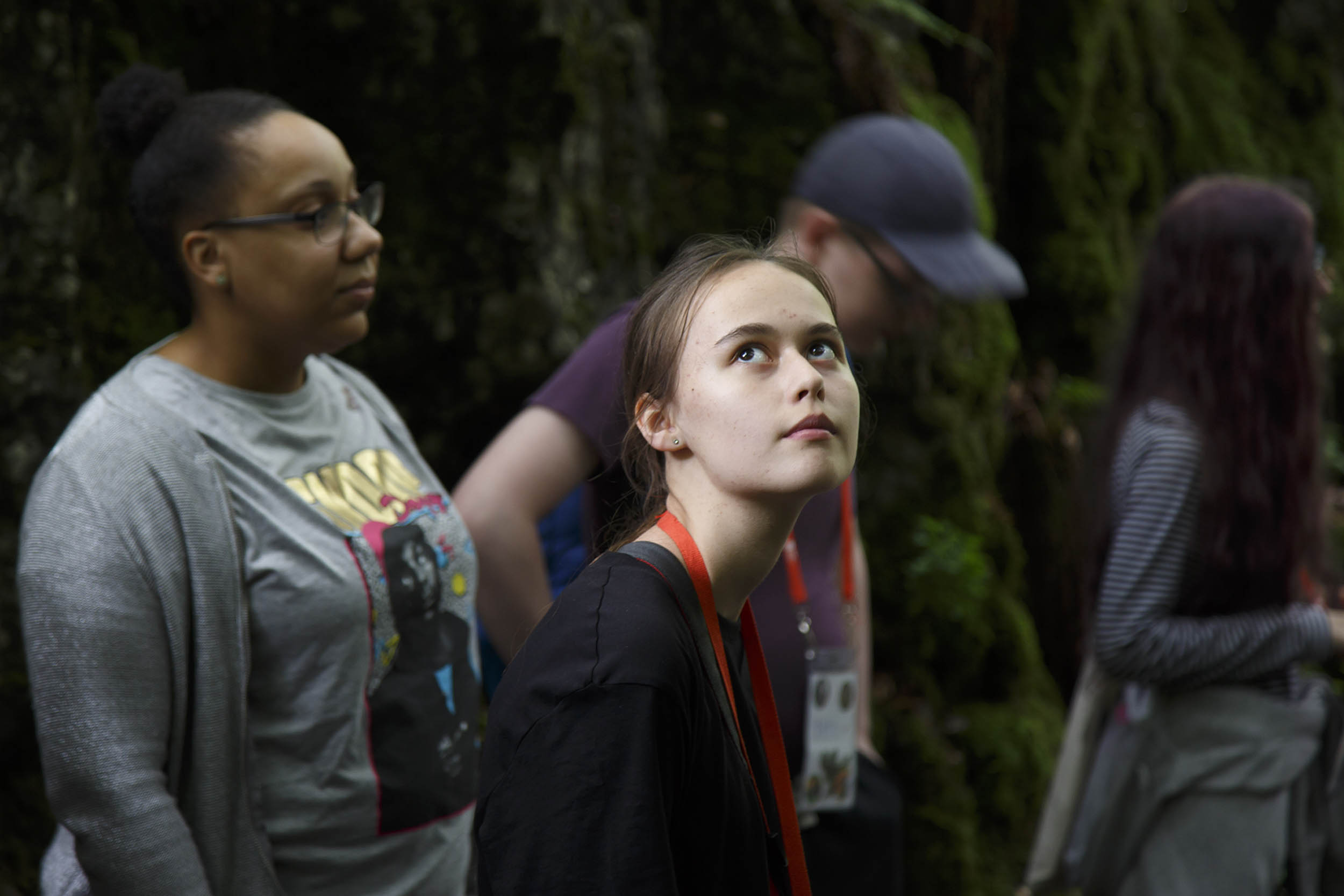
I photographed one day of the programme, providing an overview of the day’s activities while creating marketing and social media material for BES. The focus was on capturing students engaged in fieldwork, discussions, and outdoor learning, showing both the educational content and the immersive nature of the experience.
Documenting Fieldwork and Student Engagement
Even within a single day, there are many moments that illustrate the value of hands-on ecological learning. One highlight was the nature walk led by Dr. Daniel Forman, lecturer in Biosciences at Swansea University. Although I had walked the same route previously as part of the Pennine Way, Dr. Forman’s insights into the local ecology and species interactions offered students—and my photography—a new perspective on the landscape.
Photographs captured students observing habitats, taking notes, and interacting with instructors, emphasizing curiosity, engagement, and teamwork. These images help convey the hands-on learning experience to audiences who could not attend.


The Importance of Professional Photography for Educational Programmes
High-quality photography is essential for educational initiatives like the BES summer school. Images from even a single day:
Provide marketing material to promote future programmes
Document student engagement for internal review
Show the collaboration between students and instructors
Support social media, newsletters, and press coverage to demonstrate programme impact
Capturing these moments professionally ensures that BES can showcase both the learning outcomes and the immersive, field-based nature of the summer school.
Malham Tarn: A Unique Field Site
Malham Tarn in the Yorkshire Dales offers a diverse ecological setting, including wetlands, limestone landscapes, and surrounding habitats. Photographing students in this environment demonstrates how fieldwork brings theory to life and provides unique learning opportunities. Images from the day highlight the interaction between students, instructors, and the environment, which is central to BES’s mission.
Conclusion
Documenting one day of the British Ecological Society summer school allowed me to capture the energy, curiosity, and engagement of the students while providing BES with professional material for marketing, social media, and archival purposes. Working alongside expert instructors like Dr. Daniel Forman made the day both professionally and personally rewarding.
For more information about the British Ecological Society and their educational initiatives, visit britishecologicalsociety.org.
What Makes a House a Home? for Hawkins/Brown
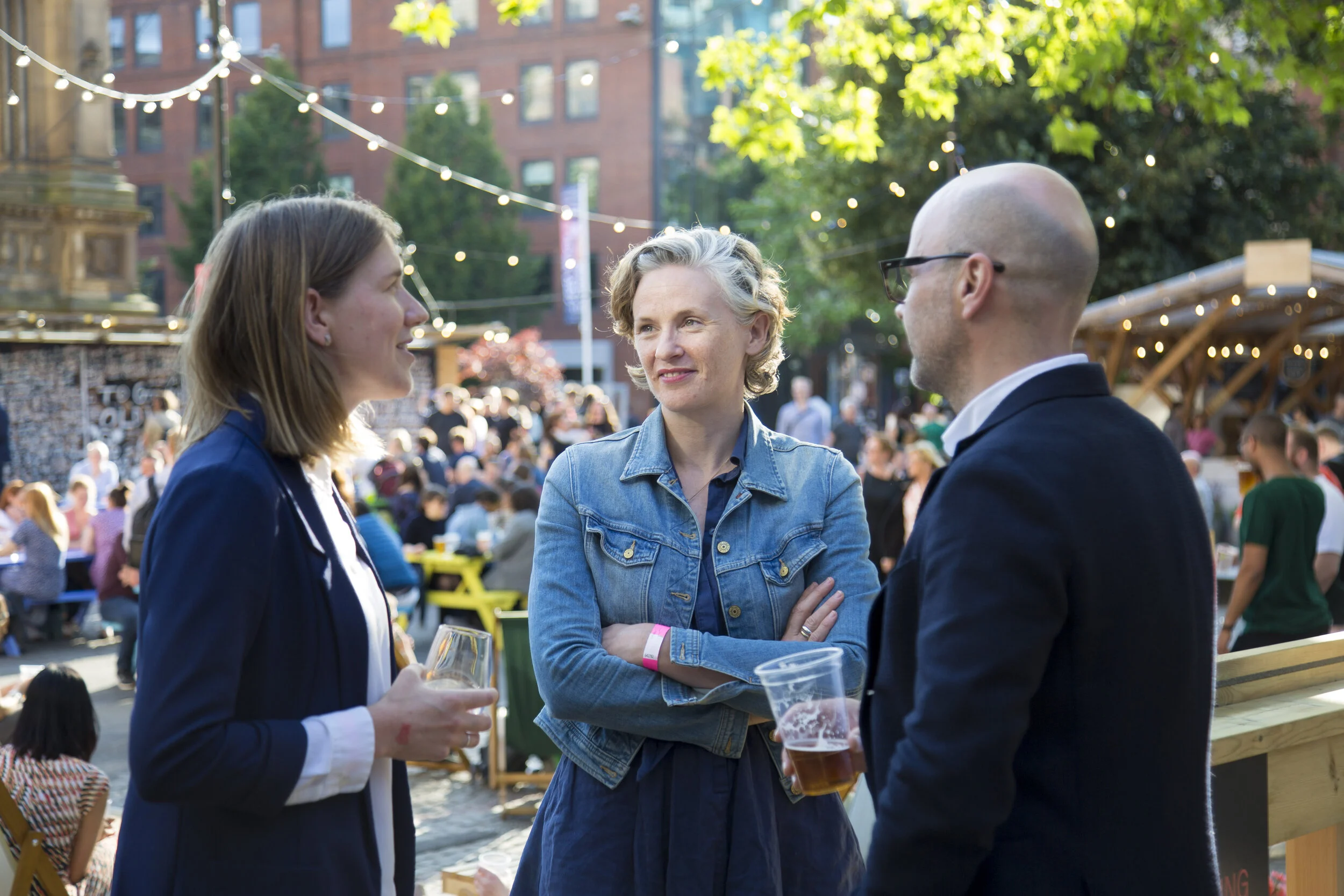
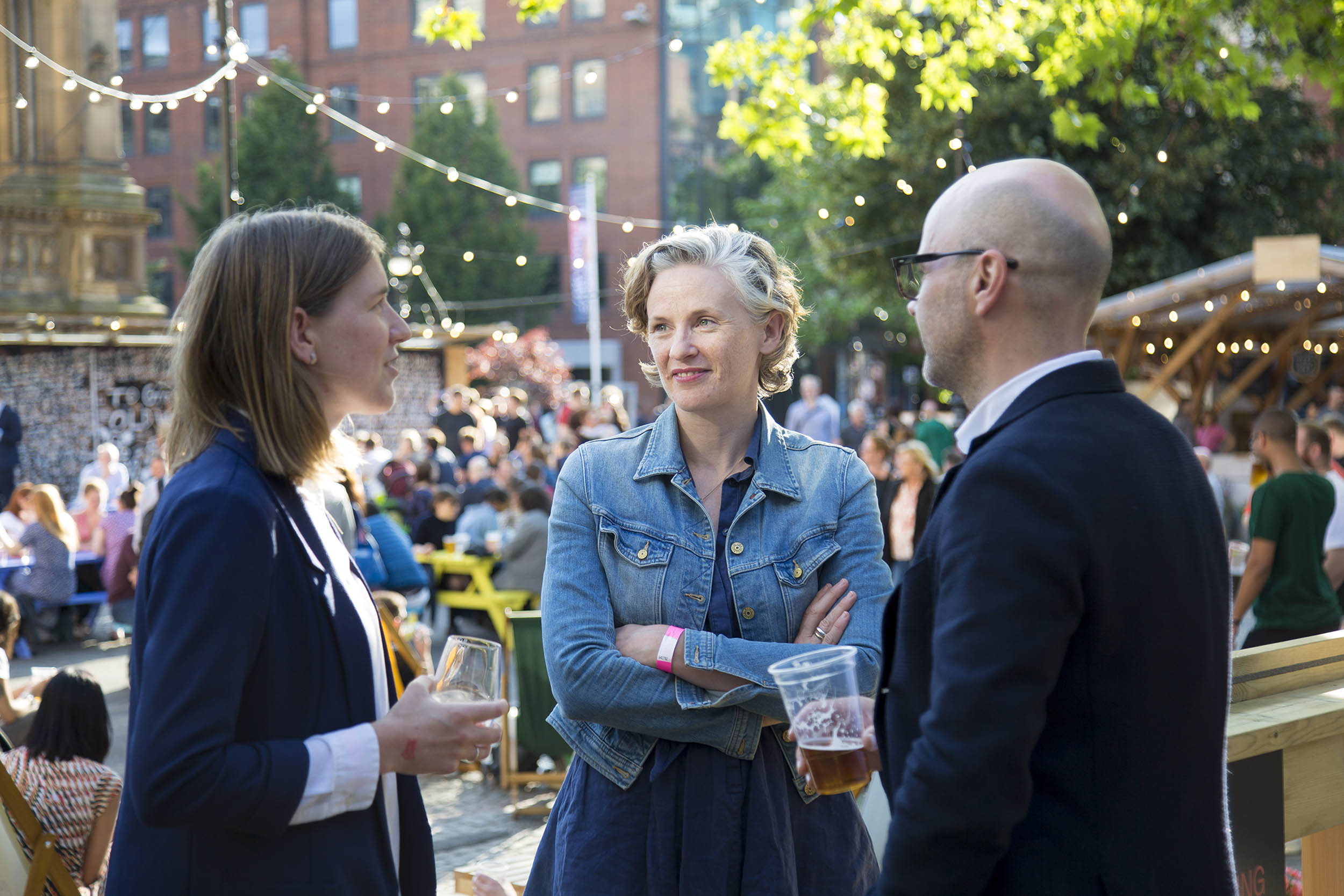
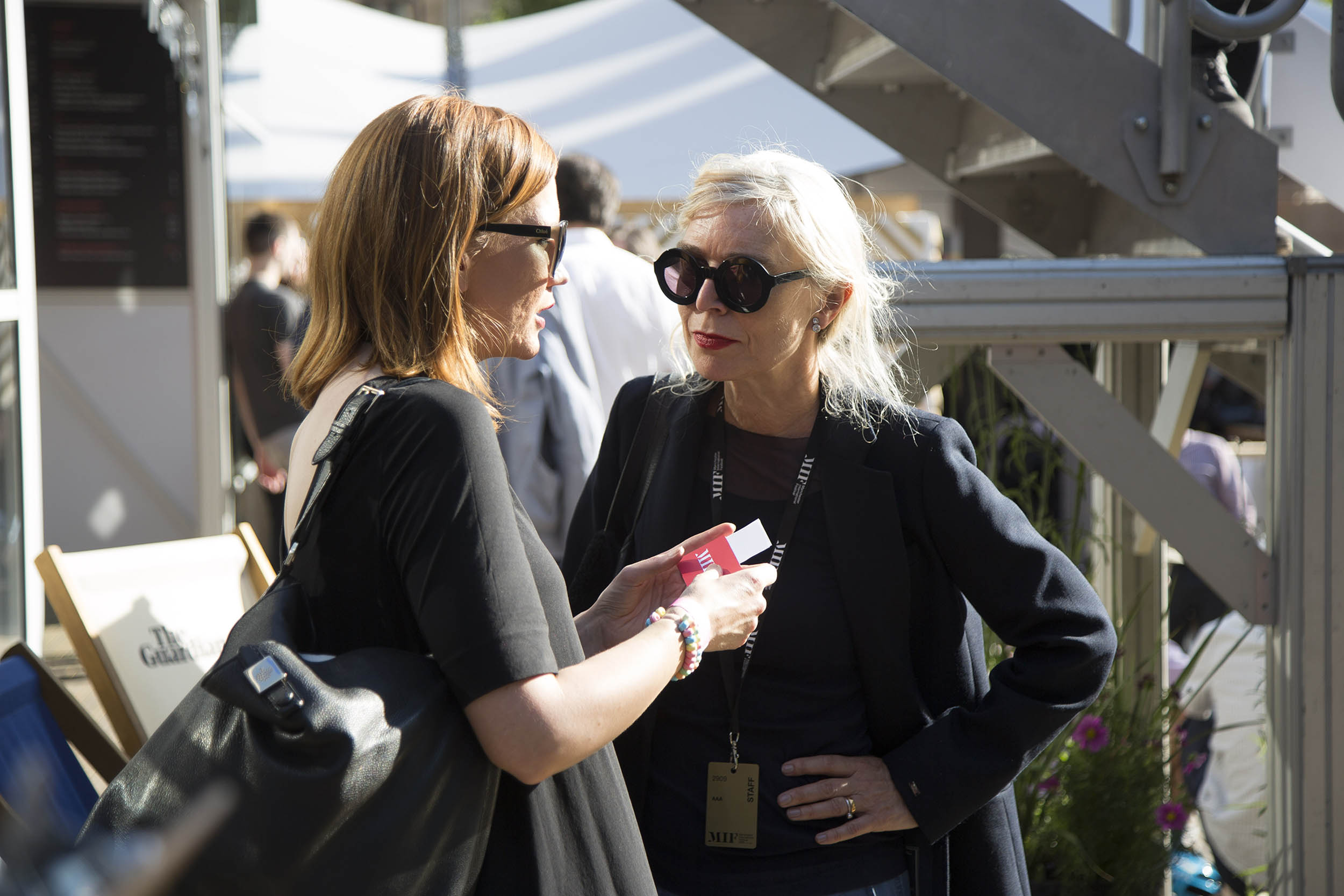
Hawkins\Brown have been debating this question for over 30 years and on Thursday 18 July 2019, hosted a conference party at Glass House One, Festival Square, to celebrate another successful year for Hawkins\Brown Studio North and their continued support of and involvement in Manchester International Festival.
The house: “a machine for living in” (Le Corbusier), or a place “to dream” (Gaston Bachelard)?
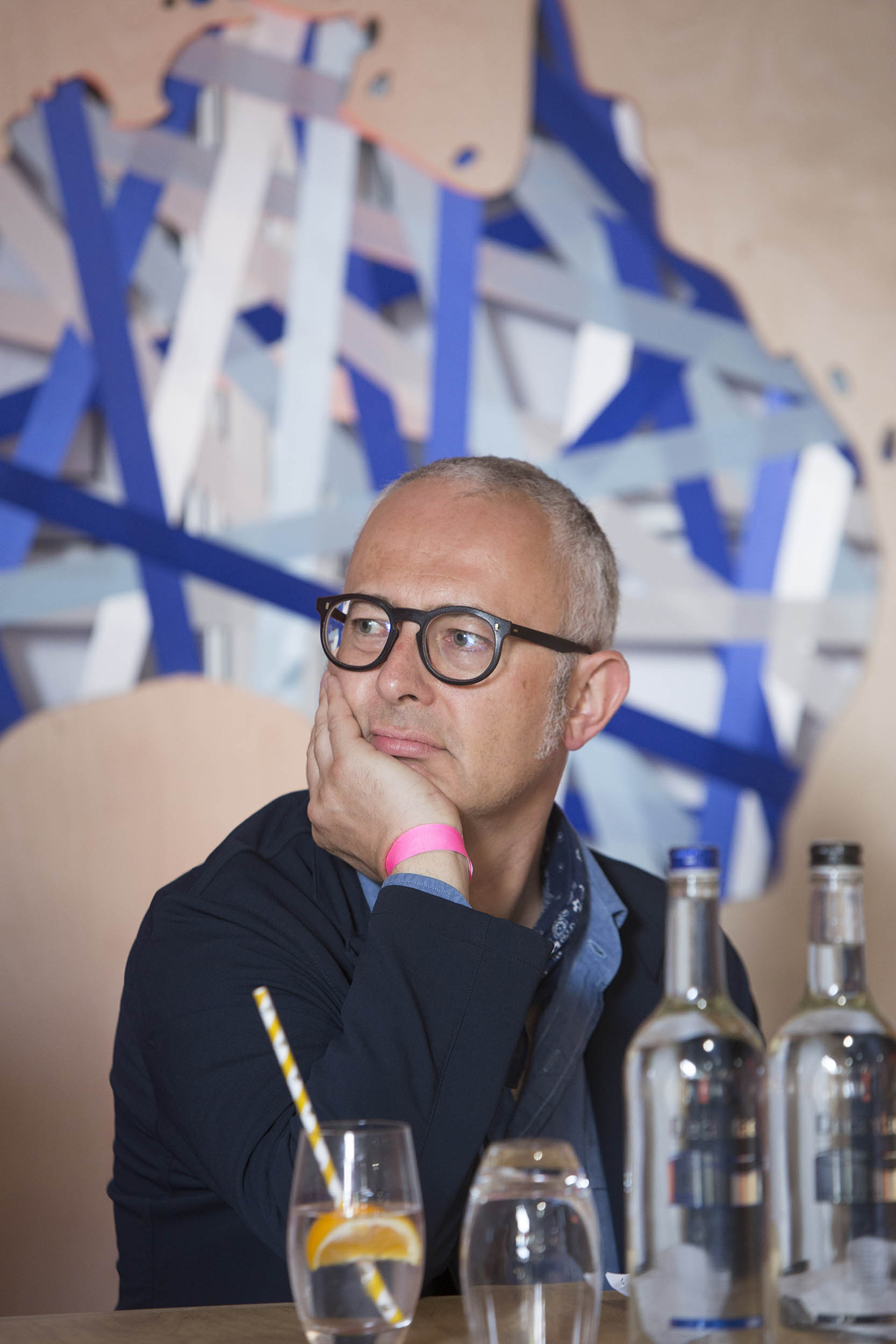
The panel delved into this rich and varied topic covering everything from co-living and the concept of community, to shifts in social demographics and changing lifestyles, to DfMA, buildability and volumetric housing, to what “home” means personally to each of the panellists. Some suggestions included: “my record collection”, “acoustic insulation (three children under the age of three!),” and “the freedom to DIY”.
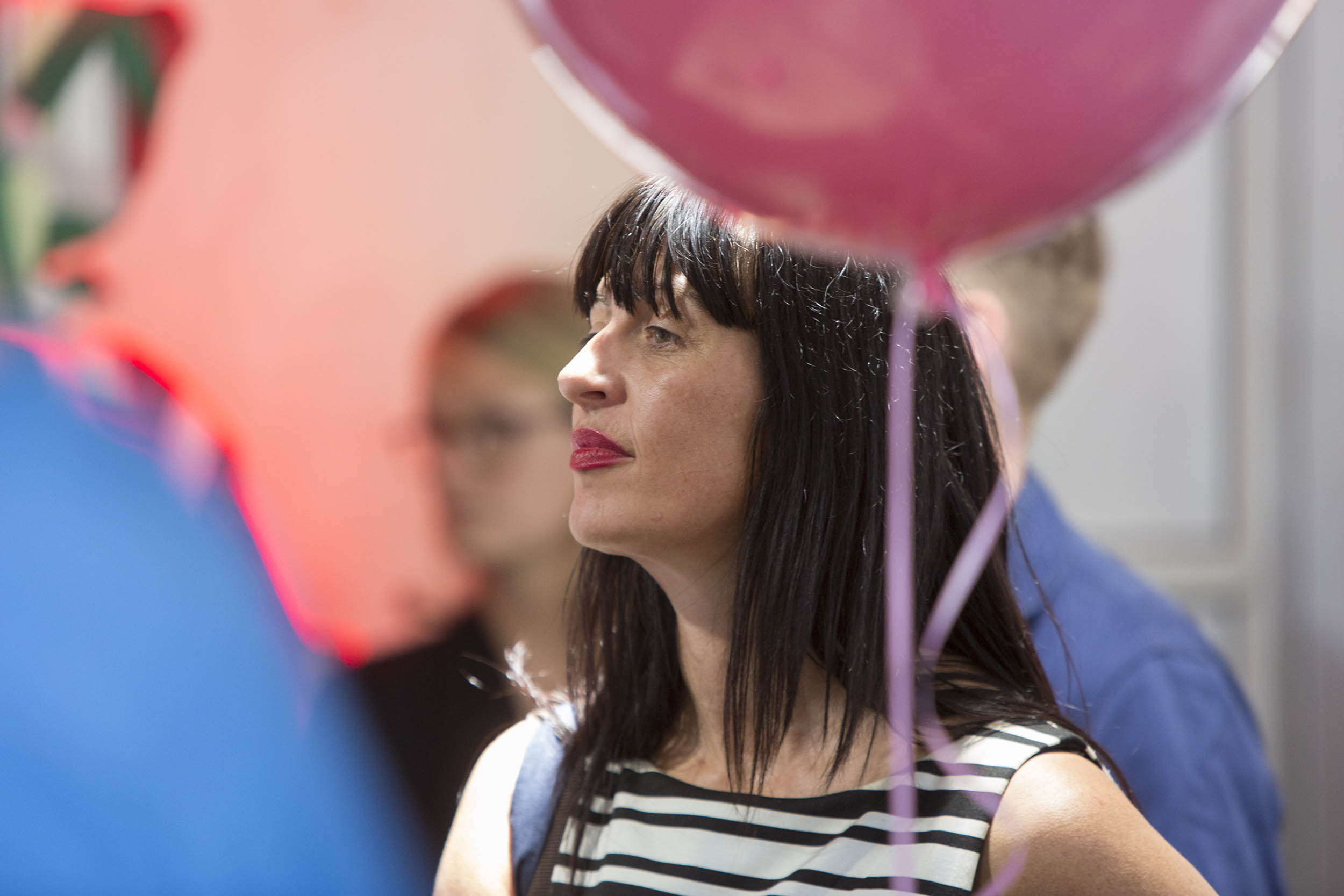
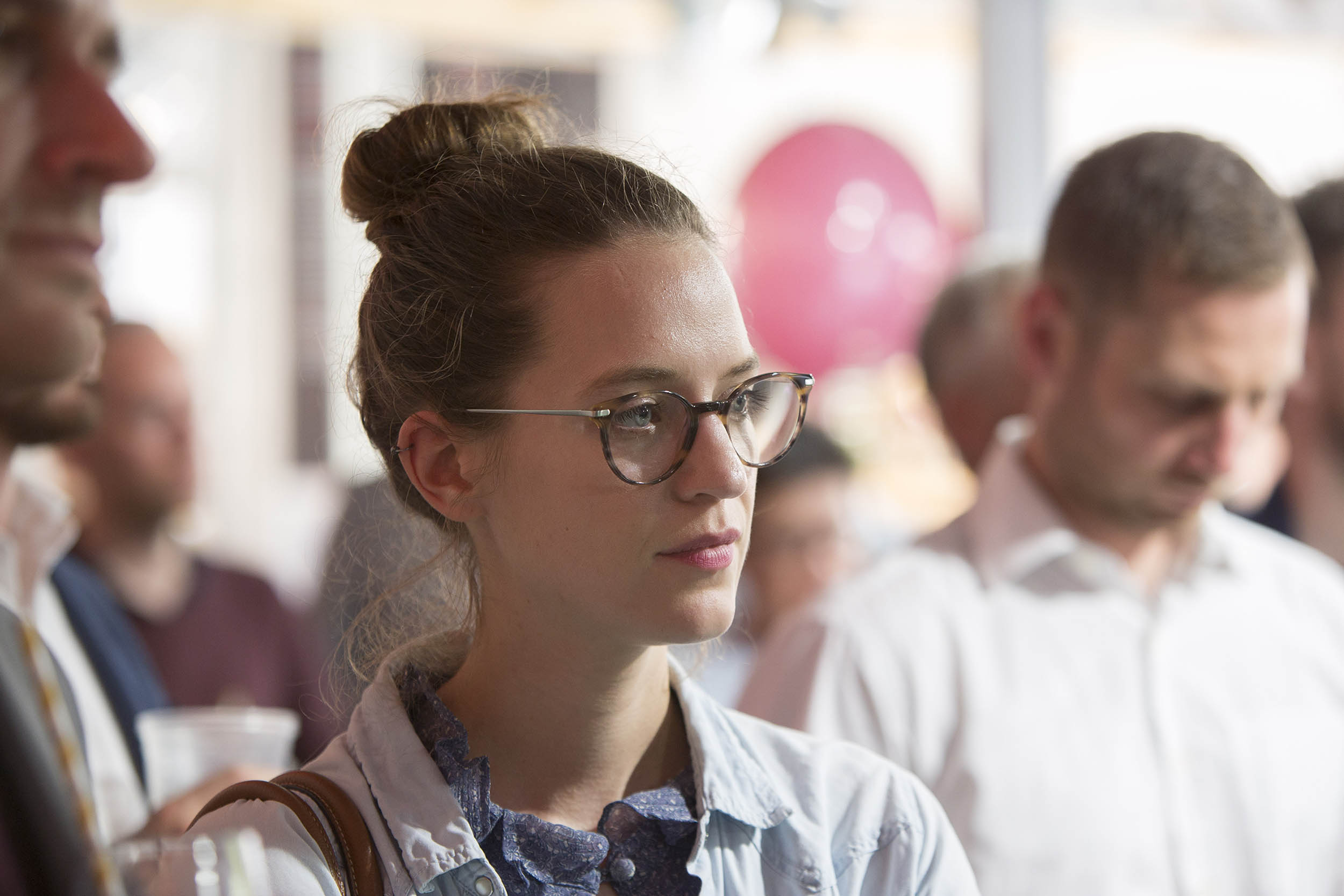
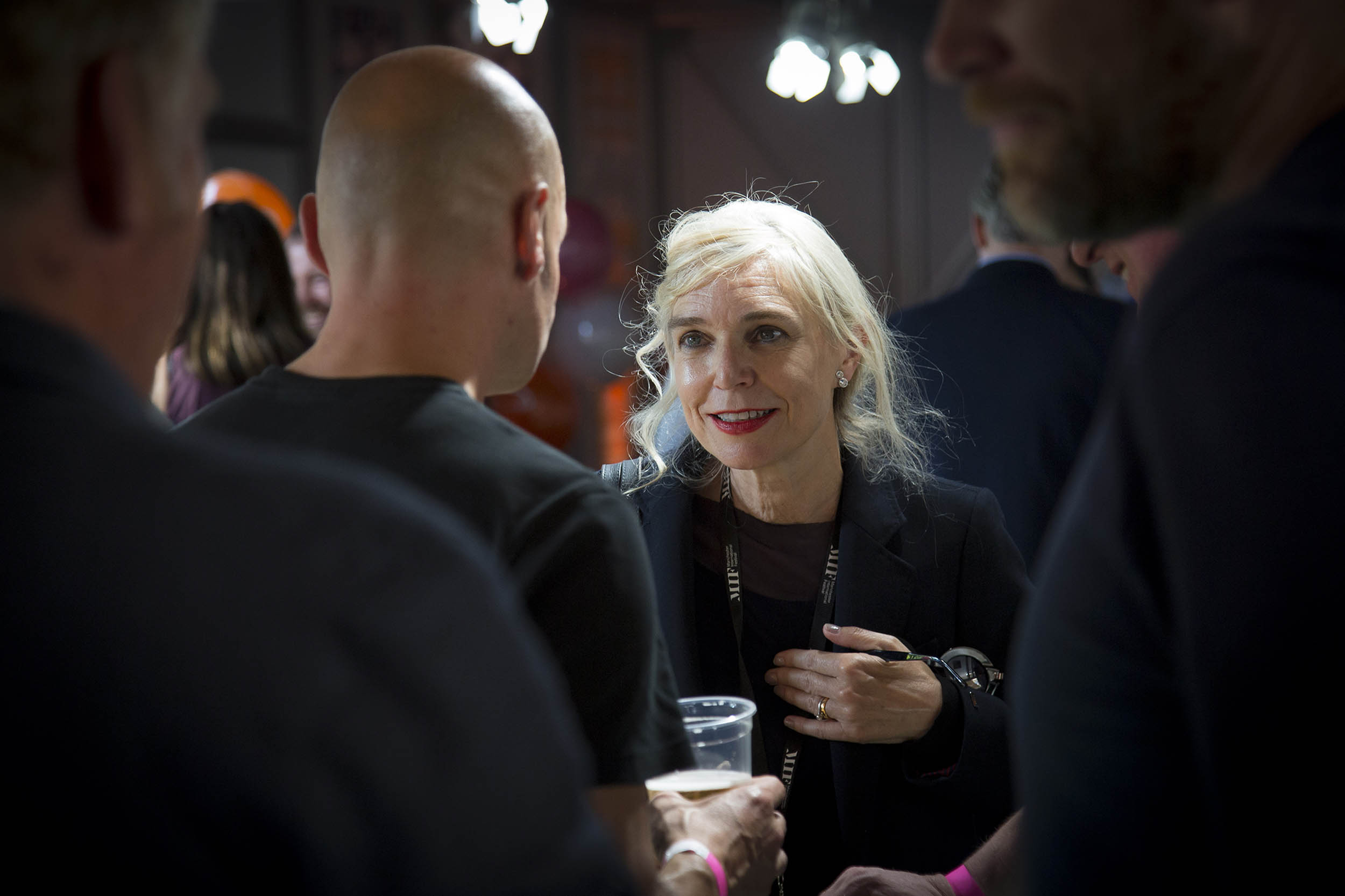
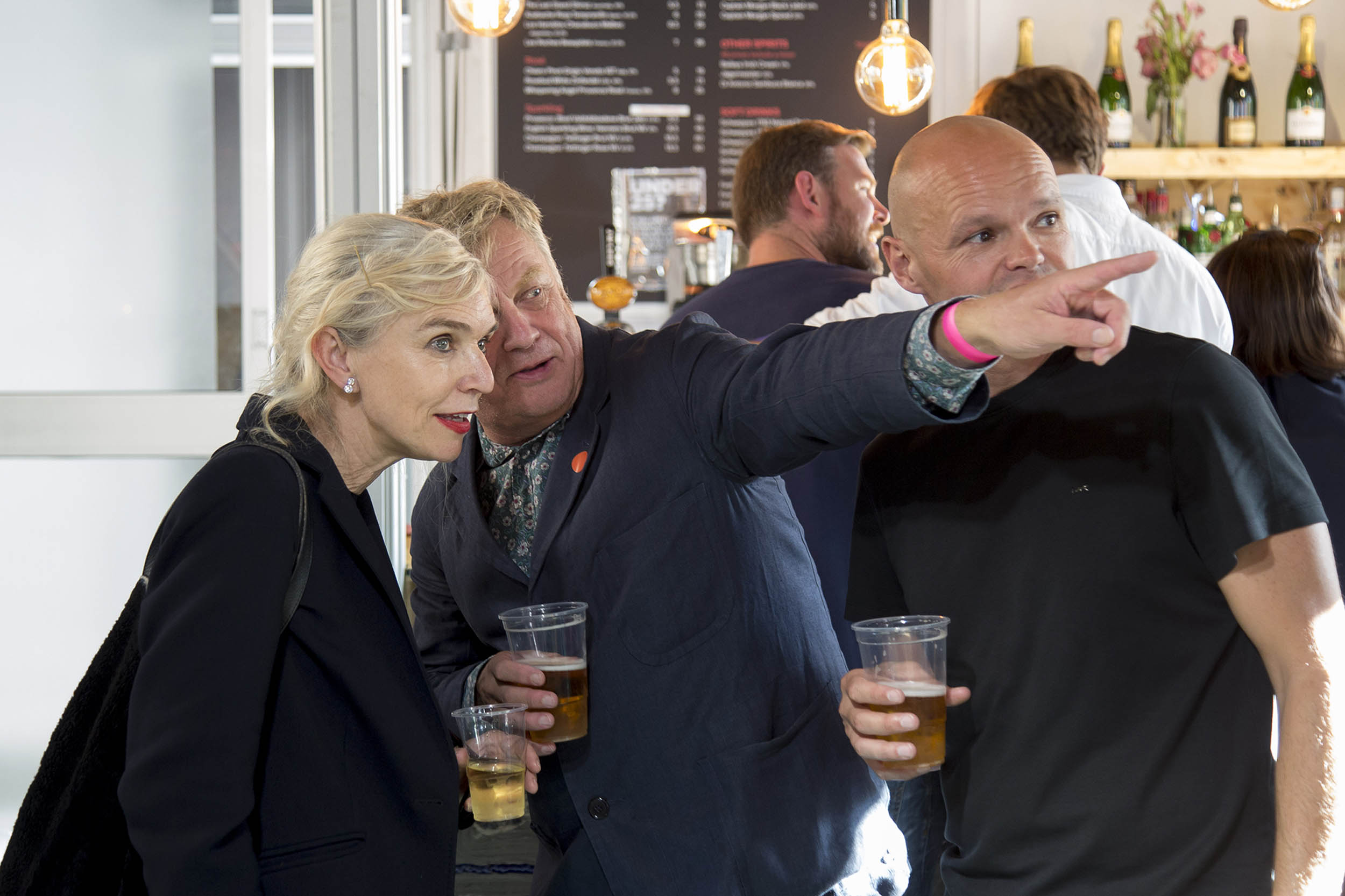
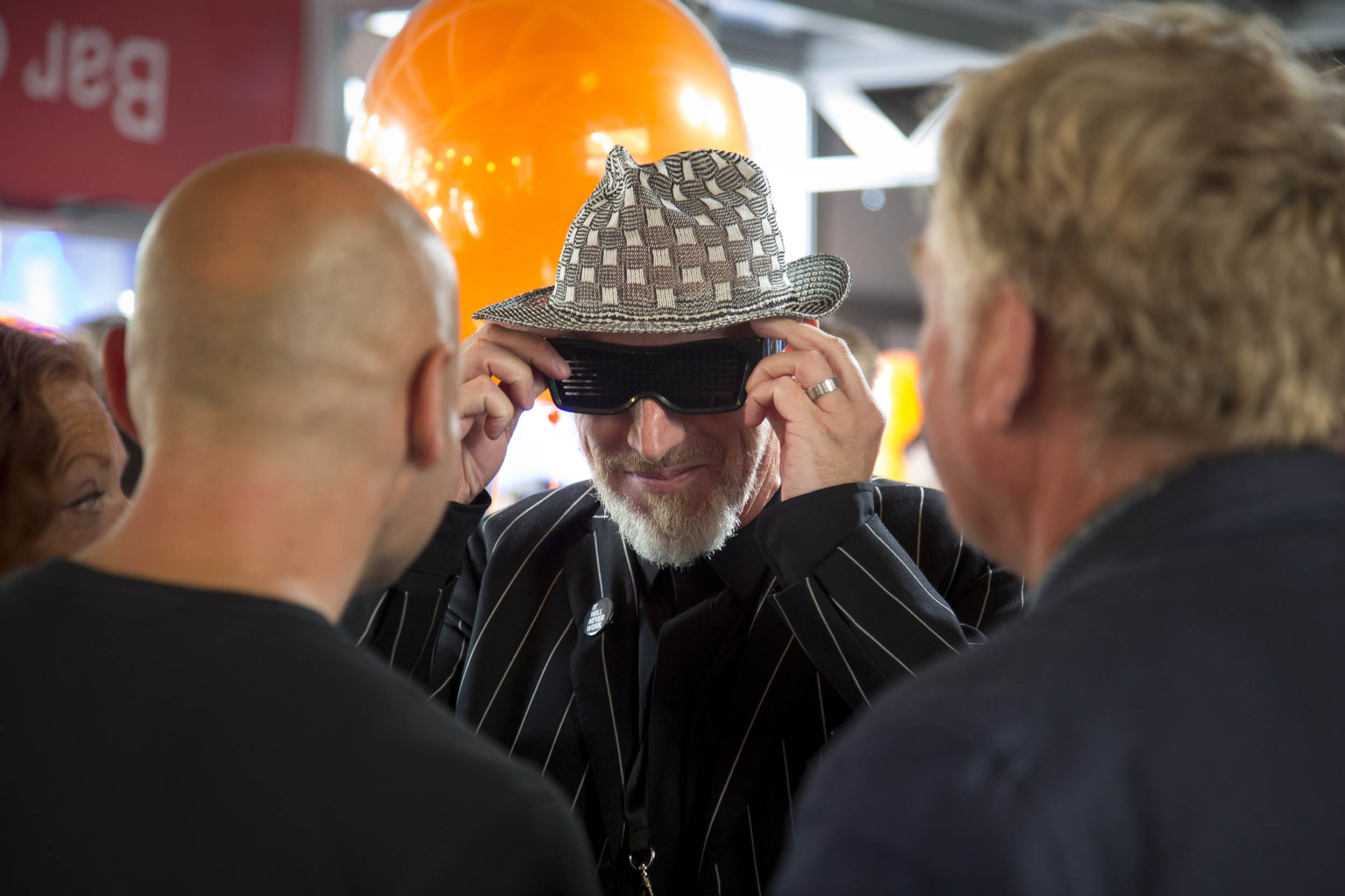
It was a pleasure to photograph the conference while enjoying the atmosphere of MIF and the last of the sunshine.
Hawkins\Brown have been debating this question for over 30 years and on Thursday 18 July 2019, hosted a party at Glass House One, Festival Square, to celebrate another successful year for Hawkins\Brown Studio North and their continued support of and involvement in Manchester International Festival.
The house: “a machine for living in” (Le Corbusier), or a place “to dream” (Gaston Bachelard)?
The panel delved into this rich and varied topic covering everything from co-living and the concept of community, to shifts in social demographics and changing lifestyles, to DfMA, buildability and volumetric housing, to what “home” means personally to each of the panellists. Some suggestions included: “my record collection”, “acoustic insulation (three children under the age of three!),” and “the freedom to DIY”.
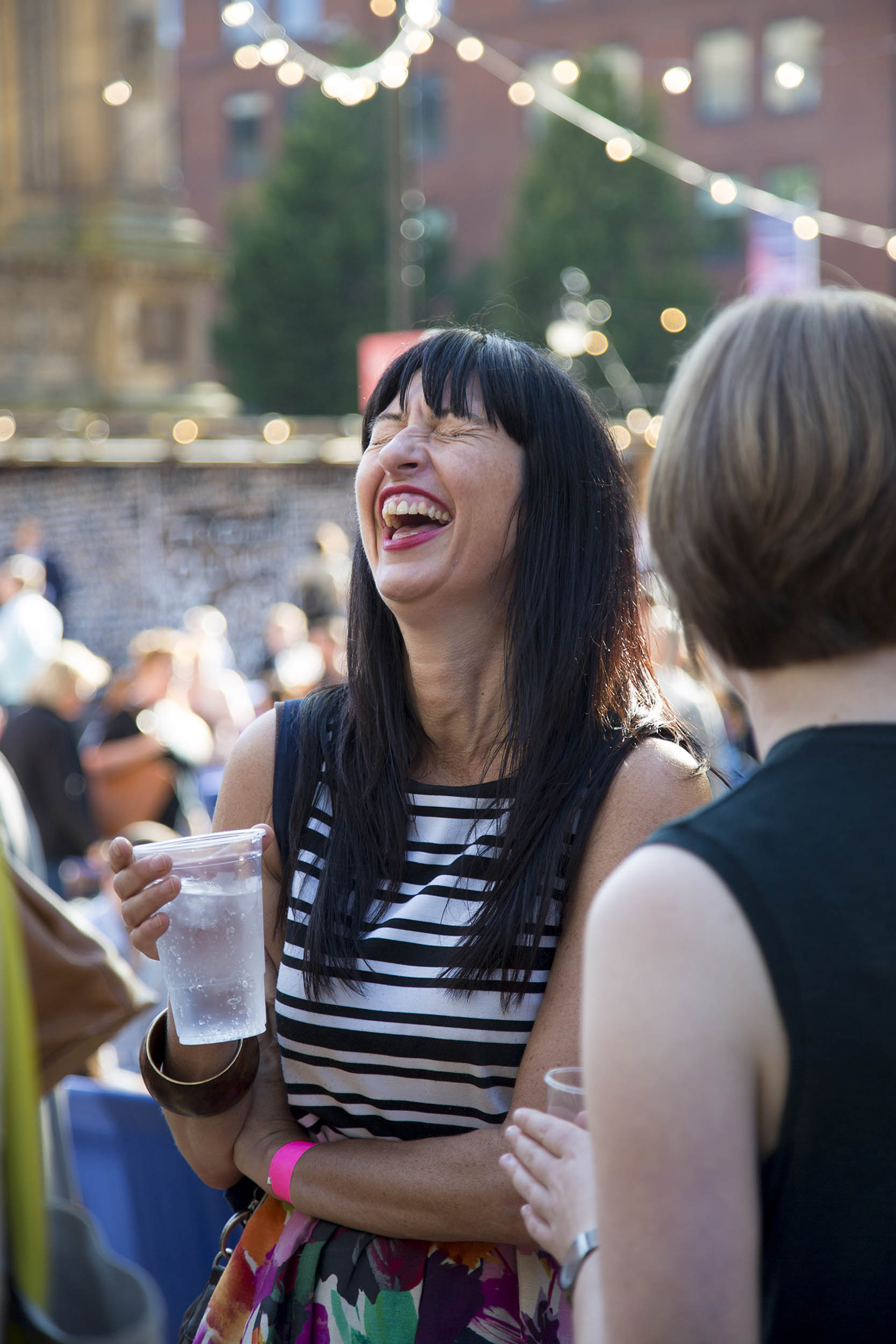

Cubic Motion
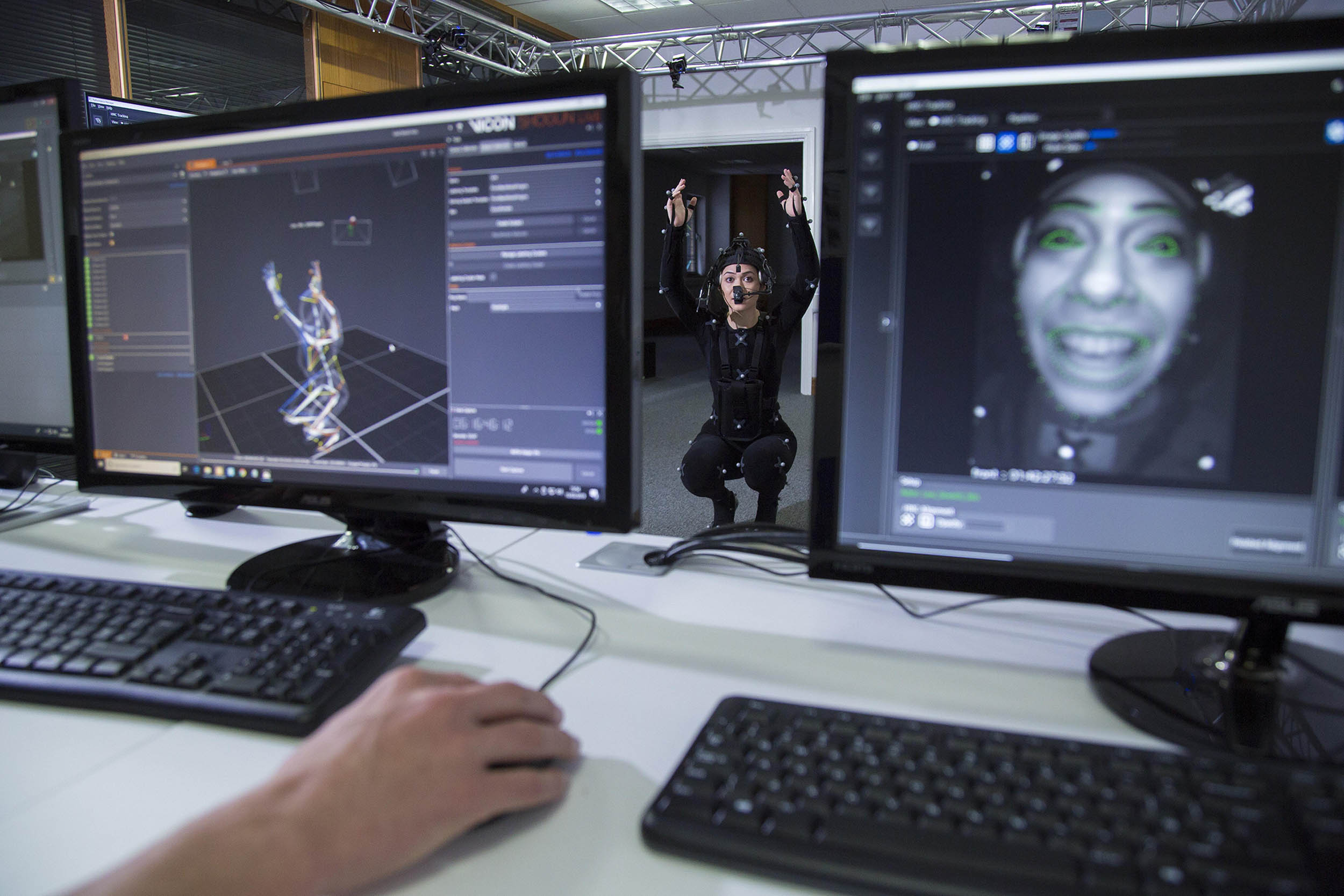
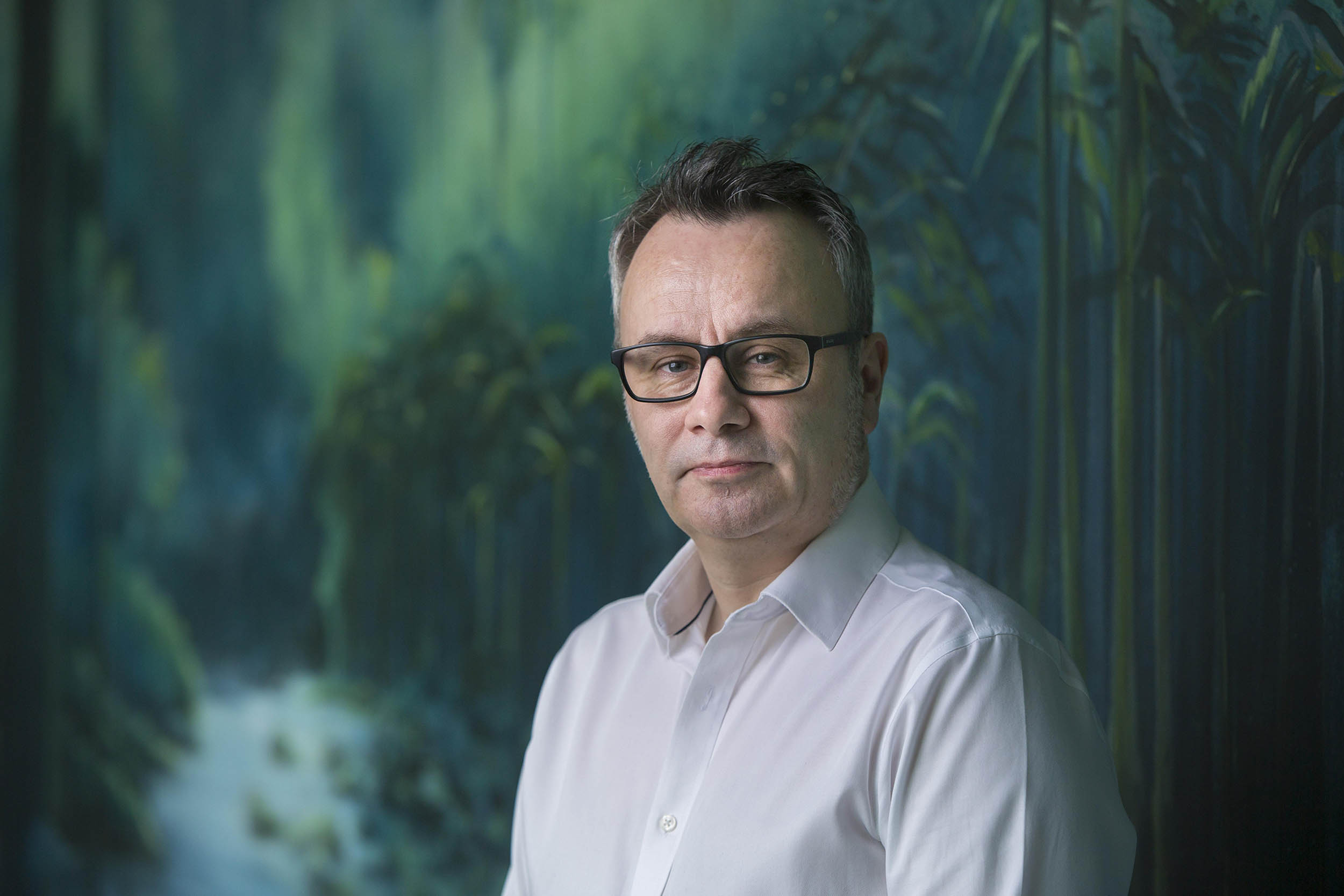
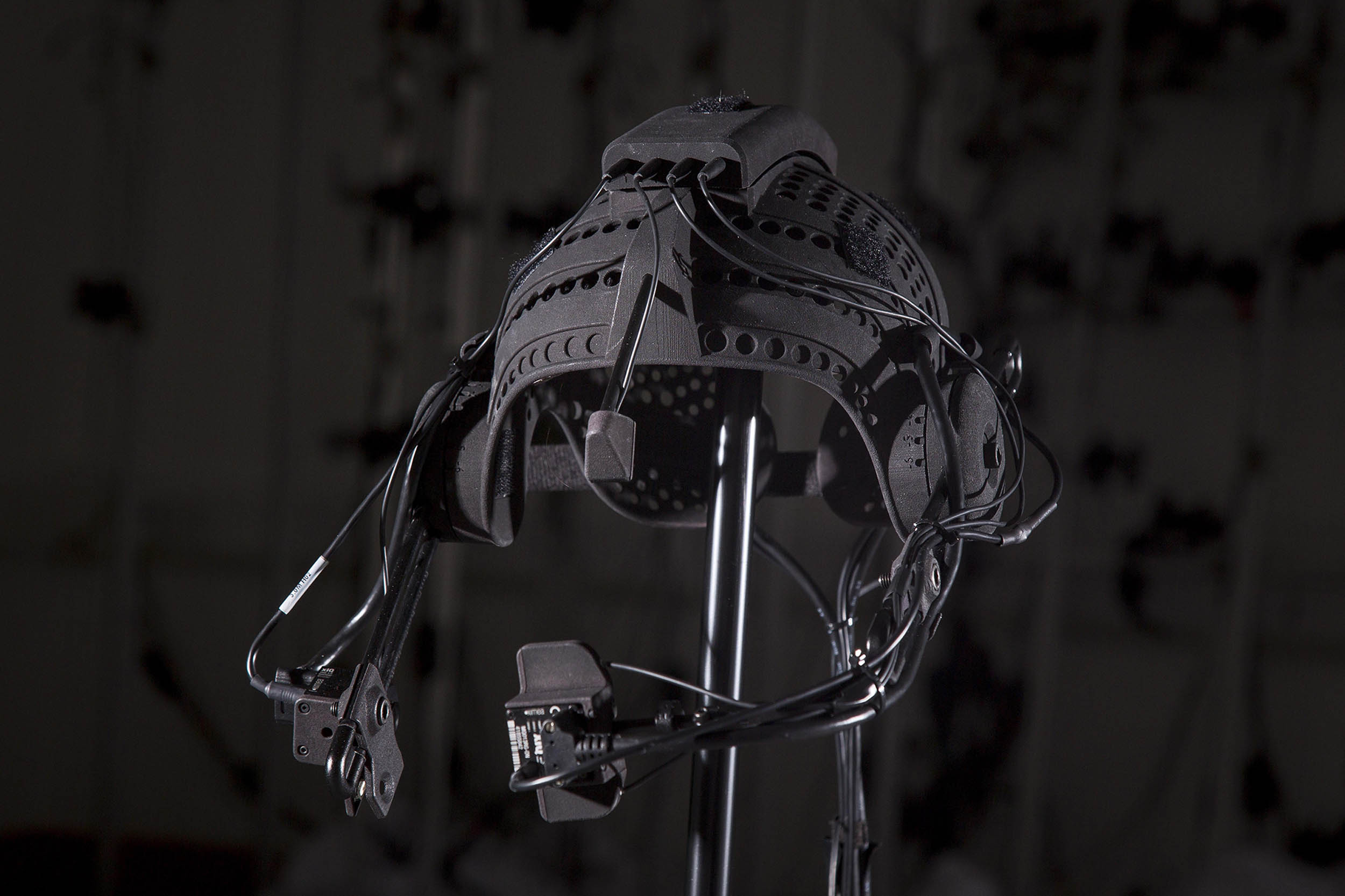
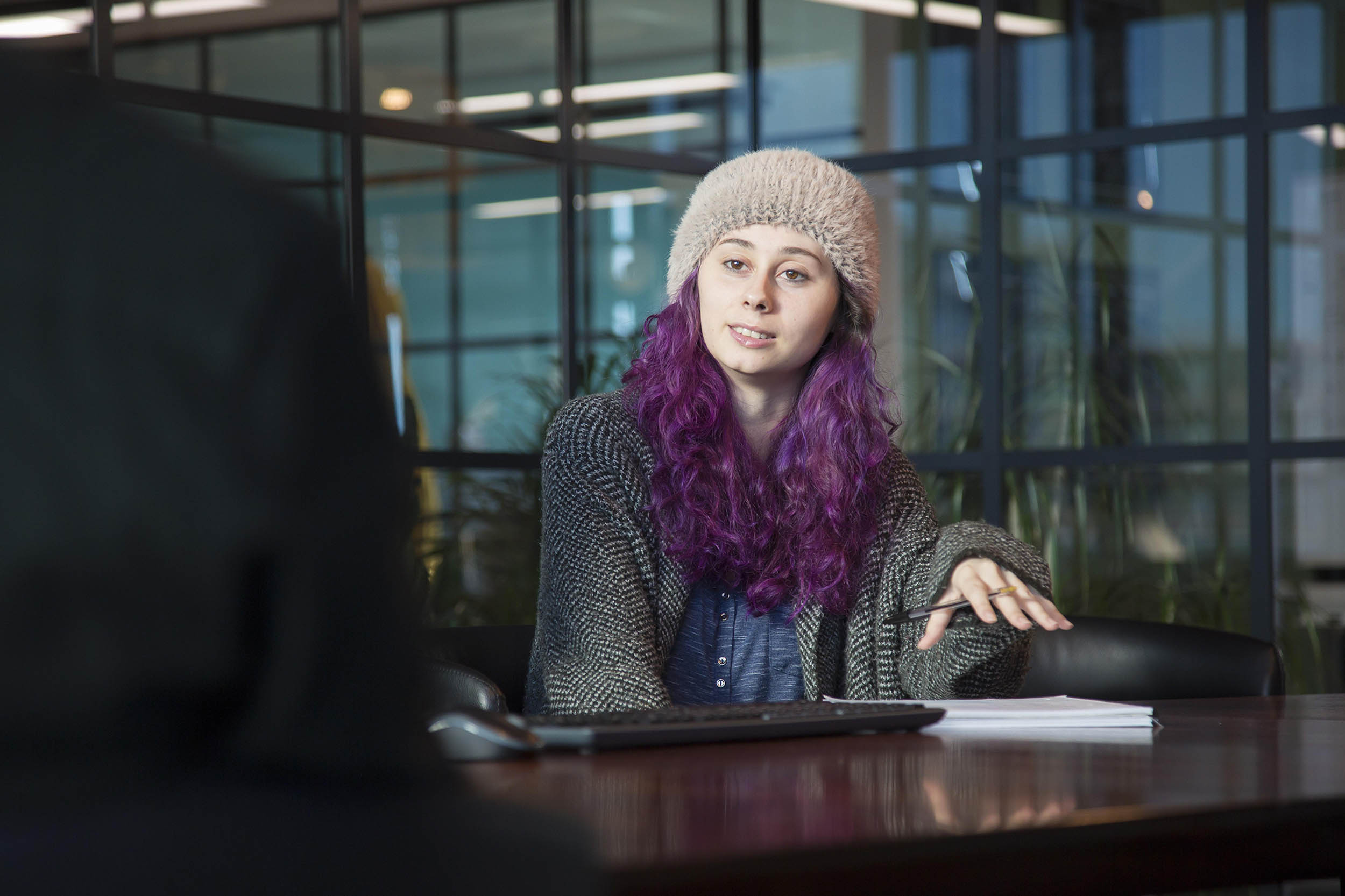
Cubic Motion is the world leader in real-time model-based computer vision and digital animation, bringing extraordinary characters to life across video games, films, broadcast media, and immersive technologies.
It was a real pleasure to be commissioned to carried out the documentary, product and portrait photography for their new website: https://cubicmotion.com/

Cubic Motion is the world leader in real-time model-based computer vision and digital animation, bringing extraordinary characters to life across video games, films, broadcast media, and immersive technologies.
It was a real pleasure to be commissioned to carried out the documentary, product and portrait photography for their new website: https://cubicmotion.com/
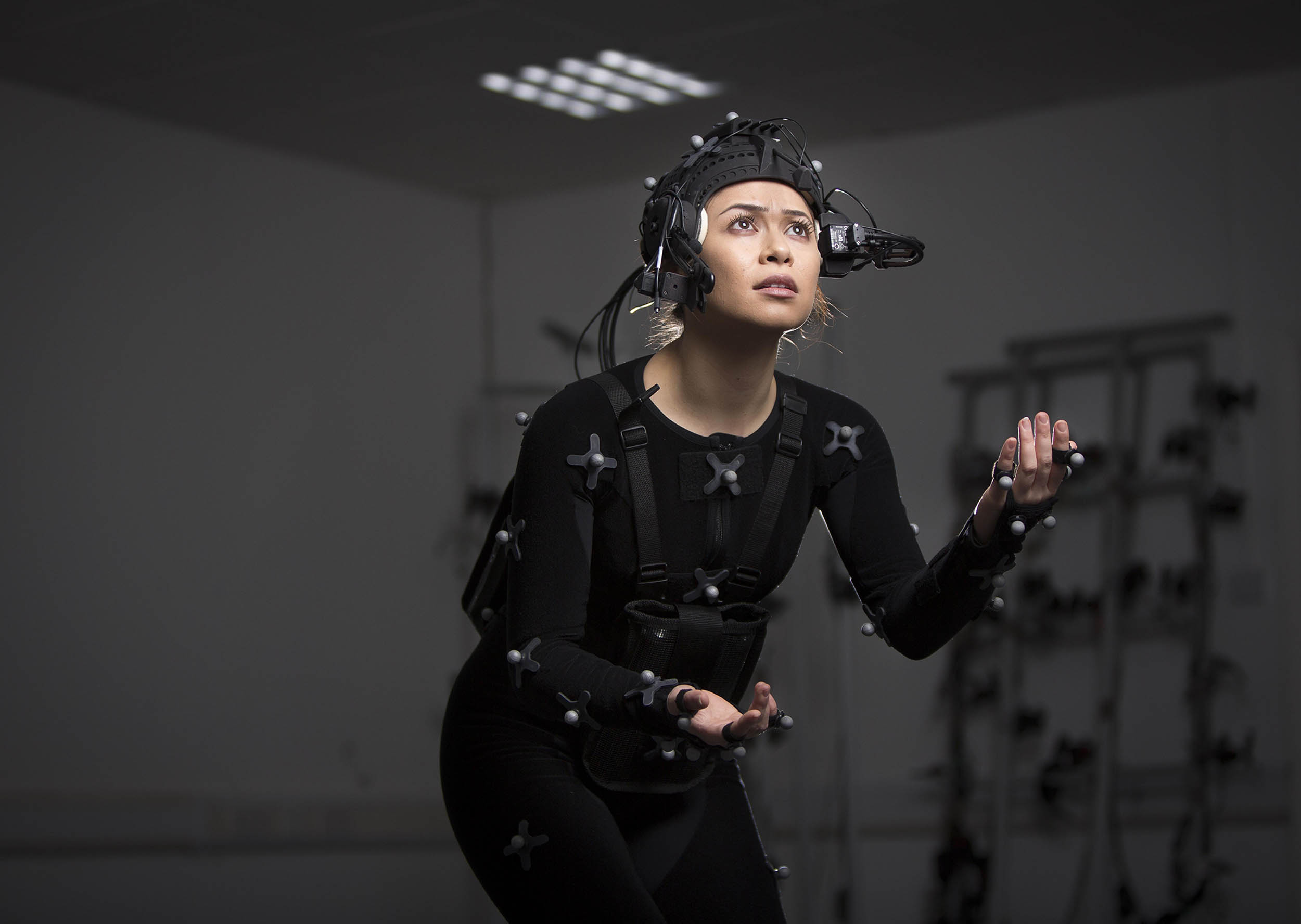
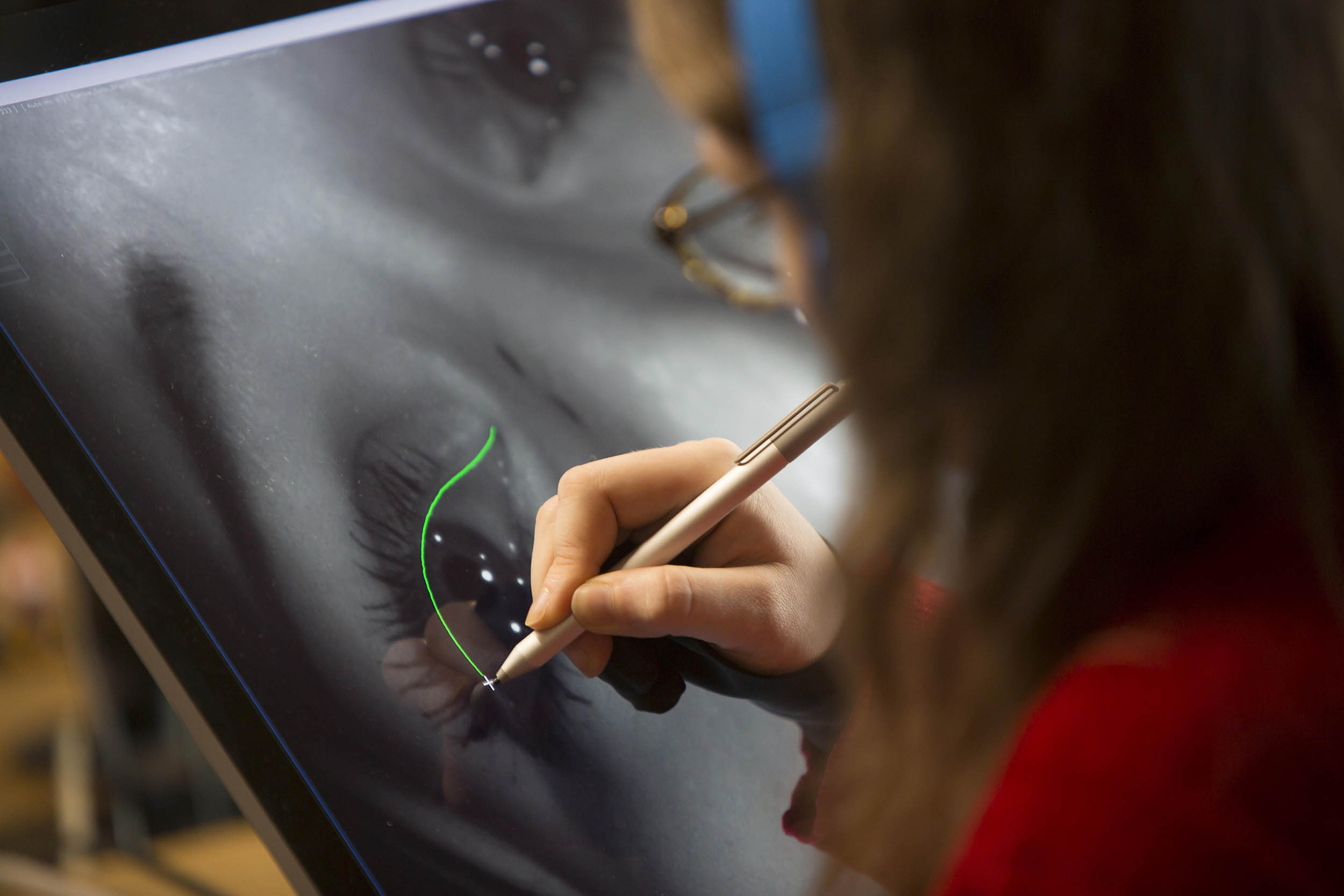

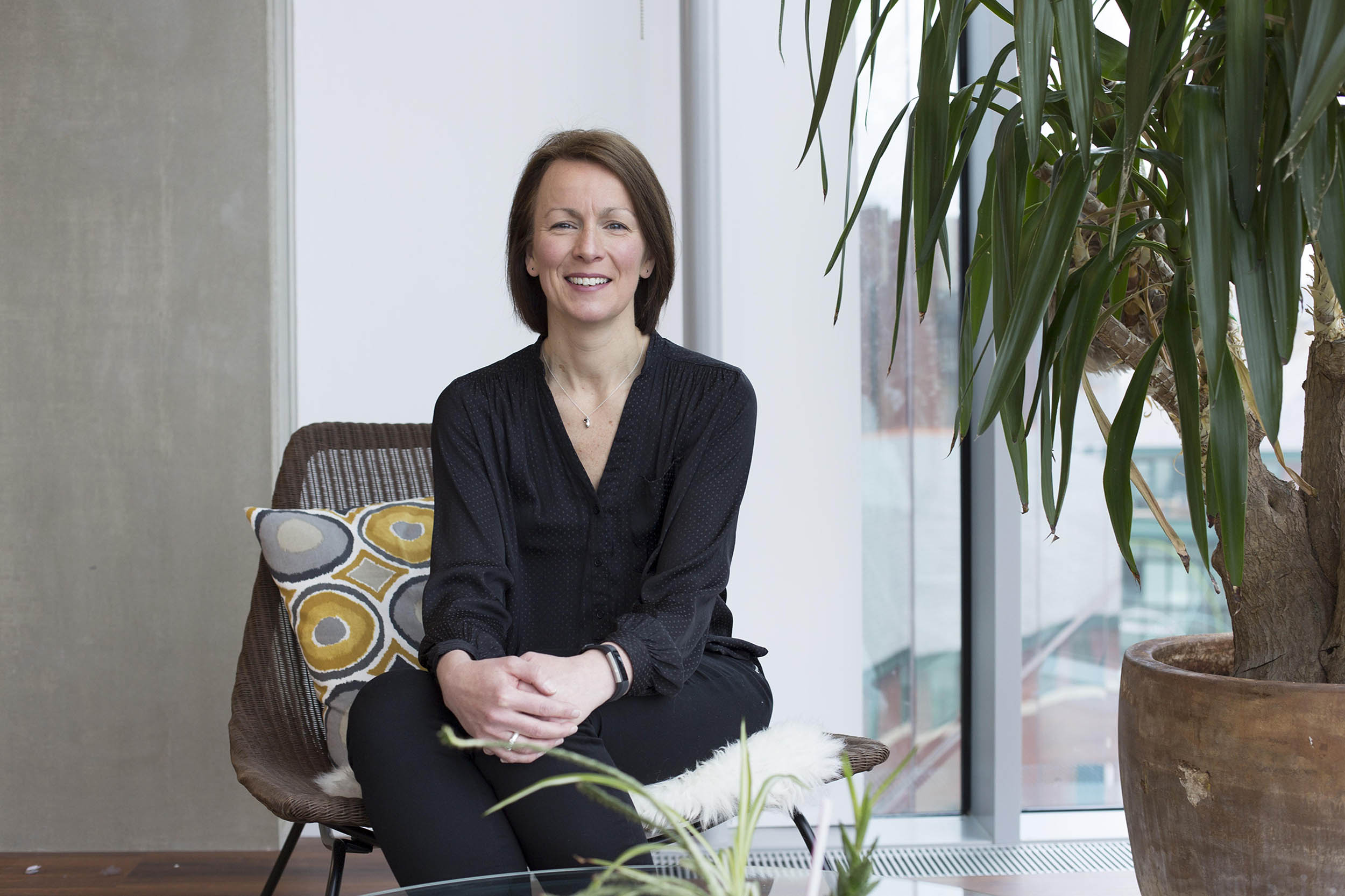


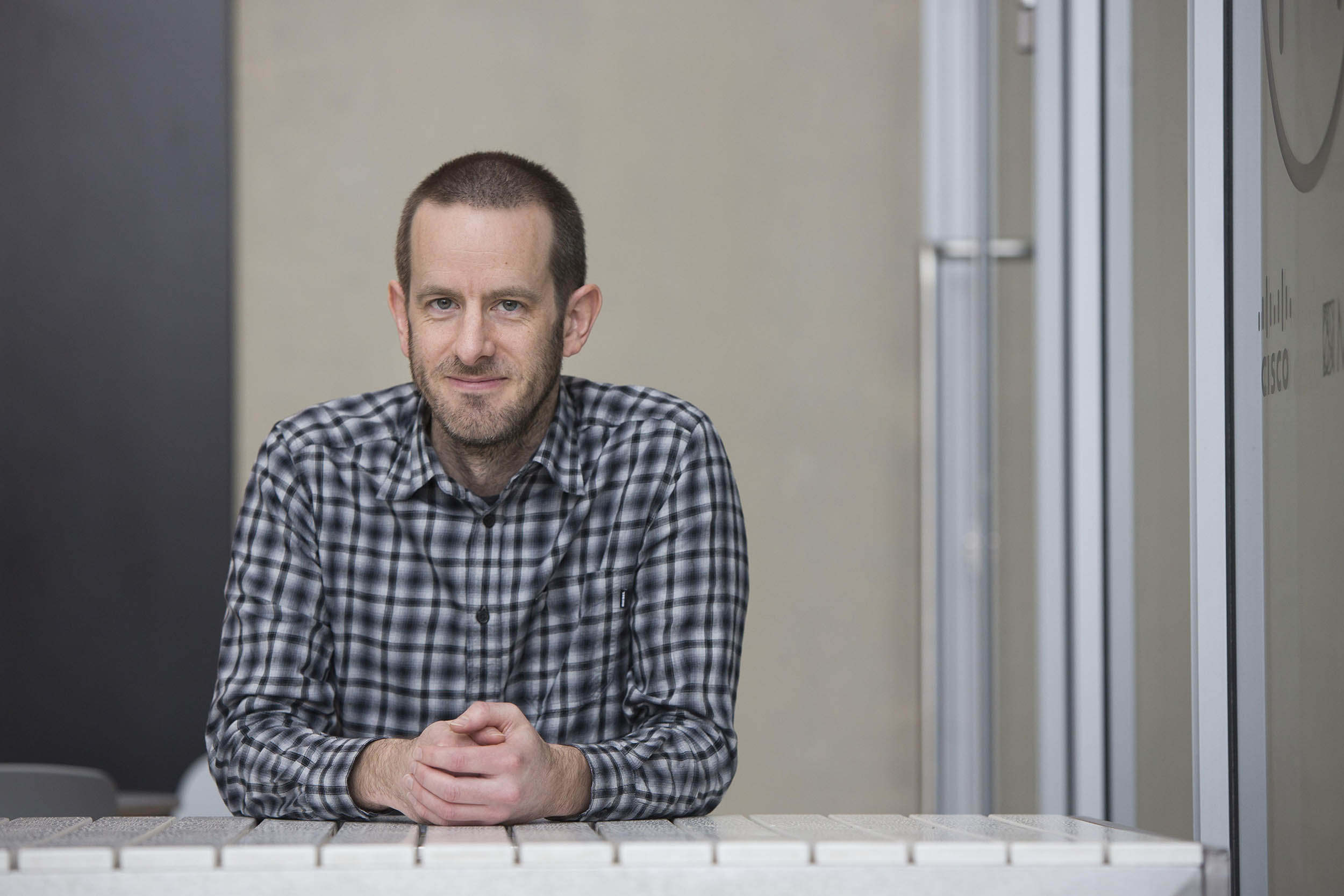

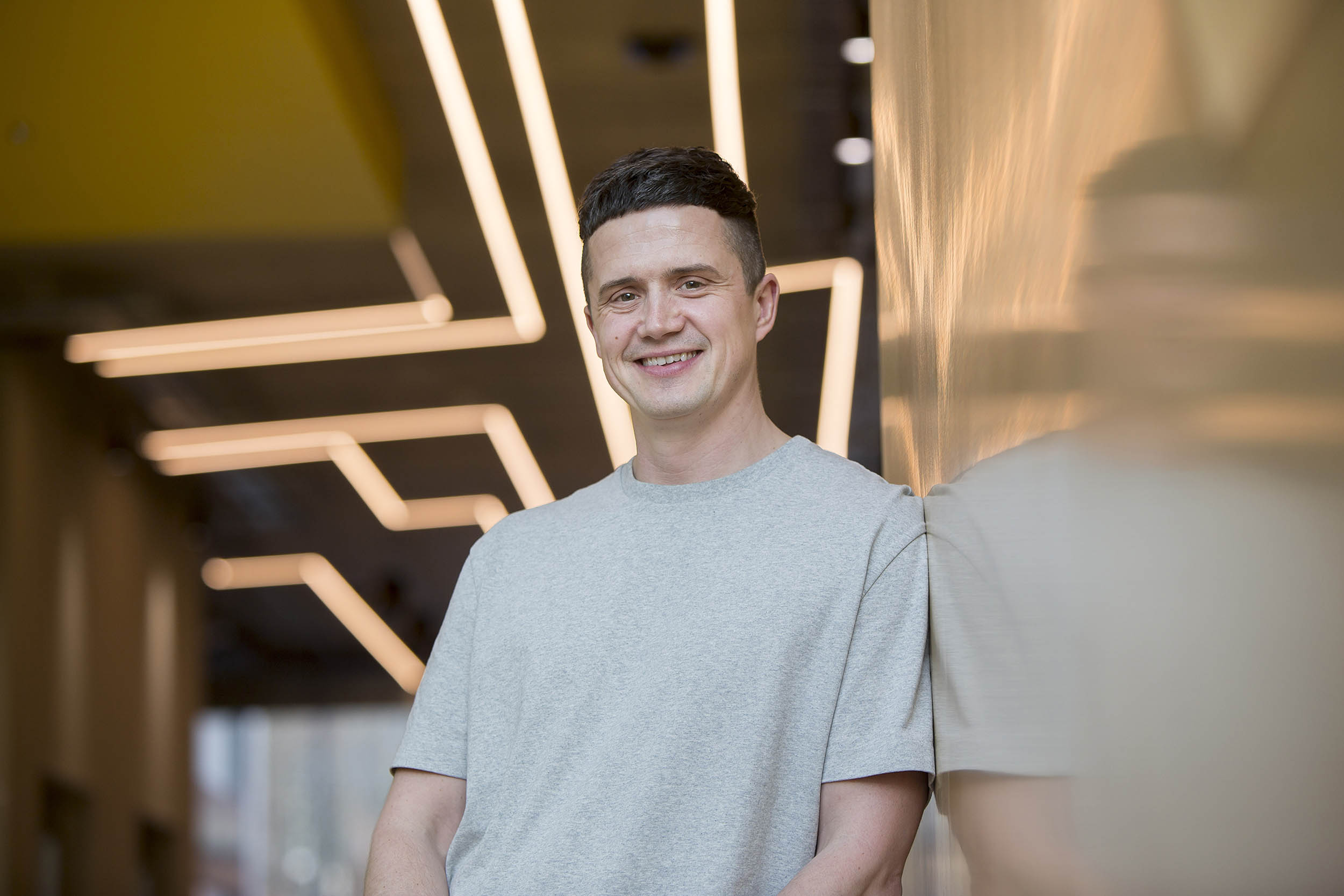

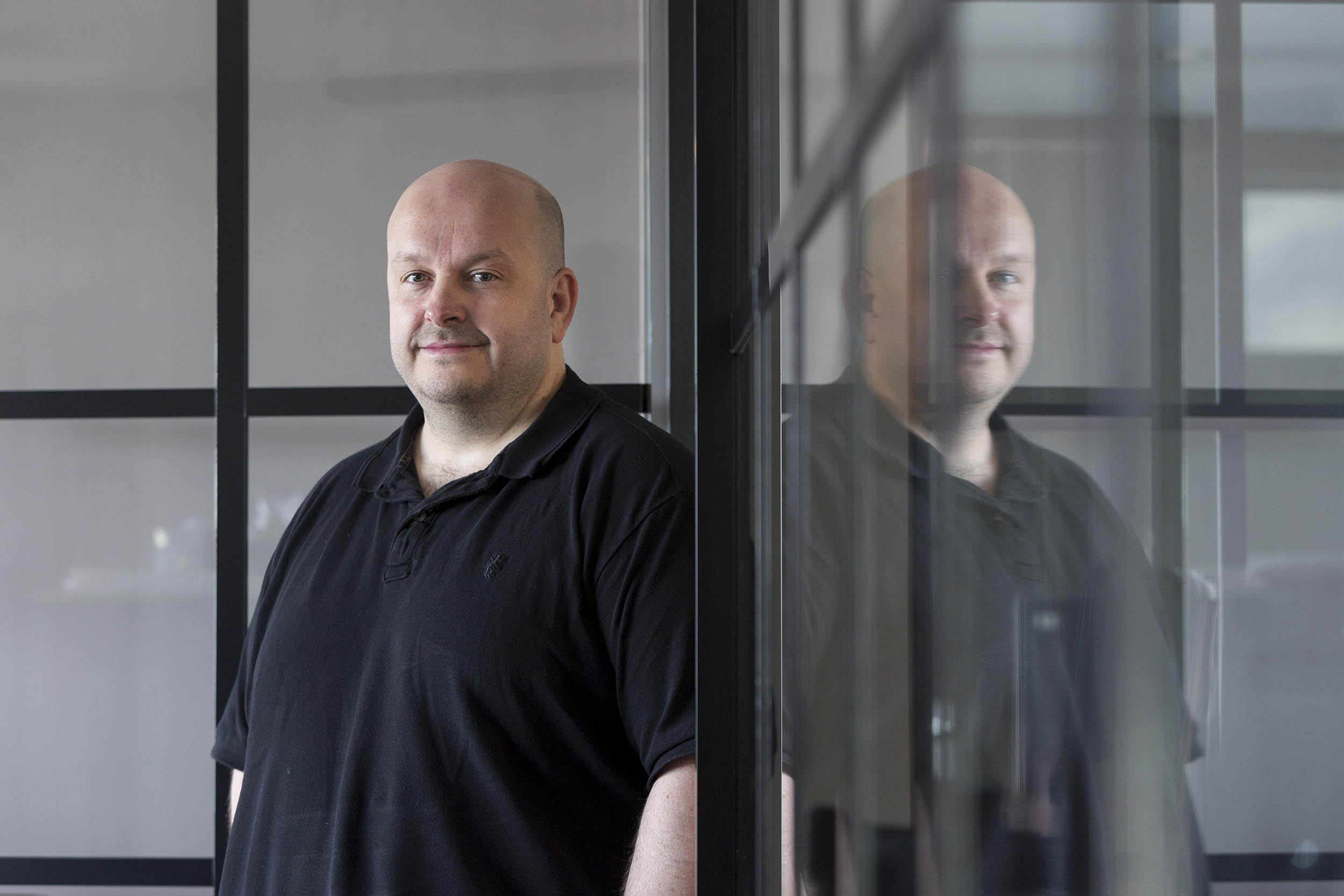
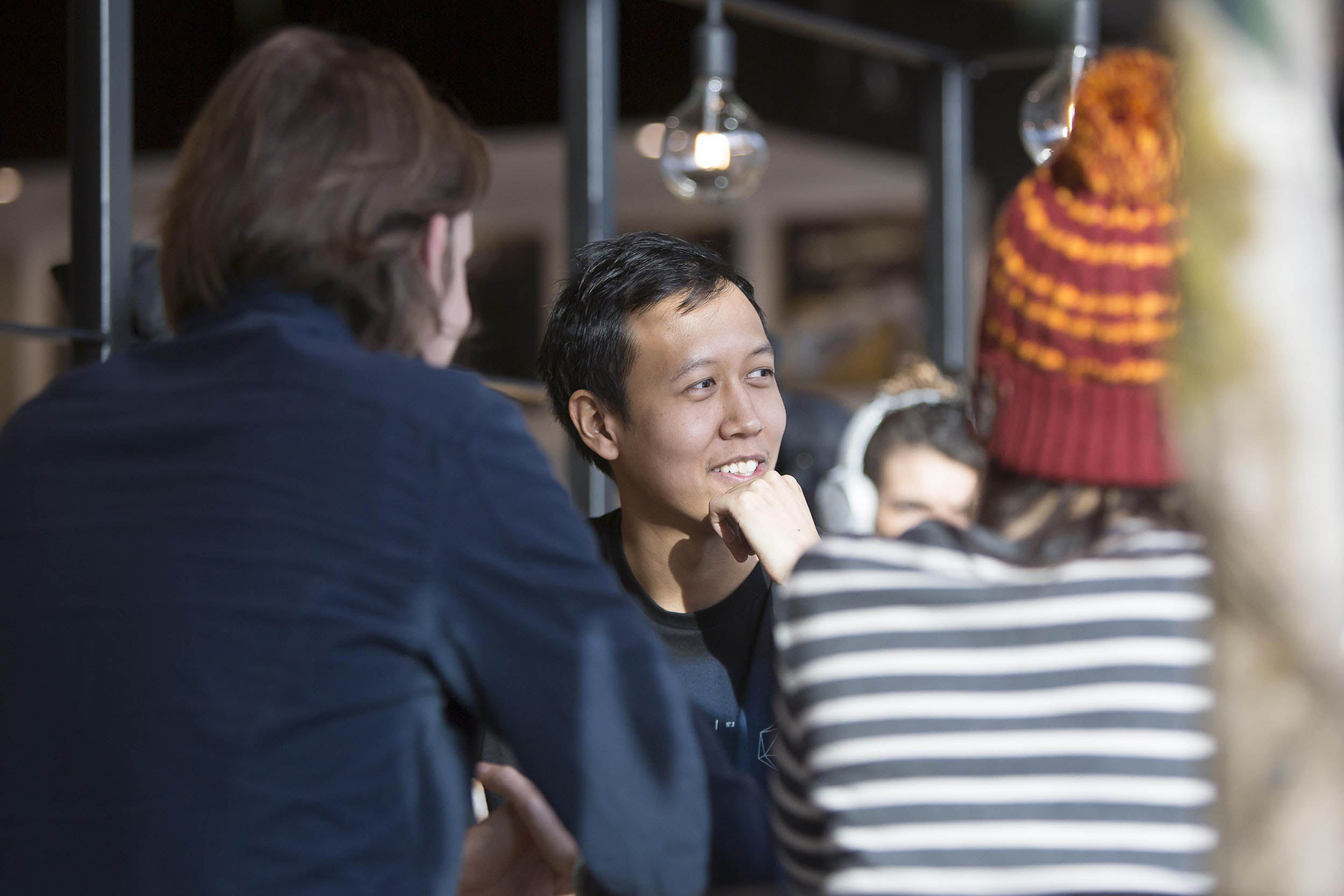
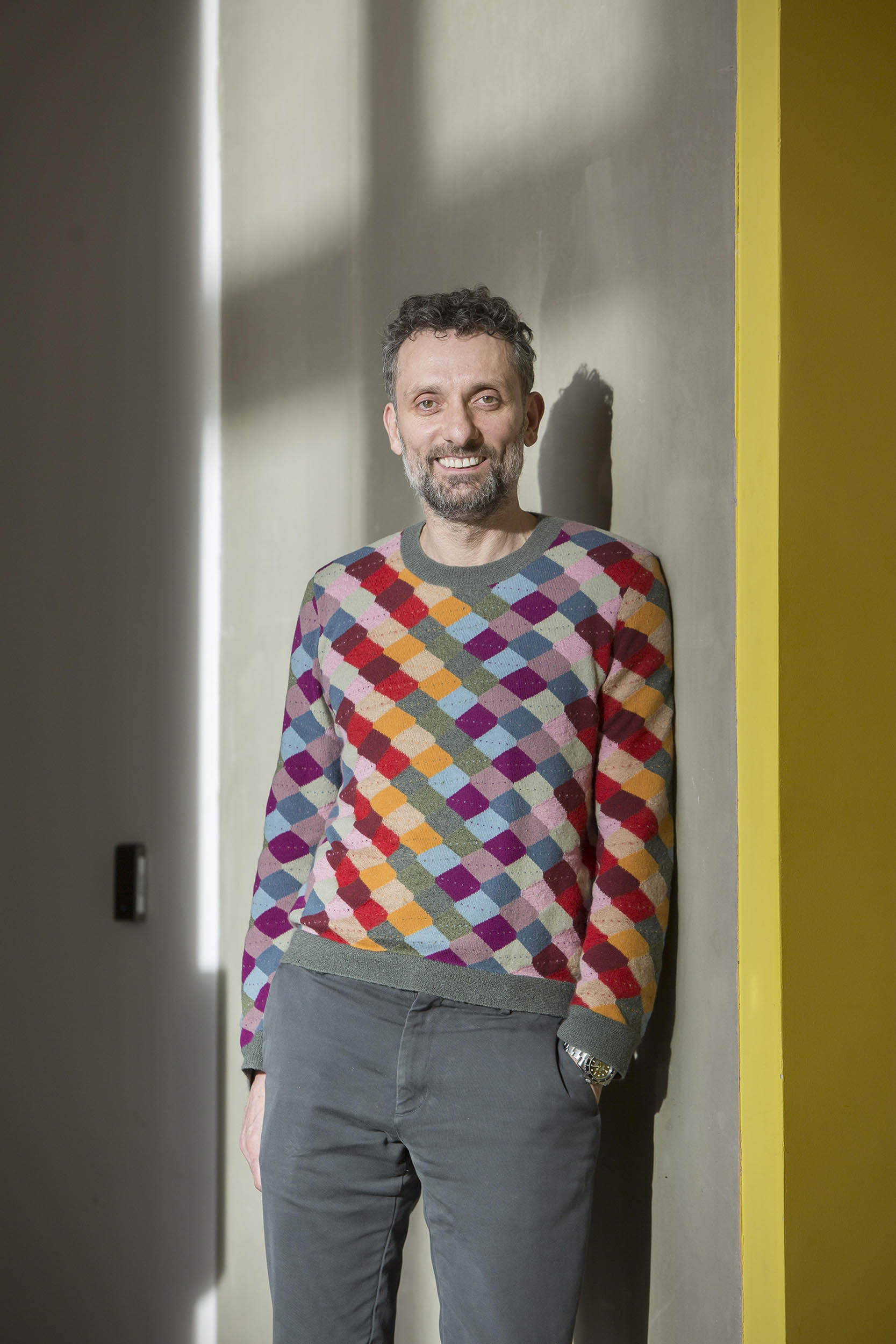
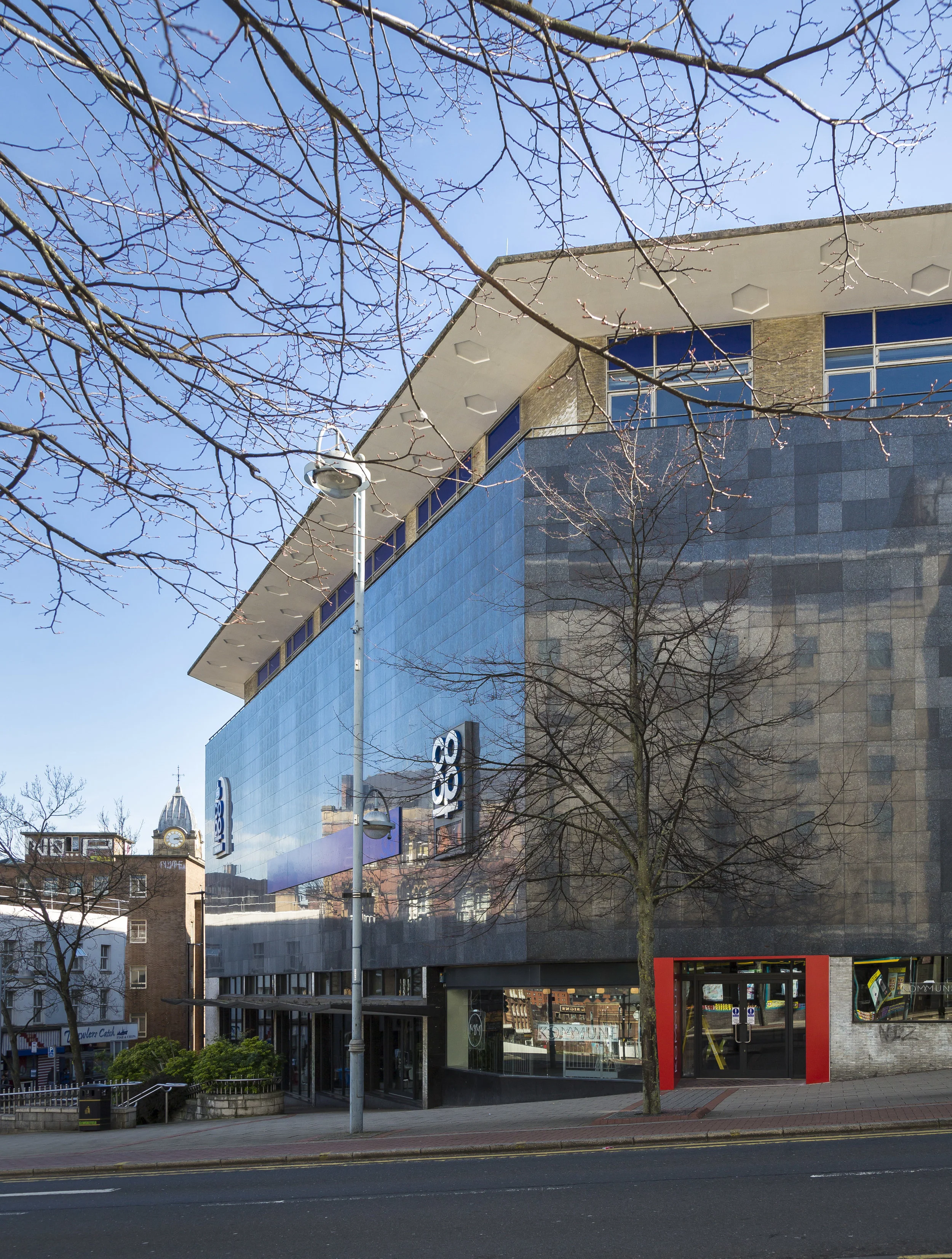
Castle House for Just H Architects
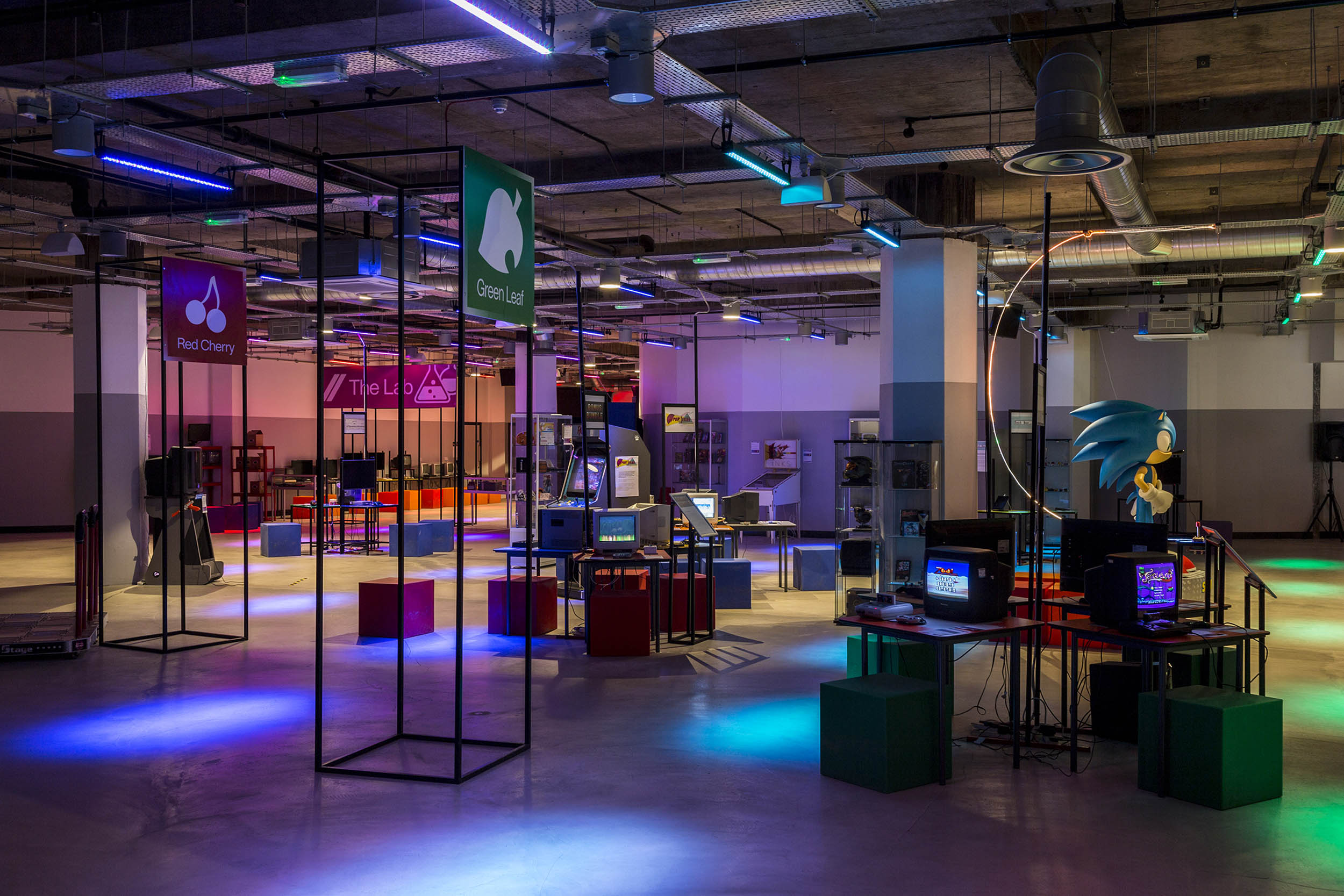
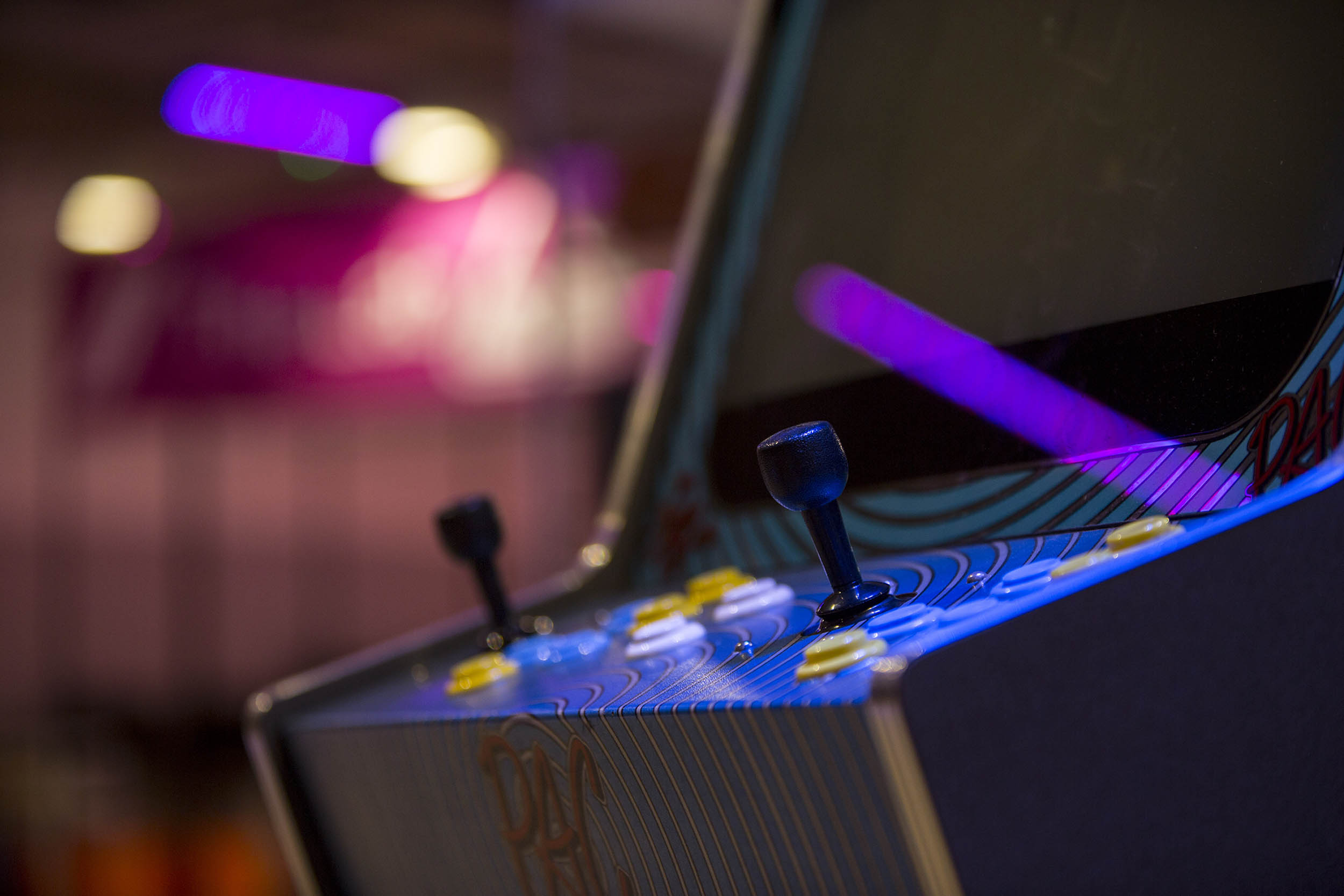
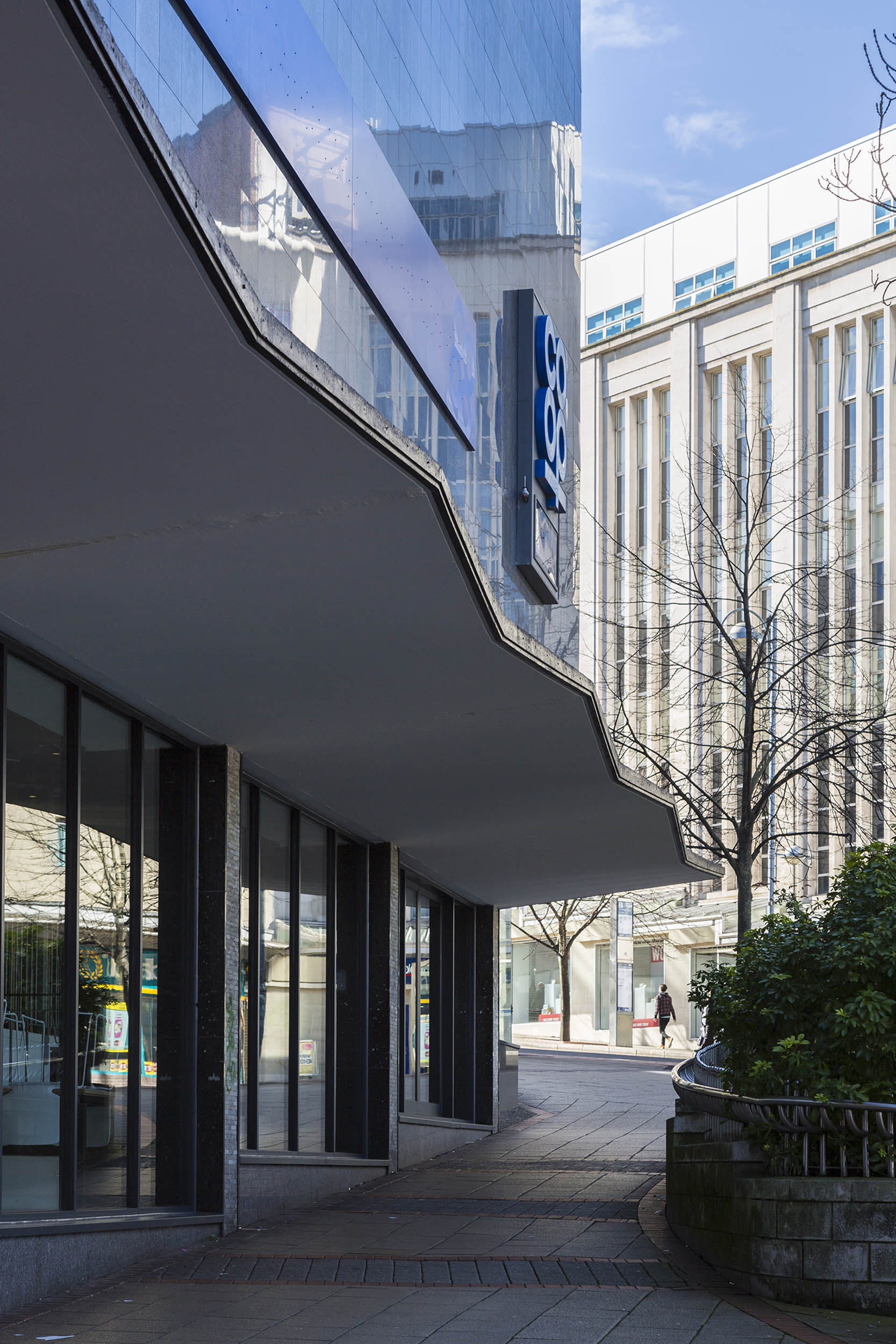
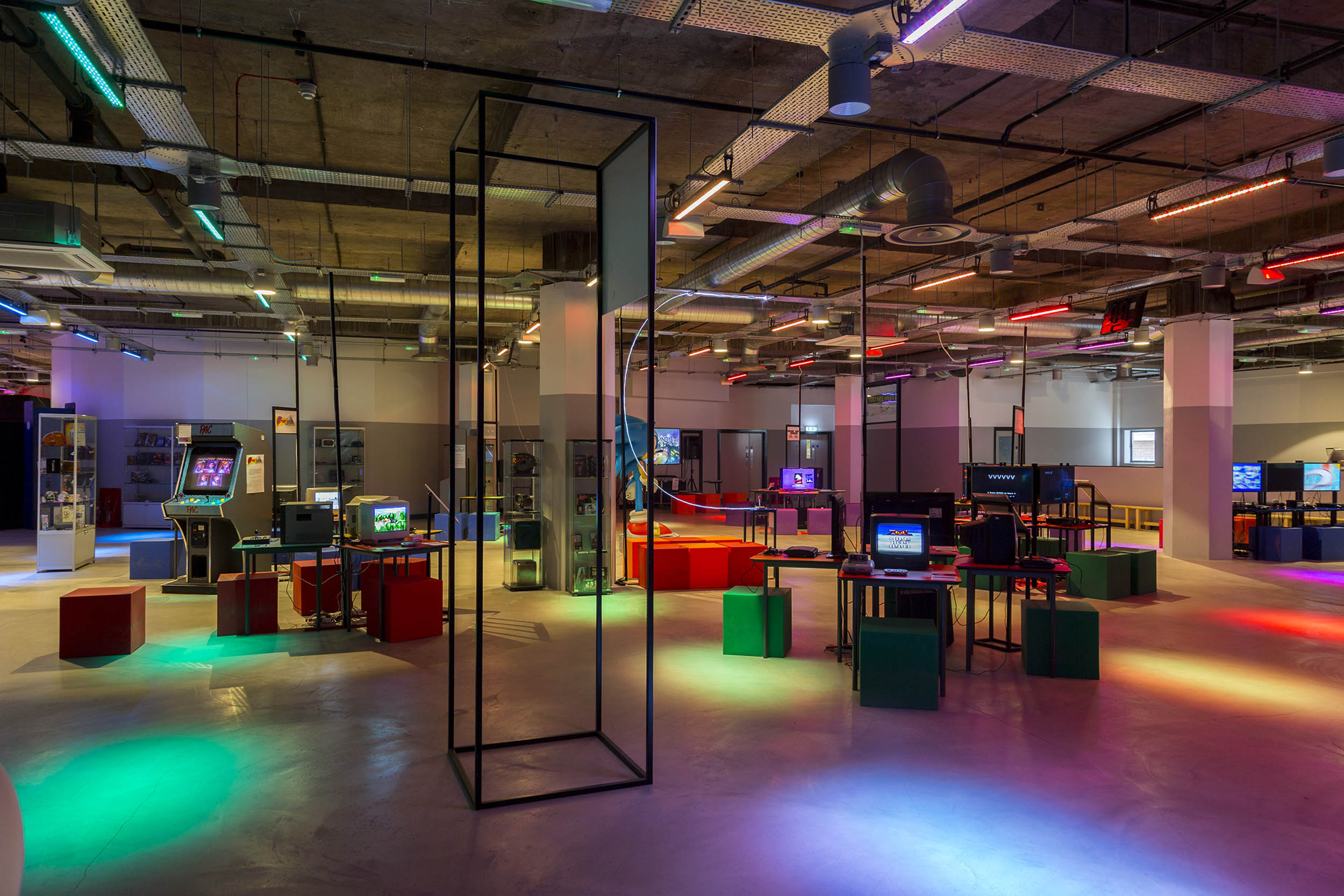
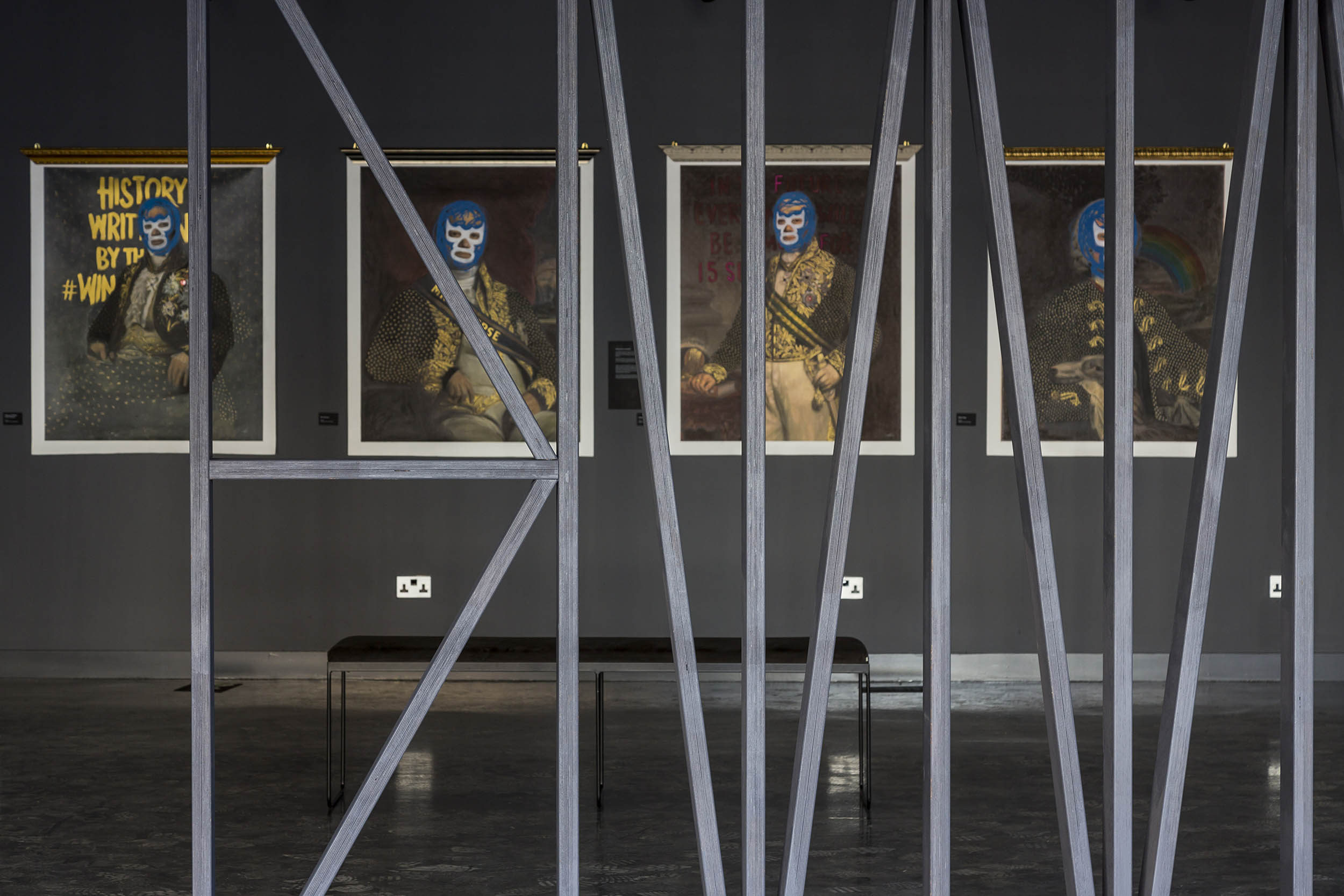
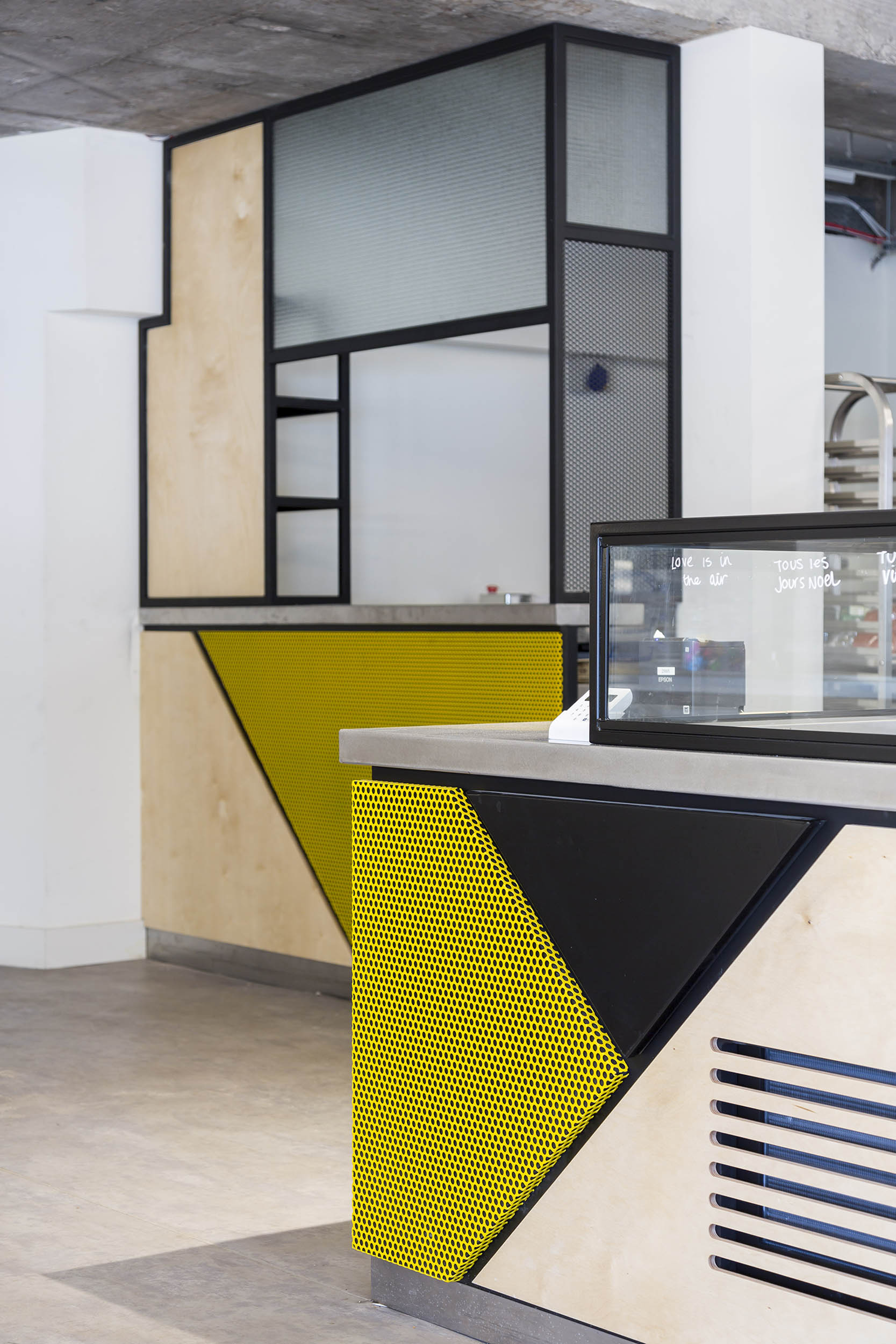
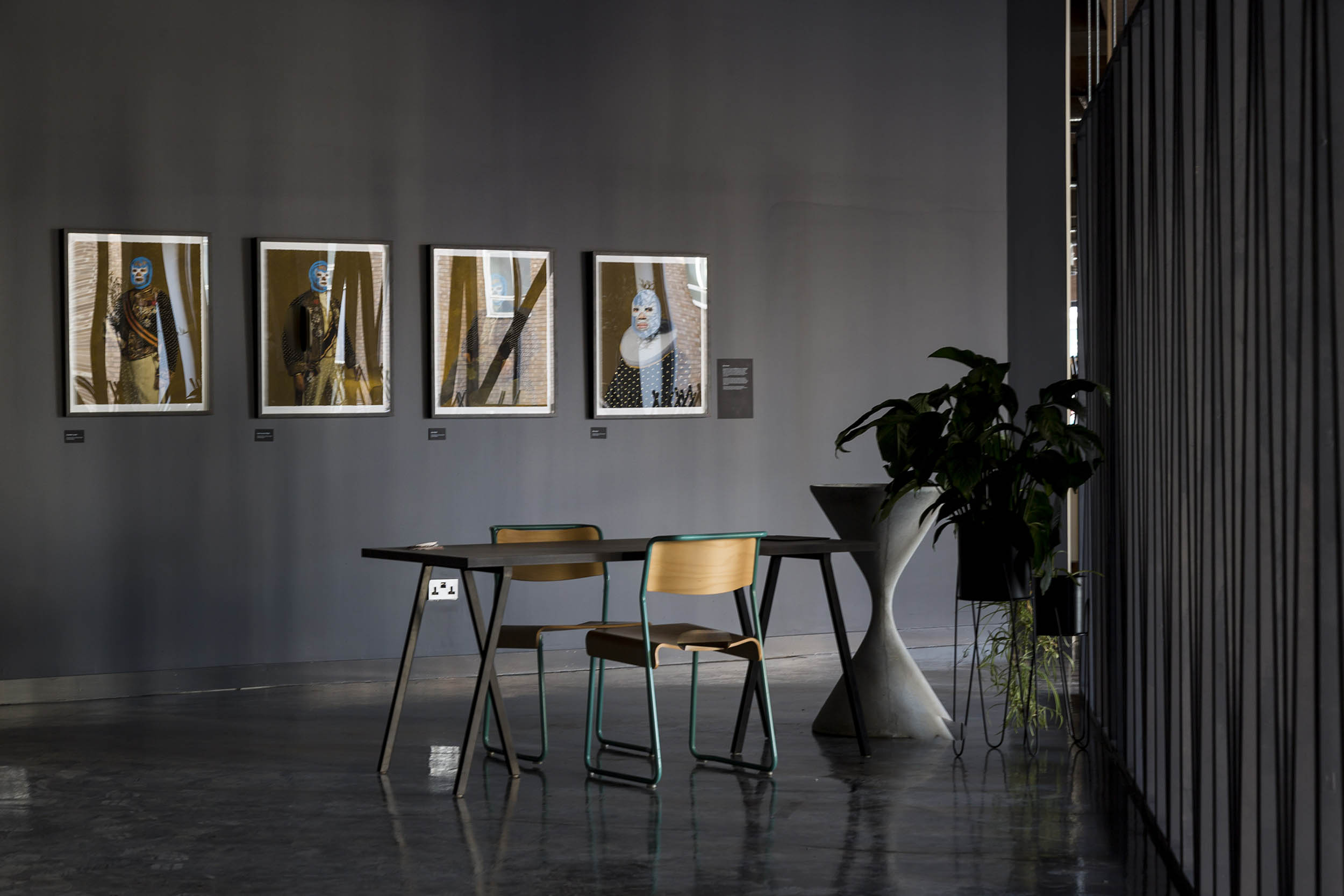
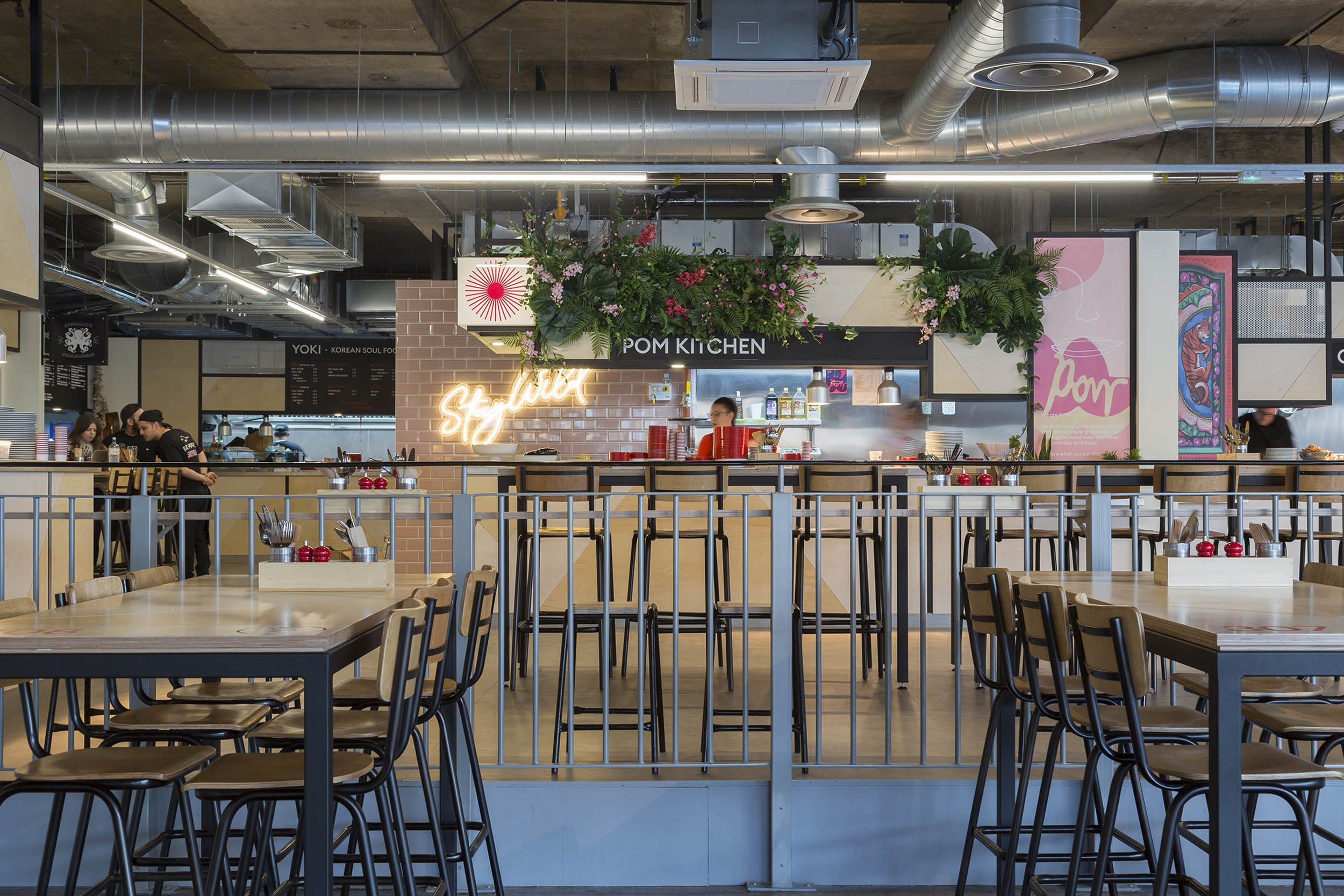
Architectural photography for Just H architects. Documenting the retrofitting of the modernist former Co-operative Society’s Castle House market in Sheffield into a new food hall, venue, gallery, co-working space and home for the National Video Game Museum.

Architectural photography for Just H architects. Documenting the retrofitting of the modernist former Co-operative Society’s Castle House market in Sheffield into a new food hall, venue, gallery, co-working space and home for the National Video Game Museum.






British Ecological Society Conferences
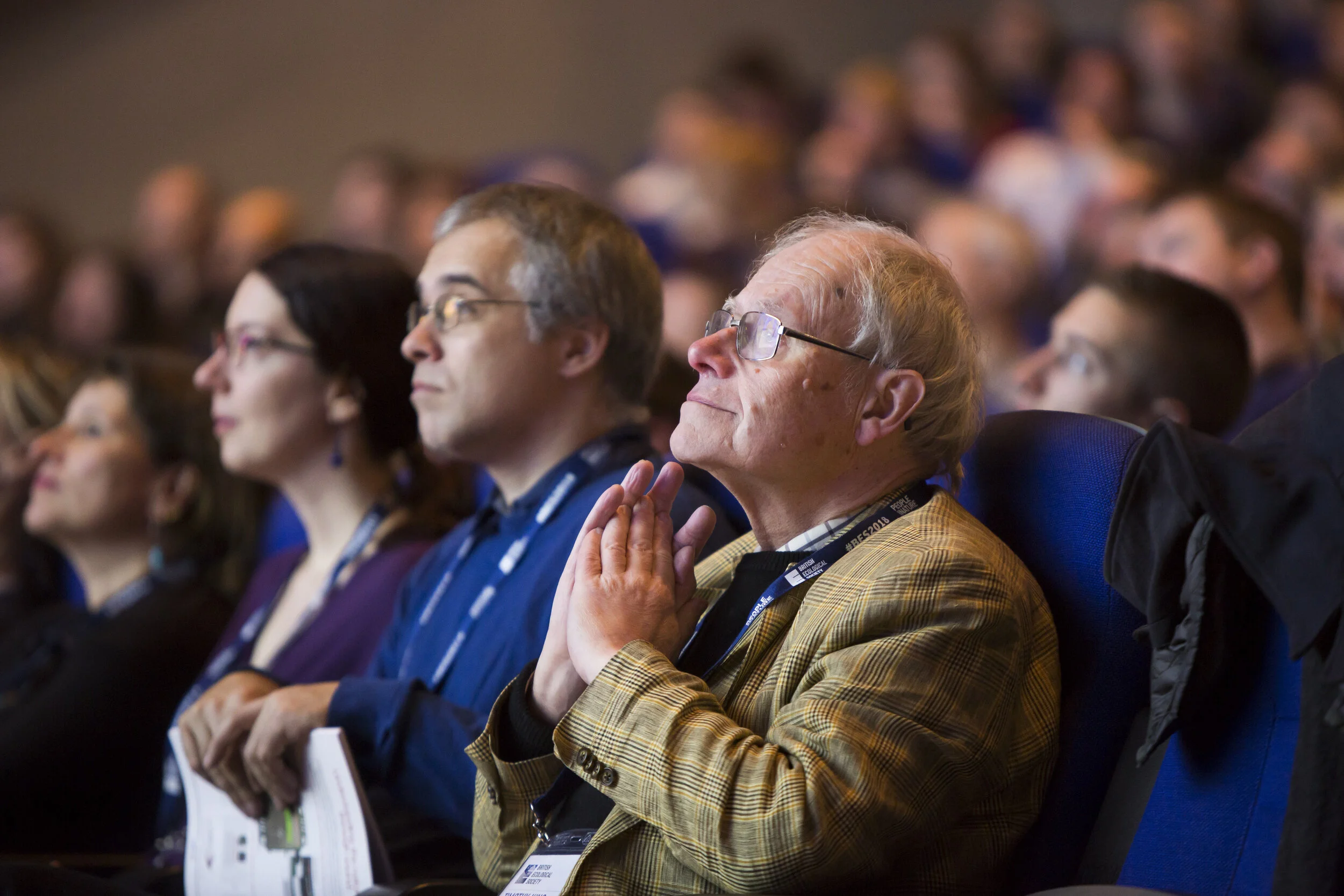
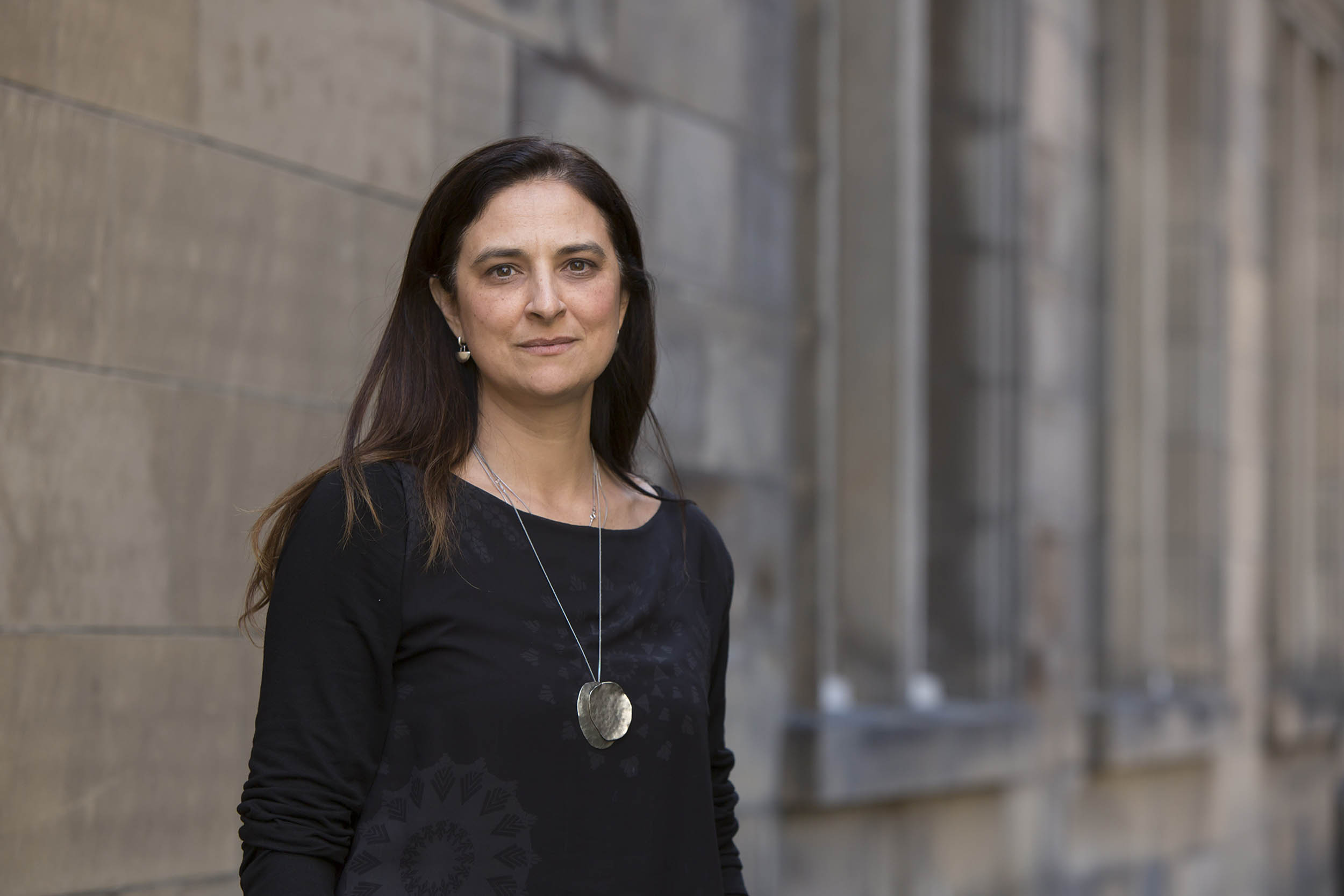
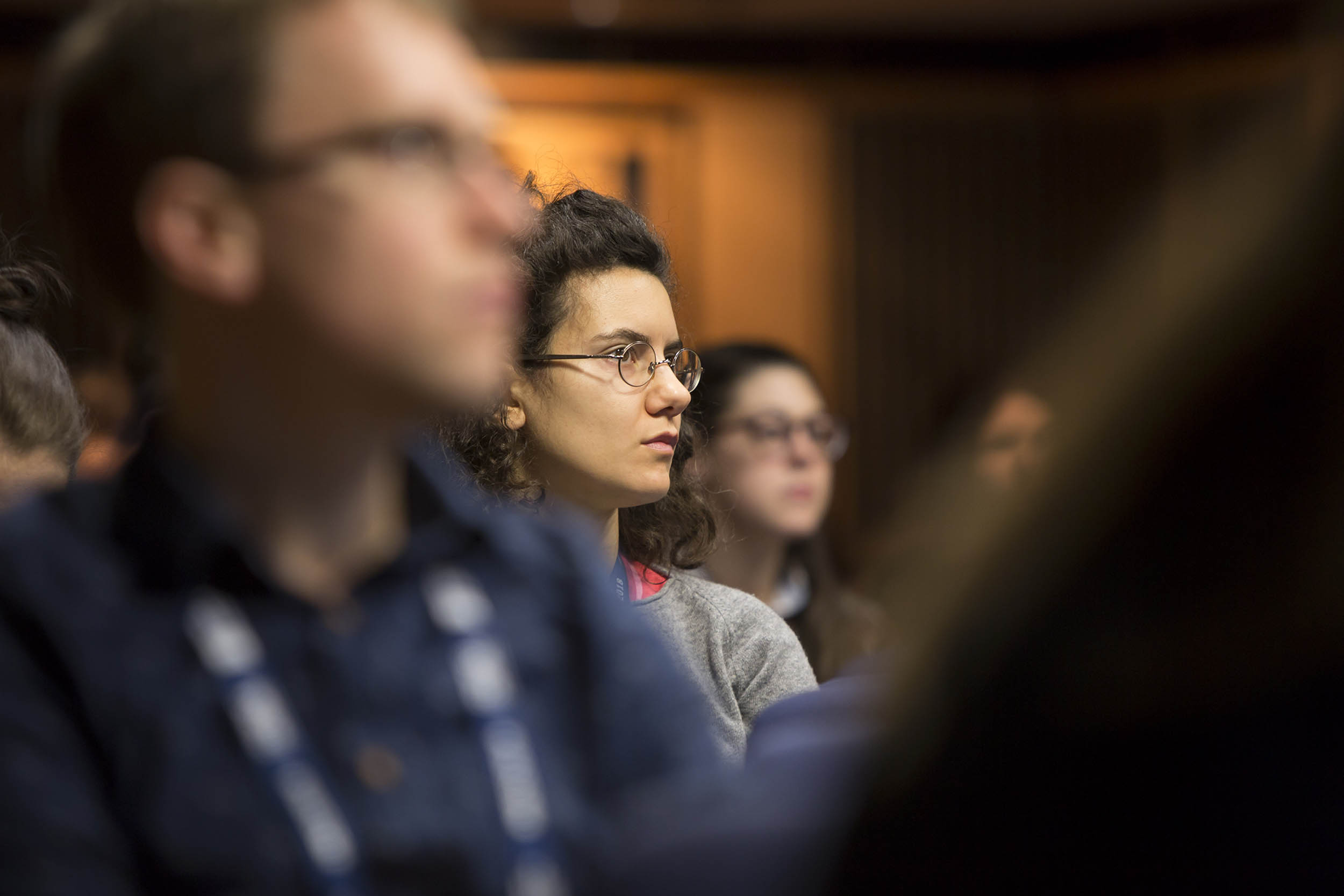
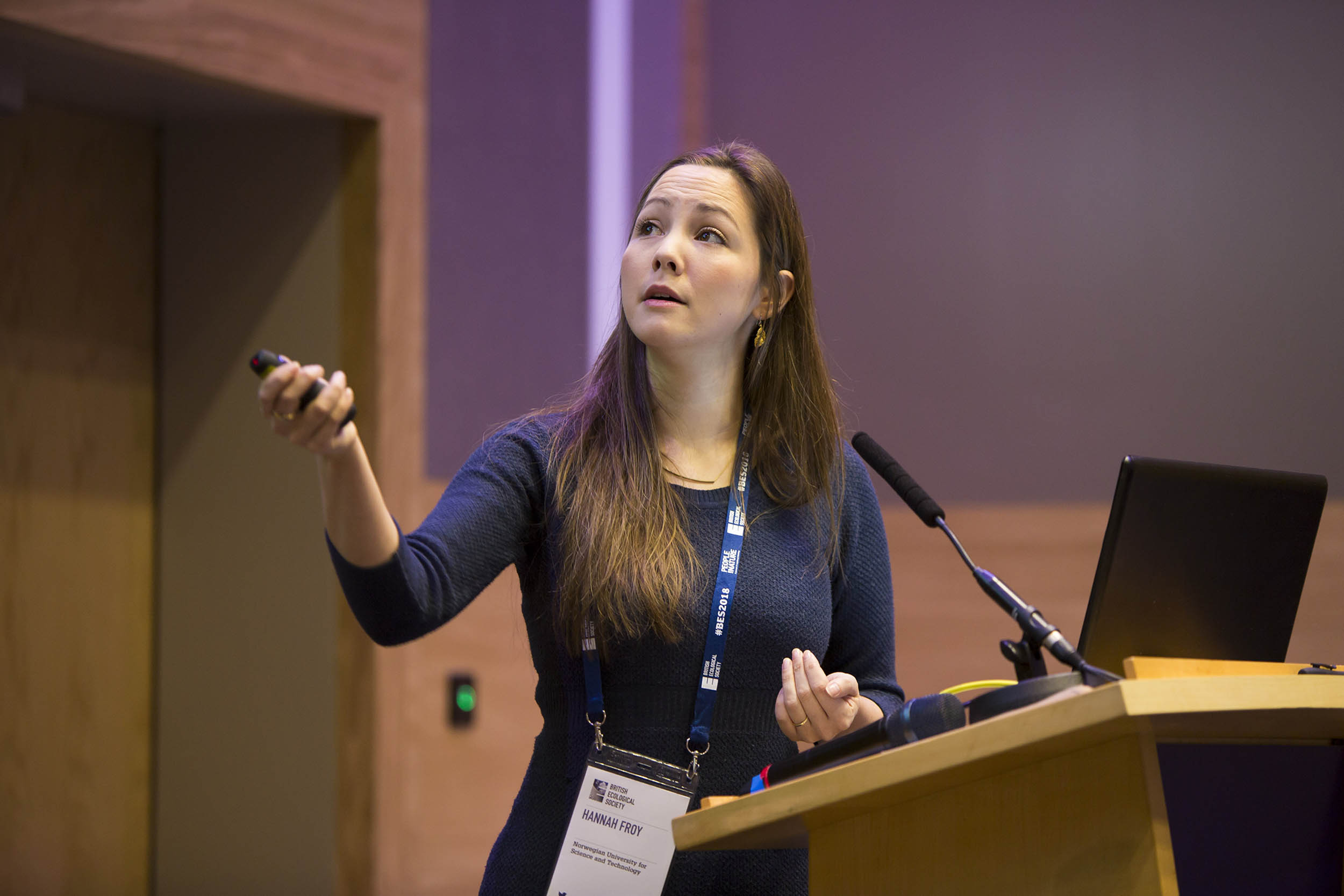
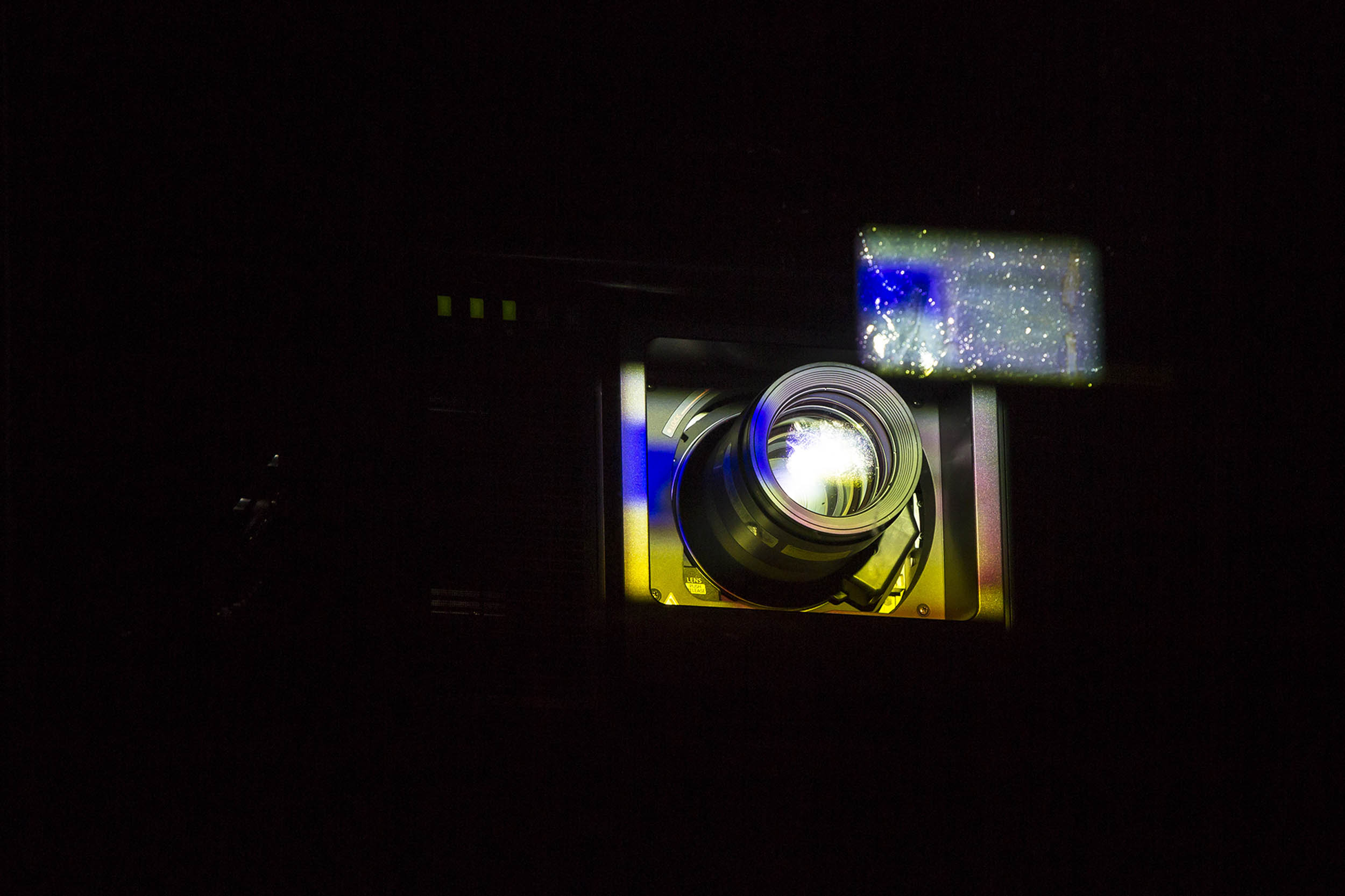
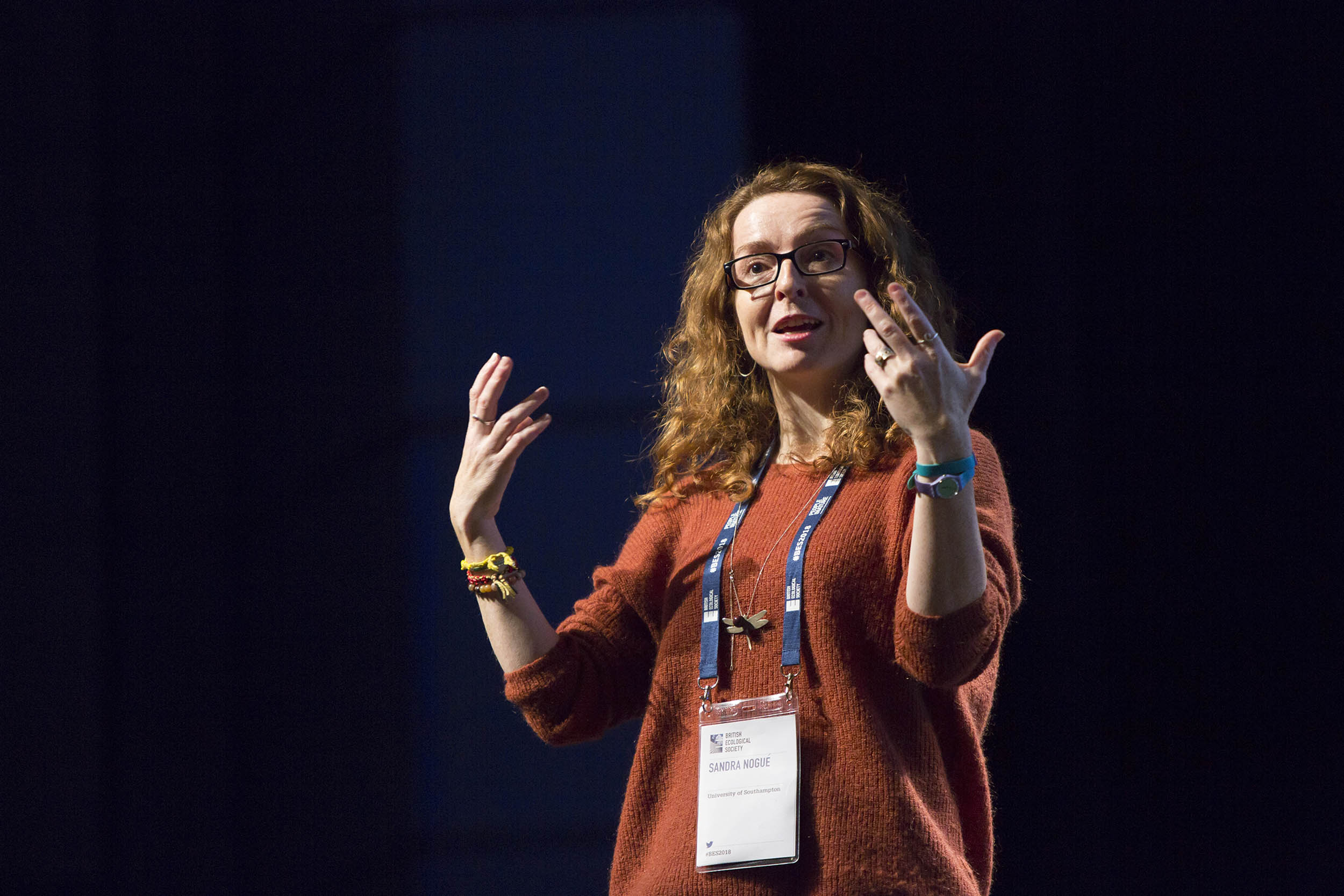
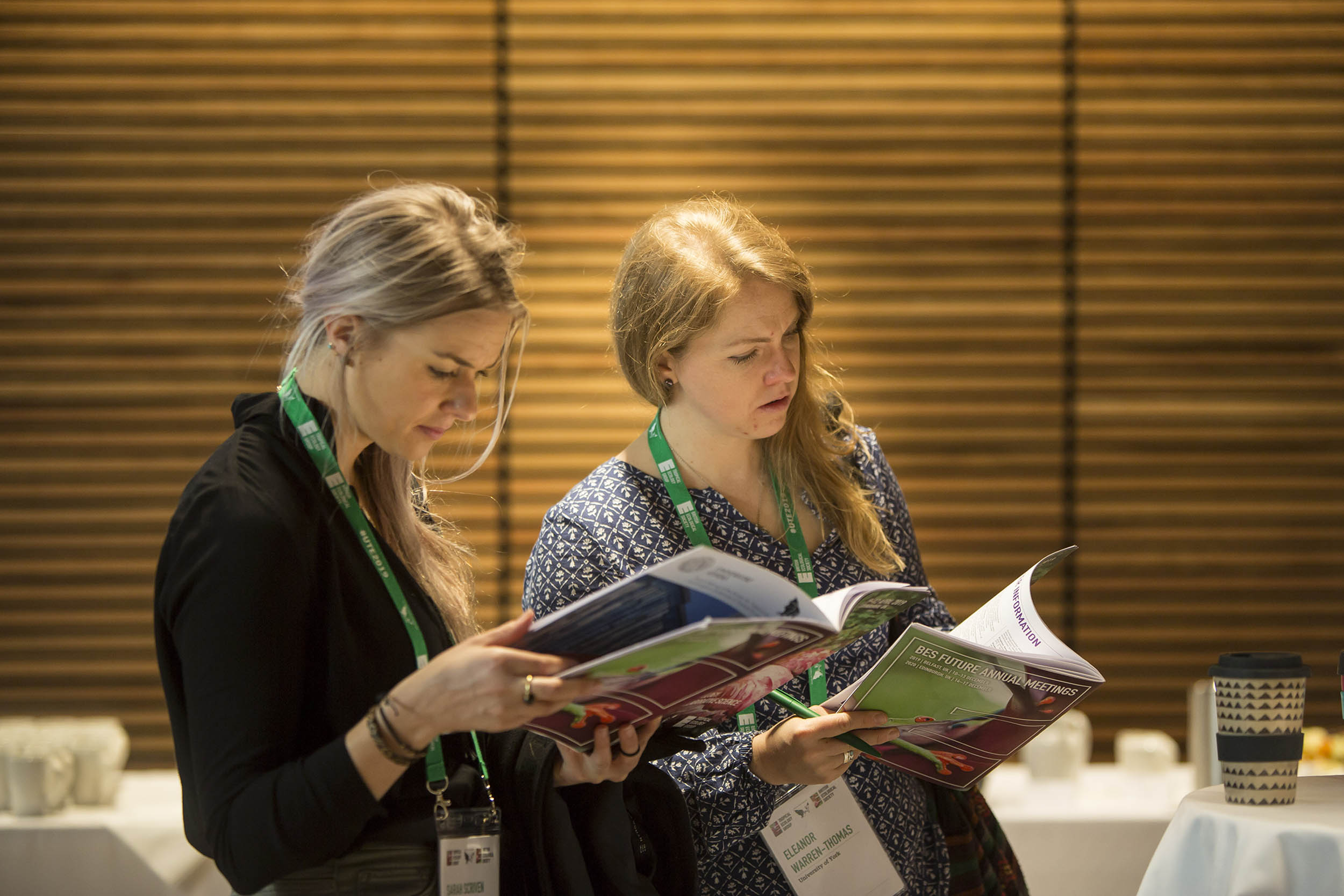
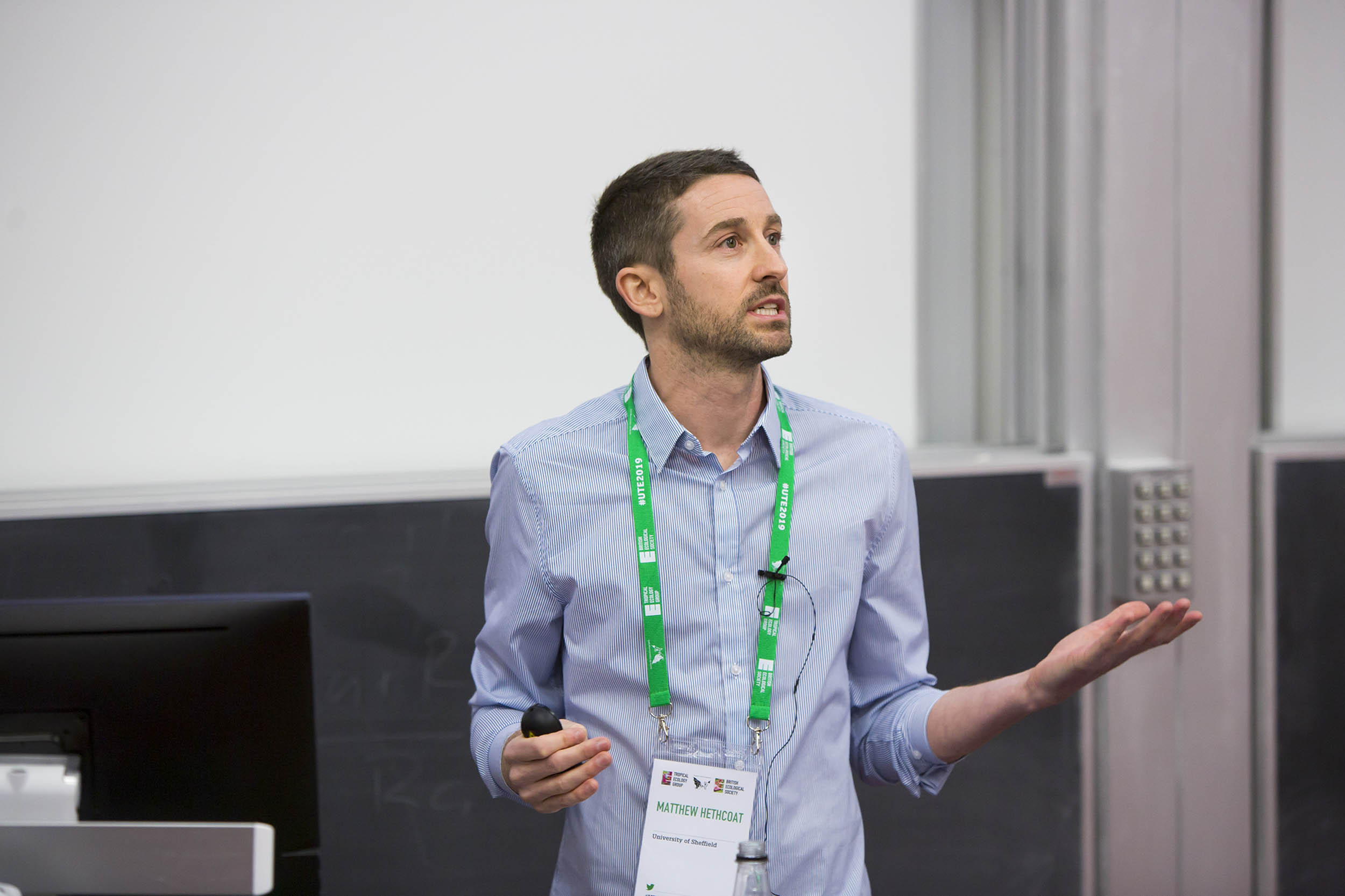
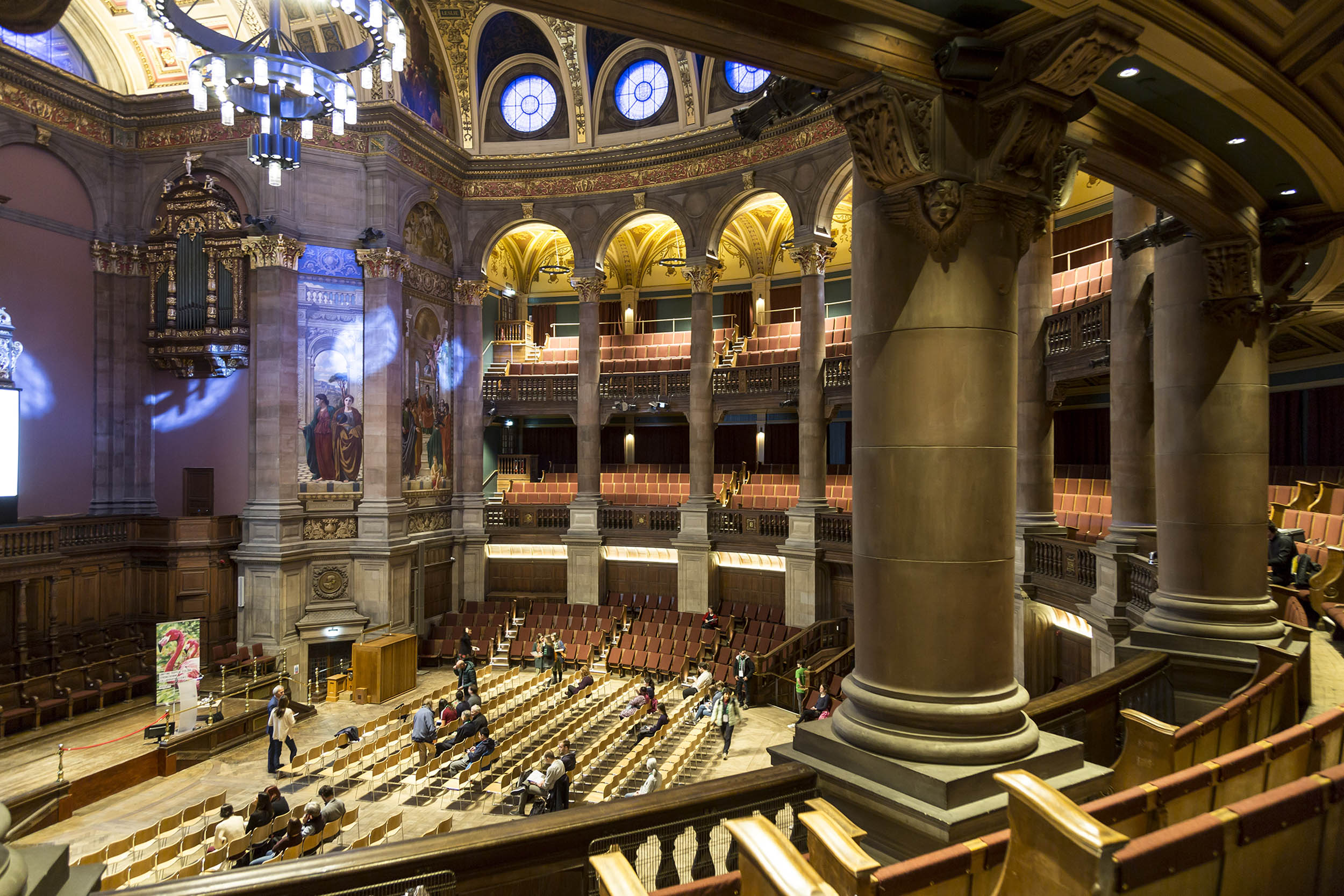
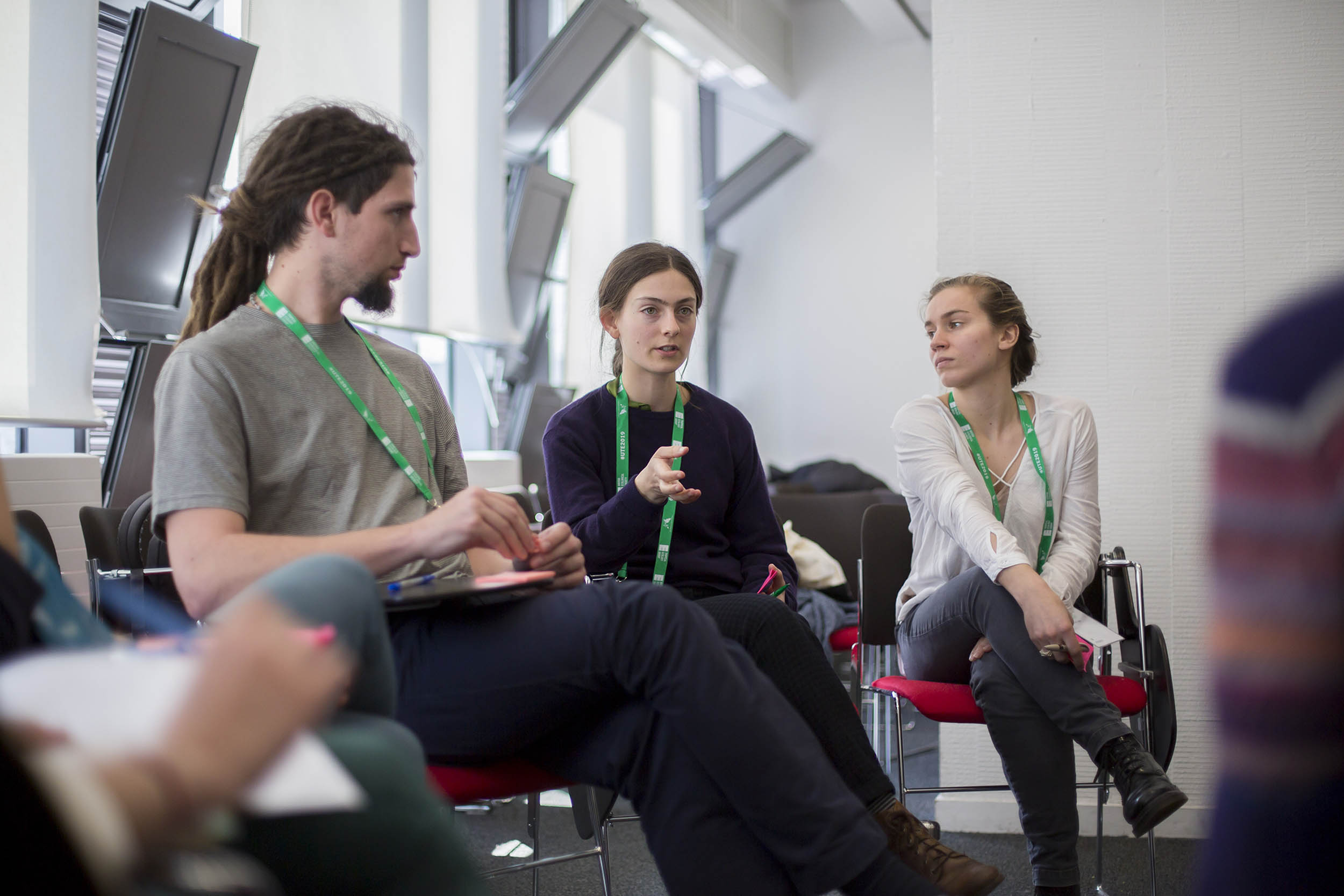
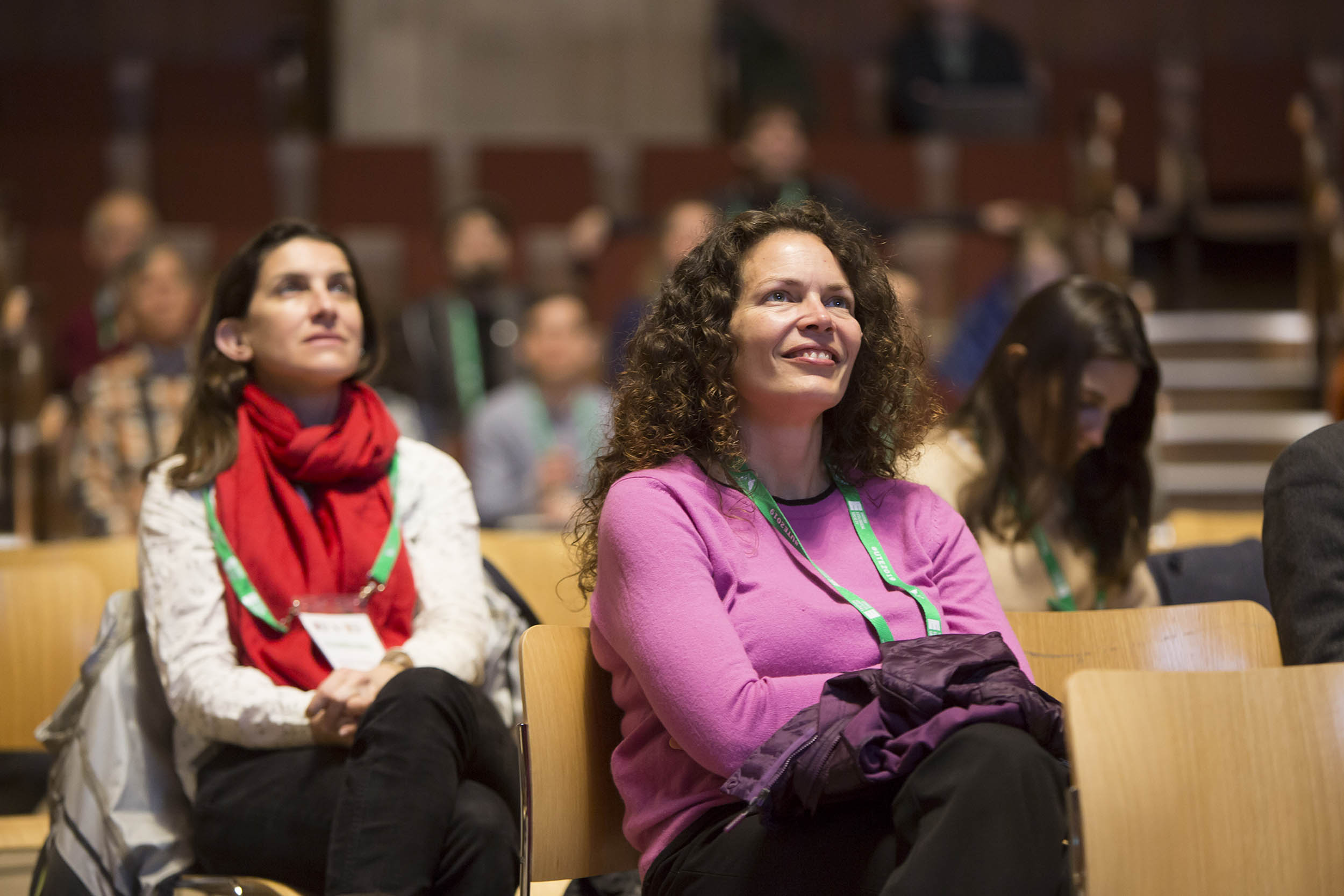
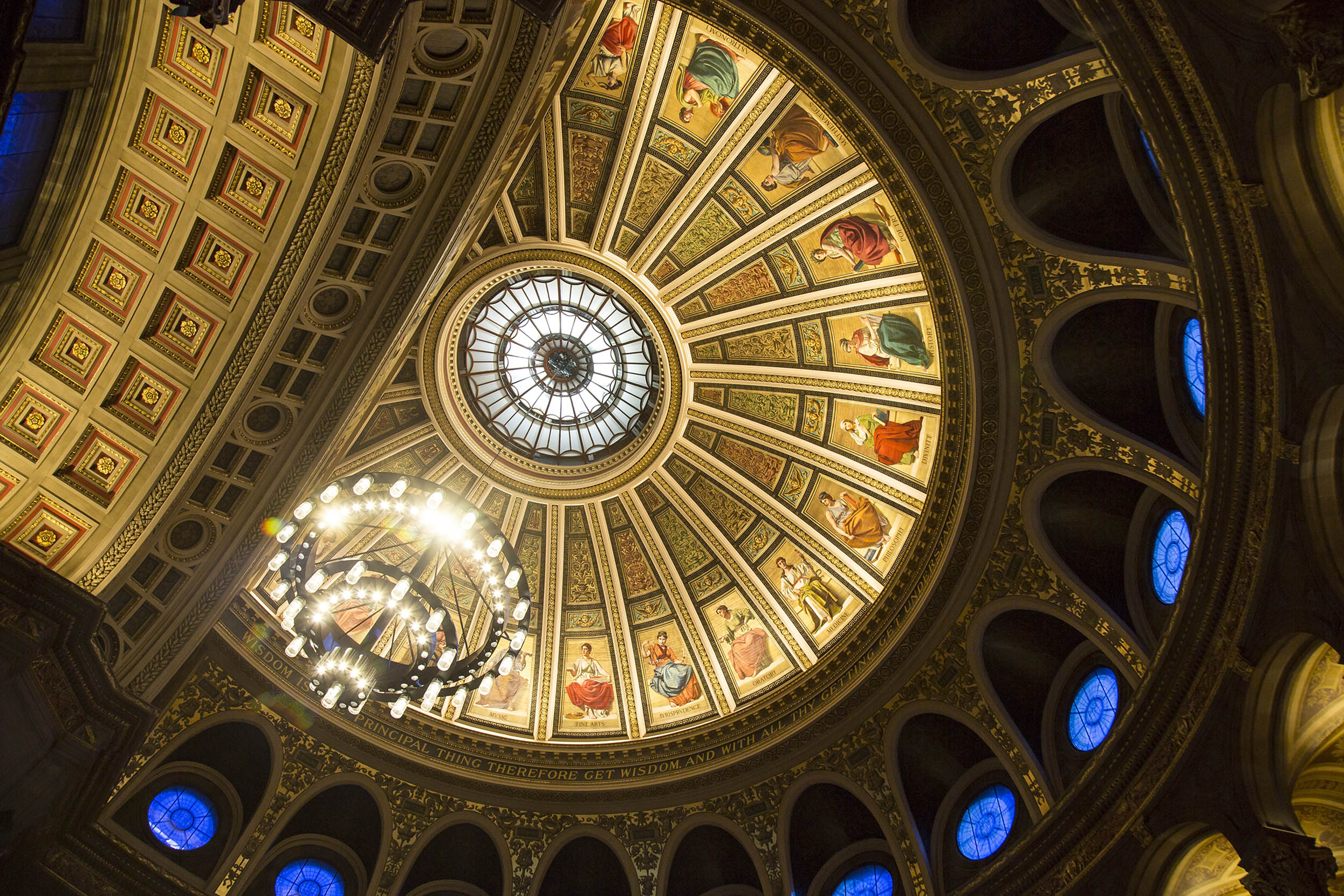
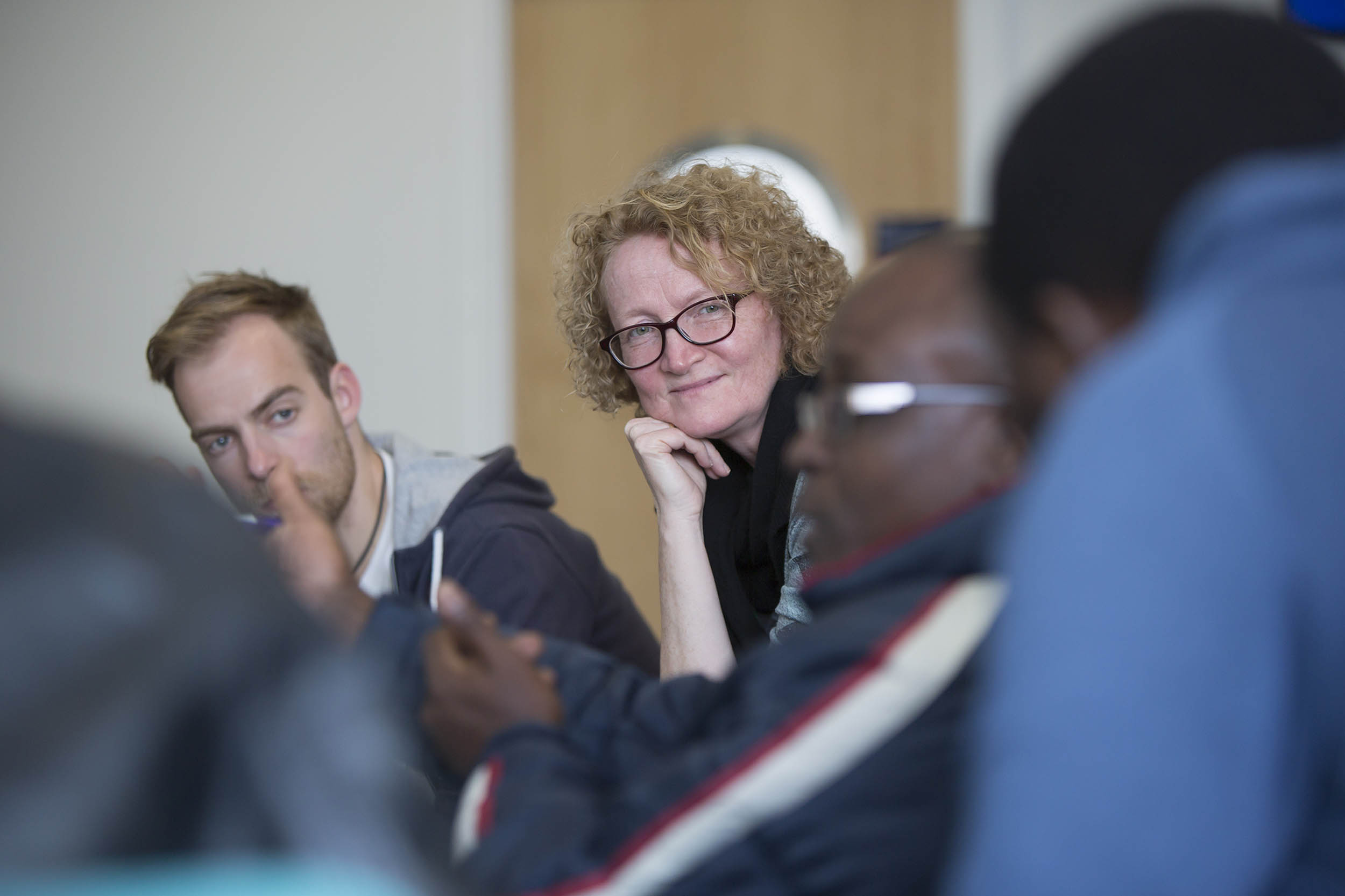
It’s always fascinating to carry out the conference photography for the British Ecological Society and often easy to forget to take pictures while listening to the presentations. Here are a selection of photographs from their and the Society for Tropical Ecology’s joint annual conference in the magnificent McEwan Hall, Edinburgh.
Event Photography: British Ecological Society and Society for Tropical Ecology Annual Conference | McEwan Hall, Edinburgh
I recently photographed the joint annual conference of the British Ecological Society (BES) and the Society for Tropical Ecology, held in the magnificent McEwan Hall in Edinburgh. Covering conferences like this is always fascinating, and it can be a challenge to balance listening to presentations with capturing key moments for documentation and promotional purposes.
The photographs provide an overview of the event, highlighting the diversity of attendees, the atmosphere of the sessions, and the architectural grandeur of McEwan Hall. Capturing these moments visually helps illustrate the importance of the conference as a space for scientific exchange, networking, and engagement with current ecological research.
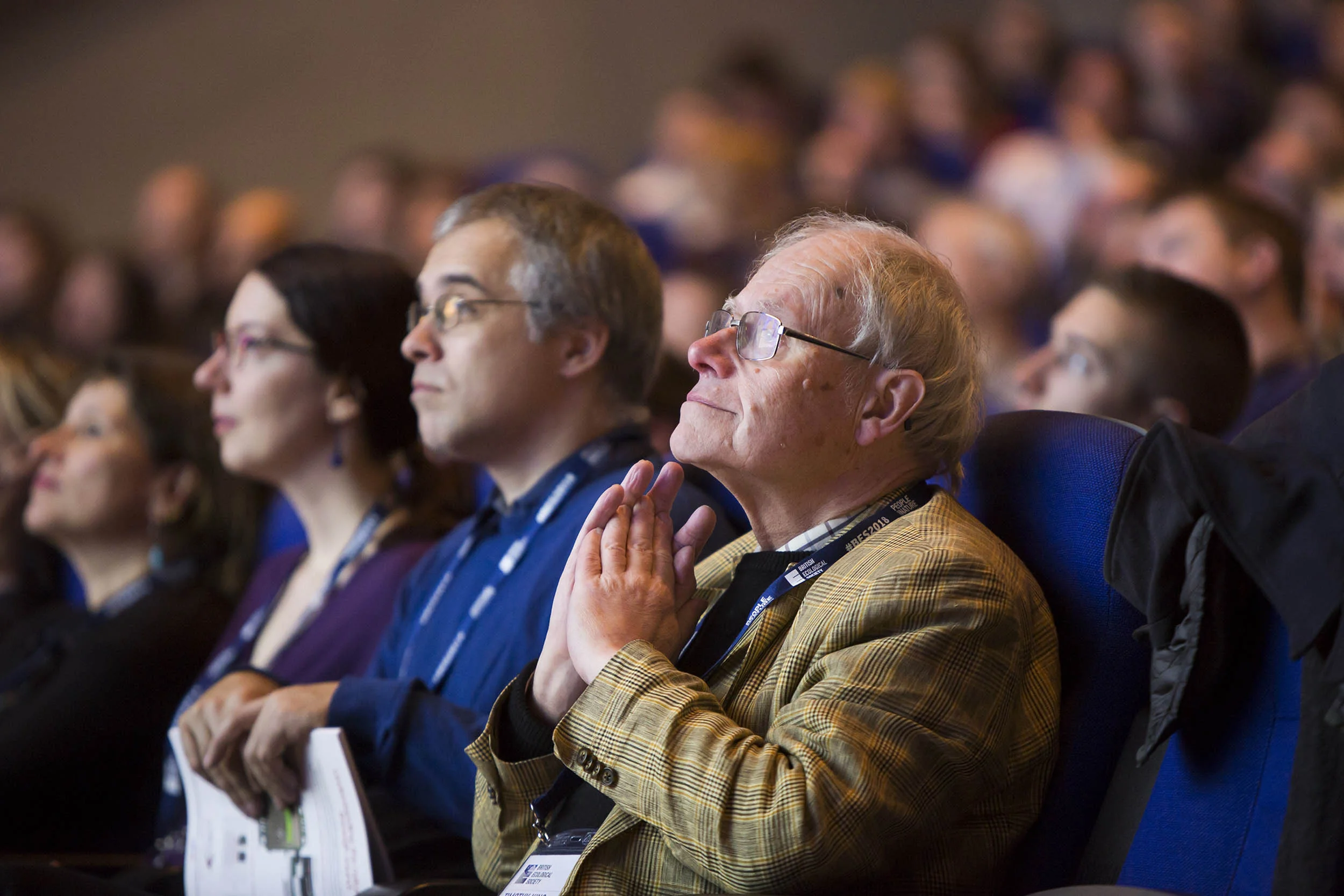
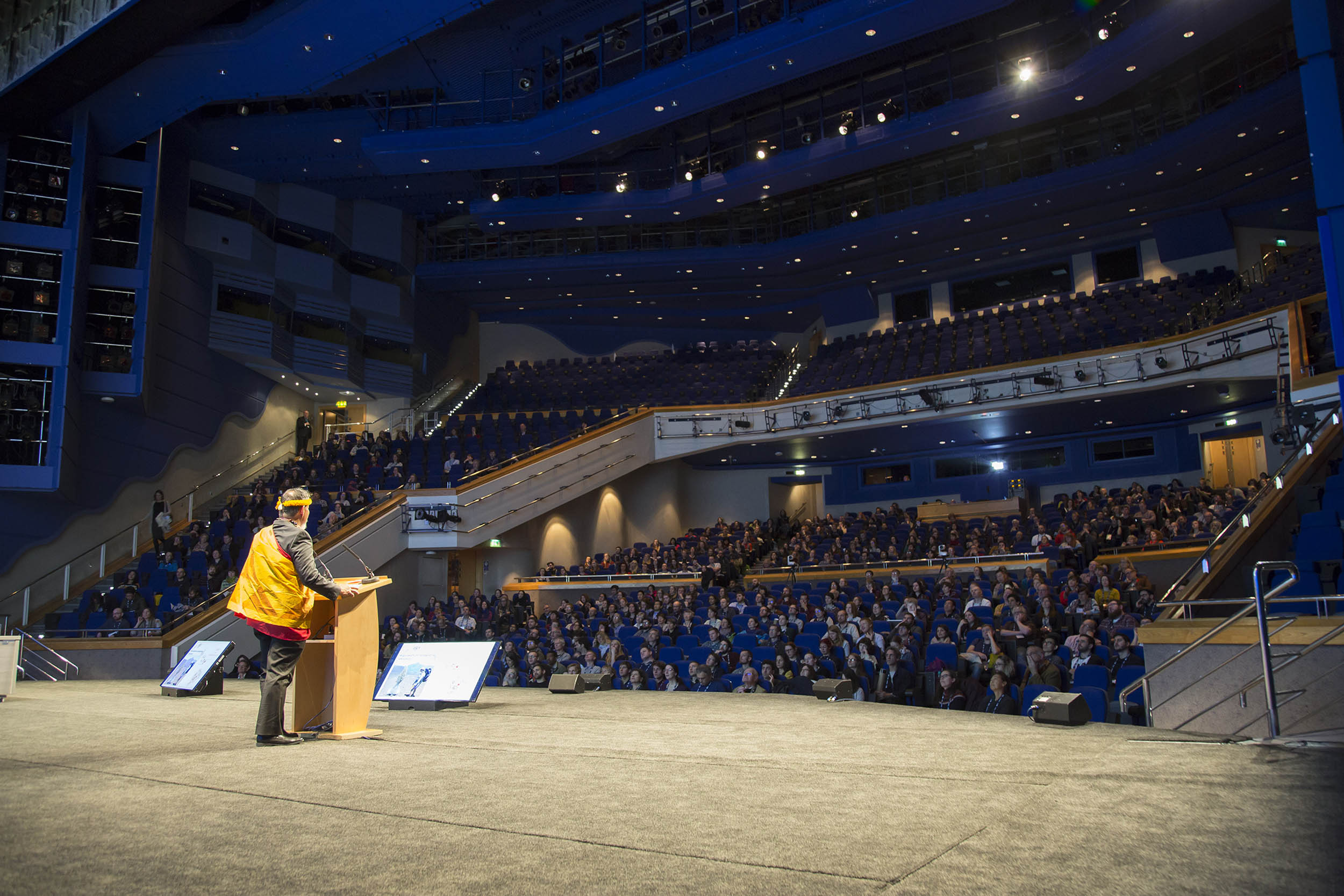
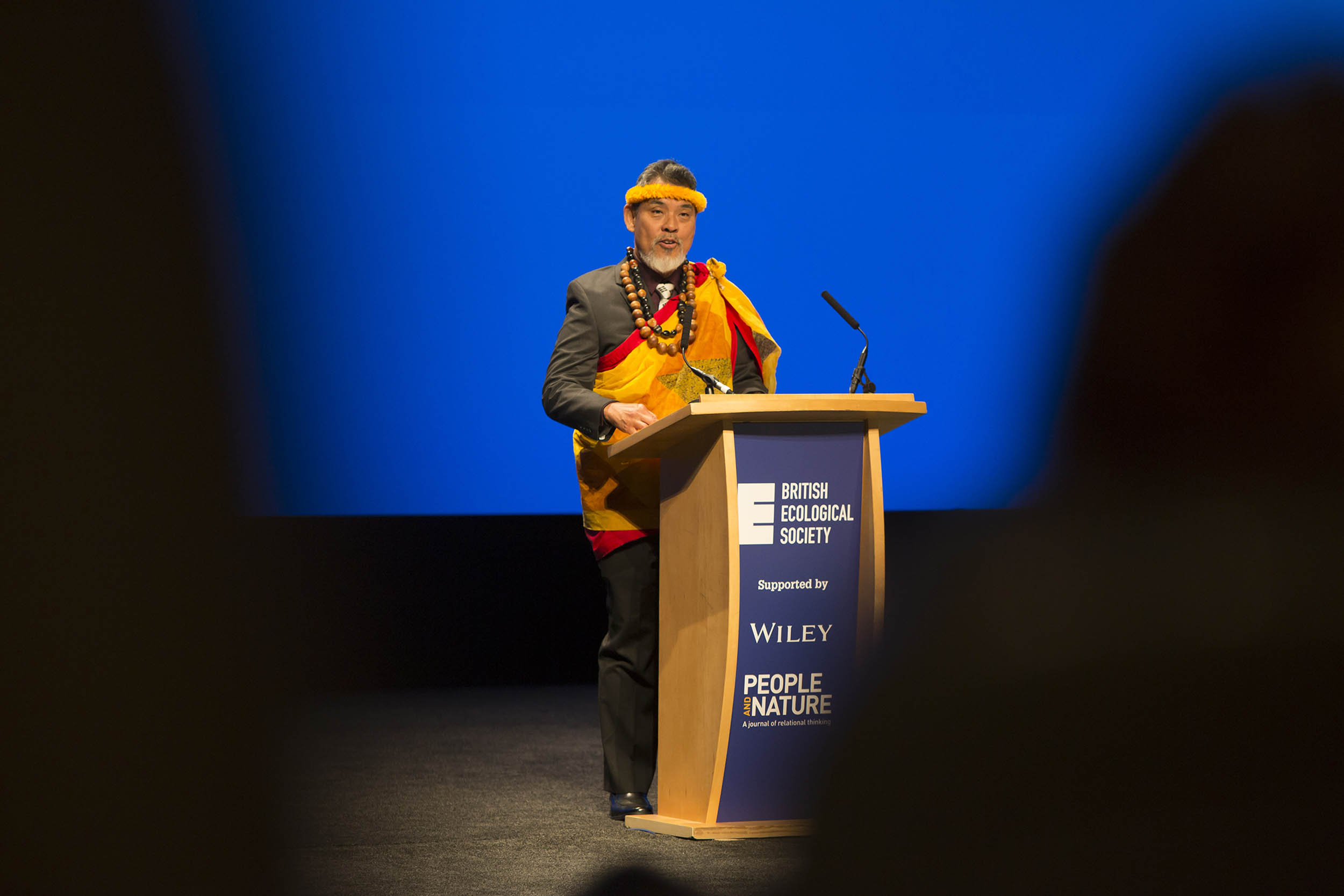
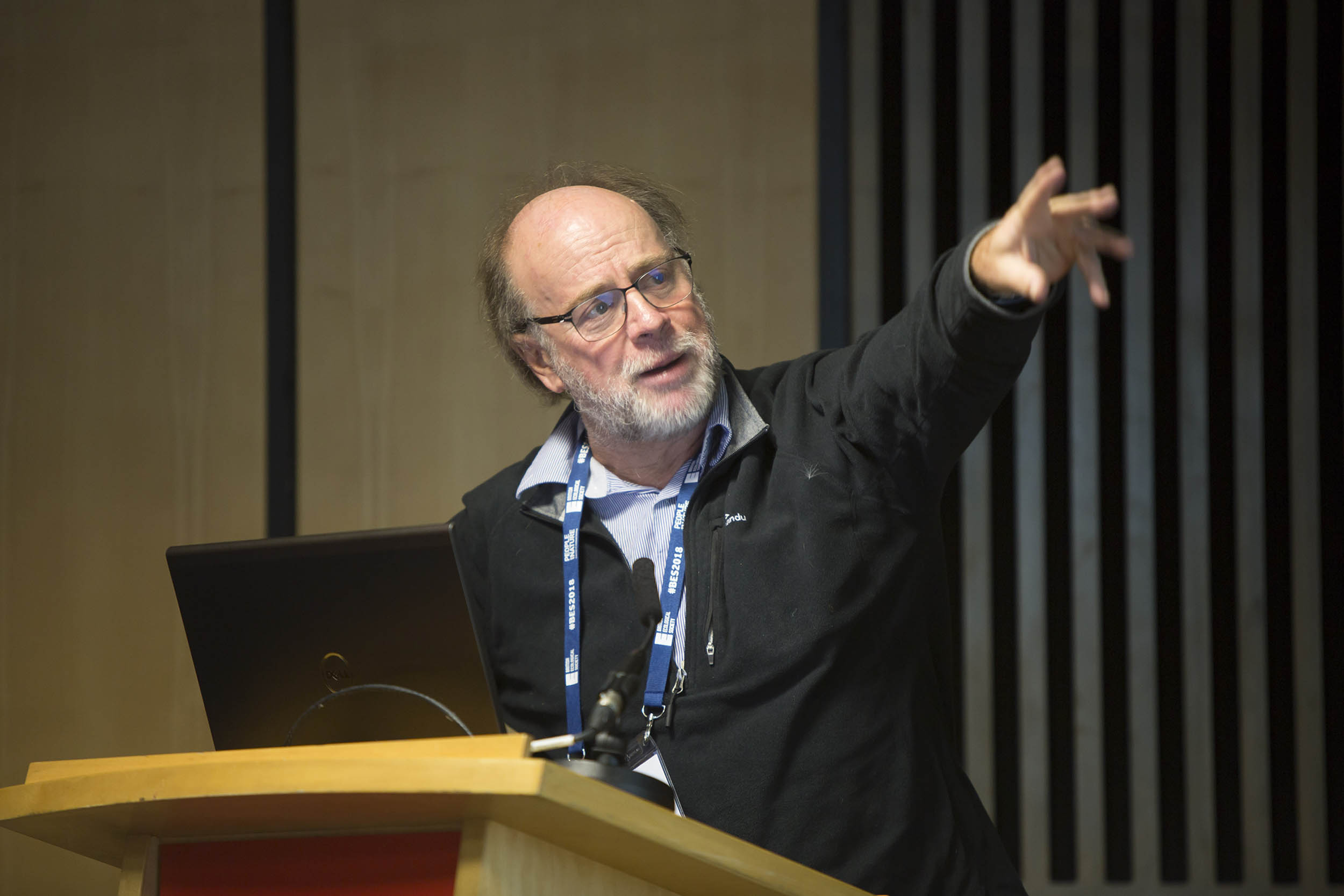
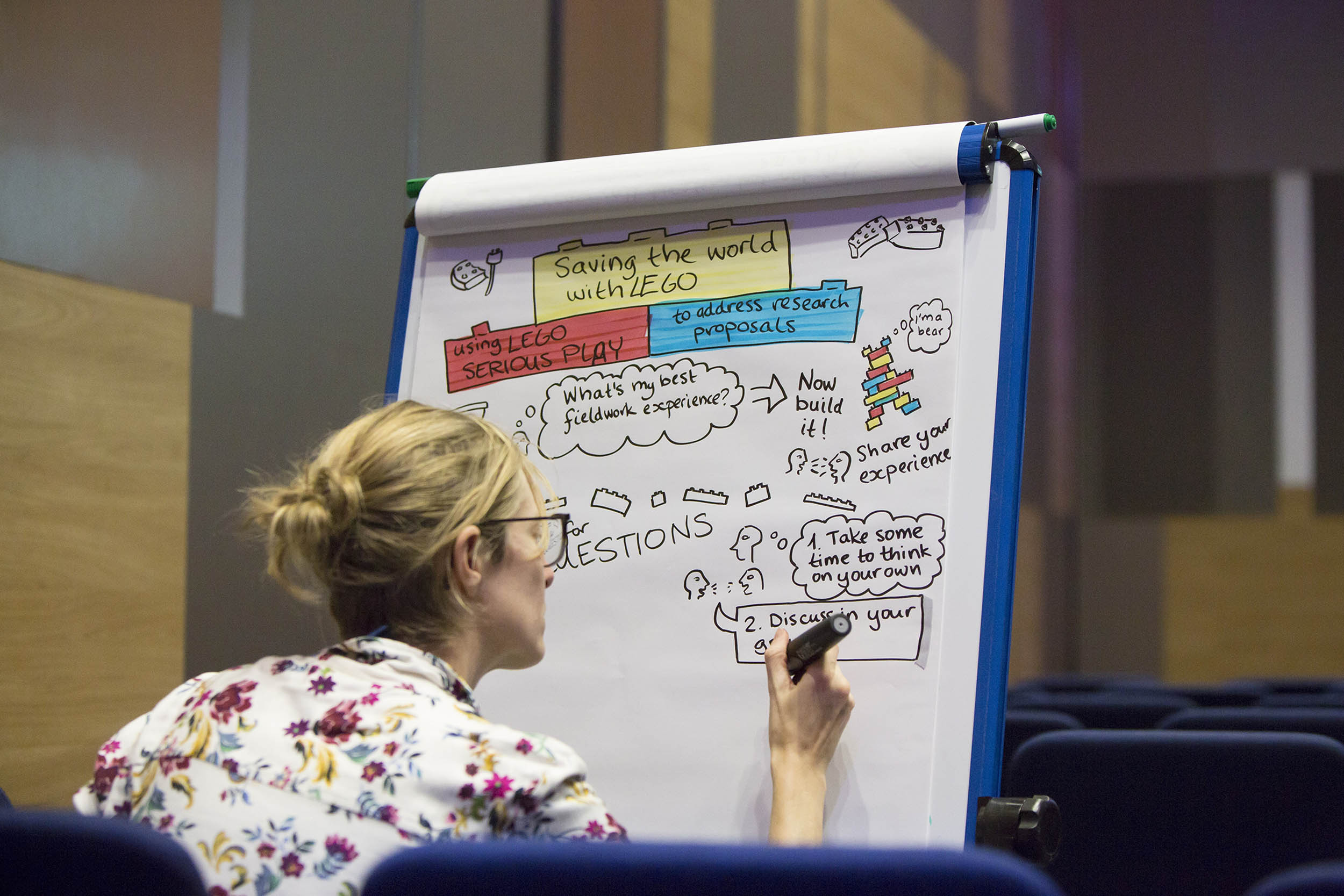
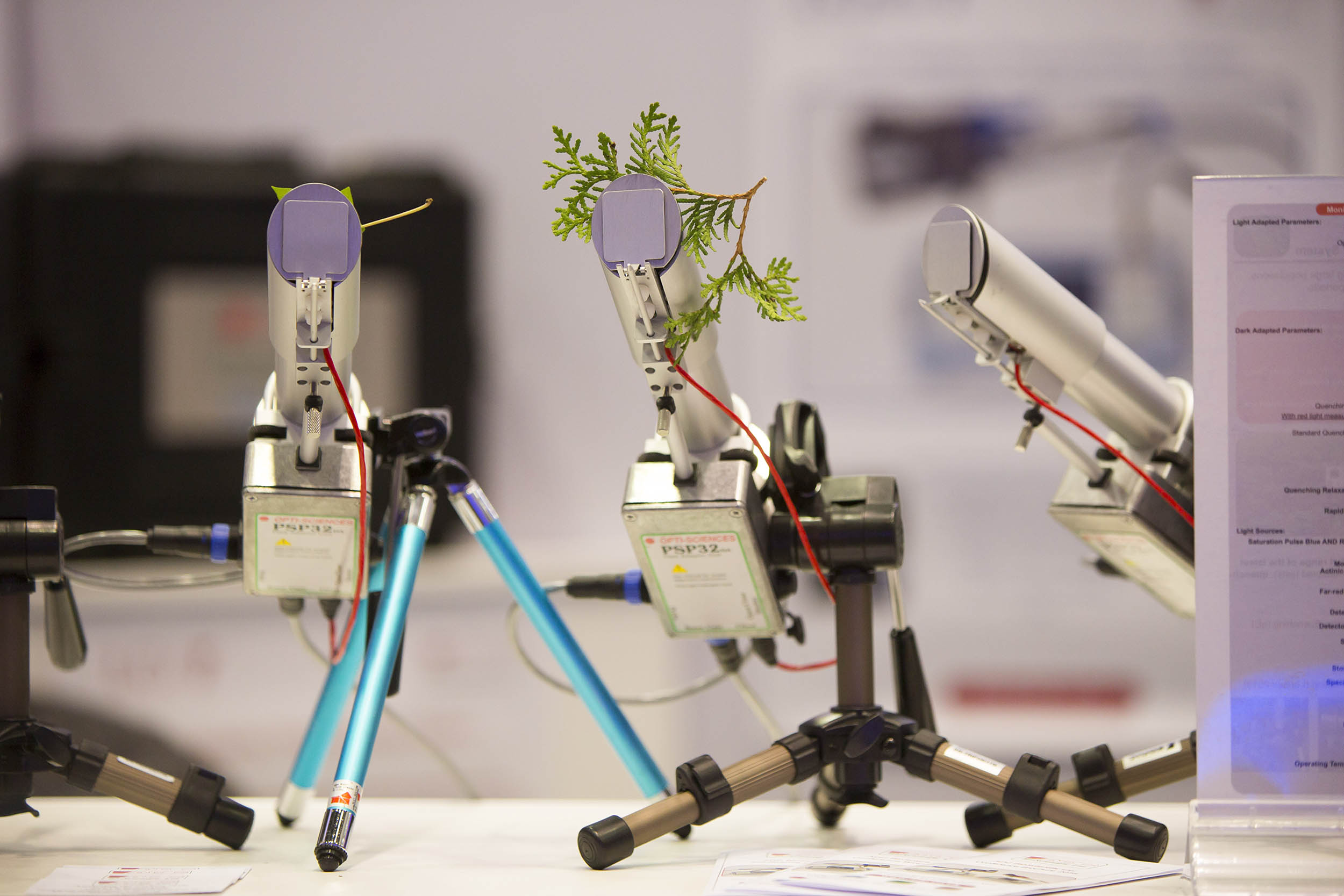
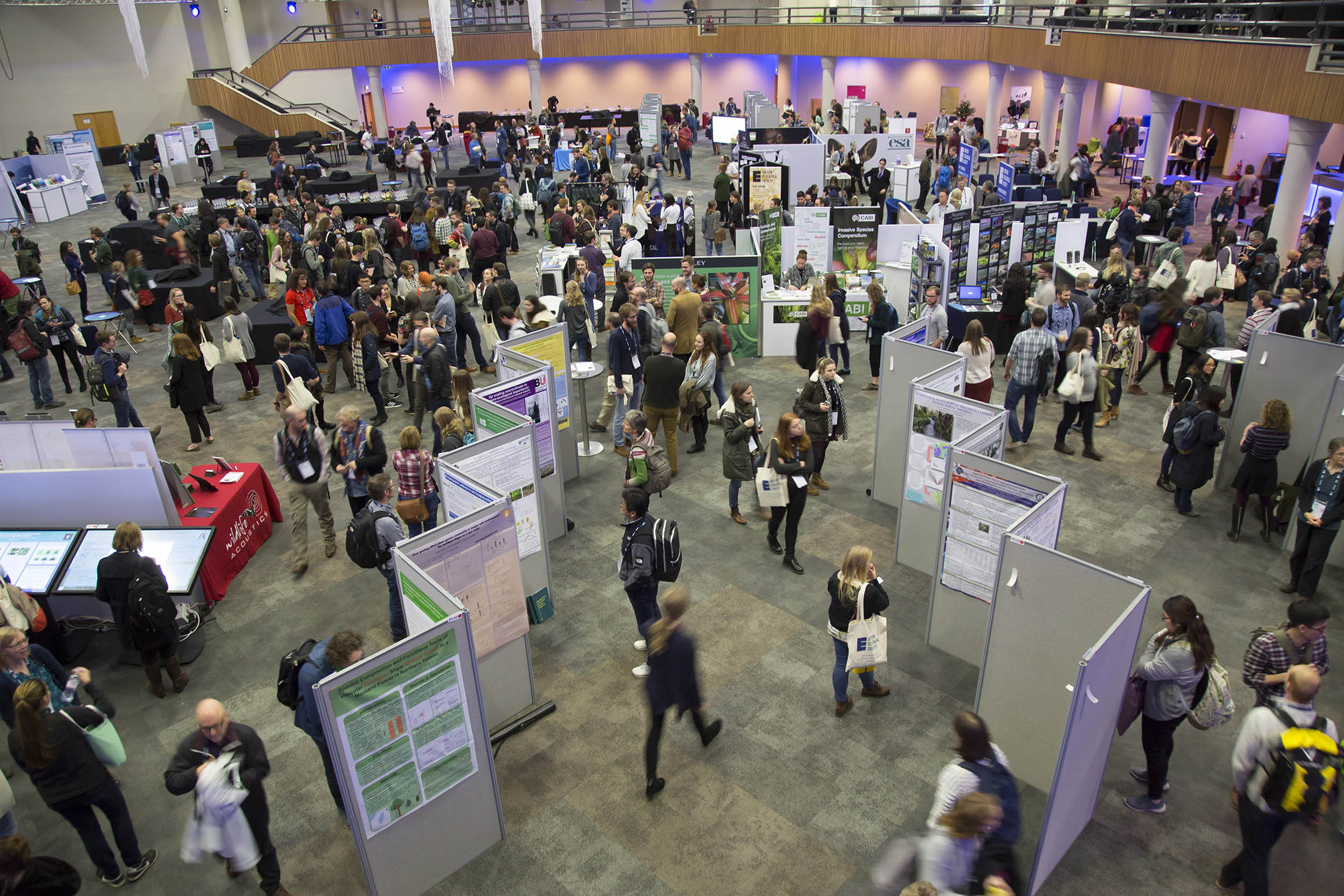
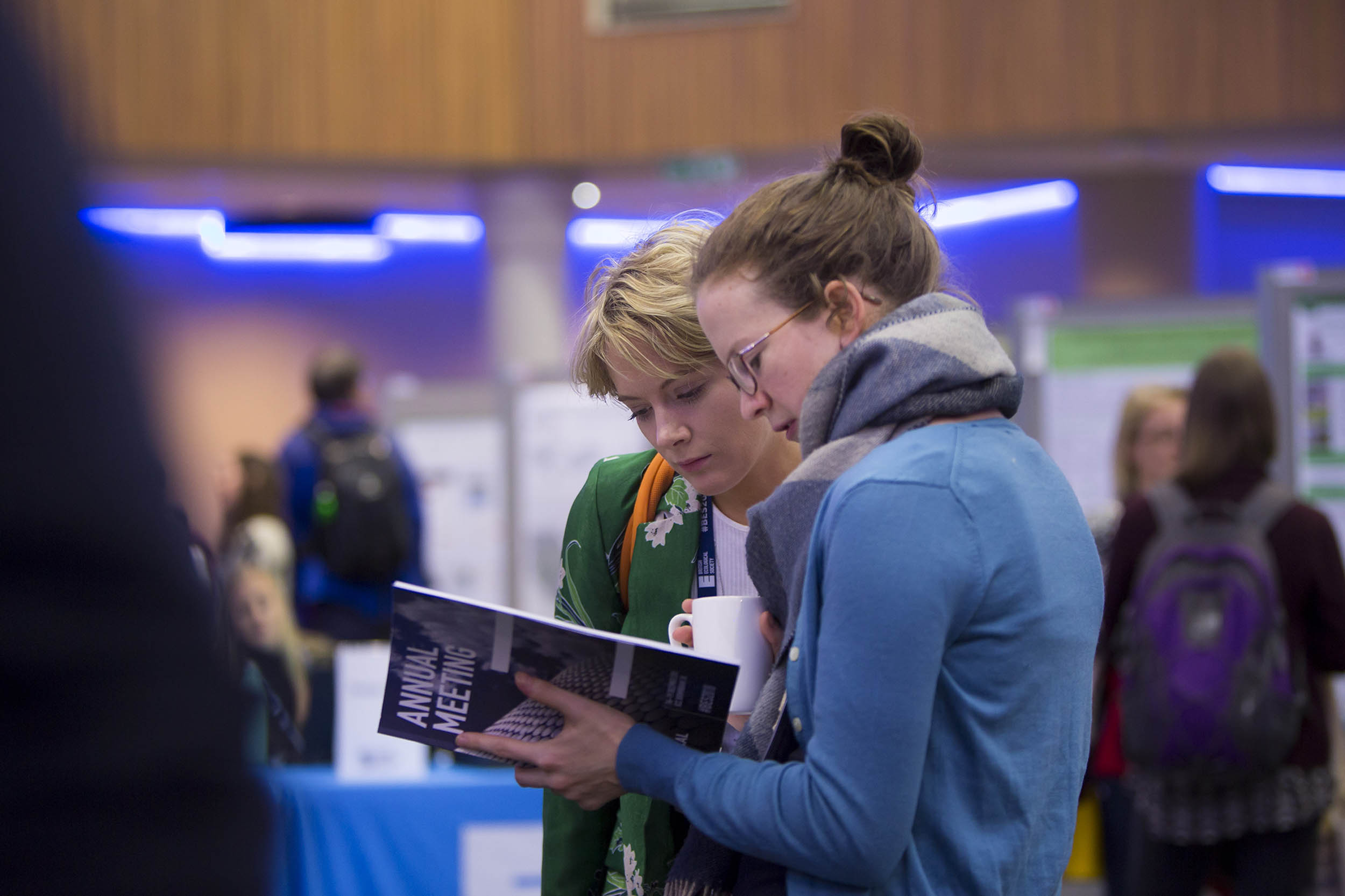

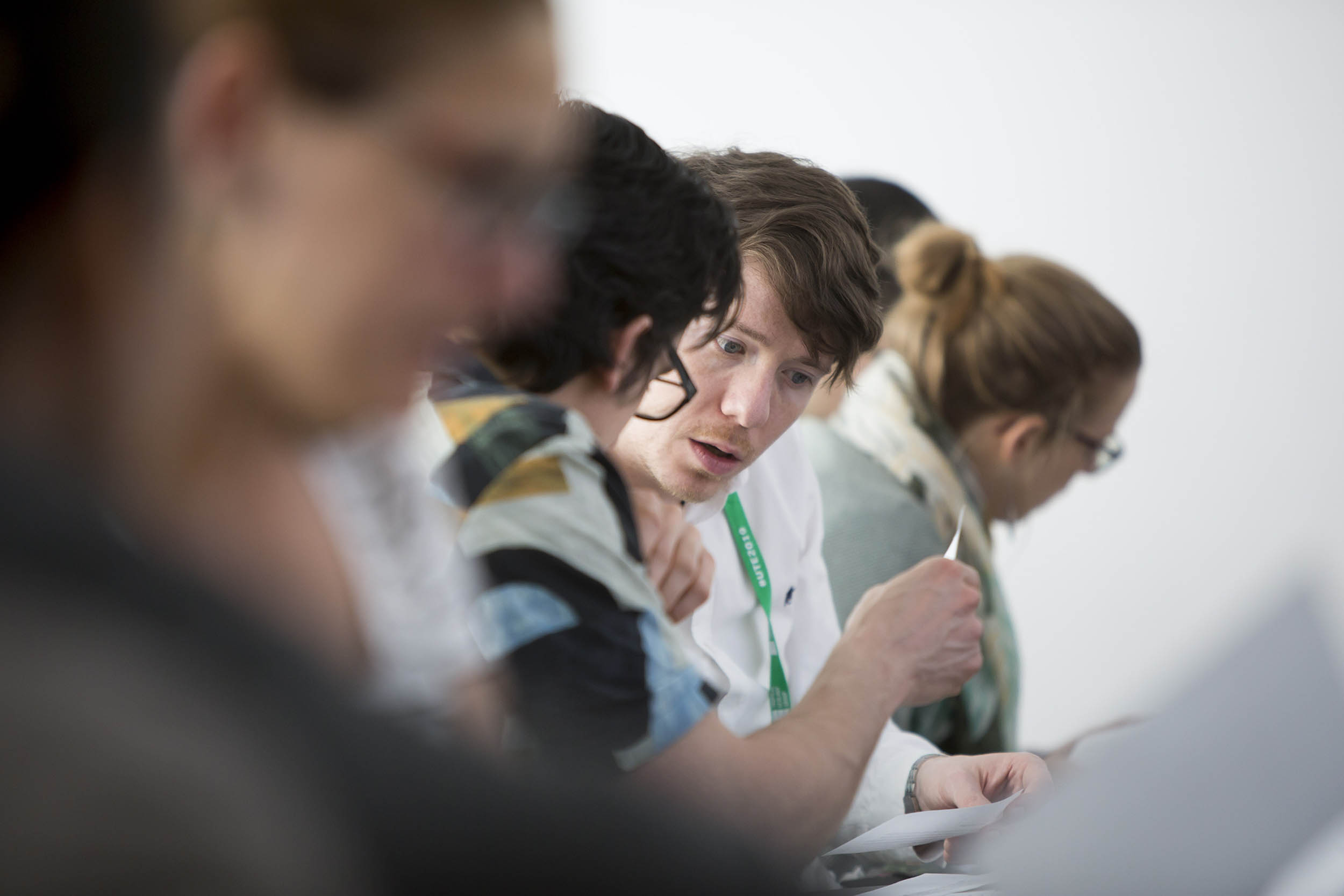
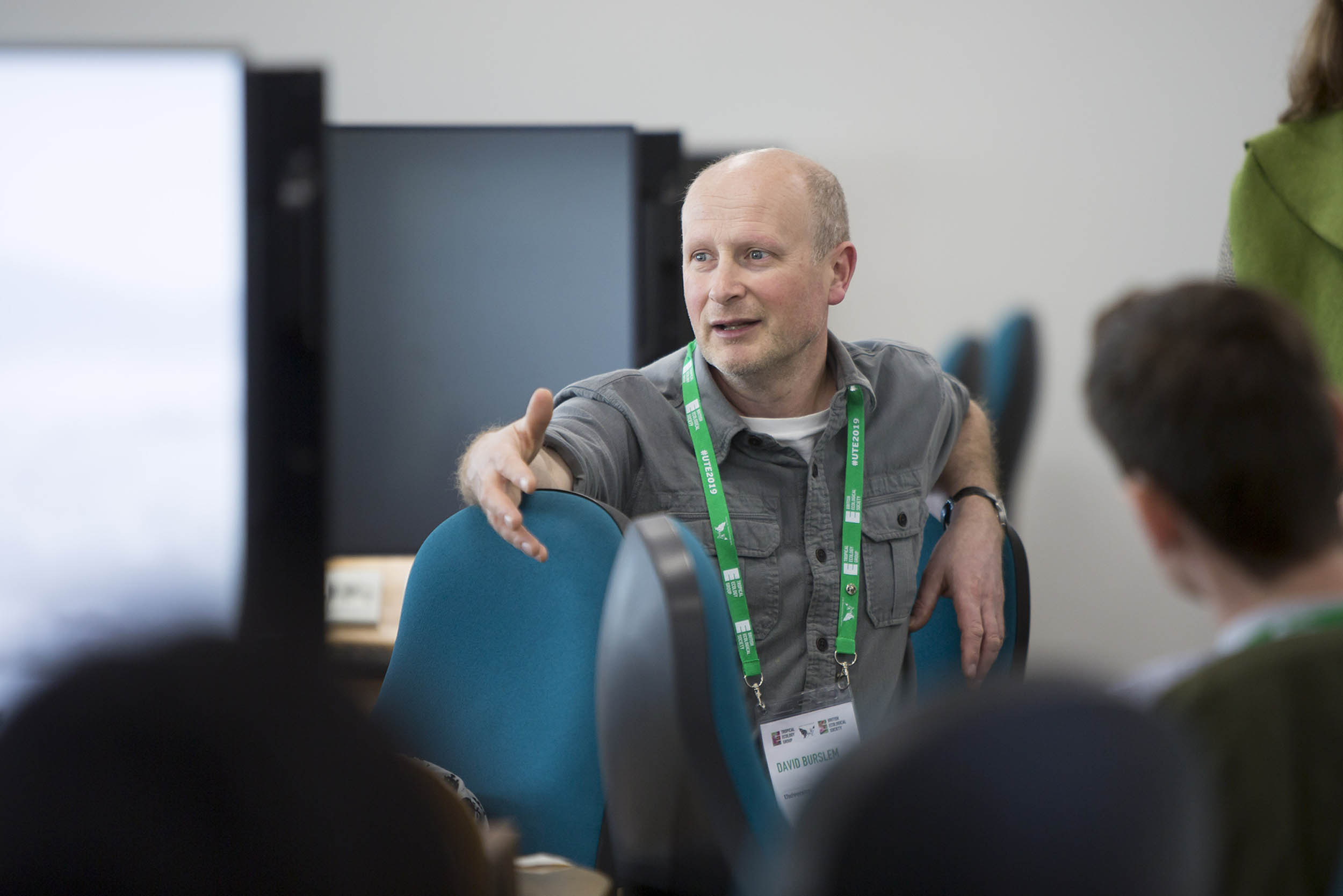
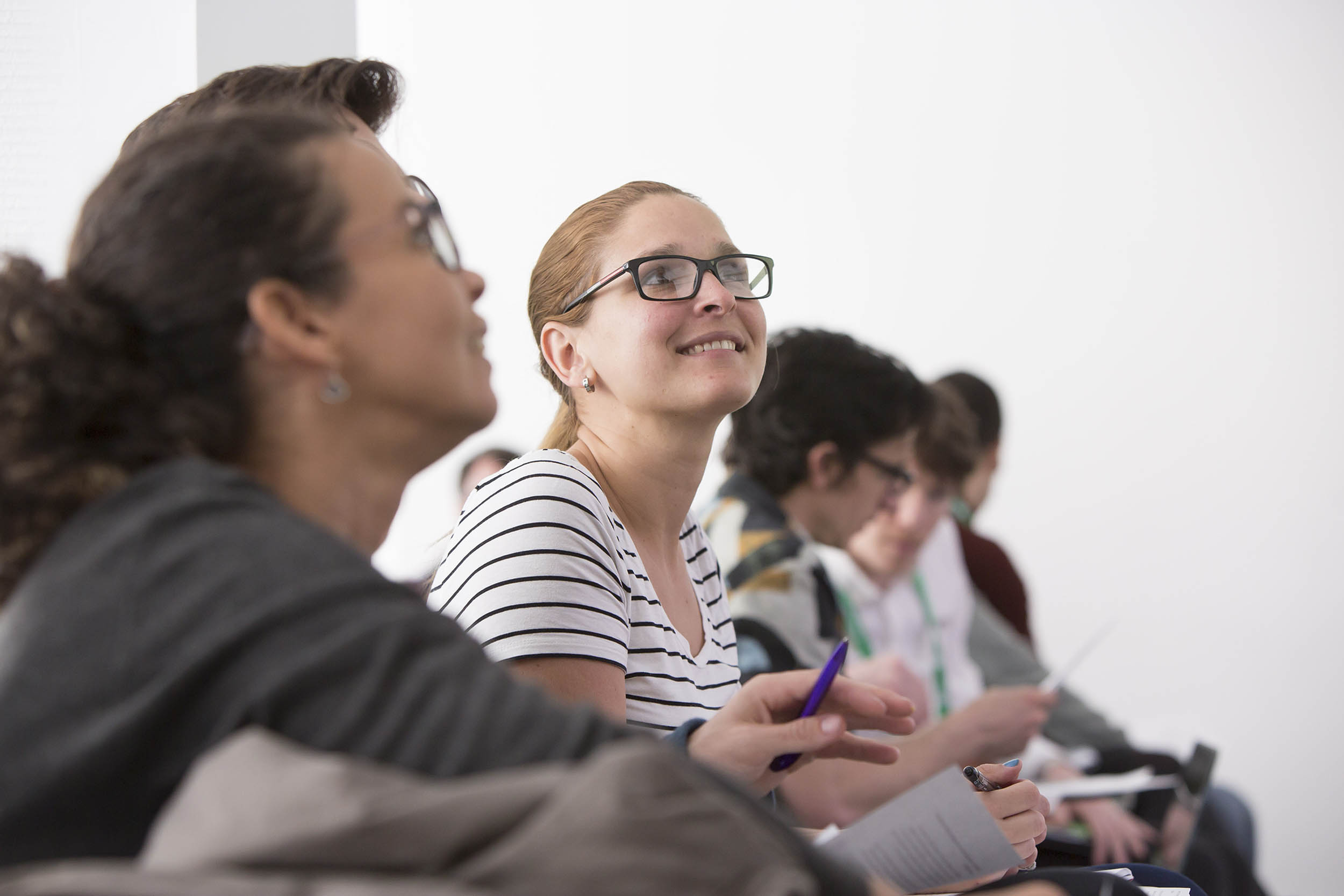
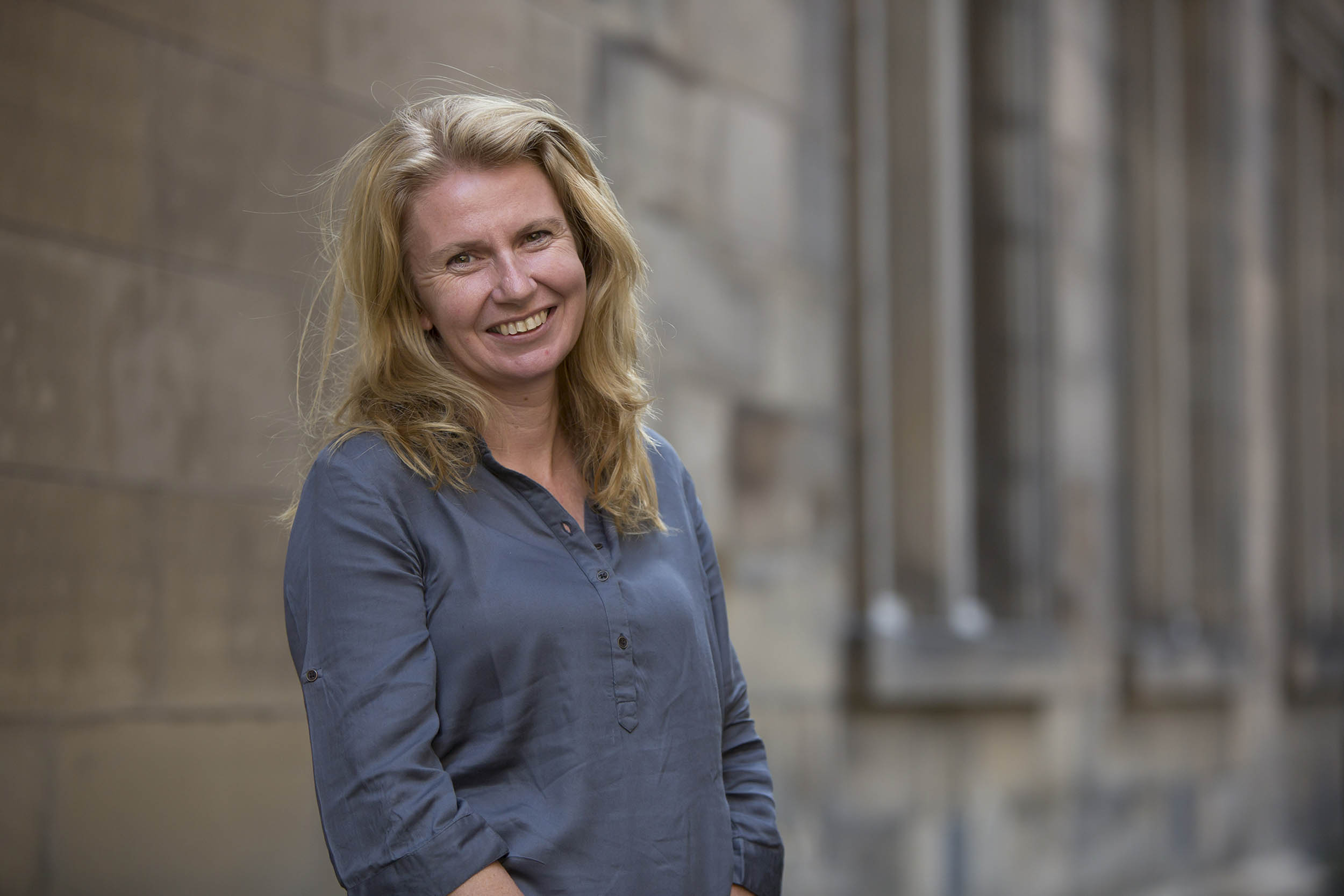
Capturing Academic Conferences
Event photography for academic and professional conferences requires attention to context, detail, and storytelling. I focused on capturing presenters during talks, delegates engaging in discussions, and the overall environment of the hall. These images are used for marketing, social media, and post-conference reporting, providing a visual record of the event that complements the written proceedings.
Documenting conferences also allows for the dissemination of the event’s energy and significance, giving future participants and collaborators a sense of the professional and social interactions that define such gatherings.
McEwan Hall: A Historic Backdrop
McEwan Hall in Edinburgh provides a dramatic and inspiring setting for conferences, combining historic architecture with modern event functionality. Photographing within this space adds visual interest, framing the attendees and speakers against the grandeur of the venue while highlighting the professional nature of the conference.
Conclusion
Photographing the joint BES and Society for Tropical Ecology annual conference offered an opportunity to create a visual record of scientific collaboration, lively discussion, and academic engagement. These images communicate the scale, professionalism, and atmosphere of the conference, providing valuable content for the societies’ marketing, archives, and social media.
New facility opening for DB Cargo
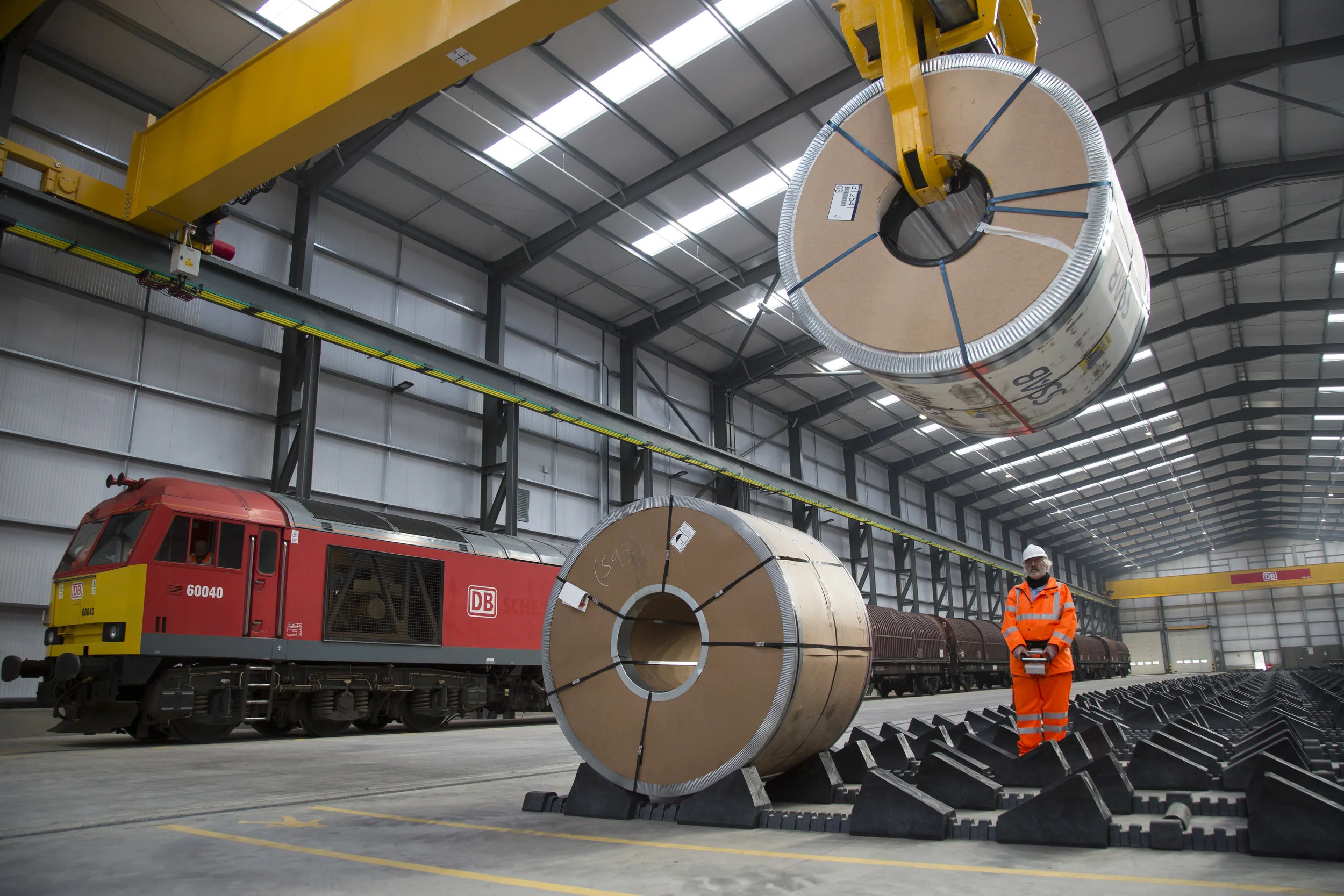
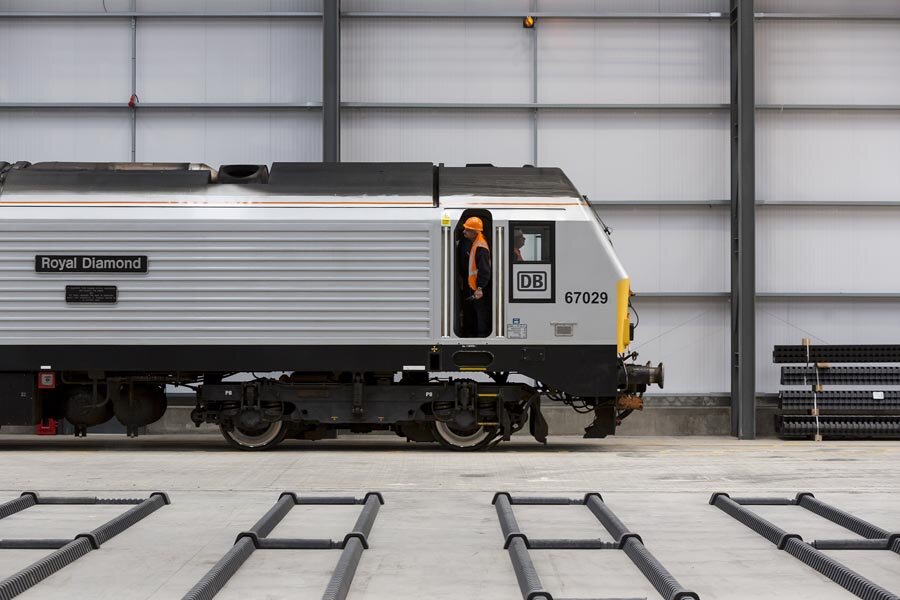
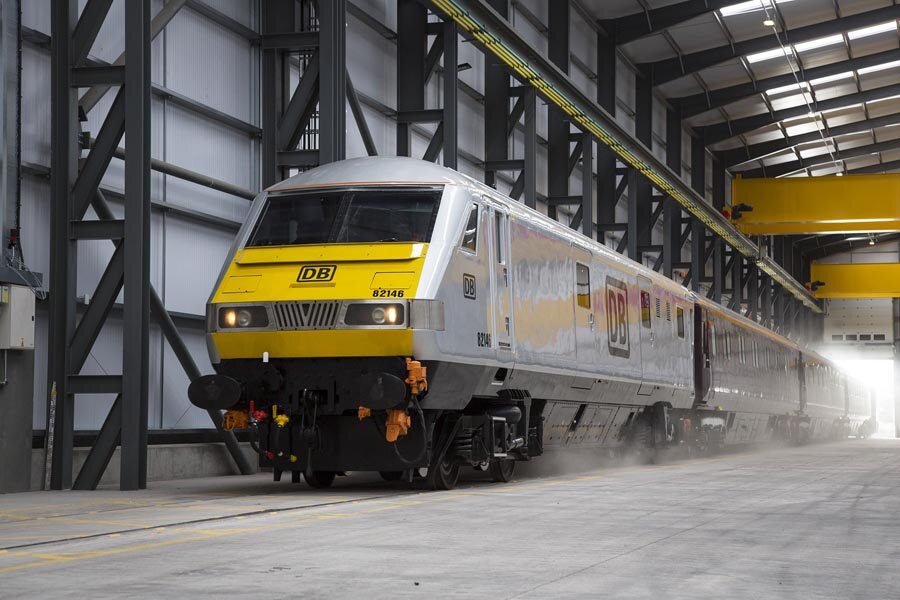
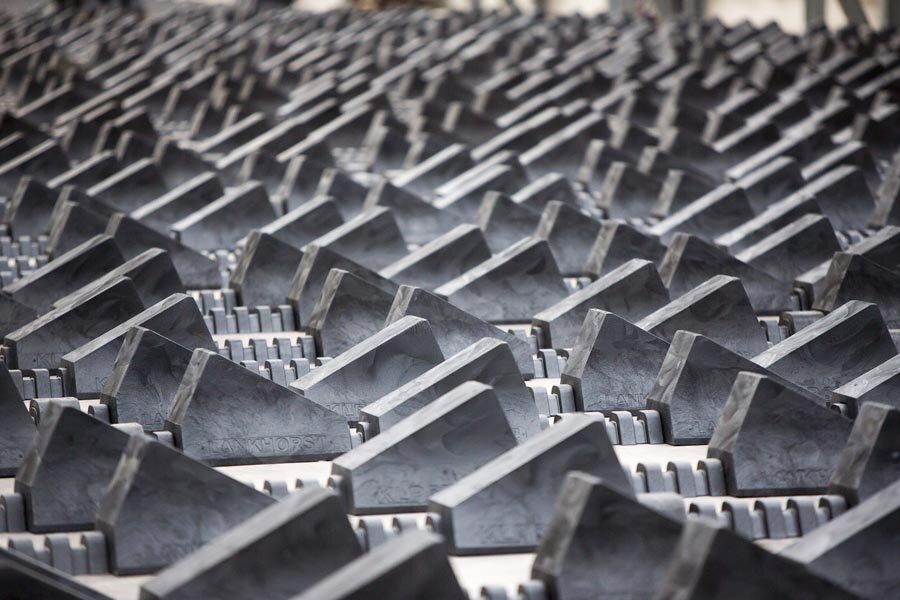
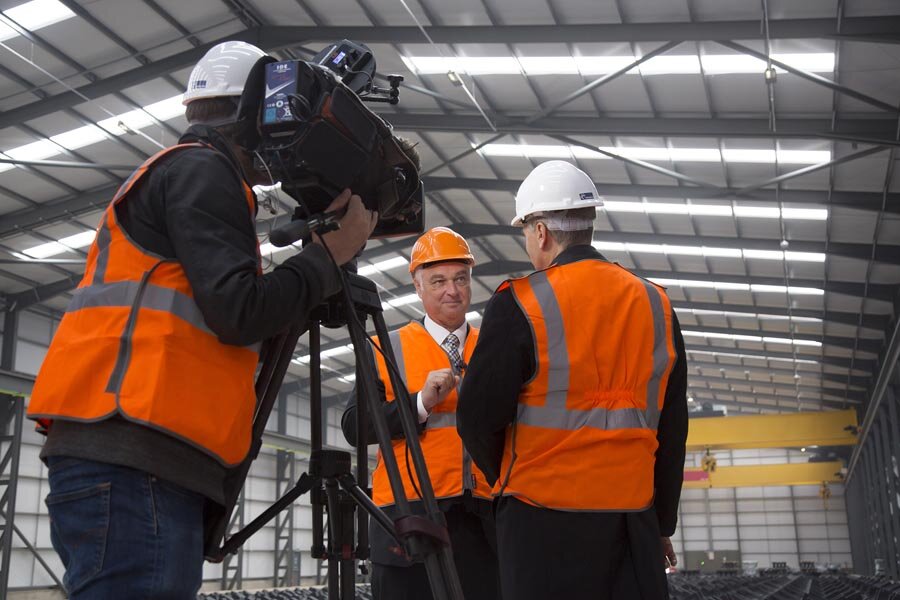
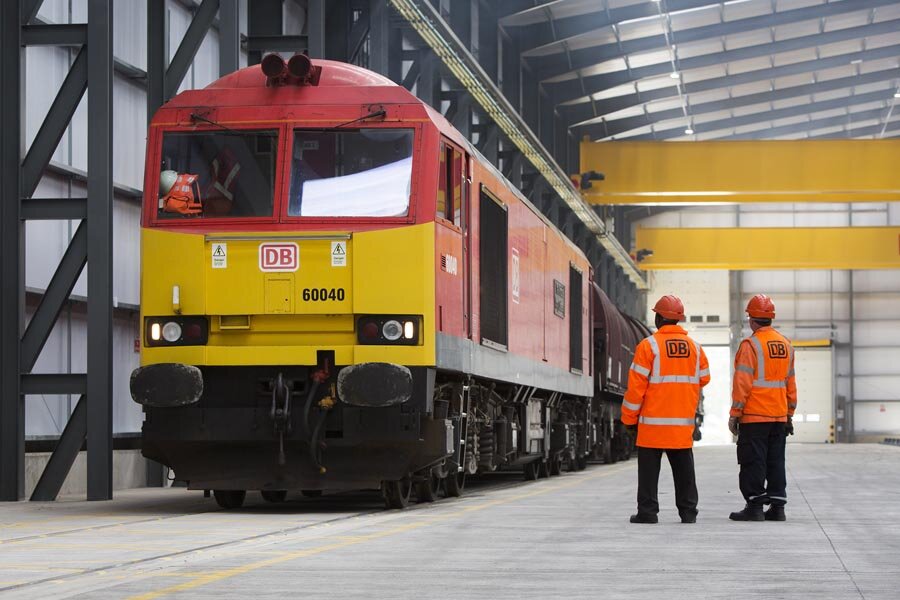
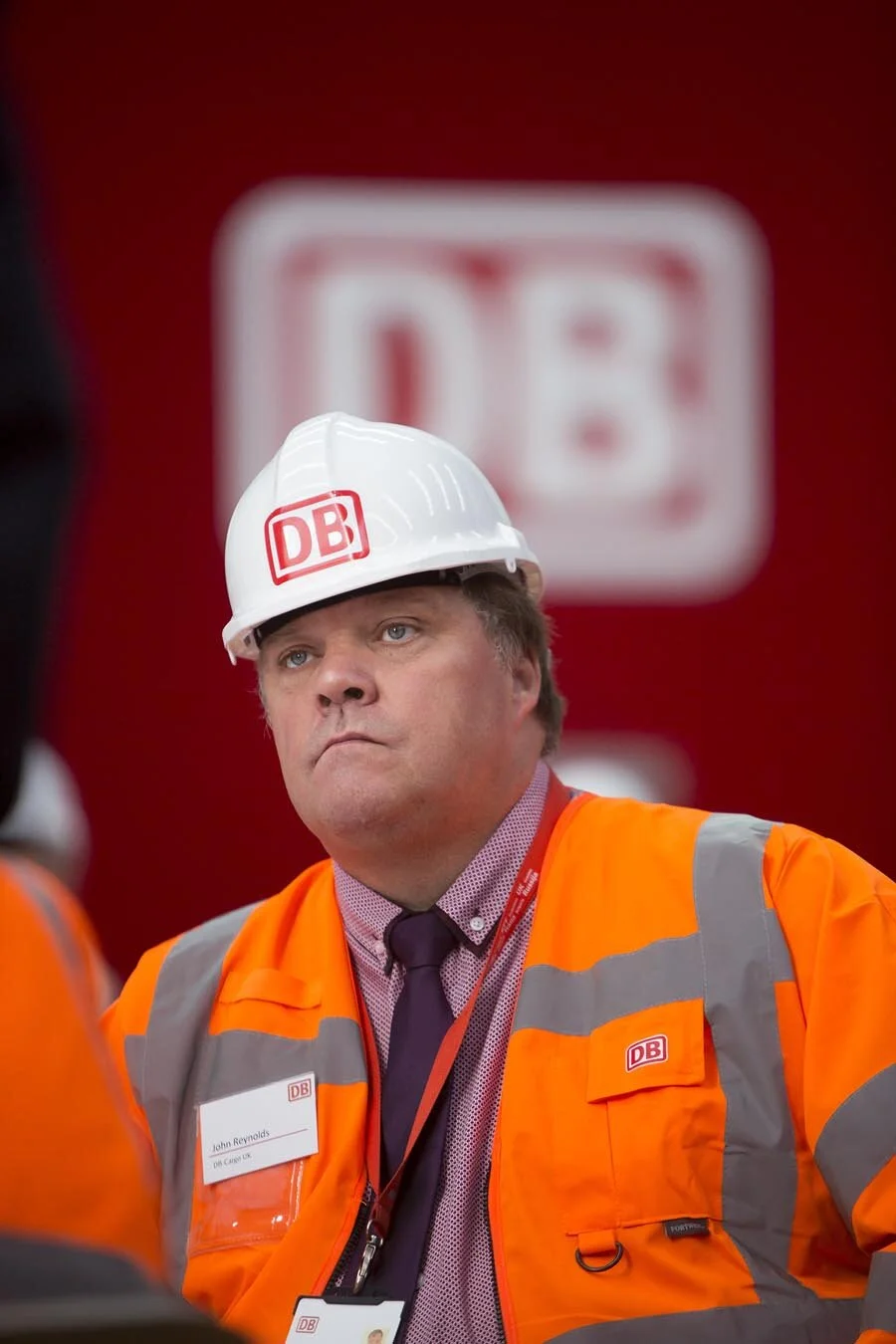
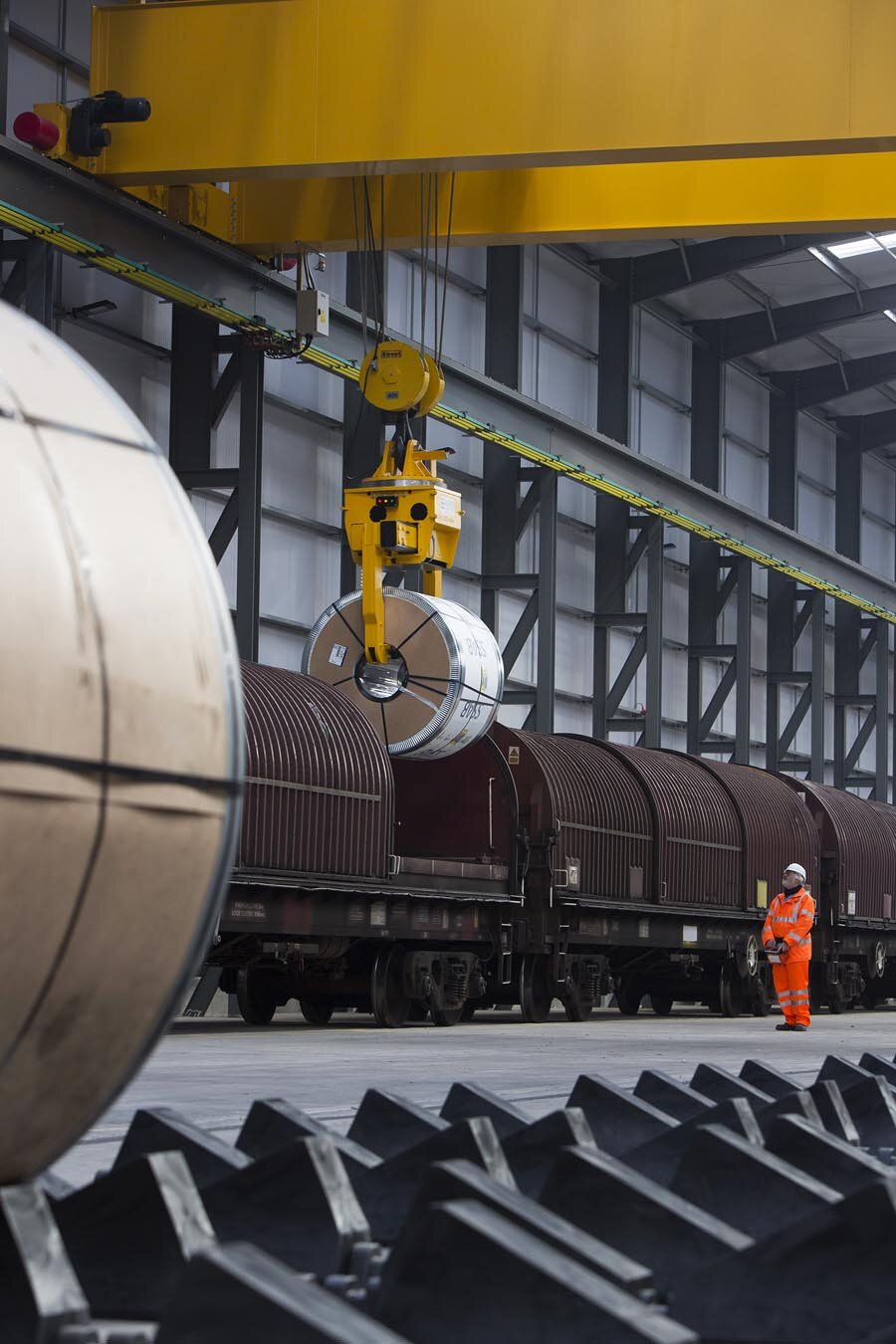
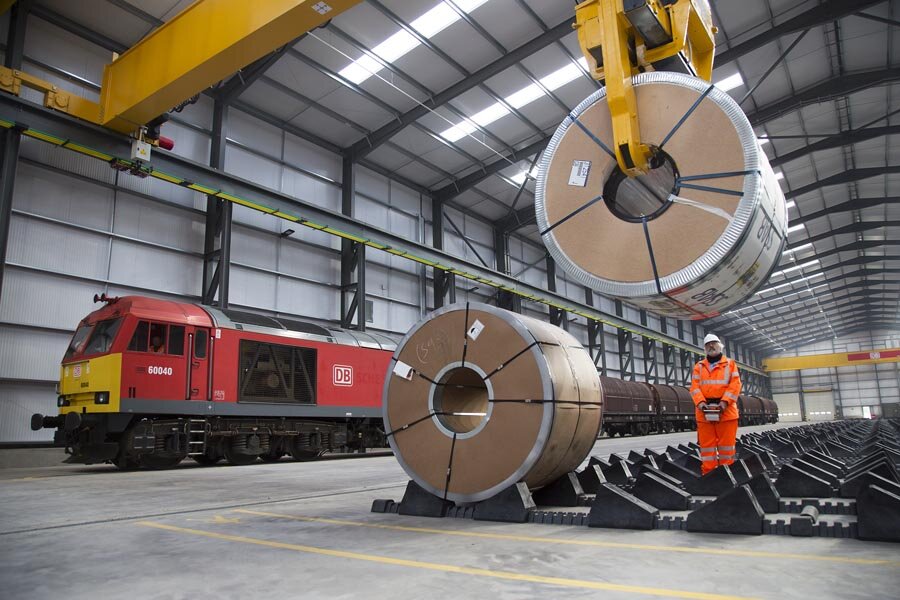
DB recently opened their new facility in Wolverhampton close to the heartland of the West Midlands motor industry. I photographed the launch, giant hangars dwarfing giant trains delivering giant rolls of steel.
I visited the West Midlands twice last year to photograph stories related to Britain’s motor industry. The new facility pictured below to deliver and house steel by Deutsche Bahn Cargo and before that on a commission for German business magazine WirtshaftsWoche to document German manufacturer Brose’s factory making seats and equipment for Jaguar Land Rover.
Event and Industrial Photography: Deutsche Bahn Cargo Facility Launch in Wolverhampton
DB recently opened its new facility in Wolverhampton, situated close to the heartland of the West Midlands motor industry. I photographed the launch of the facility, capturing the scale of the giant hangars, the trains delivering enormous rolls of steel, and the industrial context of this major logistics hub. These images were created to document the event and illustrate the operational scale of Deutsche Bahn Cargo’s new UK presence.
My visit to the West Midlands last year took me to the region twice on assignments related to Britain’s motor industry. The launch of the new DB facility is pictured below, with its expansive structures and dynamic industrial environment. Earlier in the year, on commission for the German business magazine WirtschaftsWoche (Business Week), I documented the factory of German supplier Brose, where seats and equipment are manufactured for Jaguar Land Rover models.


Capturing Industrial Scale and Event Context
Photographing industrial facilities and their launches requires a balance of documentary and editorial approaches. At the Deutsche Bahn Cargo event, the focus was on capturing the imposing scale of the new facility, the movement of freight trains delivering steel, and the atmosphere of the launch itself. The images provide a visual overview of the infrastructure and operations, contextualising the significance of the site within the UK’s manufacturing and logistics landscape.
Industrial photography like this supports editorial stories, corporate reports, and marketing materials. By showing the relationship between people, machines, and structures, the images help communicate the operational realities of major logistics investments and industrial facilities.
Brose and the Motor Industry in the West Midlands
Earlier visits to the West Midlands included a commission for WirtschaftsWoche to photograph the Brose factory, a German manufacturer producing components such as seats and interior equipment for Jaguar Land Rover. This work captured the production lines, workforce engagement, and manufacturing processes at the factory, emphasising the ongoing connections between German engineering firms and British automotive production.
Together, these visits paint a broader picture of the West Midlands as a centre for industrial innovation, logistics, and automotive supply chains. Photographing these facilities highlights the region’s economic significance and the cross‑border relationships that shape modern manufacturing.
Conclusion
Photographing the launch of Deutsche Bahn Cargo’s new facility in Wolverhampton provided an opportunity to document both a major industrial event and the scale of modern logistics infrastructure. Alongside earlier work at Brose’s automotive supply factory, these images form a coherent visual record of significant industrial activity in the West Midlands, illustrating the interplay between transport, manufacturing, and economic growth in the UK.
Blazing Winter vs. The Beast from the East...
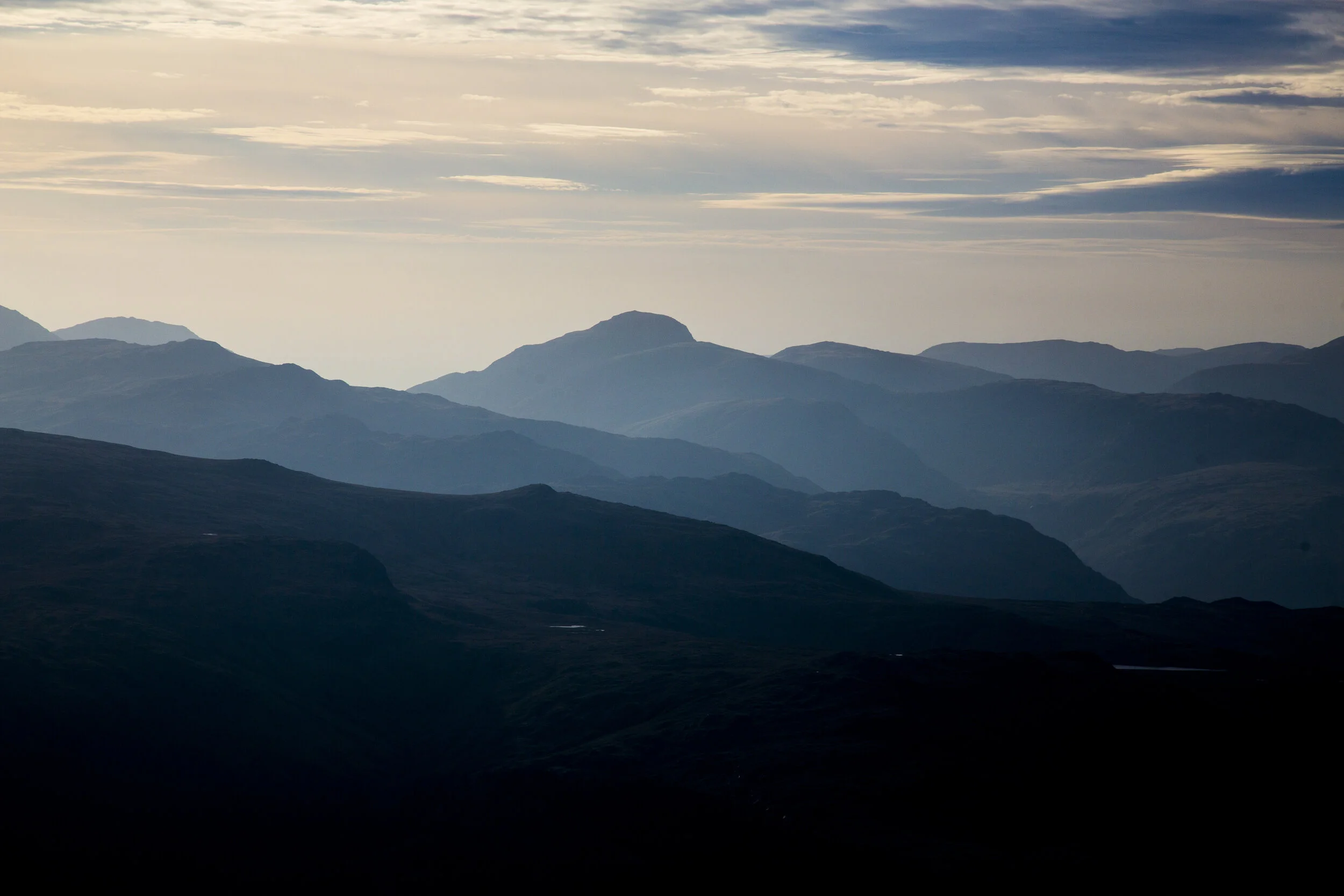
A few photographs from a hike up Helvellyn in the Lake District on 22nd February 2019…full sun, 16°C.
And some from the Old Man of Coniston on 28th February 2018, bitten by the Beast from the East, -5°C with wind chill to -17°C. Ice axes, crampons, all phone batteries dead from hypothermia.

A few pictures from a hike up Helvellyn in the Lake District on 22nd February 2019…full sun, 16°C

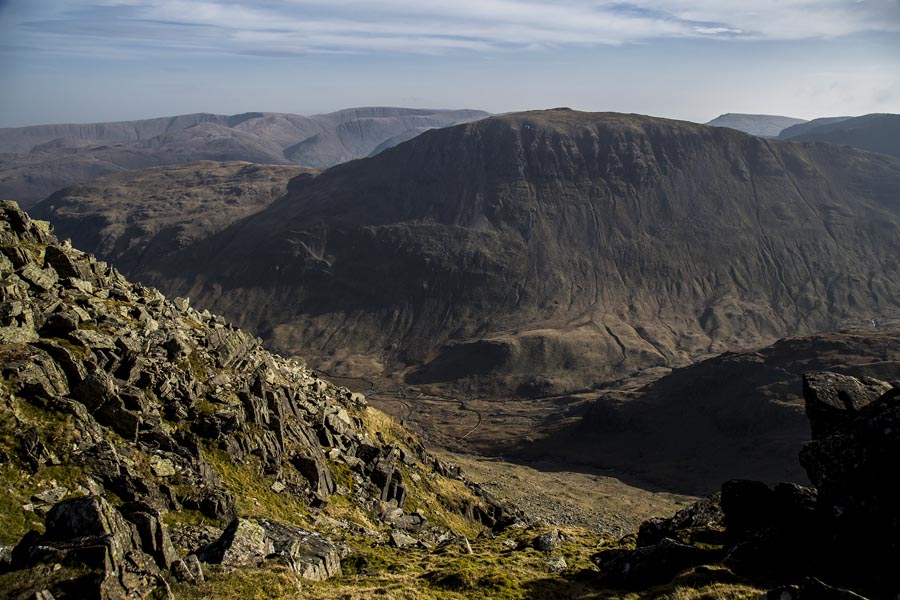


And some from the Old Man of Coniston on 28th February 2018, bitten by the Beast from the East, -5°C with wind chill to -17°C. Ice axes, crampons, all phone batteries dead from hypothermia.



Carolyn Radford
Portrait photographs for Carolyn Radford the CEO of Mansfield Town Football Club.

Portrait Photography: Carolyn Radford, CEO of Mansfield Town Football Club
I recently photographed Carolyn Radford, CEO of Mansfield Town Football Club, creating professional portrait images suitable for editorial, marketing, and corporate communications. These portraits capture her presence, leadership, and professionalism in one of the most visible executive roles in English football.
Carolyn Radford was appointed CEO of Mansfield Town at just 29, making her the youngest chief executive in English professional football at the time, and one of the very few female CEOs in the sport. Her role is groundbreaking in a male-dominated industry, highlighting her influence and leadership in football management, as well as her commitment to diversity and inclusion within the game.

Capturing Leadership Through Portrait Photography
Corporate and executive portrait photography is about more than a likeness; it conveys authority, confidence, and approachability. In Carolyn Radford’s session, the goal was to communicate her leadership style and professional presence while producing images suitable for club publications, press releases, and digital media.
Photography of football executives requires careful attention to context, branding, and tone. The portraits balance formality with accessibility, showing both the responsibilities of her role and her personality. These images provide a visual connection for fans, stakeholders, and partners, reinforcing her presence as a trailblazer in the sport.
Conclusion
Portrait photography of Carolyn Radford celebrates her pioneering role as one of the few female chief executives in British professional football while producing high-quality images for editorial, marketing, and social media use. Capturing executives in context ensures organisations can communicate their people, values, and leadership effectively, strengthening their visual presence both online and in print.

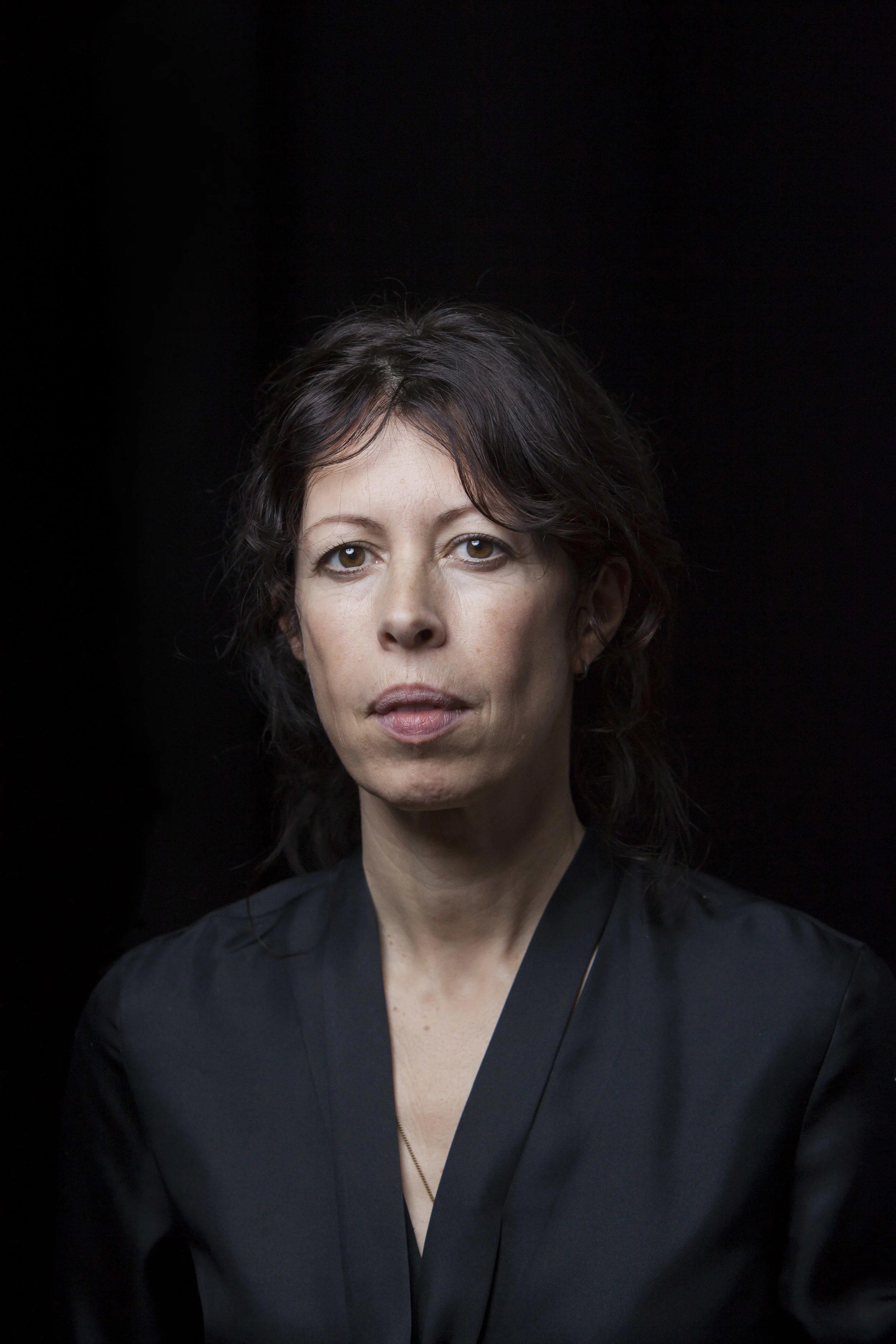
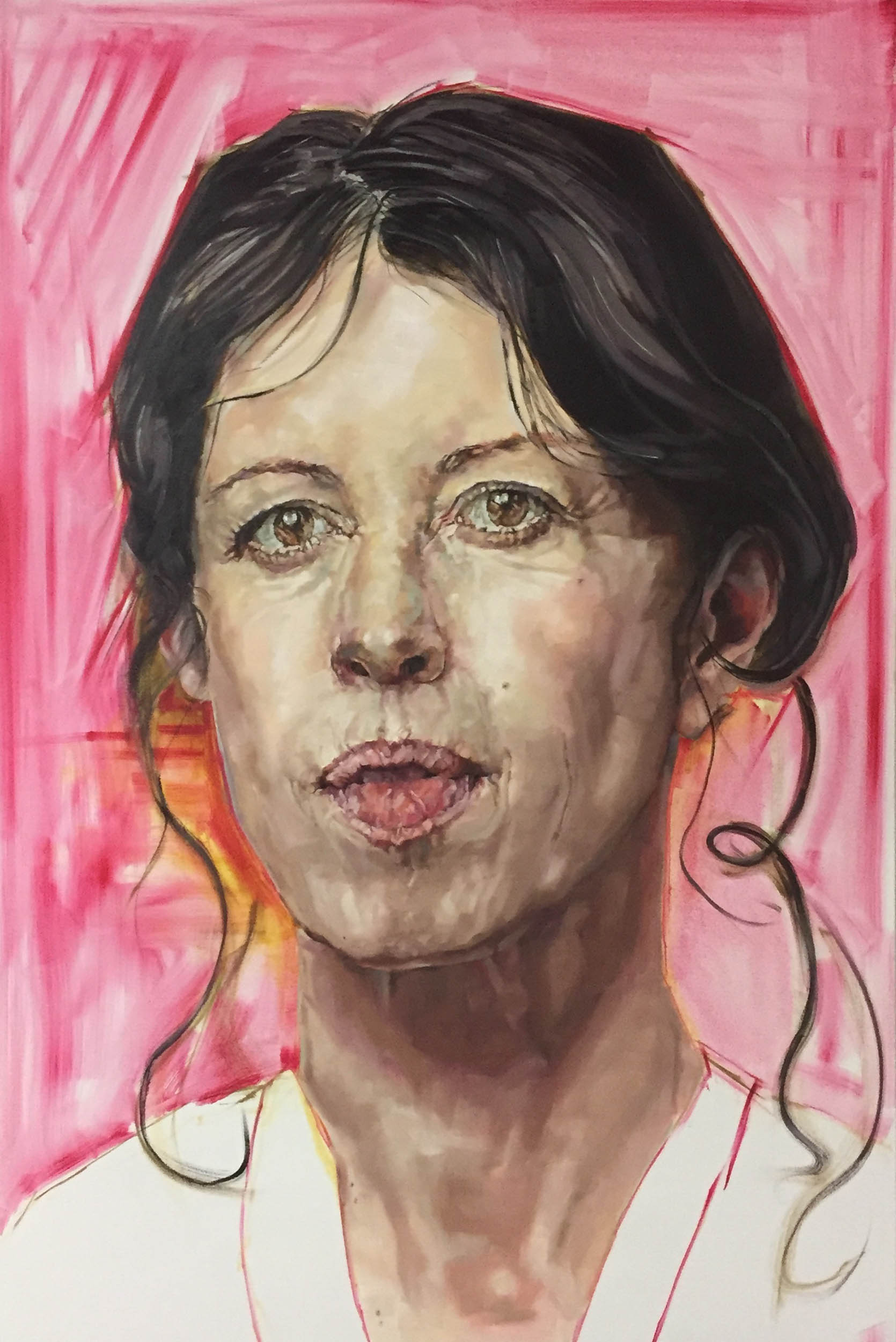
Cecily Brown by Shana Wilson
Shana Wilson approached me to use my portrait of artist Cecily Brown as the basis for a portrait in her series TribeShe promoting visibility and empowerment of women over 40.

Portrait of Cecily Brown | Featured in Shana Wilson’s TribeShe Series
Portrait Photography Shared and Reinterpreted by Shana Wilson
Earlier this year, artist and creator Shana Wilson approached me about using my portrait of the British‑born painter Cecily Brown as the basis for a new work in her ongoing TribeShe series. TribeShe is a portrait series dedicated to increasing the visibility and empowerment of women over 40, celebrating their resilience, creativity, and continued cultural impact. Wilson’s work reframes existing images by placing them in a broader narrative of visibility and representation, making the original photograph a starting point for a new visual dialogue.
My original portrait of Cecily Brown and Wilson’s nearly completed reinterpretation are featured below, showing how portrait photography can transcend its initial purpose to inspire creative reinterpretation and collaboration within the visual arts. You can find more of Shana Wilson’s work at her website: shanawilsonartist.com.
Who Is Cecily Brown and Why a Portrait of Her Matters
Cecily Brown is a highly influential British painter whose work has been central to the resurgence of figurative painting since the 1990s. Born in London in 1969, she studied at the Slade School of Fine Art before moving to New York in the mid‑1990s, where she quickly established herself on the international art stage. Her early exhibitions at Deitch Projects were met with critical and commercial success, and her career has included solo shows at major institutions such as the Hirshhorn Museum in Washington, D.C., Museo Reina Sofía in Madrid, and Blenheim Palace in the UK, among others.
Brown’s work is characterised by sweeping, gestural brushwork that blurs the boundary between abstraction and figuration. She draws on influences ranging from Abstract Expressionists like Willem de Kooning to Old Masters such as Rubens and Goya, combining historical references with a deeply personal exploration of movement, form, and perception. Her paintings often appear intense and kaleidoscopic, inviting sustained viewer engagement and reflection.
Brown’s paintings are included in the permanent collections of world‑renowned institutions including the British Museum, Tate Modern, the Museum of Modern Art in New York, and the Whitney Museum of American Art. Beyond her aesthetic achievements, her influence stems from how she revitalised painting at a time when conceptual and multimedia art dominated. Her commitment to paint as a medium, and her ability to synthesise figuration and abstraction, marks her as one of the most important painters of her generation.
TribeShe: Amplifying Women’s Voices Through Art
Shana Wilson’s TribeShe series focuses on women over 40, emphasising empowerment, legacy, and representation. By selecting portraits of women who have already made significant cultural contributions, Wilson reframes them in a way that foregrounds lived experience, agency, and continued relevance. Choosing a portrait of Cecily Brown — an artist with an influential career spanning decades and an international presence — aligns with TribeShe’s mission to highlight women whose voices deserve wider recognition.
Wilson’s reinterpretations are not merely aesthetic exercises; they position women’s stories within broader societal and artistic conversations, elevating subjects who have shaped their fields and whose work continues to resonate across communities.
The Power of Portraiture and Collaboration
Portrait photography captures more than a likeness; it reflects presence, influence, and context. A portrait of an artist like Cecily Brown carries weight not just because of her stature in the art world but because her career embodies sustained creativity and a commitment to her medium. Through Wilson’s reinterpretation, the original photographic work becomes part of a larger exploration of identity, ageing, and leadership in the arts.
This kind of artistic dialogue — where photographic portraiture becomes a catalyst for further creation — demonstrates the dynamic interplay between image, interpretation, and cultural narrative. It highlights the ways in which visual representation can both document and reframe the significance of influential figures.
Conclusion
Being approached by Shana Wilson to contribute to her TribeShe series through my portrait of Cecily Brown was a reminder of how photography can extend beyond its initial purpose, becoming part of new artistic stories and collaborations. The partnership between photographer and painter, between original image and reinterpretation, reflects the fluid, ongoing conversations within contemporary art about identity, visibility, and empowerment.
Explore more of Shana Wilson’s work at shanawilsonartist.com.
Nick Freeman
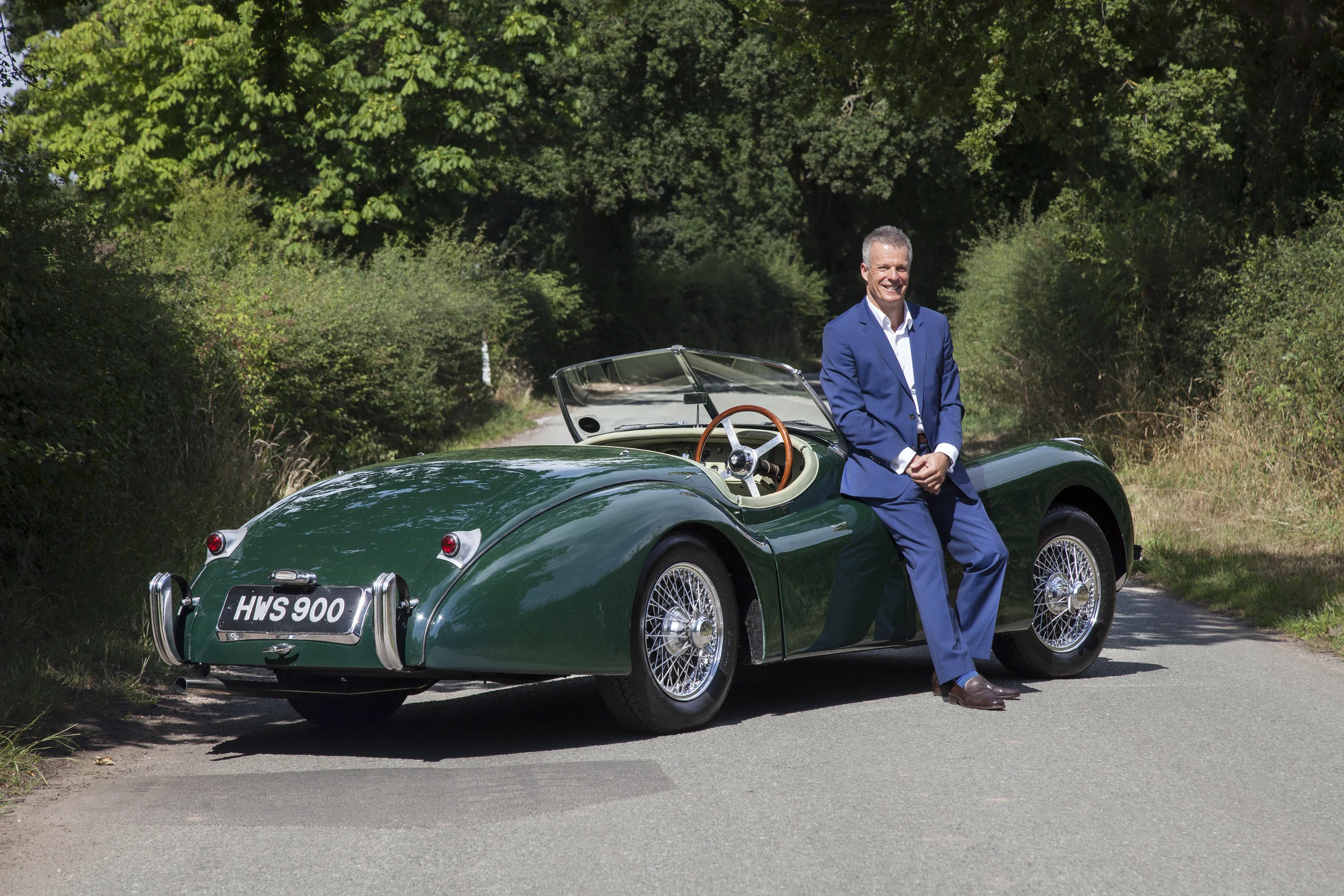
It’s not everyday you get to cruise around Cheshire in a Jaguar XK120, let alone when its 28 degrees outside. Happily, they were the conditions when I photographed motoring lawyer to the stars Nick Freeman for the Sunday Times ‘Me and My Motor’ section.

It’s not everyday you get to cruise around Cheshire in a Jaguar XK120, let alone when its 28 degrees outside. Happily, they were the conditions when I photographed motoring lawyer to the stars Nick Freeman for the Sunday Times ‘Me and My Motor’ section.
We found out that classic cars don’t really enjoy idling in the baking heat, but after a bit of cooling off in the shade, we got the job done.