Latest Editorial, Portrait & Commercial Photography Projects
A selection of my most recent commissions and ongoing projects.
The work shown here spans editorial assignments, portrait commissions, documentary projects and commercial photography for organisations and publishers. It reflects current areas of focus and the range of contexts in which I am working.
New projects are added regularly.

Documentary Photography - BP's LiDAR buoy at Liverpool Docks
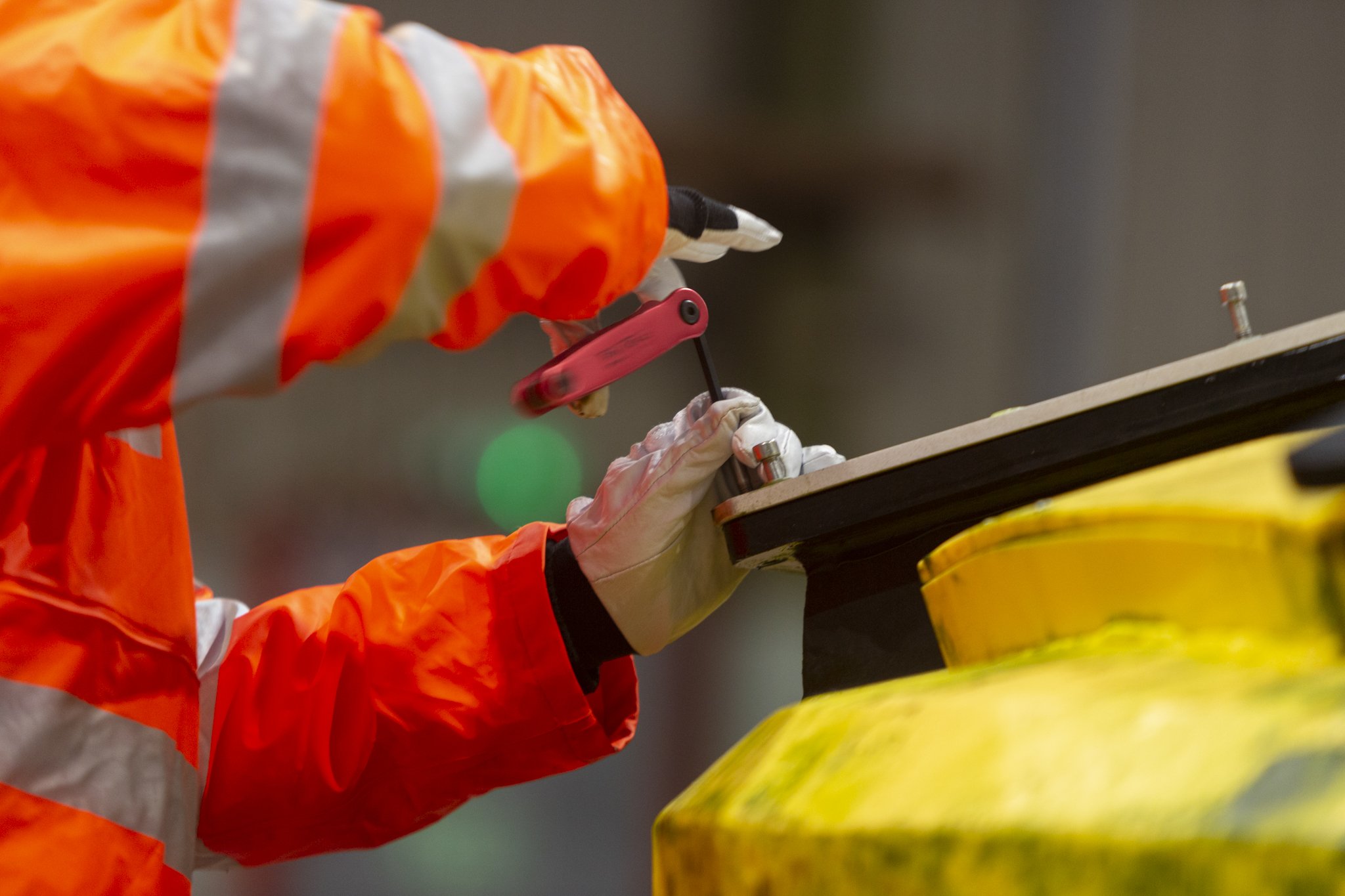
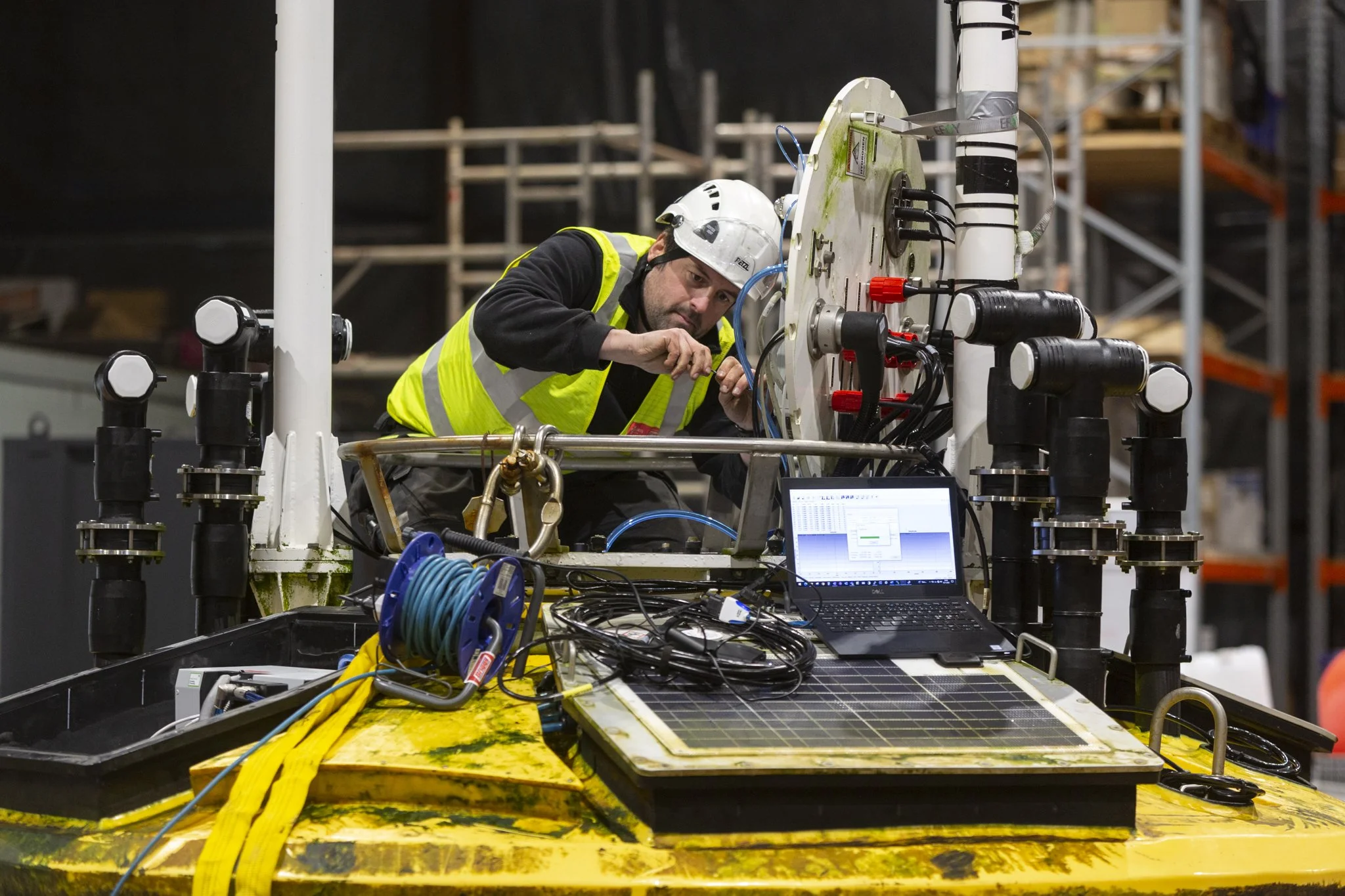
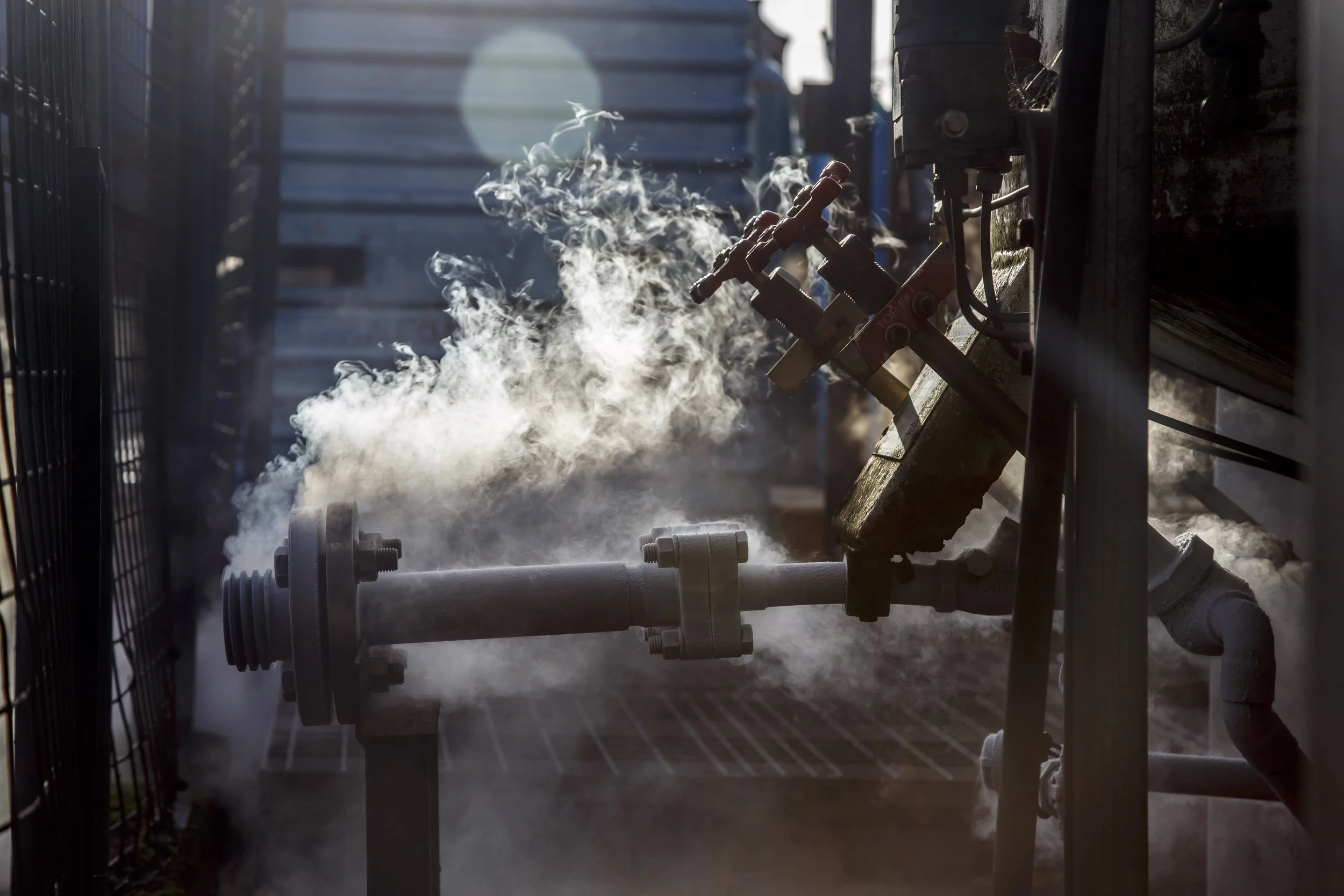
Another commission from BP as they work on the development of the Mona and Morgan Irish Sea wind farms. This time I was taking photographs to document the maintenance of one of their Fugro Seawatch LiDAR buoys which are surveying the field to find optimal wind turbine locations. The Seawatch buoys run on solar panels and fuel cells using methanol fuel. Although autonomous in the field the buoys need to be towed to shore for refueling and servicing.

Another commission from BP as they work on the development of the Mona and Morgan Irish Sea wind farms. This time I was taking photographs to document the maintenance of one of their Fugro Seawatch LiDAR buoys which are surveying the field to find optimal wind turbine locations. The Seawatch buoys run on solar panels and fuel cells using methanol fuel. Although autonomous in the field the buoys need to be towed to shore for refueling and servicing.
As an ex-engineer with a background in Physics, this was a really interesting - if freezing! - few days shooting in Liverpool.
LiDAR, or Light Detection and Ranging, can measure wind speed by using the Doppler effect. The Doppler effect is a phenomenon that occurs when the frequency of a wave changes as the source of the wave moves relative to the observer. This effect is commonly experienced in everyday life, for example, the change in pitch of a siren as an ambulance approaches and then passes by.
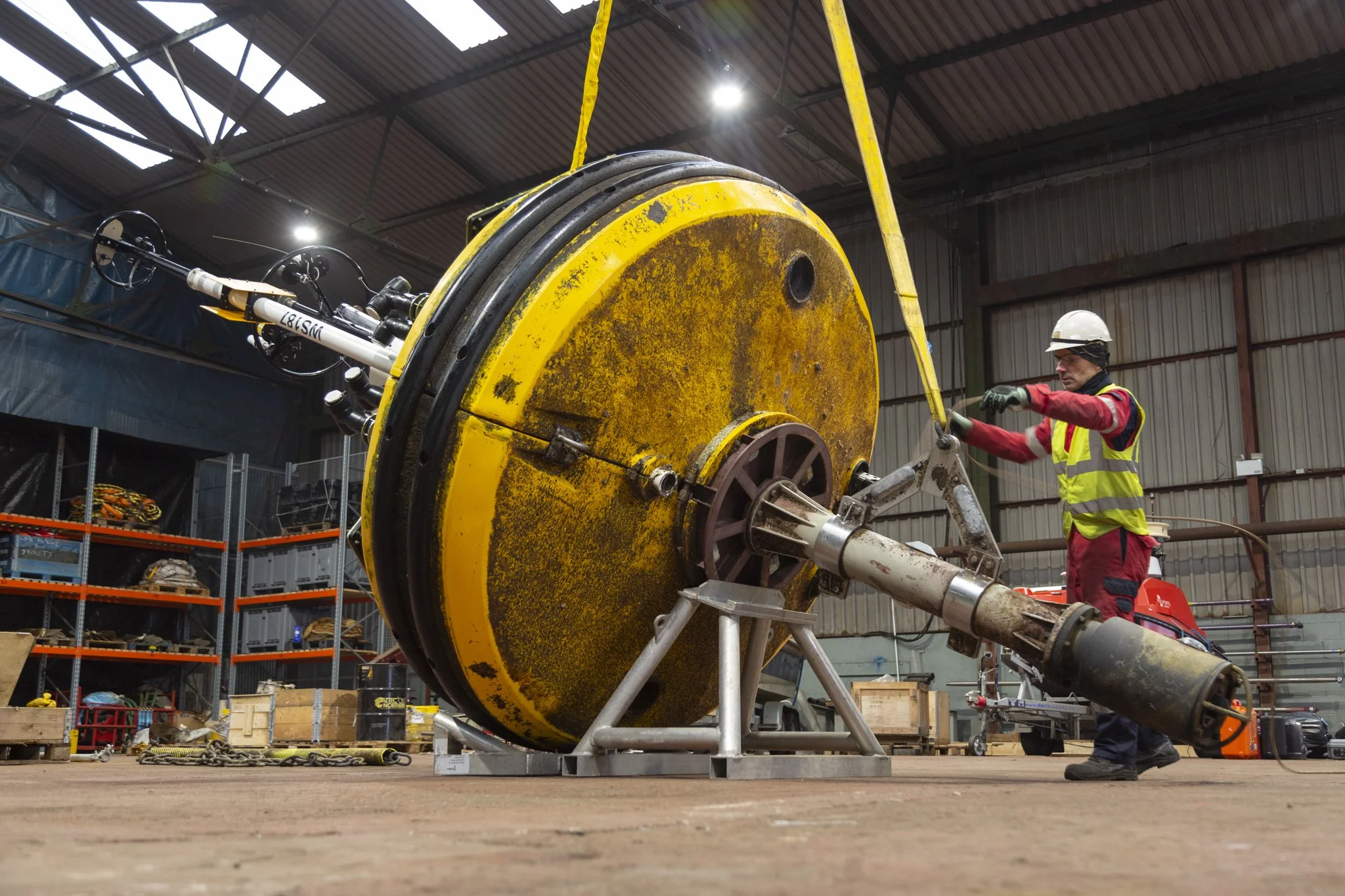
In the context of LiDAR, a laser beam is directed towards the atmosphere, and the reflected light is detected by a sensor. As the laser beam passes through the atmosphere, it interacts with particles in the air, such as dust or water droplets. These particles scatter the laser beam in different directions, and some of the scattered light returns to the sensor.

By analyzing the scattered light, LiDAR can detect the movement of air particles and calculate wind speed. The movement of the particles changes the frequency of the scattered light, and this change in frequency is detected by the sensor. The amount of frequency shift is proportional to the wind speed, allowing LiDAR to calculate the wind speed with high accuracy.

LiDAR can also provide information about the direction and turbulence of the wind, helping to identify potential challenges for wind turbine installations. This information is particularly useful in the development of wind farms, where accurate wind measurements are essential for identifying the most suitable locations for wind turbines.




Langfields
Langfields are specialist fabricators of process plant for the Pharmaceutical, Chemical, Offshore, Oil & Gas, Marine, Defence, Nuclear and other process industries. Based only one mile from Deansgate they demonstrate that there is still some manufacturing industry in the post-industrial city.
As a former engineer, I love visiting these places and finding out what’s being made and the techniques used.
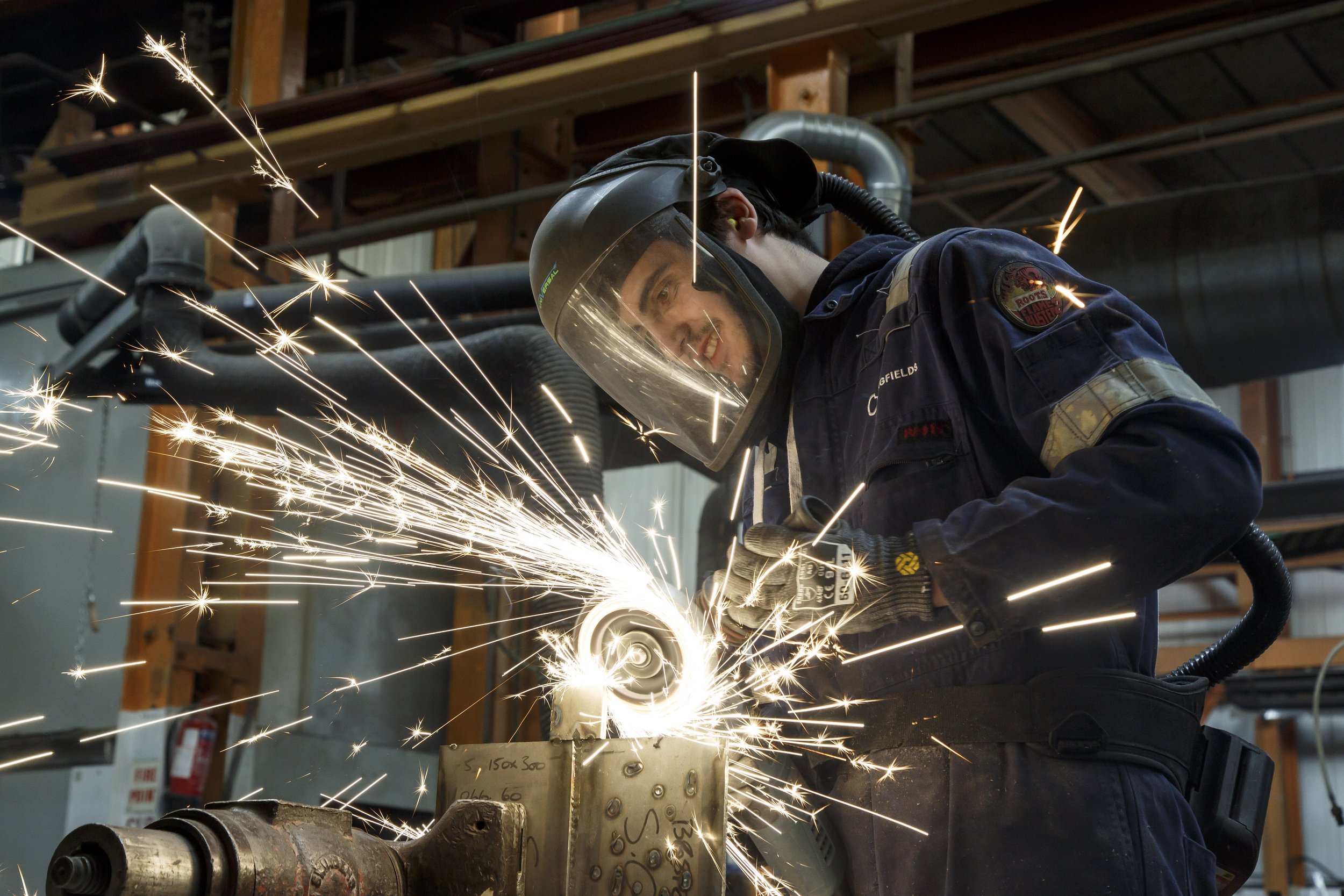
The fabricators at Langfields receive giant 18mm Aluminium plates and within the space of only 20 metres, cut, bend and weld it into complex, water-jacketed vessels according to the exacting specifications of high tech industries.
Langfields Process Plant Fabrication Photography | Manchester Industrial Photography
I recently visited Langfields, specialist fabricators of process plant equipment for the pharmaceutical, chemical, offshore, oil and gas, marine, defence, and nuclear industries. Based just one mile from Deansgate in Manchester, Langfields demonstrates that advanced manufacturing continues to play an important role in the city’s economy and industrial heritage.

As a former engineer, visiting facilities like Langfields is particularly rewarding. Photographing industrial operations captures both the technical processes and the human skill involved in producing high-specification equipment.
Advanced Industrial Fabrication at Langfields
Langfields transforms large 18mm aluminium plates into complex, water-jacketed vessels, following precise specifications required by some of the most demanding industries in the world. Within a compact production space, the plates are cut, bent, and welded with exceptional precision, showing the combination of craftsmanship and engineering expertise required for modern process plant fabrication.

The process highlights both the machinery and the skilled fabricators who operate it, demonstrating the scale, precision, and professionalism of high-tech industrial fabrication.

Precision Engineering for Pharmaceutical and Chemical Industries
The vessels and plant components produced at Langfields are used in critical applications across pharmaceutical production, chemical processing, offshore energy, nuclear technology, and other high-spec industries. Photography captures the company’s technical capabilities, quality standards, and expertise.
Every stage of fabrication, from cutting and bending to welding and finishing, reflects the attention to detail and precision engineering that underpin Langfields’ operations. These processes illustrate the combination of modern technology and human skill required to meet exacting industry standards.

Manchester’s Post-Industrial Manufacturing Scene
Langfields’ location near the centre of Manchester highlights the ongoing relevance of manufacturing in a post-industrial city. Facilities like this provide skilled technical employment while maintaining advanced production capabilities that support a wide range of industries. Capturing these processes visually helps tell the story of a city that continues to innovate and manufacture complex equipment.

Documenting Industrial Expertise and Human Skill
Visiting Langfields provides an opportunity to record the intersection of engineering excellence, technical innovation, and human skill. From raw aluminium plates to fully fabricated vessels, the facility offers a rich visual narrative of high-tech industrial processes. The images reflect both the technical and human dimensions of manufacturing, illustrating the expertise and care involved in producing equipment for demanding industries.