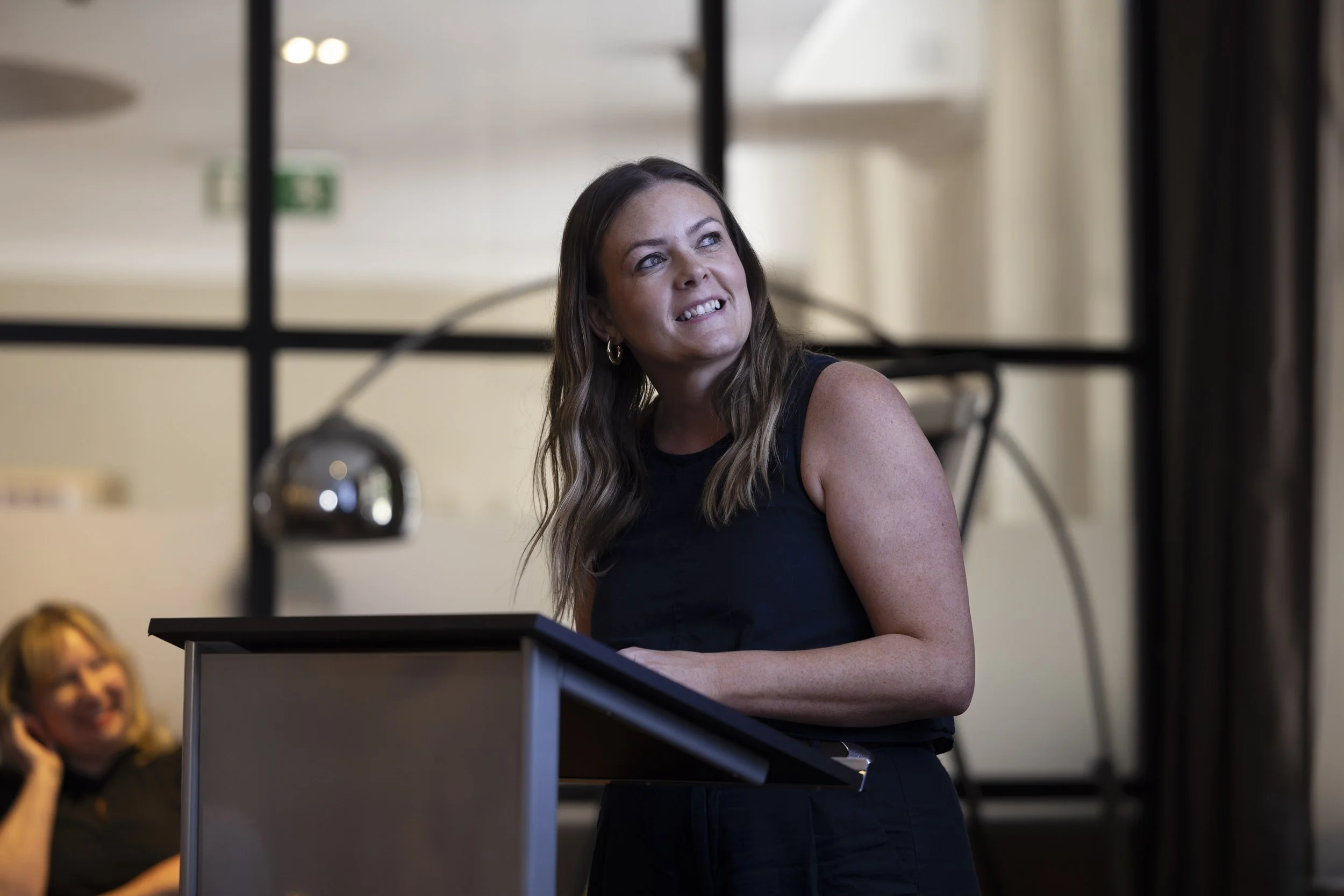
Event Photography for P+HS Architects
I recently photographed Looking Ahead: The Future of Residential Design, a morning seminar and networking event organised by P+HS Architects with Lichfields at the Townhouse Hotel in Manchester.
The event brought together architects, planners, housing professionals and other people working across the built environment to discuss some of the changes facing residential development. The programme covered planning reform, sustainability, viability, housing quality and the Future Homes Standard, with presentations, a panel discussion and opportunities for people to meet and exchange ideas.
For me, the job was to document all of that without simply producing a series of photographs of people sitting in a room listening to presentations.
Photographing events in Manchester
Event photography is often about trying to show what it actually felt like to be there. There are the obvious photographs, such as speakers presenting and people listening, but there are also the conversations, reactions, interactions and smaller moments that give an event its atmosphere.
For a professional event, those photographs are useful afterwards because they give the organisers something more than a record of who attended. They can show the energy of the event, the people involved and the kinds of conversations that took place.
With an event like this, where the purpose was partly to bring people from different parts of the built environment together, that sense of interaction was particularly important.
The future of residential design
The Manchester event was the first of three regional sessions organised by P+HS Architects and Lichfields. The idea was to bring together different perspectives on the future of housing and residential development, looking at the practical implications of changing regulations, economic pressures and increasing expectations around sustainability and the quality of places being created.
The Manchester session included speakers from P+HS Architects, Lichfields, Future Homes Hub, Drees & Sommer and Urban Green, followed by a panel discussion and audience Q&A.
That mixture of presentations, discussion and networking gave me a number of different things to photograph throughout the morning.
Working discreetly
One of the most important things for me when photographing an event is to avoid becoming part of the event myself.
I don't generally use flash at conferences or seminars unless there is a very specific reason to do so. A flash going off repeatedly in a relatively quiet room can be distracting for both speakers and the audience, and it can also change the atmosphere of the photographs.
Instead, I prefer to work quietly around the edges of the room, moving between different positions and looking for opportunities without getting in people's way. The idea is to be present enough to photograph what is happening, but not so noticeable that people become conscious of the camera.

A difficult room to photograph
The Townhouse Hotel presented a particular challenge. The room was relatively dark, while outside it was a bright, sunny day. That meant there were some quite extreme differences in light, particularly around the windows.
There were also projection screens being used during the presentations. The screen itself was bright, while the speaker standing beside it was often comparatively dark. That creates a difficult exposure, especially when you're trying to make a photograph that shows both the speaker and what they're presenting.
These are fairly typical problems when photographing conferences and seminars, but every venue presents them slightly differently. There isn't always a technically perfect solution, so a lot of the job is about working within the conditions you've got.
Working without flash
The lack of good light meant I had to work carefully with the available exposure rather than simply adding my own.
Using flash would have made some things easier technically, but it wouldn't have been appropriate for the atmosphere of the event. I wanted to remain as unobtrusive as possible and allow the speakers and attendees to carry on without interruption.
That means accepting some compromises and looking for the positions where the available light works best. Sometimes moving a few metres can make a noticeable difference. Sometimes it means waiting for a speaker to move into a better position, or looking for a moment when the balance between the room and the projection screen works.
Making presentations look interesting
There is a danger with event photography that every presentation photograph ends up looking the same. Someone stands behind a lectern, there is a screen behind them and the photographer takes another photograph of someone talking.
I'm always trying to avoid that.
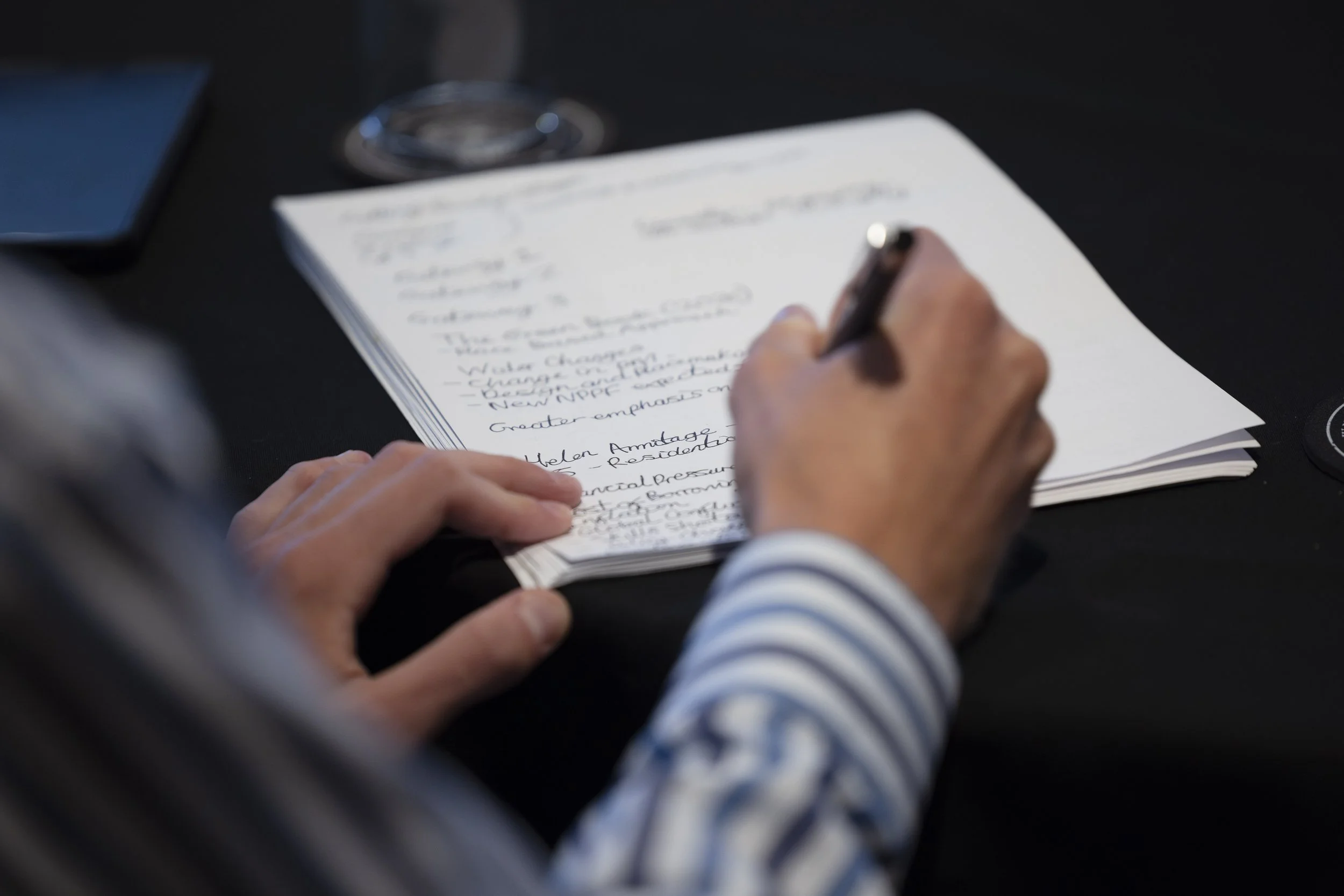
Even when the subject matter is serious, there are ways of making the photographs more visually interesting. I'm looking at the relationship between the speaker and the screen, the expressions of people in the audience, the shapes created by the room and the moments when someone is engaged in what is being discussed.
The aim is to make the event look like something people would actually have wanted to attend, rather than simply documenting the fact that it happened.
Looking for moments between the talks
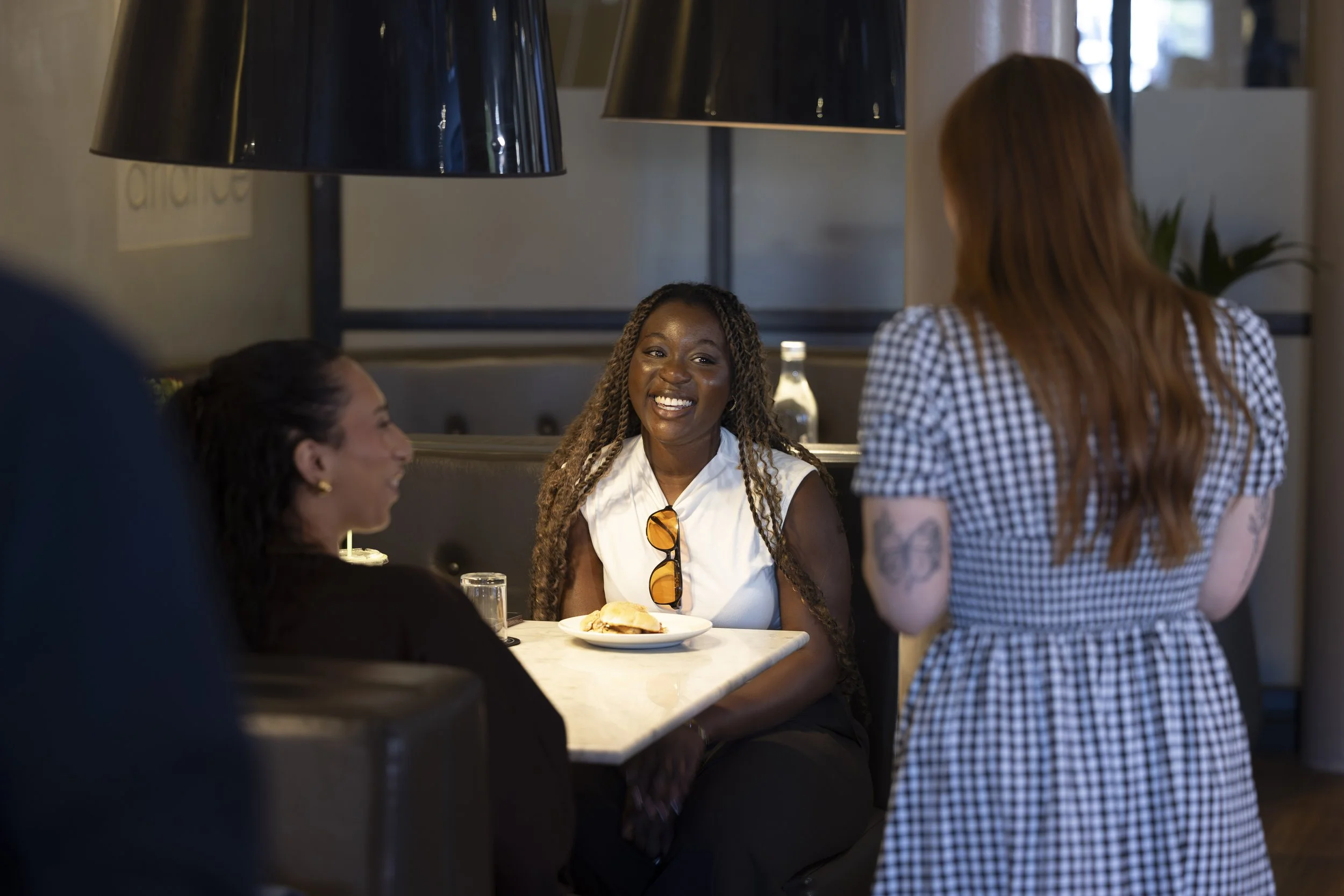
The networking and discussion parts of an event can be just as important as the formal presentations. They show why people have actually come together.
At the Townhouse Hotel there were opportunities to photograph people talking before and after the presentations, as well as during the breaks. These photographs help give a sense of the wider event and show the relationships and conversations that sit behind the formal programme.
For an organisation such as P+HS Architects, those images can be particularly useful afterwards. They show not only what the event looked like, but also the community of people involved in the conversation.
Photographing the audience
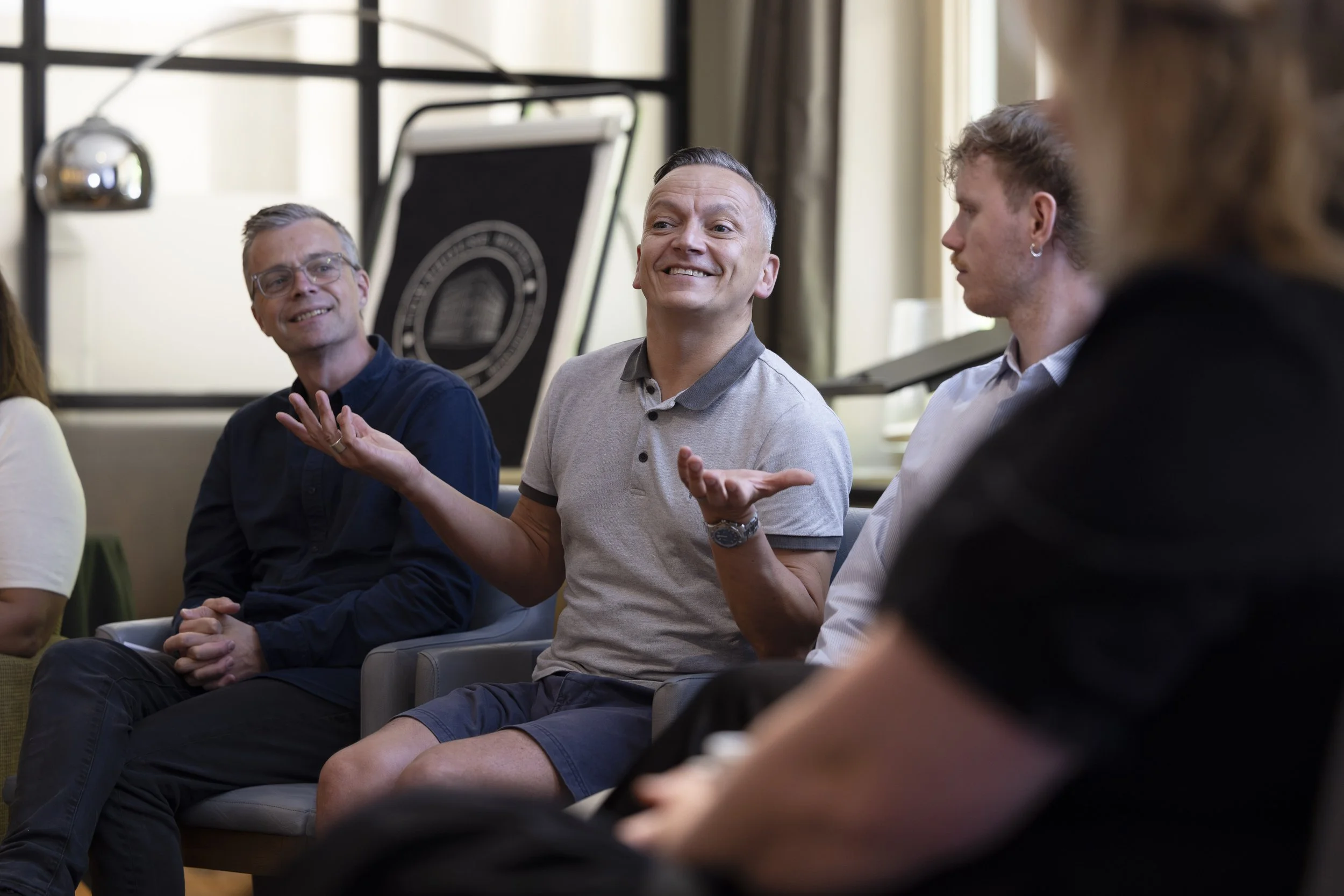
The audience is another important part of an event like this. A photograph of a speaker on stage tells you what happened, but a photograph showing a room full of people listening gives a much better sense of scale and atmosphere.
I'm often looking for reactions, people taking notes, conversations between attendees and moments of concentration. These are small details, but they help build a picture of the event as a whole.
They also provide variety in a set of photographs. When you have ten or twelve images to deliver, you don't want them all to be variations on the same shot of a speaker.
Architecture and the built environment
Although this was an event about residential design rather than an architectural project in itself, the subject matter made it particularly relevant to photographing the built environment in Manchester.
The discussions were concerned with how housing is planned, designed and delivered, and with the wider question of how we create places that work for the people who live in them. Planning, sustainability, viability and placemaking are all connected to the physical environments that architects, planners and developers ultimately create.
That wider context is useful when photographing the event. The pictures aren't intended to illustrate the architecture of the Townhouse Hotel so much as to document the people and conversations involved in shaping the built environment.

Telling the story of an event
A good event photography set needs to work as a sequence. The individual photographs need to be strong, but they also need to work together to tell the story of the day.
For this event, that meant combining wide photographs showing the room, closer photographs of speakers, details of presentations, audience reactions and informal conversations. Each type of photograph adds something different.
The challenge is to make that variety feel coherent while working quickly and discreetly in a room where the lighting isn't always on your side.
Photographing events naturally
This is one of the reasons I enjoy event photography. You have to make decisions quickly and work with whatever the location gives you. There isn't usually time to rearrange the room or create perfect lighting conditions.
Instead, I'm looking for the best possibilities within the situation: where the light falls, where I can stand without disrupting the event, what is happening in front of me and how I can make a photograph that has some energy to it.
For Looking Ahead: The Future of Residential Design, that meant working quietly around a challenging room and finding ways to make the photographs feel varied, natural and engaging. The resulting images document not just a series of talks at a Manchester hotel, but the conversations and connections around an important discussion about the future of housing and residential design.