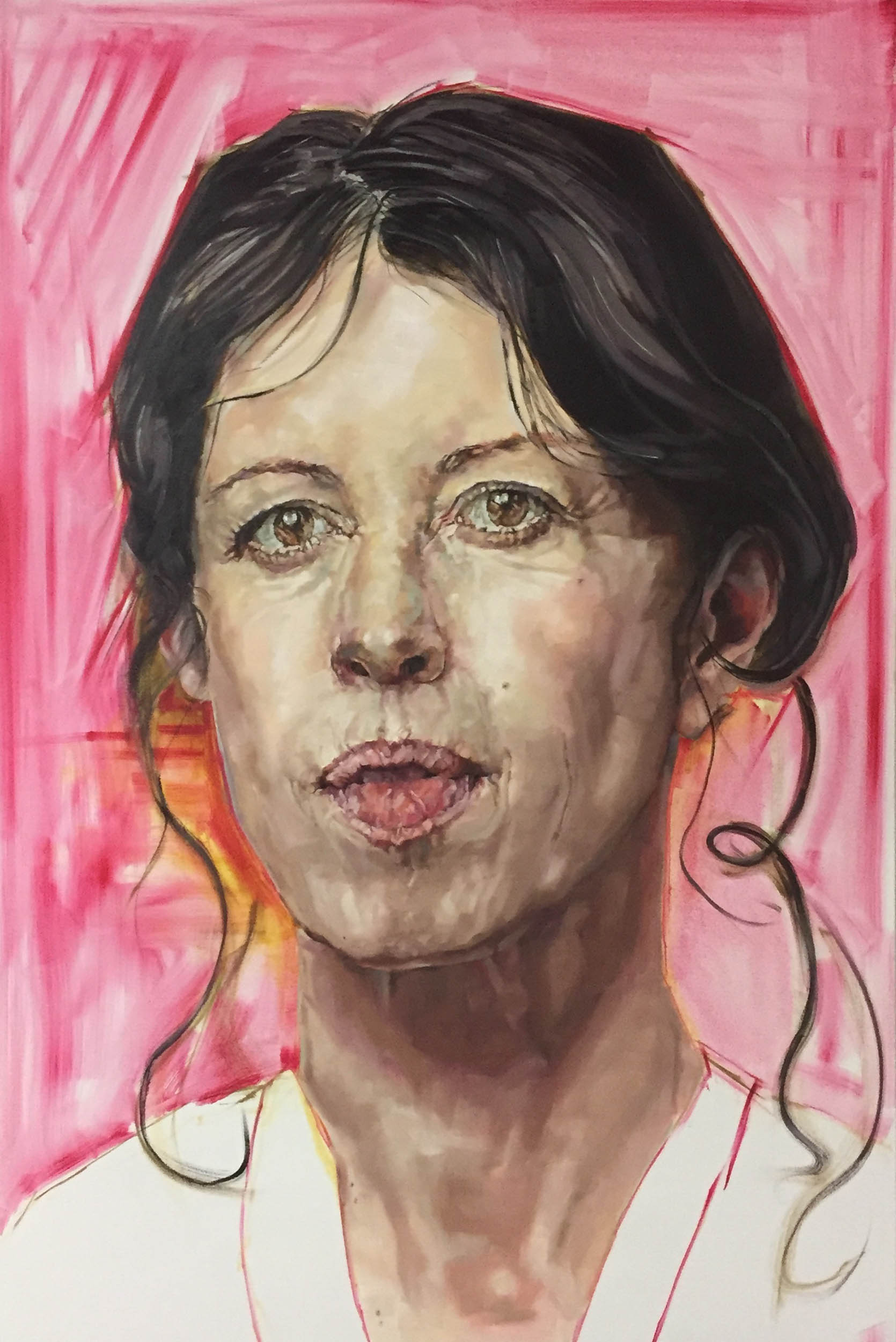

Portrait of Cecily Brown | Featured in Shana Wilson’s TribeShe Series
Portrait Photography Shared and Reinterpreted by Shana Wilson
Earlier this year, artist and creator Shana Wilson approached me about using my portrait of the British‑born painter Cecily Brown as the basis for a new work in her ongoing TribeShe series. TribeShe is a portrait series dedicated to increasing the visibility and empowerment of women over 40, celebrating their resilience, creativity, and continued cultural impact. Wilson’s work reframes existing images by placing them in a broader narrative of visibility and representation, making the original photograph a starting point for a new visual dialogue.
My original portrait of Cecily Brown and Wilson’s nearly completed reinterpretation are featured below, showing how portrait photography can transcend its initial purpose to inspire creative reinterpretation and collaboration within the visual arts. You can find more of Shana Wilson’s work at her website: shanawilsonartist.com.
Who Is Cecily Brown and Why a Portrait of Her Matters
Cecily Brown is a highly influential British painter whose work has been central to the resurgence of figurative painting since the 1990s. Born in London in 1969, she studied at the Slade School of Fine Art before moving to New York in the mid‑1990s, where she quickly established herself on the international art stage. Her early exhibitions at Deitch Projects were met with critical and commercial success, and her career has included solo shows at major institutions such as the Hirshhorn Museum in Washington, D.C., Museo Reina Sofía in Madrid, and Blenheim Palace in the UK, among others.
Brown’s work is characterised by sweeping, gestural brushwork that blurs the boundary between abstraction and figuration. She draws on influences ranging from Abstract Expressionists like Willem de Kooning to Old Masters such as Rubens and Goya, combining historical references with a deeply personal exploration of movement, form, and perception. Her paintings often appear intense and kaleidoscopic, inviting sustained viewer engagement and reflection.
Brown’s paintings are included in the permanent collections of world‑renowned institutions including the British Museum, Tate Modern, the Museum of Modern Art in New York, and the Whitney Museum of American Art. Beyond her aesthetic achievements, her influence stems from how she revitalised painting at a time when conceptual and multimedia art dominated. Her commitment to paint as a medium, and her ability to synthesise figuration and abstraction, marks her as one of the most important painters of her generation.
TribeShe: Amplifying Women’s Voices Through Art
Shana Wilson’s TribeShe series focuses on women over 40, emphasising empowerment, legacy, and representation. By selecting portraits of women who have already made significant cultural contributions, Wilson reframes them in a way that foregrounds lived experience, agency, and continued relevance. Choosing a portrait of Cecily Brown — an artist with an influential career spanning decades and an international presence — aligns with TribeShe’s mission to highlight women whose voices deserve wider recognition.
Wilson’s reinterpretations are not merely aesthetic exercises; they position women’s stories within broader societal and artistic conversations, elevating subjects who have shaped their fields and whose work continues to resonate across communities.
The Power of Portraiture and Collaboration
Portrait photography captures more than a likeness; it reflects presence, influence, and context. A portrait of an artist like Cecily Brown carries weight not just because of her stature in the art world but because her career embodies sustained creativity and a commitment to her medium. Through Wilson’s reinterpretation, the original photographic work becomes part of a larger exploration of identity, ageing, and leadership in the arts.
This kind of artistic dialogue — where photographic portraiture becomes a catalyst for further creation — demonstrates the dynamic interplay between image, interpretation, and cultural narrative. It highlights the ways in which visual representation can both document and reframe the significance of influential figures.
Conclusion
Being approached by Shana Wilson to contribute to her TribeShe series through my portrait of Cecily Brown was a reminder of how photography can extend beyond its initial purpose, becoming part of new artistic stories and collaborations. The partnership between photographer and painter, between original image and reinterpretation, reflects the fluid, ongoing conversations within contemporary art about identity, visibility, and empowerment.
Explore more of Shana Wilson’s work at shanawilsonartist.com.