
Leeds City Station for Transport for the North

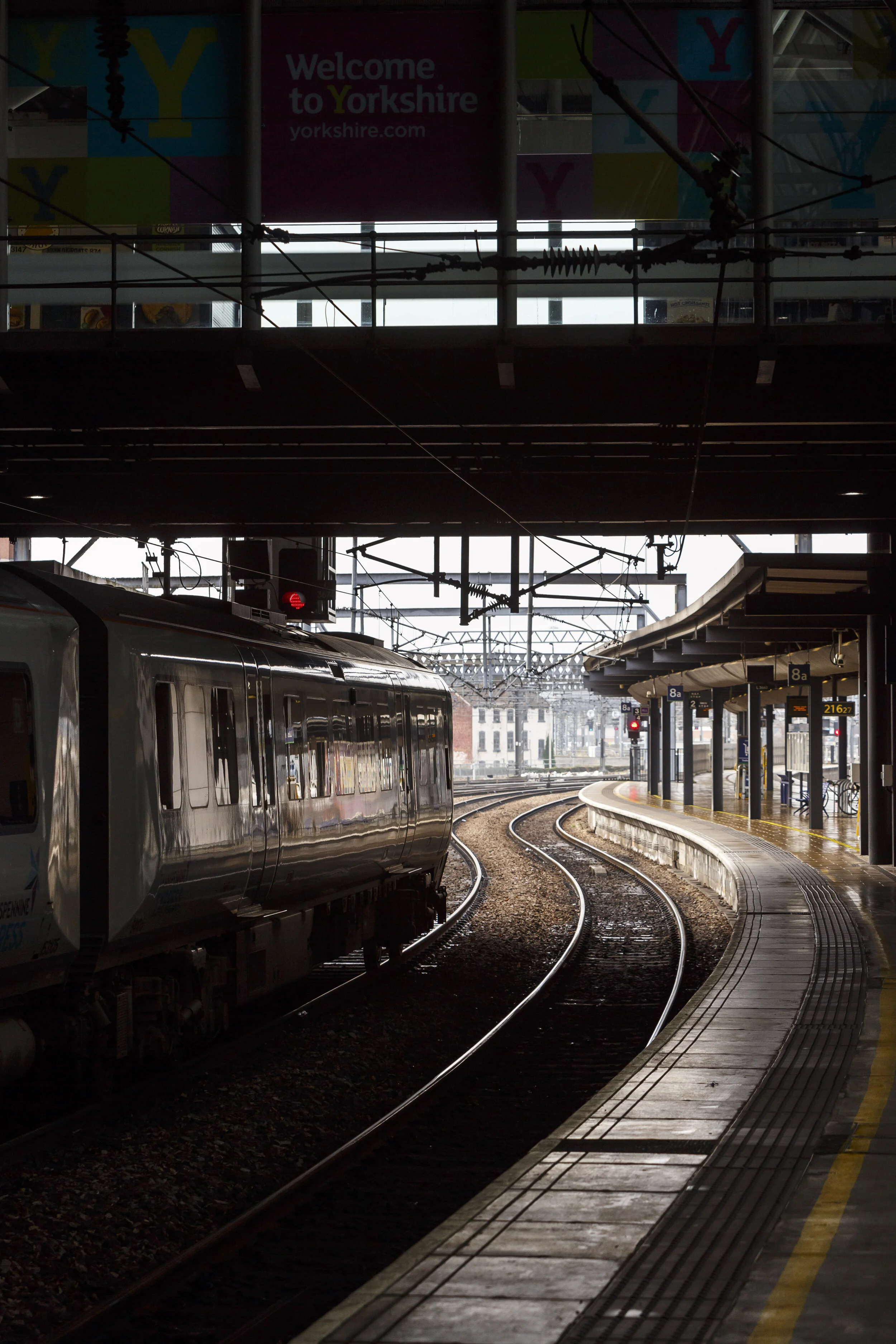
This assignment for Transport for the North brought me to Leeds to photograph one of the region’s key transport interchanges. The brief was rooted in documentary observation—an editorial photography approach that focused on infrastructure, movement, and absence as much as presence.
Working inside transport environments always carries a certain rhythm, but this commission was different in tone: quieter, more reflective, and shaped by the reality of reduced passenger flow and ongoing disruption across the network.

Documenting Leeds Railway Station as a Strategic Northern Transport Hub
The shoot took place within Leeds railway station, one of the most important transport gateways in the North of England. As a location, it sits at the intersection of regional commuting, long-distance travel, and the wider infrastructure debate that continues to shape the future of northern connectivity.
From a photographic standpoint, it offered a complex environment—architectural scale, layered signage, and deep perspective lines that naturally support editorial photography storytelling.
The Role of Transport for the North in Regional Infrastructure Debate
Transport for the North exists to advocate for improved connectivity, investment, and long-term planning across the region. The organisation works to make the case to central government for sustained transport funding, addressing long-standing disparities in infrastructure between the North and other parts of the country.
Photographing this assignment meant engaging indirectly with that wider context—capturing spaces that reflect both current conditions and future potential.

Editorial Photography Approach to Industrial Transport Environments
My approach was grounded in observational editorial photography rather than staging or intervention. The aim was to allow the environment to speak for itself, particularly in a location where movement and flow are usually constant.
Leeds station, typically dense with commuters and movement, felt noticeably subdued during the shoot. That shift in atmosphere became a central visual and conceptual thread throughout the work.

The Atmosphere of Reduced Passenger Flow in Northern Rail Networks
What stood out most was the absence of the usual density of people. Rather than navigating through crowds, there was space—long sightlines, quiet platforms, and moments where the scale of the infrastructure became more visible than its daily function.
This kind of stillness is rare in transport photography and changes the way the space is perceived. The station’s infrastructure becomes more apparent when not obscured by movement.

Observing Ageing Rail Infrastructure and Capacity Constraints
Working within the station also brought attention to the physical realities of the network: ageing rolling stock, visible wear across infrastructure, and a sense of systems operating under sustained pressure.
These conditions are not abstract when you are photographing them directly. They become part of the visual language—embedded in platforms, materials, and operational signage that reflects decades of incremental development.

A Temporary Stillness in a Normally High-Intensity Commuter Space
Photographing a major station in a quieter state creates a slightly disorienting experience. Spaces designed for constant movement feel paused, as though the system is briefly revealing its underlying structure.
In editorial photography terms, this creates an opportunity to document not just architecture, but absence—something that is often overlooked in transport environments defined by rush and congestion.

Visualising What a Fully Invested Transport Network Could Be
There was a recurring thought throughout the shoot: that this temporary reduction in activity offered a glimpse—however unintended—of what a better-resourced and more efficient system might feel like.
More space, clearer flow, and less strain on infrastructure all become visible when the pressure of daily volume is reduced. It is in these quieter moments that the potential of investment becomes easier to imagine.

The Human and Political Context Behind Northern Transport Photography
Beyond the physical environment, this assignment sits within a broader political and social conversation. Transport infrastructure in the North of England has long been part of discussions around investment, regional equity, and long-term planning priorities.
Photographing for Transport for the North meant engaging with that context visually rather than editorialising it directly—allowing the environment to reflect the wider conversation without overt interpretation.

Leeds as a Centre of Movement and Regional Connectivity
The city of Leeds plays a central role in the North’s transport network, acting as a key interchange for both regional and national routes. The station itself reflects this function, combining historical development with ongoing adaptation to modern travel demands.
From an editorial photography perspective, it is a location that constantly shifts between order and congestion, structure and unpredictability.

Working with Architectural Scale in Railway Station Photography
One of the most striking elements of the shoot was the scale of the interior spaces. High ceilings, long platforms, and layered structural elements create a strong geometric framework for photography.
This kind of environment allows for compositions that rely on depth, repetition, and human scale within large industrial architecture—an essential component of transport-focused editorial work.
Reflections on Transport Infrastructure, Investment, and Documentary Photography
Assignments like this reinforce how closely photography and infrastructure are linked when working in editorial contexts. Transport systems are not just functional networks—they are visual environments shaped by policy, investment, and long-term planning decisions.
Supporting organisations like Transport for the North means contributing visually to a wider narrative about regional development and future capacity. It is work that sits between documentary observation and public-facing communication.
All power to the staff who keep these systems moving, and to the ongoing efforts to improve and strengthen transport across the North.