Photographing historic churches in Wales
As a Manchester-based editorial photographer, I was commissioned by London creative agency Sunday to photograph David Farrington MRICS for Modus, the magazine of the Royal Institution of Chartered Surveyors.
David is a surveyor with the Friends of Friendless Churches, a small charity dedicated to rescuing and caring for historic places of worship that have become redundant and vulnerable to neglect. The assignment took us to two churches in North Wales and Anglesey, St Baglan’s at Llanfaglan and St Tyfrydog’s at Llandyfrydog.

The Friends of Friendless Churches
The Friends of Friendless Churches was established in 1957 to save beautiful historic churches and chapels from demolition, decay and unsympathetic conversion. The charity now cares for more than 70 historic places of worship across England and Wales.
Many of the buildings are remote and modest in scale, but contain an extraordinary amount of architectural, social and religious history. Keeping them standing means dealing with everything from the condition of the building itself to the small details that have survived inside it.
That work is where people such as David Farrington come in.

David Farrington MRICS
David is a Chartered Surveyor specialising in historic buildings and is listed by RICS as a certified historic building professional. For the Friends of Friendless Churches, his work involves looking closely at the condition of the buildings in their care and helping to identify what needs to be done to preserve them.
For this assignment, however, my role was a little simpler. I was there to photograph David.
The brief from Sunday was to create a set of portraits and environmental photographs that would place him within the buildings he works with, while also giving Modus a selection of photographs showing the churches themselves.

St Baglan’s Church, Llanfaglan
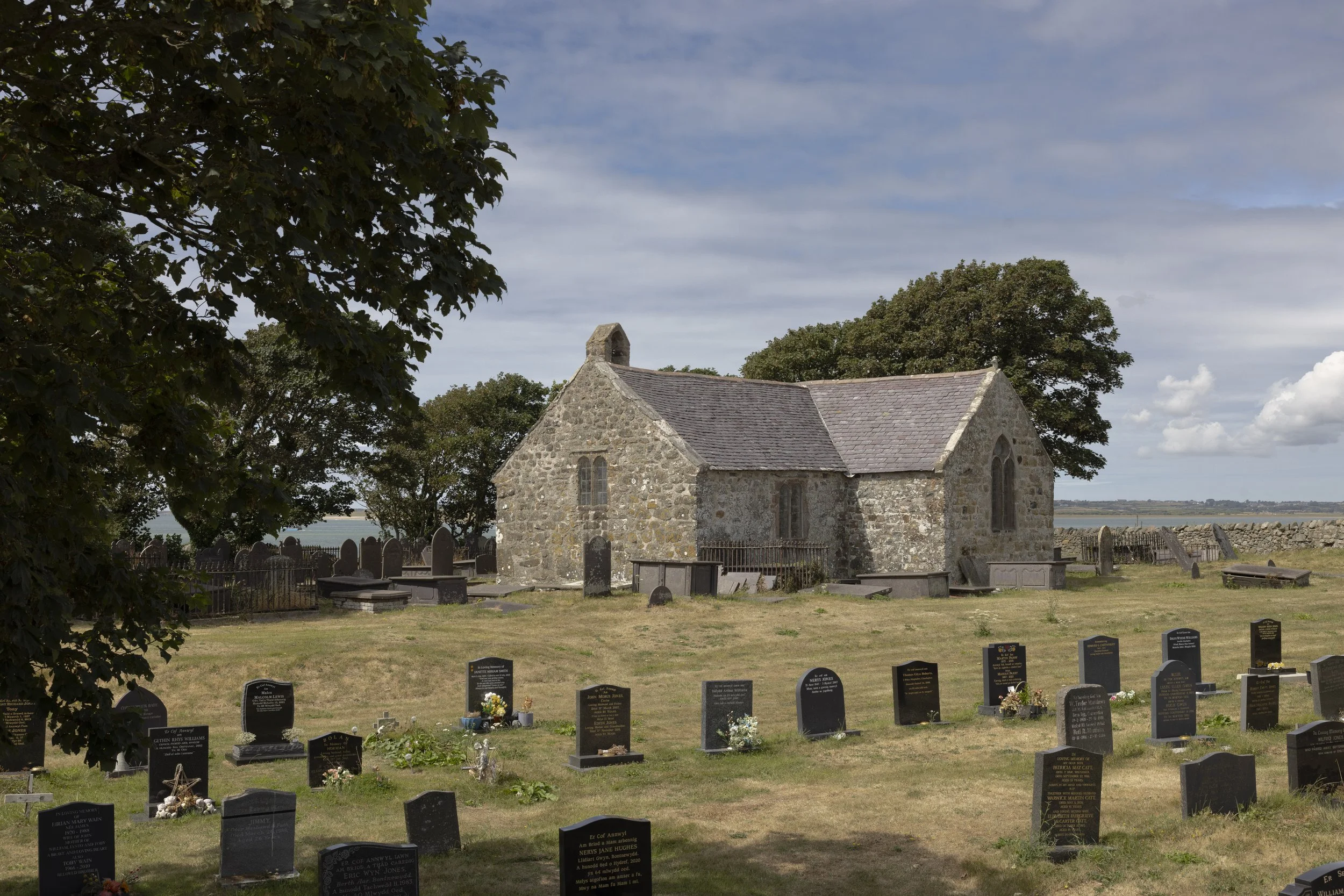
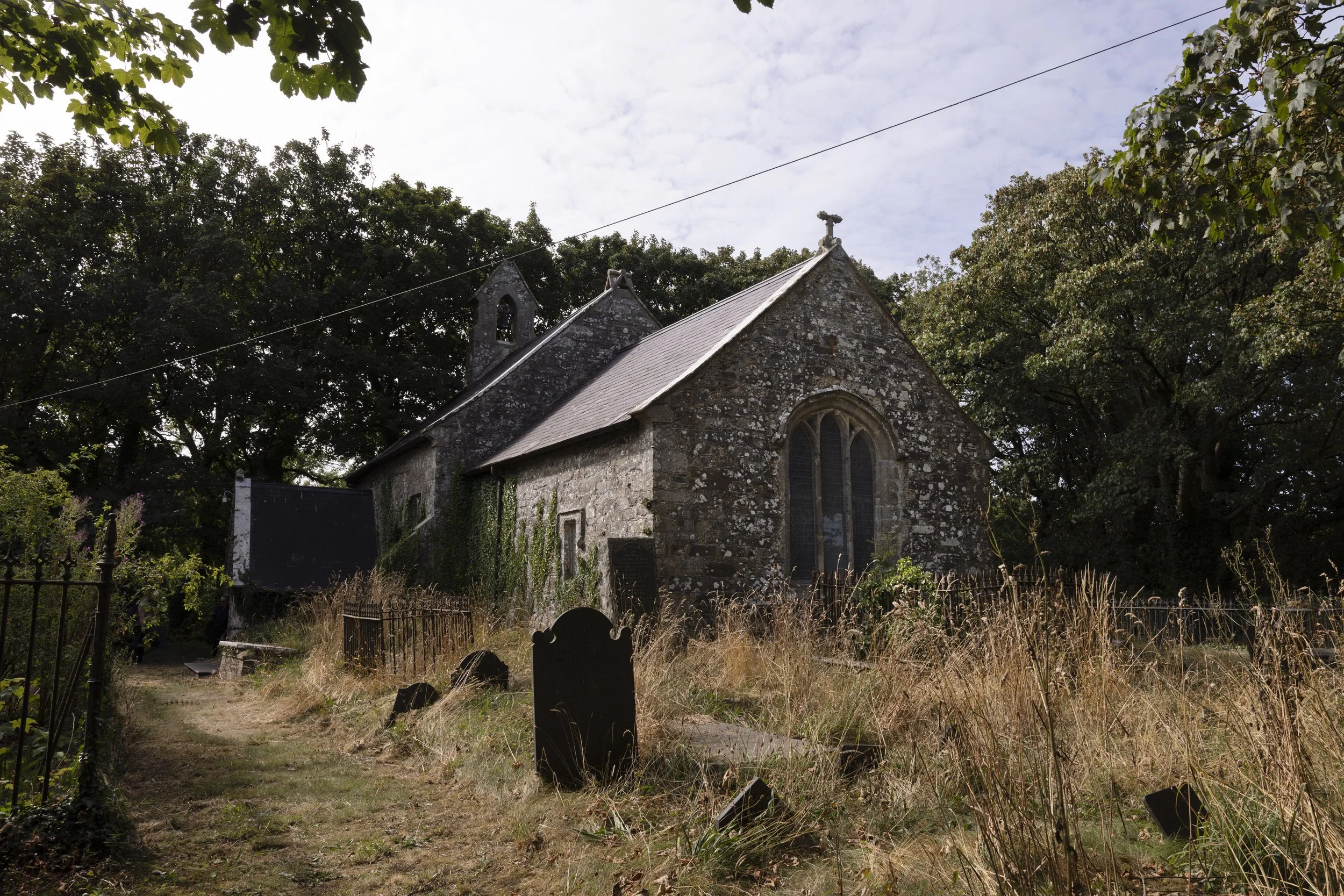
Our first stop was St Baglan’s Church at Llanfaglan, near Caernarfon. The church stands in an isolated position surrounded by its churchyard and fields, and has an unusually untouched character.
The building is Grade I listed and contains fabric and furnishings from several periods. It escaped the widespread Victorian restoration that altered so many historic churches, leaving features including its box pews and other eighteenth-century furnishings largely intact.
It was an ideal setting for the portrait work.
Portraits among the box pews
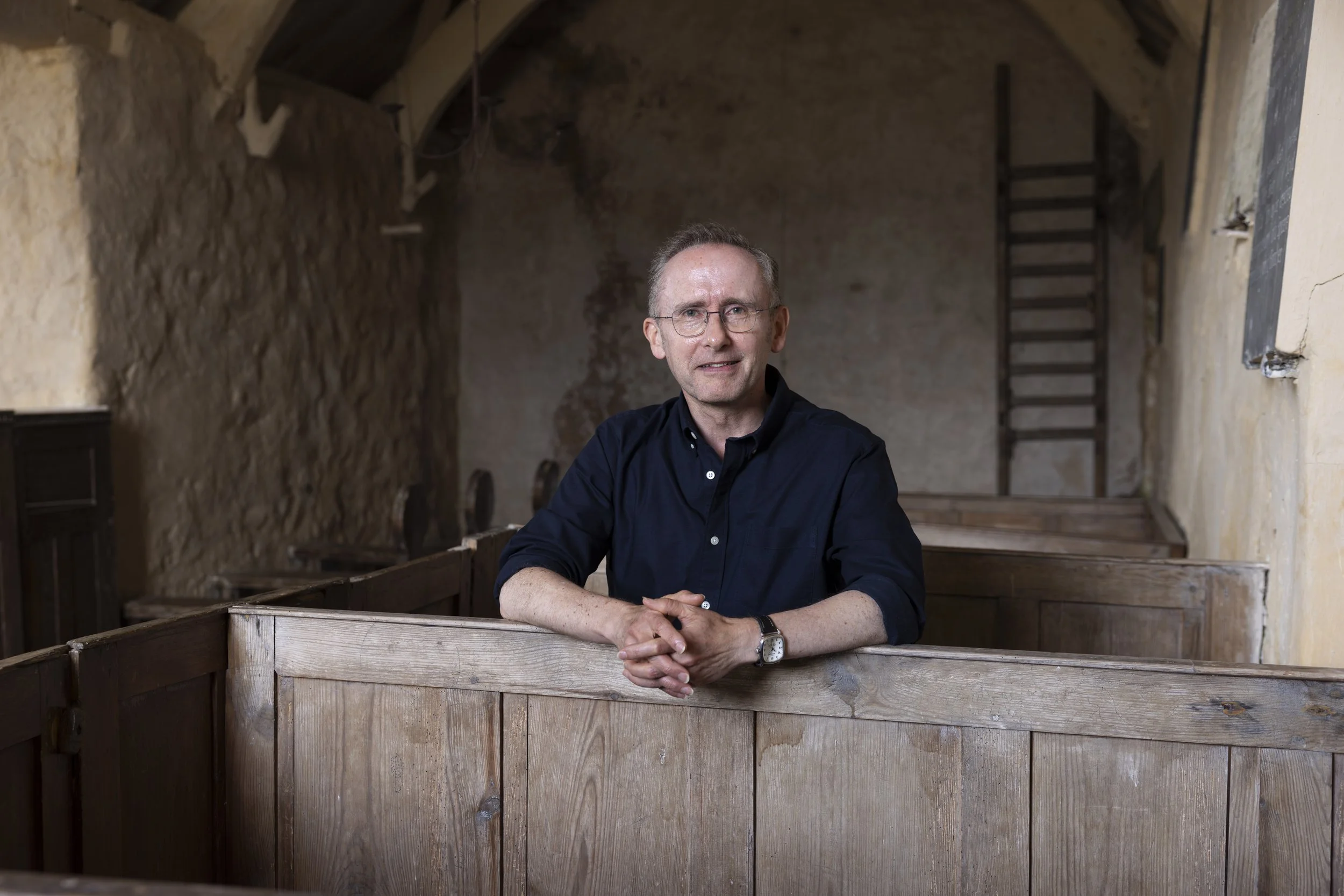
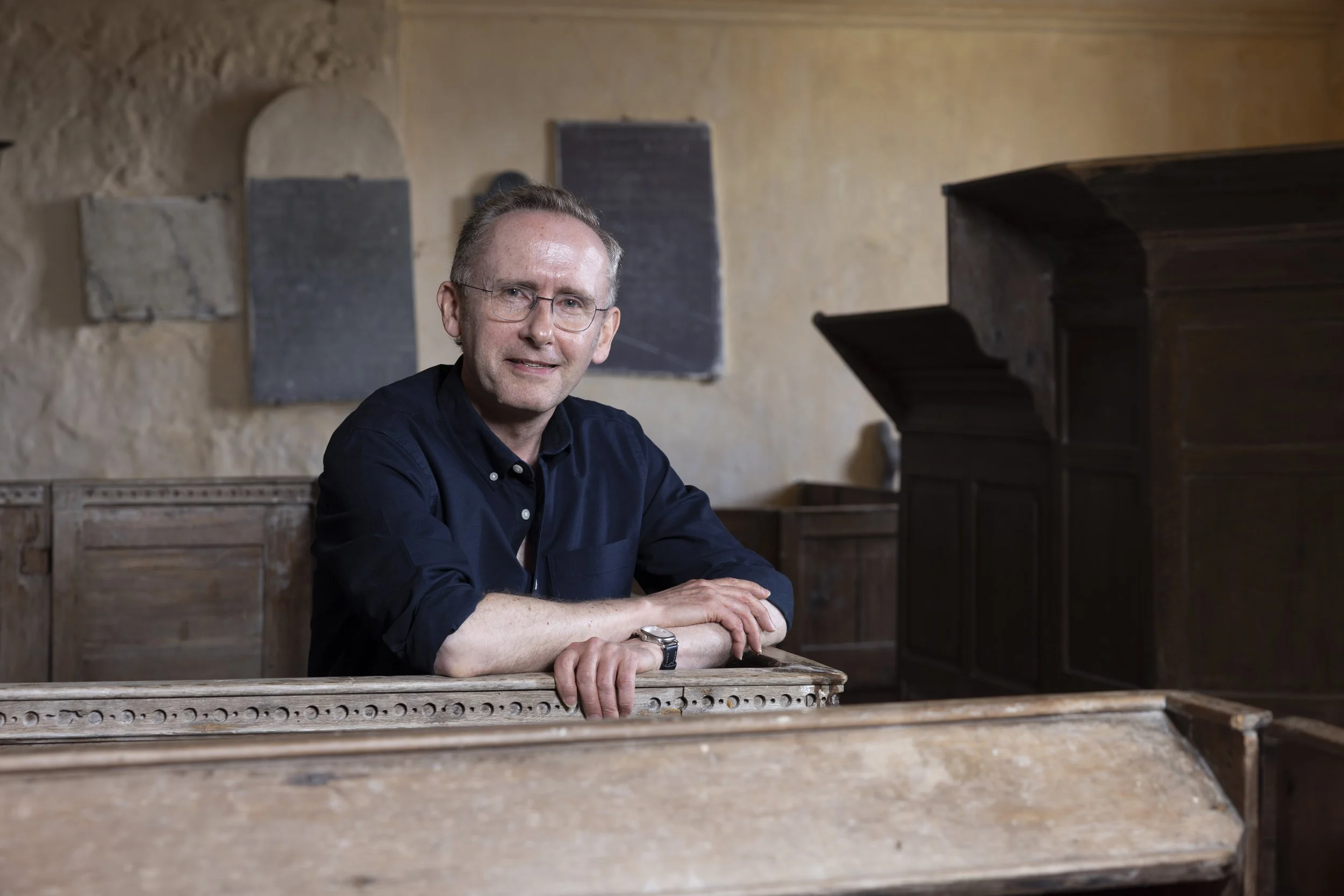
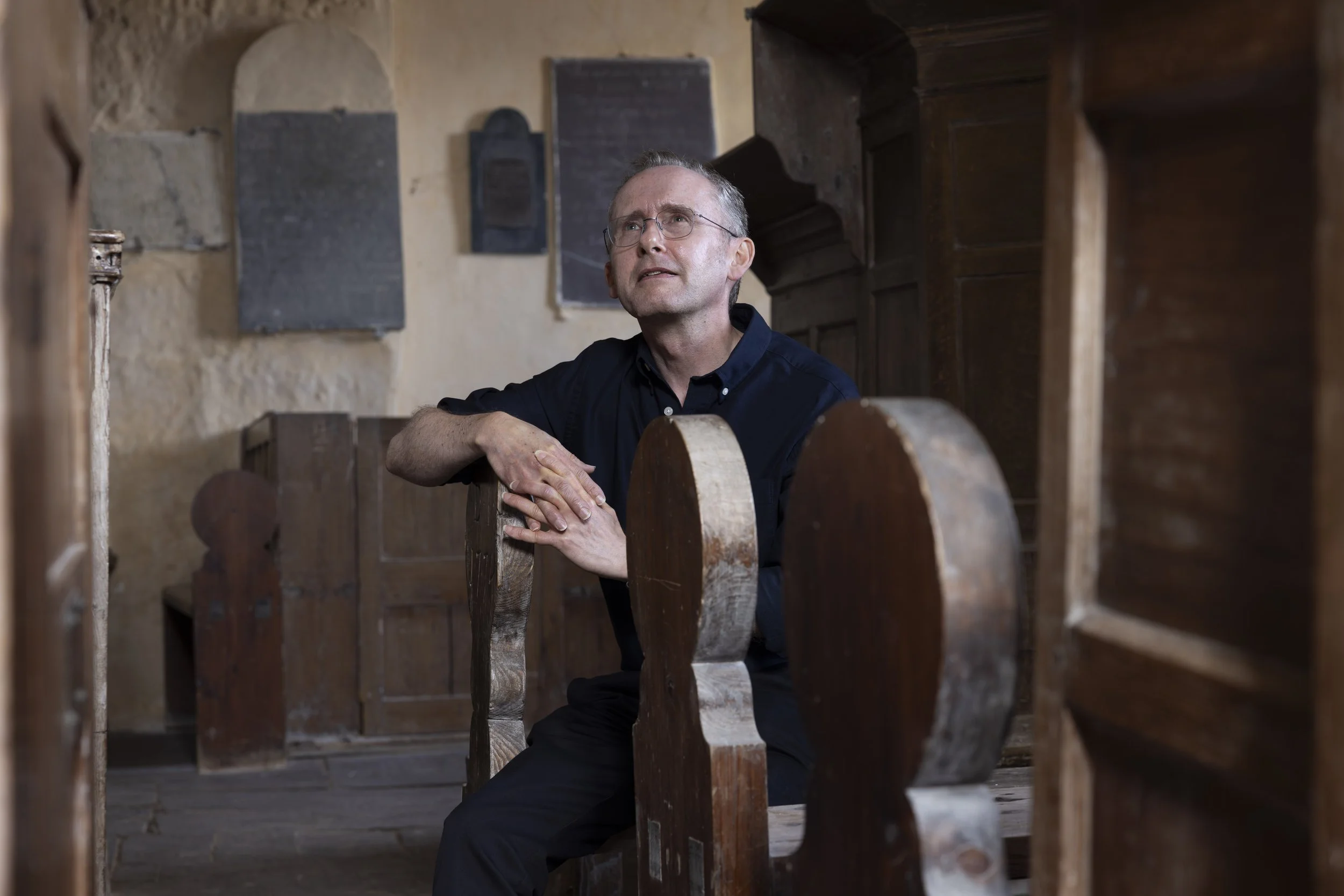
Inside St Baglan’s, I photographed David sitting among the church’s distinctive box pews, using the architecture to frame the portraits and give a sense of the environment in which he works.
The box pews provided particularly strong shapes and lines, with David sometimes sitting inside them and sometimes positioned against their walls. Rather than treating the church as a neutral studio, the idea was to make the building part of the portrait.
The photographs were intended to work editorially, giving a sense of David as a surveyor while also showing something of the character of the places he is responsible for.
The churchyard and the building
We also worked outside, using the churchyard and the surrounding landscape for a series of wider environmental portraits.
David was photographed among the gravestones and outside the church itself, as well as looking back towards the building. From further away, the church almost disappears into the surrounding trees and vegetation, giving a sense of how isolated some of these buildings are.
That relationship between the individual, the church and its landscape became an important part of the series.
Details inside St Baglan’s
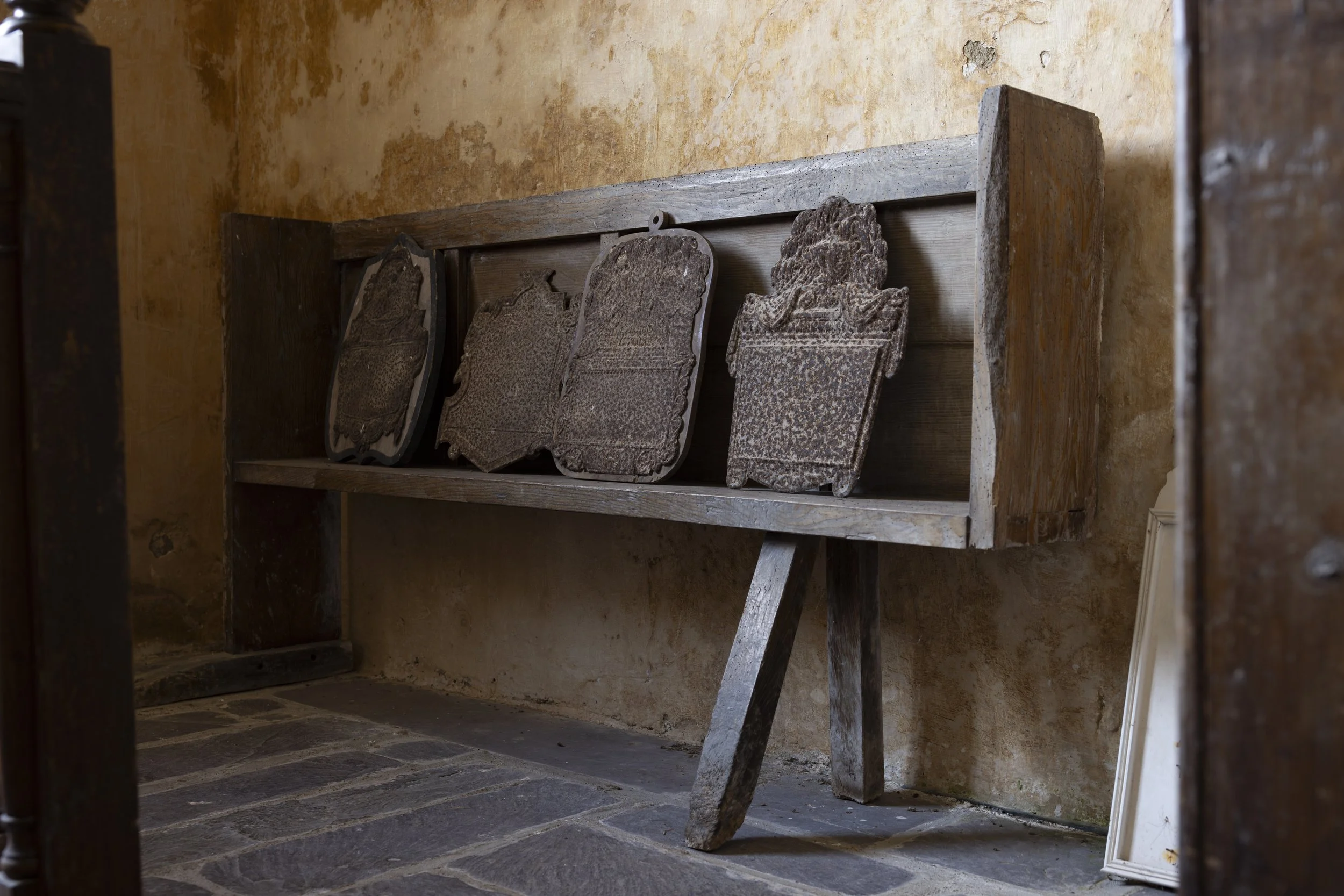
Alongside the portraits, I photographed details of the church that helped tell the story of the building.
There were carved wooden features, slate inscriptions, stained glass, the altar and various examples of the way the building had been constructed and maintained over time. Small details in the timberwork showed traditional methods of joining and fixing the structure, including wooden pegs and dowels.
These photographs gave Modus a visual record of the building beyond the portraits, showing some of the craftsmanship and accumulated history that David's work is concerned with protecting.
St Tyfrydog’s, Llandyfrydog
From Llanfaglan we travelled across to Anglesey and St Tyfrydog’s Church at Llandyfrydog.
The atmosphere here was quite different. St Tyfrydog’s had only recently come into the care of the Friends of Friendless Churches, and the building was showing the effects of a period without the level of care that would now be required.
The church is Grade II* listed and retains important medieval fabric and historic furnishings. At the time of our visit, repairs were about to begin.
A church at the beginning of a new chapter
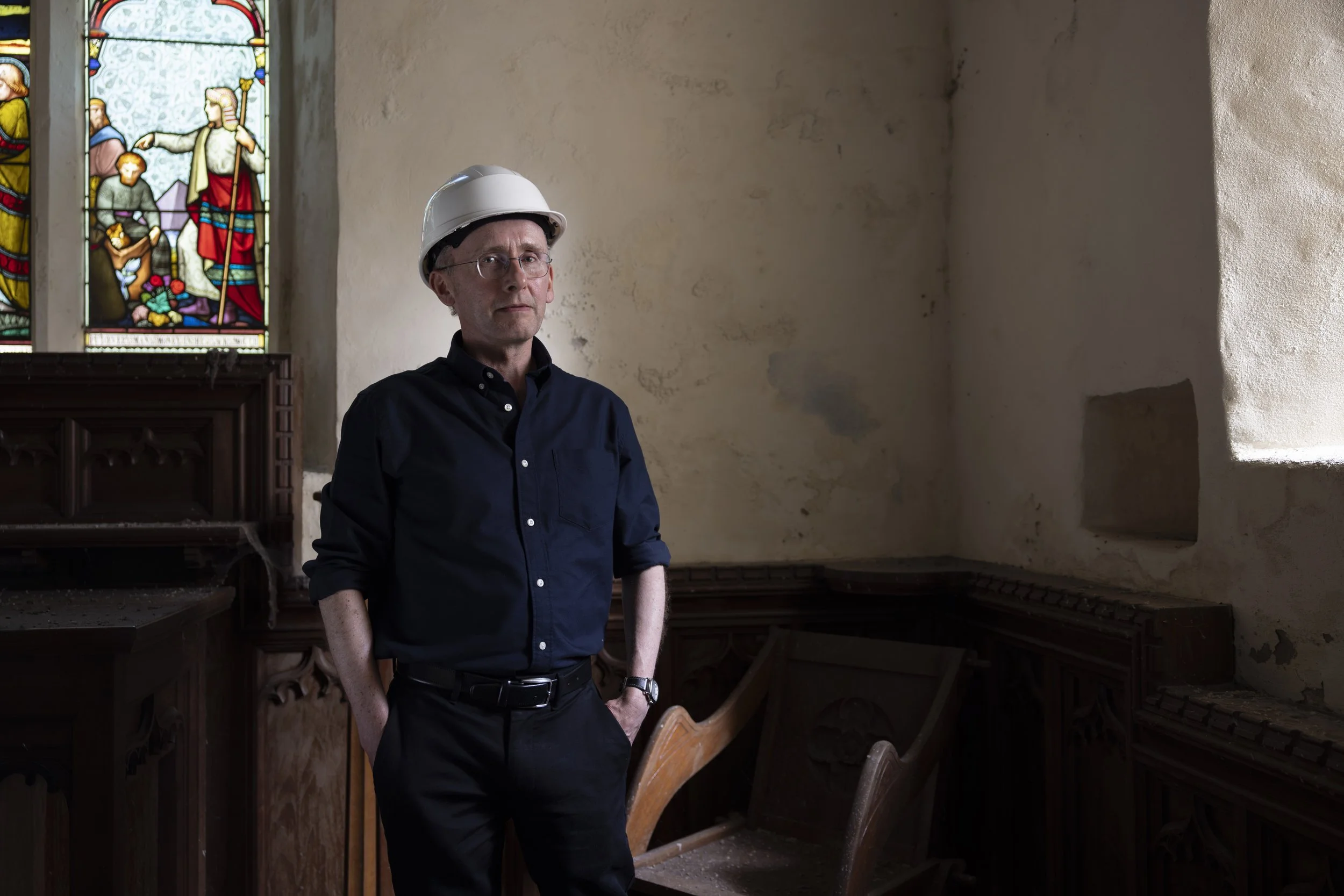
Inside, the building was considerably more weathered than St Baglan’s. Parts of the floor felt soft underfoot, there were broken windows and other signs of deterioration, while the stained glass remained striking despite the condition of the surrounding building.
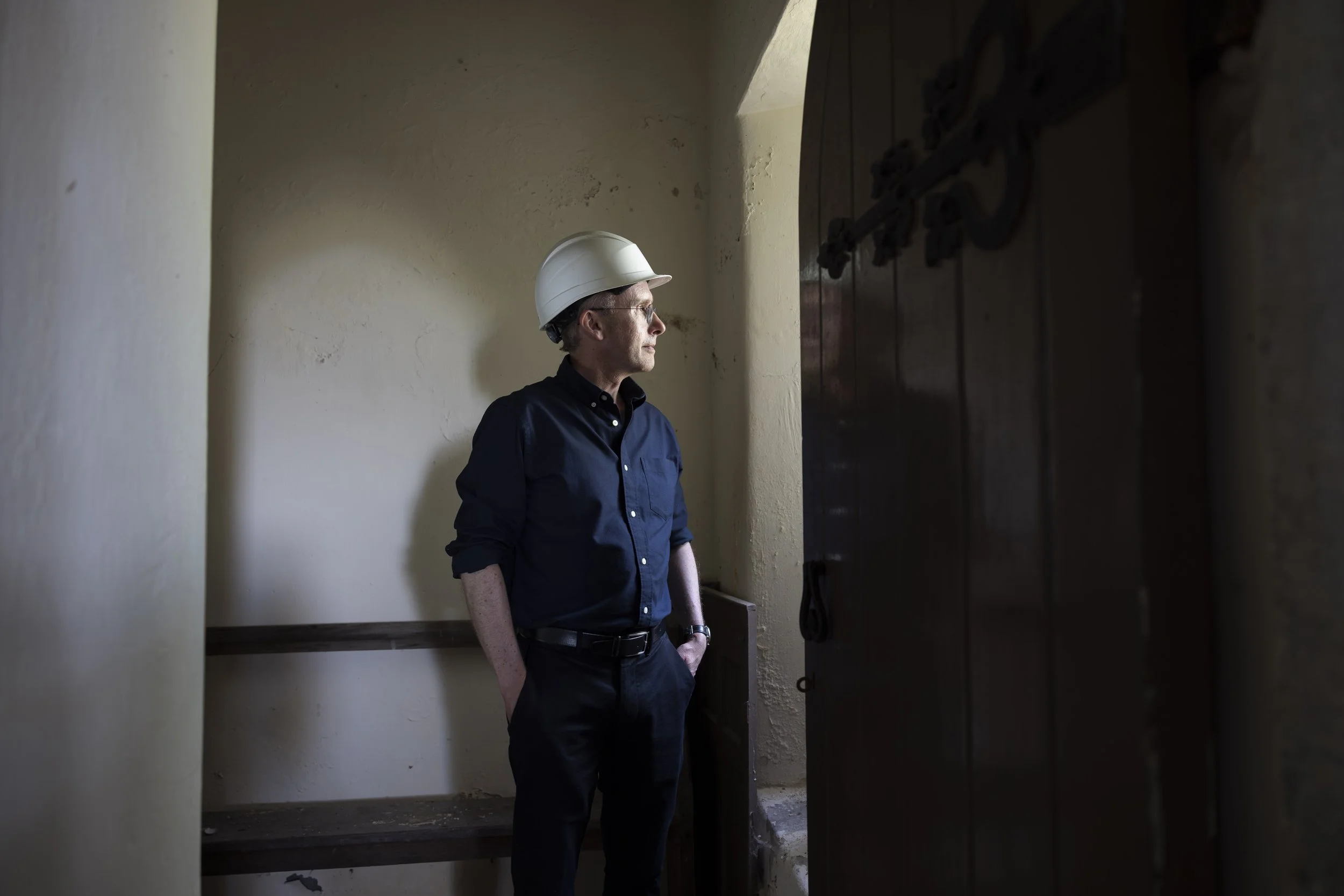
David wore a hard hat while we worked inside, reflecting the condition of the structure and the practical realities of looking after historic buildings.
I photographed him moving through the church, including the entrance vestibule and the main interior, as well as looking up towards the roof and examining the building from outside.
Looking closely at the details
The details at St Tyfrydog’s were very different from those at St Baglan’s, but were equally important to the story.
I photographed the stained glass windows close up, damaged elements of the building and other details that showed both its historic character and its current condition. Even the old church key became part of the photographic story, a small object connecting the practical business of accessing the building with its much longer history.
The aim was to give the magazine photographs that could sit alongside the portraits and provide a sense of what David encounters in his work.

Photographing the work of conservation
There was a useful tension between the two locations. St Baglan’s has retained much of its historic character, while St Tyfrydog’s showed a building at a more vulnerable stage, just as responsibility for its future was being transferred to the Friends.
That difference made the assignment particularly interesting to photograph. David's role exists somewhere between surveying, conservation and stewardship, and the buildings themselves provided the clearest way of illustrating that work.
Rather than staging the churches as pristine heritage attractions, the photographs show them as working historic buildings, complete with signs of age, damage, repair and change.

A portrait of a surveyor through the places he works
For an editorial portrait assignment like this, the location is as important as the person.
David could have been photographed in a studio or office, but that would have removed the context that makes his work distinctive. Placing him inside the churches, among the pews, in the churchyards and looking at the fabric of the buildings gave the photographs a much stronger sense of purpose.
The resulting series combines portraits with architectural and documentary details, allowing the buildings to explain something about the person being photographed and the work he does.

Modus and RICS
The photographs were commissioned through Sunday, a London creative agency, for Modus, the magazine of the Royal Institution of Chartered Surveyors.
It was a good example of the kind of editorial assignment where portraiture and documentary photography overlap, with the photographs needing to introduce a person while also explaining their professional world.
In this case, that world happened to be some of the quieter and more unusual historic buildings in Wales.

Editorial photography in historic places
Assignments involving historic buildings often require a slightly different approach to conventional portrait photography. The architecture already has its own visual language, and the challenge is to work with it without allowing the person to disappear into the surroundings.
At St Baglan’s, the box pews, timber, stone and churchyard provided the structure for the portraits. At St Tyfrydog’s, the condition of the building became part of the story.
Together, the two locations provided a varied set of photographs for Modus, from environmental portraits and wider views to close details of architecture, craftsmanship and the objects that remain inside these remarkable buildings.

Photographing people in their working environment
The assignment was a reminder of why environmental portraiture can be so effective for editorial and institutional work. A portrait can tell you who someone is, but placing them in the environment in which they work can tell you considerably more.
For David Farrington, those environments are historic churches scattered across England and Wales, buildings whose future depends on careful attention to everything from major structural repairs to the smallest surviving details.
It was a pleasure to spend a day travelling between two of them and photographing a small part of that work.